





— Products —
 Consumer hotline +8618073152920
WhatsApp:+8615367865107
Address:Room 102, District D, Houhu Industrial Park, Yuelu District, Changsha City, Hunan Province, China
Water Quality Sensors


NiuBoL NBL-WQ-MLSS-408-S online sludge concentration sensor adopts 90° scattered light principle and infrared LED technology. It is specially designed for wastewater treatment, industrial water treatment and environmental monitoring. It supports RS485 Modbus RTU protocol, features IP68 high-level protection and automatic cleaning brush, solving engineering pain points such as easy scaling on the sensor window and frequent maintenance. It is the preferred high-stability measu···
Tel/WhatsApp:+8615367865107
Email:Arvin@niubol.com +Nearly 100 partner companies in more than 75 countries. We are committed to providing high-quality, practical products to meet your needs and help you solve problems. Our products comply with international standards and are certified with ISO, CE and RoHS.Product Details
Product Overview: The NiuBoL NBL-WQ-MLSS-408-S is an Self-Cleaning online sludge concentration sensor designed for continuous monitoring of suspended solids in wastewater treatment processes. Using infrared scattered-light measurement, it provides a concentration range of 0–20.000 g/L (0–20,000 mg/L), 0.001 g/L resolution, RS485 Modbus RTU communication and IP68 protection. It is suitable for evaluating mixed liquor suspended solids (MLSS) and sludge concentration trends in compatible treatment systems.
Monitoring sludge concentration is important in activated sludge wastewater treatment systems. Changes in mixed liquor suspended solids can provide useful information about biomass concentration, sludge circulation and process conditions.
The NBL-WQ-MLSS-408-S uses an infrared LED and optical scattered-light detection to measure a signal associated with suspended particles in water.
The detected signal is processed using sensor calibration data and converted into an estimated sludge concentration expressed in g/L.
With a measurement range of 0–20 g/L, the sensor can be considered for applications that require a higher solids range than conventional low-range water quality TSS probes.
The sensor provides RS485 Modbus RTU communication for connection to compatible PLCs, data loggers, RTUs and wastewater monitoring systems.

Online sludge concentration monitoring from 0–20.000 g/L.
Optical scattered-light measurement using an infrared LED source.
0.001 g/L measurement resolution.
RS485 Modbus RTU digital communication.
Optional 4–20 mA output configuration.
Integrated temperature measurement and Pt1000 temperature compensation.
Two-point calibration for adjusting the optical measurement response.
Configurable cleaning registers for compatible cleaning-equipped versions.
IP68 protection for suitable immersion installations.
3/4-inch NPT mounting connection.
Standard 5-meter cable with customizable lengths.
| Parameter | Specification |
|---|---|
| Brand | NiuBoL |
| Model | NBL-WQ-MLSS-408-S |
| Product Type | Online Sludge Concentration Sensor |
| Measurement Principle | Infrared Scattered-Light Method |
| Measurement Range | 0–20.000 g/L |
| Equivalent Range | 0–20,000 mg/L |
| Sludge Concentration Resolution | 0.001 g/L |
| Specified Accuracy | ±5%, depending on sludge homogeneity |
| Temperature Resolution | 0.1°C |
| Temperature Compensation | Automatic, Pt1000 |
| Calibration | Two-point calibration |
| Digital Output | RS485 Modbus RTU |
| Optional Analog Output | 4–20 mA |
| Power Supply | 12–24 VDC |
| Sensor Power Consumption | <0.3 W @ 12 V |
| Operating Temperature | 0–50°C |
| Operating Pressure | <0.2 MPa |
| Storage Temperature | -5 to 65°C |
| Housing | Stainless Steel |
| Installation | Immersion Installation |
| Mounting Thread | 3/4-inch NPT |
| Body Diameter | Approximately 32 mm |
| Body Length | Approximately 185 mm |
| Sensor Connector | M16, 5-Pin Waterproof Male Connector |
| Digital Cable | 4-Core Shielded Cable |
| Standard Cable Length | 5 m; Customizable |
| Protection Rating | IP68 |
Measurement accuracy: The specified ±5% performance depends on sludge homogeneity and calibration conditions. Particle characteristics and sample composition can affect optical measurements. For applications requiring agreement with laboratory MLSS results, evaluate the sensor using representative sludge samples.
Power selection: The sensor electronics are specified at less than 0.3 W at 12 V. If a motorized cleaning assembly is included, its operating and startup power requirements must also be included when designing the power supply.
MLSS stands for Mixed Liquor Suspended Solids. It describes the concentration of suspended solids in the mixed liquor of an activated sludge wastewater treatment process.
Mixed liquor contains microorganisms, organic material, inorganic particles and other suspended constituents.
MLSS is commonly expressed in mg/L or g/L.
The following conversion applies:
1 g/L = 1,000 mg/L
For example, an MLSS concentration of 3.5 g/L is equivalent to 3,500 mg/L.
MLSS measurement provides information about the concentration of suspended material in the biological treatment process.
Monitoring trends can help operators identify changes associated with sludge wasting, return sludge conditions, process disturbances and other operating factors.
However, MLSS alone does not determine microorganism activity, sludge age, sludge settleability or treatment efficiency.
Parameters such as dissolved oxygen, sludge volume index, flow rates and laboratory measurements may also be required for a complete process assessment.
MLSS, TSS and MLVSS are related but different wastewater measurement terms.
| Parameter | Meaning |
|---|---|
| MLSS | Mixed liquor suspended solids in an activated sludge treatment process. |
| TSS | Total suspended solids in a water or wastewater sample. |
| MLVSS | Mixed liquor volatile suspended solids, determined using a suitable laboratory procedure. |
The NBL-WQ-MLSS-408-S reports an optical sludge concentration estimate. It does not independently determine MLVSS or separate biological solids from inorganic solids.
The term MLSS describes the sampling context, while TSS describes suspended solids mass concentration more generally.
The NBL-WQ-MLSS-408-S uses an infrared scattered-light measurement principle.
An infrared LED emits light into the surrounding water. Suspended particles scatter a portion of the incident light.
The optical sensing system detects the scattered-light response and processes it using internal calibration information.
The result is converted into an estimated sludge concentration in g/L.
This optical method supports continuous measurement without collecting and drying a laboratory sample for every reading.
However, its response depends on the characteristics of the suspended particles.
Different sludge samples may produce different optical signals even when their gravimetric solids concentrations are similar.

Suspended solids should be sufficiently mixed at the measurement location. Uneven sludge distribution can cause unstable readings.
In an aeration tank, local solids concentrations may vary because of mixing patterns, tank geometry and process operation.
Activated sludge flocs, mineral particles and other suspended materials scatter light differently.
Changes in particle characteristics can affect the relationship between optical readings and laboratory MLSS concentration.
Air bubbles can interfere with optical measurement. Avoid locations where bubbles remain attached to the measurement window.
In aeration tanks, the measurement position should provide representative mixed liquor while reducing excessive bubble interference.
Biofilm, sludge deposits and other contamination on the optical window can change the detected signal.
Regular inspection and cleaning are necessary for reliable long-term operation.
Calibration should reflect the characteristics of the actual sludge being monitored.
Where practical, use representative reference samples and compare online readings with an appropriate laboratory method.
The NBL-WQ-MLSS-408-S can be considered for monitoring MLSS concentration in activated sludge aeration tanks.
Continuous readings can help operators observe changes in suspended solids concentration during treatment operation.
Select a representative measurement location and consider mixing conditions, air bubbles, sludge characteristics and maintenance accessibility.
Return activated sludge (RAS) carries settled biological solids from secondary clarification back to the treatment process.
The sensor may be evaluated for RAS concentration monitoring where the expected solids concentration remains within 0–20 g/L.
For accurate process calculations, sludge concentration measurements may need to be combined with return sludge flow data and other process information.
Waste activated sludge monitoring can provide information about the concentration of solids being removed from a treatment process.
Where the sludge concentration is within the supported range and the sample is sufficiently homogeneous, the sensor may be considered for online monitoring.
Concentrated sludge above 20 g/L requires a sensor with a suitable higher measurement range.
Industrial wastewater treatment systems may contain biological sludge and other suspended solids.
The NBL-WQ-MLSS-408-S can provide optical concentration measurements where its range, materials and operating conditions are suitable.
Applications with changing particle composition should include appropriate measurement verification.
Sludge concentration measurements may support monitoring of selected sludge streams associated with secondary clarification.
The sensor measures solids concentration at its installed location. It does not independently measure sludge blanket depth or sludge settling velocity.
These applications may require additional sensors and process information.
Laboratory MLSS testing commonly determines the mass of suspended solids collected from a representative mixed liquor sample using a defined filtration and gravimetric procedure.
The NBL-WQ-MLSS-408-S uses an optical measurement and calibration relationship to estimate concentration.
| Comparison | Description |
|---|---|
| Online Optical MLSS | Continuous concentration estimate based on scattered light. |
| Laboratory MLSS | Measurement of suspended solids mass using a defined reference procedure. |
| Main Application | Online process monitoring and trend observation. |
| Verification | Representative sample comparison where required. |
Online measurement provides useful process information between laboratory sampling events.
For applications requiring accurate agreement with laboratory MLSS results, reference comparison and appropriate calibration should be established for the monitored sludge.
The required measurement range should cover both normal operation and expected concentration changes.
| Selection Item | What to Confirm |
|---|---|
| Normal Concentration | Expected MLSS or sludge concentration during normal operation. |
| Maximum Concentration | Whether the highest expected value remains within 20 g/L. |
| Sludge Type | Activated sludge, return sludge, waste sludge or another suspension. |
| Measurement Location | Aeration tank, sludge line, treatment tank or another monitoring point. |
| Sample Conditions | Mixing, bubbles, particle properties and fouling. |
| Reference Testing | Required agreement with laboratory measurements. |
| Output Interface | RS485 Modbus RTU or optional 4–20 mA. |
| Cleaning Requirement | Whether a cleaning-equipped configuration is needed. |
For applications with a lower suspended solids range, a dedicated NBL-WQ-TSS-408S Online Suspended Solids Sensor may be considered.
The NBL-WQ-TSS-408S has a documented range of 0–2,000 mg/L, while the NBL-WQ-MLSS-408-S has a range of 0–20,000 mg/L.
The appropriate model should be selected according to the required concentration range, measurement conditions and accuracy needs.
The NBL-WQ-MLSS-408-S supports immersion installation using a 3/4-inch NPT threaded connection.
The sensor should be positioned in representative mixed liquor while allowing access for cleaning and calibration.
| Installation Item | Requirement |
|---|---|
| Side Wall Clearance | More than 5 cm |
| Bottom Clearance | More than 10 cm |
| Operating Temperature | 0–50°C |
| Operating Pressure | <0.2 MPa |
| Mounting Connection | 3/4-inch NPT |
For reliable installation:
Choose a well-mixed, representative measurement location.
Maintain the recommended wall and bottom clearances.
Keep the optical measurement region immersed during operation.
Avoid excessive bubble interference.
Prevent unnecessary contact with nearby structures.
Secure the sensor and cable against mechanical stress.
Provide suitable access for maintenance and calibration.
Protect external electrical connections from water ingress.
The sensor has an IP68 protection rating and is designed for suitable underwater installation. Operating pressure and cable assembly limitations must also be respected.

The standard digital sensor uses four electrical connections for power and RS485 communication.
| Wire Color | Function |
|---|---|
| Red | 12–24 VDC Positive |
| Black | Power Ground (GND) |
| Blue | RS485 A |
| White | RS485 B |
The sensor uses an M16 waterproof connector. Verify the supplied cable and connector pinout before applying power.
For optional analog output or motorized cleaning configurations, use the electrical connection information supplied with that configuration.
All field connections exposed to water or moisture should be sealed using suitable waterproof connection methods.

The NBL-WQ-MLSS-408-S provides digital sludge concentration data through RS485 Modbus RTU.
| Communication Parameter | Default Setting |
|---|---|
| Interface | RS485 |
| Protocol | Modbus RTU |
| Baud Rate | 9600 bps |
| Data Bits | 8 |
| Parity | None |
| Stop Bits | 1 |
| Default Device Address | 64 (0x40) |
| Address Range | 1–255 |
| Read Function | 03 |
| Write Function | 06 |
| Register Address | Function |
|---|---|
| 0x0000 | Sludge concentration and temperature measurement block, 4 registers |
| 0x1000 | Lower-point calibration |
| 0x1004 | Slope calibration |
| 0x1010 | Temperature calibration |
| 0x1300 | Automatic cleaning interval setting |
| 0x1301 | Cleaning rotation setting |
| 0x2002 | Device address setting |
| 0x2020 | Restore default calibration values |
The following command reads four measurement registers from device address 64.
Request: 40 03 00 00 00 04 4B 18
Example response: 40 03 08 27 FB 00 03 00 B0 00 01 49 FC
In this example, the sludge concentration raw value is 0x27FB (10235 decimal) with three decimal places, resulting in 10.235 g/L.
The temperature raw value is 0x00B0 (176 decimal) with one decimal place, resulting in 17.6°C.
The receiving controller must use the correct register order and decimal scaling.
The NBL-WQ-MLSS-408-S supports cleaning configuration registers for compatible cleaning-equipped versions.
| Cleaning Parameter | Setting |
|---|---|
| Cleaning Interval | 6–6000 minutes |
| Default Interval | 30 minutes |
| Cleaning Rotations | 0–6 rotations |
| Default Rotations | 3 rotations |
Where an automatic cleaning mechanism is fitted, cleaning can help reduce deposits on the optical measurement window.
The cleaning assembly, its electrical requirements and included accessories should be specified when ordering.
Automatic cleaning reduces some fouling-related maintenance requirements but does not eliminate routine sensor inspection or calibration.

Regular maintenance is important for obtaining reliable online sludge concentration readings.
Inspect the optical measurement window for sludge deposits, biological growth and other contamination.
Clean the surface carefully using clean water and a soft, damp cloth. Avoid abrasive materials that could damage the optical window.
Inspect the sensor housing, cable and waterproof connections for damage.
Ensure the cable is not stretched or used to support the weight of the installed probe.
Compare online readings with suitable representative laboratory MLSS measurements when required by the process monitoring plan.
Recalibration may be necessary when the sludge characteristics change significantly or measurement verification indicates unacceptable deviation.
The NBL-WQ-MLSS-408-S supports two-point calibration using appropriate sludge concentration reference suspensions.
Use a reference suspension within the 0–2.000 g/L calibration range.
Place the sensor vertically in the calibration container, keeping the measurement end at least 10 cm above the bottom.
Allow the reading to stabilize before carrying out calibration using register 0x1000.
Use a suitable reference suspension within the 2.000–20.000 g/L range.
Maintain a sufficiently homogeneous suspension during calibration to reduce settling-related measurement variation.
After stabilization, perform slope calibration using register 0x1004 and the appropriate concentration scaling.
The calibration commands use concentration in g/L multiplied by 1000.
For example, a 2.000 g/L reference corresponds to a register value of 2000, while a 20.000 g/L reference corresponds to 20000.
Accurate preparation of reference samples and adequate mixing are important for calibration quality.
The NBL-WQ-MLSS-408-S can be connected to compatible industrial monitoring equipment through RS485 Modbus RTU.
MLSS Sensor → RS485 Modbus RTU → PLC / RTU / Data Logger → Monitoring Software
For remote monitoring, an external compatible communication gateway may be used to transmit the acquired measurements.
The sensor supplies sludge concentration data. Automatic sludge wasting, return sludge pumping, chemical dosing and other process-control functions require separate controllers and appropriate system design.
A1. It estimates sludge concentration using infrared scattered-light measurement and reports the result in g/L.
A2. The measurement range is 0–20.000 g/L, equivalent to 0–20,000 mg/L.
A3. The specified accuracy is ±5%, depending on sludge homogeneity. Actual performance also depends on particle characteristics and calibration conditions.
A4. MLSS describes suspended solids in mixed liquor from an activated sludge process. TSS is a general term for total suspended solids in a water sample.
A5. No separate MLVSS measurement function is specified. MLVSS requires an appropriate reference analysis.
A6. Yes, where the sludge concentration remains within the measurement range and the installation location provides representative conditions.
A7. It may be used for compatible return sludge monitoring when the concentration is within 0–20 g/L and the measurement is properly verified.
A8. Not automatically. The optical estimate may need comparison and calibration against representative laboratory MLSS results.
A9. Yes. It uses RS485 Modbus RTU with a default device address of 64 and baud rate of 9600 bps.
A10. An optional 4–20 mA output configuration is available. Specify the required output when ordering.
A11. Cleaning settings are supported for compatible cleaning-equipped configurations. Confirm the supplied cleaning assembly and power requirements when ordering.
A12. The specified operating temperature is 0–50°C, with operating pressure below 0.2 MPa.
A13. Yes. Air bubbles can interfere with optical measurements, particularly in aerated wastewater. Select the measurement location carefully.
A14. The sensor supports lower-point and slope calibration using suitable sludge reference suspensions and the corresponding Modbus commands.
A15. The sensor supplies measurement data. Automatic control requires separate compatible controllers and actuators.
Download the user manual for installation dimensions, electrical wiring, Modbus registers, calibration procedures and maintenance instructions.
 NBL-WQ-MLSS-408-S User Manual (PDF)
For product selection and quotation, please provide the following information:
Wastewater treatment application and measurement location.
Normal and maximum sludge concentration in g/L or mg/L.
Sludge type: mixed liquor, return activated sludge, waste sludge or another suspension.
Required accuracy and laboratory reference method.
Operating temperature, pressure and installation depth.
Required RS485 Modbus RTU or optional 4–20 mA output.
Whether an automatic cleaning assembly is required.
Required cable length and quantity.
Receiving PLC, RTU or data logger model.
For wastewater treatment projects, NiuBoL can assist with selecting the appropriate sludge concentration measurement range and communication configuration.
Contact NiuBoL for technical specifications, integration information and a quotation.
Explore additional Online Water Quality Sensors for suspended solids, turbidity, dissolved oxygen, pH and wastewater monitoring applications.
Sensors & Weather Stations Catalog
 Agriculture Sensors and Weather Stations Catalog-NiuBoL.pdf
Weather Stations Catalog-NiuBoL.pdf
Agriculture Sensors Catalog-NiuBoL.pdf
Water Quality Sensor Catalog-NiuBoL.pdf
Related recommendations
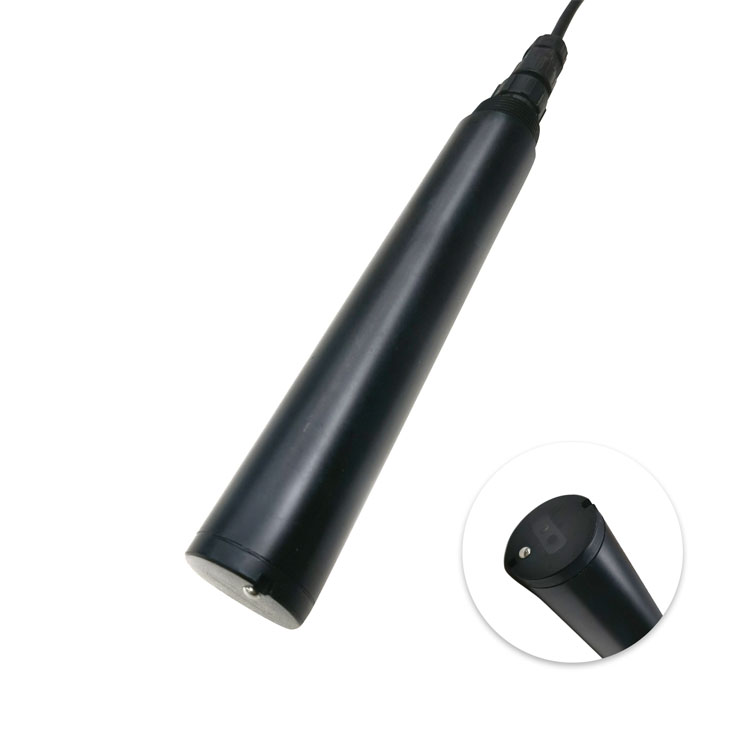 Online Turbidity Sensor RS485 Modbus | NBL-WQ-TS
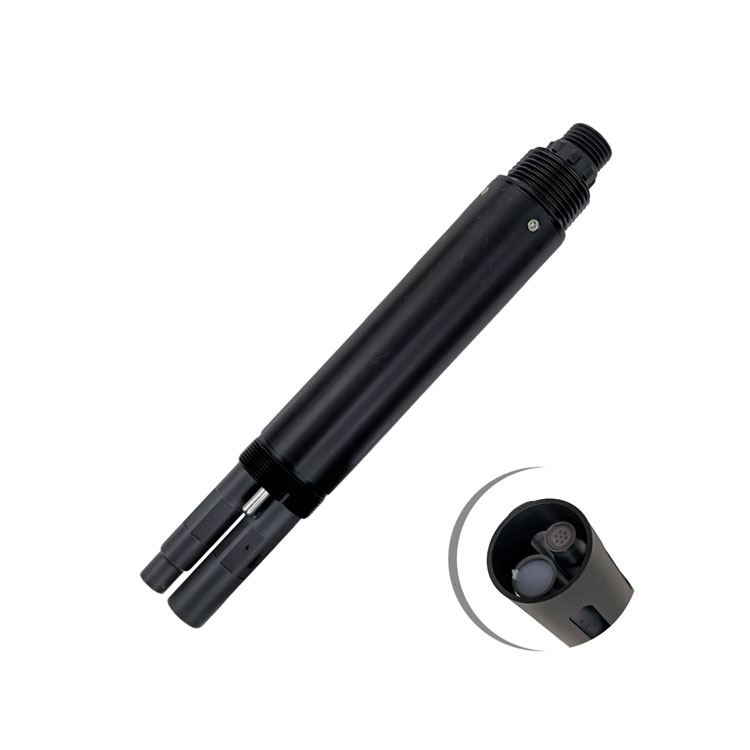 Online Ammonia Nitrogen Sensor (Ammonium ISE) | NBL-WQ-NHN
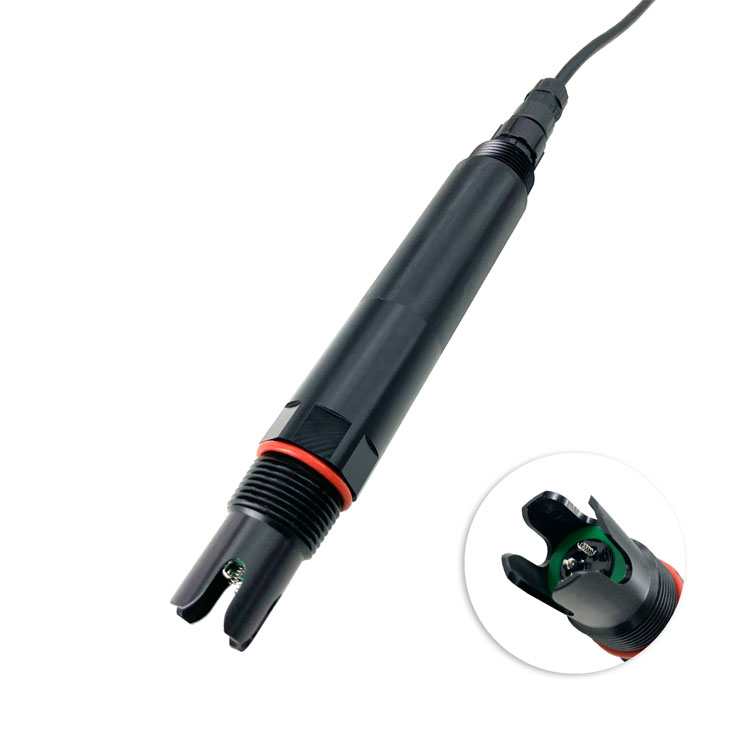 Online Residual Chlorine Sensor (HOCl) RS485 | Water Quality Sensor| NBL-WQ-CL
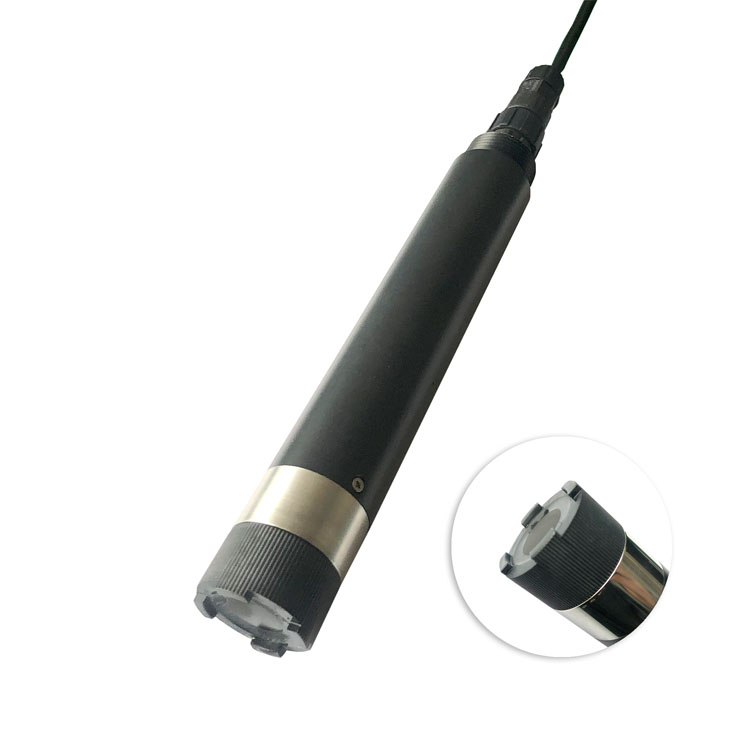 NBL-WQ-DO Online Fluorescence Dissolved Oxygen Sensor
 NBL-WQ-COD Online COD Water Quality Sensor
 Water Conductivity EC Sensor RS485 Modbus IP68 | NBL-WQ-EC


Screenshot, WhatsApp to identify the QR code
WhatsApp number:+8615367865107
(Click on WhatsApp to copy and add friends)

