





— Blogs —
—Products—
 Consumer hotline +8618073152920
 WhatsApp:+8615367865107
Address:Room 102, District D, Houhu Industrial Park, Yuelu District, Changsha City, Hunan Province, China
Product knowledge
Time:2023-10-17 14:49:12 Popularity:4319
Data accuracy: The accuracy of meteorological data is the core issue of weather stations. Although modern weather stations have adopted various advanced technologies and equipments, there are still some errors and uncertainties in weather data due to the complexity and unpredictability of weather conditions.
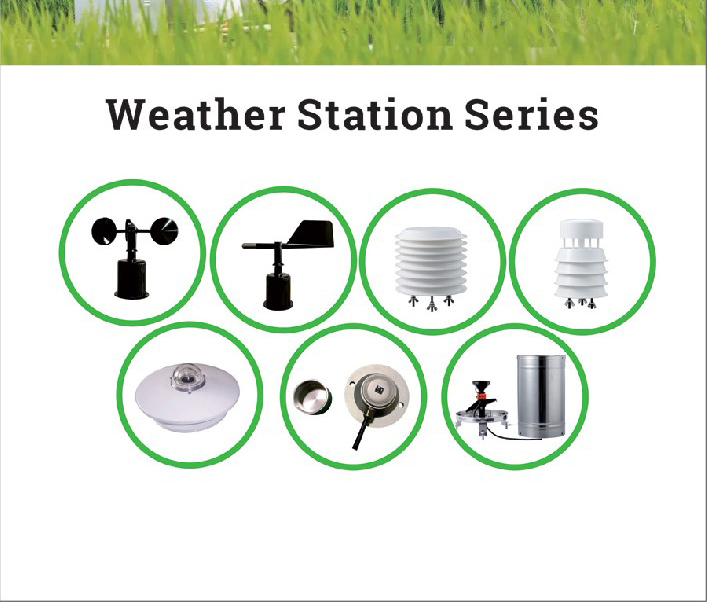
Equipment maintenance and upgrading: The equipment of meteorological stations requires regular maintenance and upgrading to ensure their normal operation and the accuracy of data collection. However, due to the wide distribution of weather stations and the large number of equipments, the cost of maintenance and upgrading is high, which is also a pain point faced by weather stations.
Data transmission and storage: Meteorological data need to be transmitted to data centres in real time for processing and storage, but data transmission and storage also face some challenges. For example, data may be lost or incorrect during transmission, and storage devices may be faulty or damaged.
Real-time monitoring and early warning: The real-time monitoring and early warning functions of weather stations are also one of their important pain points. Although modern weather stations have been equipped with more advanced forecasting technologies, real-time monitoring and early warning still have certain difficulties and challenges due to the complexity and variability of meteorological conditions.
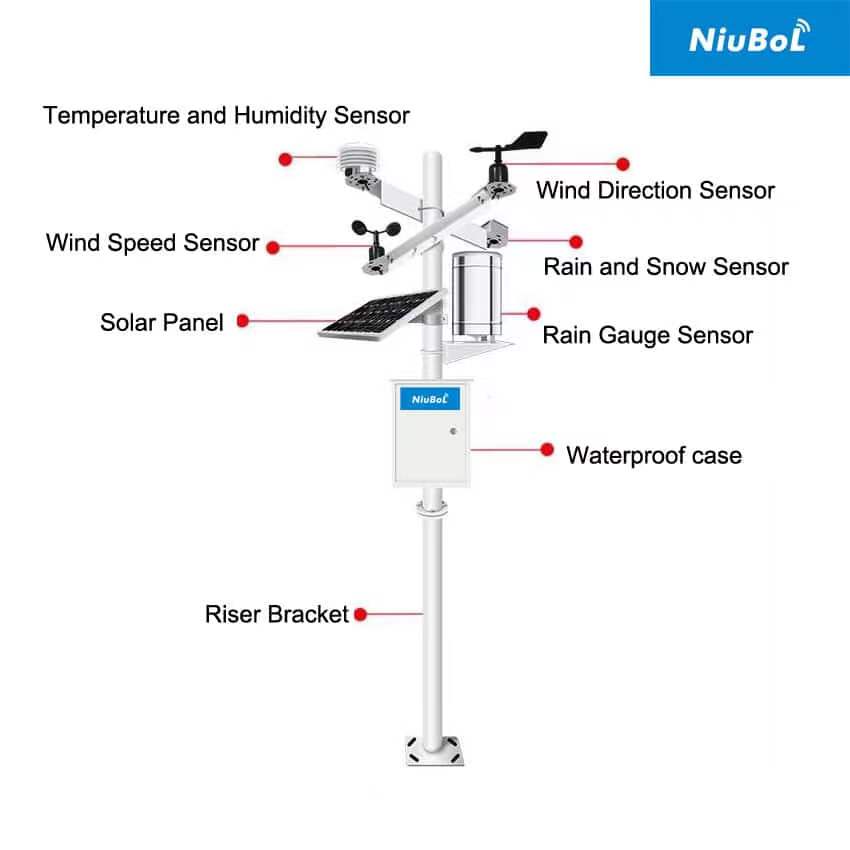
In summary, the pain points of meteorological stations mainly include the problems of data accuracy, equipment maintenance and upgrading, data transmission and storage, as well as real-time monitoring and early warning. In response to these problems, meteorological departments are actively researching and introducing advanced technologies to improve the accuracy of meteorological observations and forecasts, strengthening the management of equipment maintenance and upgrading, optimising the data transmission and storage mechanism, as well as strengthening the building of capacity for real-time monitoring and early warning, among other things, in order to make improvements and refinements.
The following measures can be taken to solve the problems of meteorological stations:
Improve data accuracy: More precise meteorological observation instruments and technologies can be adopted to improve the accuracy and resolution of data collection. At the same time, the stability of data transmission and processing can be strengthened to reduce errors and uncertainties.
Optimising equipment maintenance and upgrading: some measures can be taken, such as regular equipment inspection and maintenance, timely detection and problem solving to avoid equipment failure or damage. Meanwhile, for the upgrading of equipment, smarter and more efficient technologies and equipment can be adopted to improve the performance and efficiency of the equipment.
Enhance data transmission and storage: more reliable and efficient data transmission and storage technologies can be adopted, such as the use of high-speed data transmission protocols or fibre-optic transmission technology, etc., to improve the stability and efficiency of data transmission. Meanwhile, for data storage, distributed storage system or cloud storage technology, etc. can be adopted to improve the security and reliability of data storage.
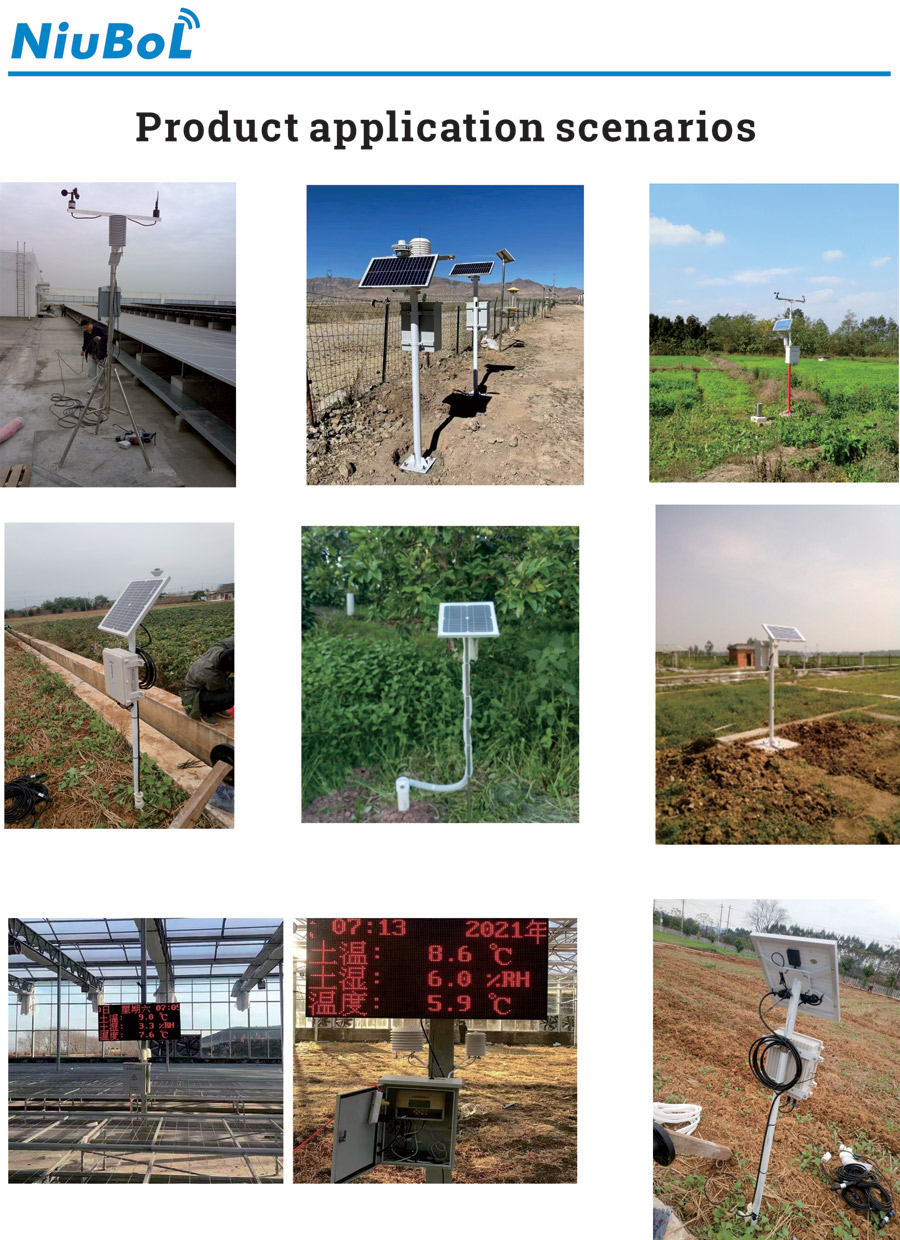
Strengthening real-time monitoring and early warning: some measures can be taken, such as strengthening real-time data monitoring and analysis, timely detection and problem solving to avoid data anomalies or loss. Meanwhile, smarter and more efficient technologies and equipment, such as artificial intelligence and big data analysis, can be adopted to improve the accuracy and timeliness of early warning.
In addition, other pain points that exist in weather stations, such as the accuracy and timeliness of weather forecasts and the monitoring and early warning of meteorological disasters, can also be solved by adopting appropriate technical and management measures. For example, the research and application of meteorological forecasting models should be strengthened to improve the accuracy and timeliness of forecasts; and a meteorological disaster monitoring and early warning system should be established to detect and solve meteorological disaster problems in a timely manner.
 Weather-Stations-Catalog-NiuBoL-2024.pdf
Related recommendations
Sensors & Weather Stations Catalog
 Agriculture Sensors and Weather Stations Catalog-NiuBoL.pdf
Weather Stations Catalog-NiuBoL.pdf
Agriculture Sensors Catalog-NiuBoL.pdf
Water Quality Sensor Catalog-NiuBoL.pdf
Related products
 Combined air temperature and relative humidity sensor
 TDR Soil Moisture & Temperature Sensor for irrigation| RS485 |4-20mA| NBL-S-THR
 Soil pH sensor RS485 soil Testing instrument soil ph meter for agriculture |NBL-S-PH
 Wind Speed sensor Output Modbus/RS485/Analog/0-5V/4-20mA
 Tipping bucket rain gauge for weather monitoring auto rainfall sensor RS485/Outdoor/stainless steel
 Pyranometer Solar Radiation Sensor 4-20mA/RS485

Screenshot, WhatsApp to identify the QR code
WhatsApp number:+8615367865107
(Click on WhatsApp to copy and add friends)

