





— Blogs —
—Products—
 Consumer hotline +8618073152920
WhatsApp:+8615367865107
Address:Room 102, District D, Houhu Industrial Park, Yuelu District, Changsha City, Hunan Province, China
Product knowledge
Time:2025-09-27 16:46:00 Popularity:1020
Environmental sensors for mining should be selected for a defined monitoring task, such as tracking perimeter dust, recording site weather or observing process-water conditions. These measurements can guide inspections and operational reviews. Ordinary environmental sensors are not substitutes for certified gas-safety instruments, personal exposure assessment, geotechnical monitoring or an approved emergency system.
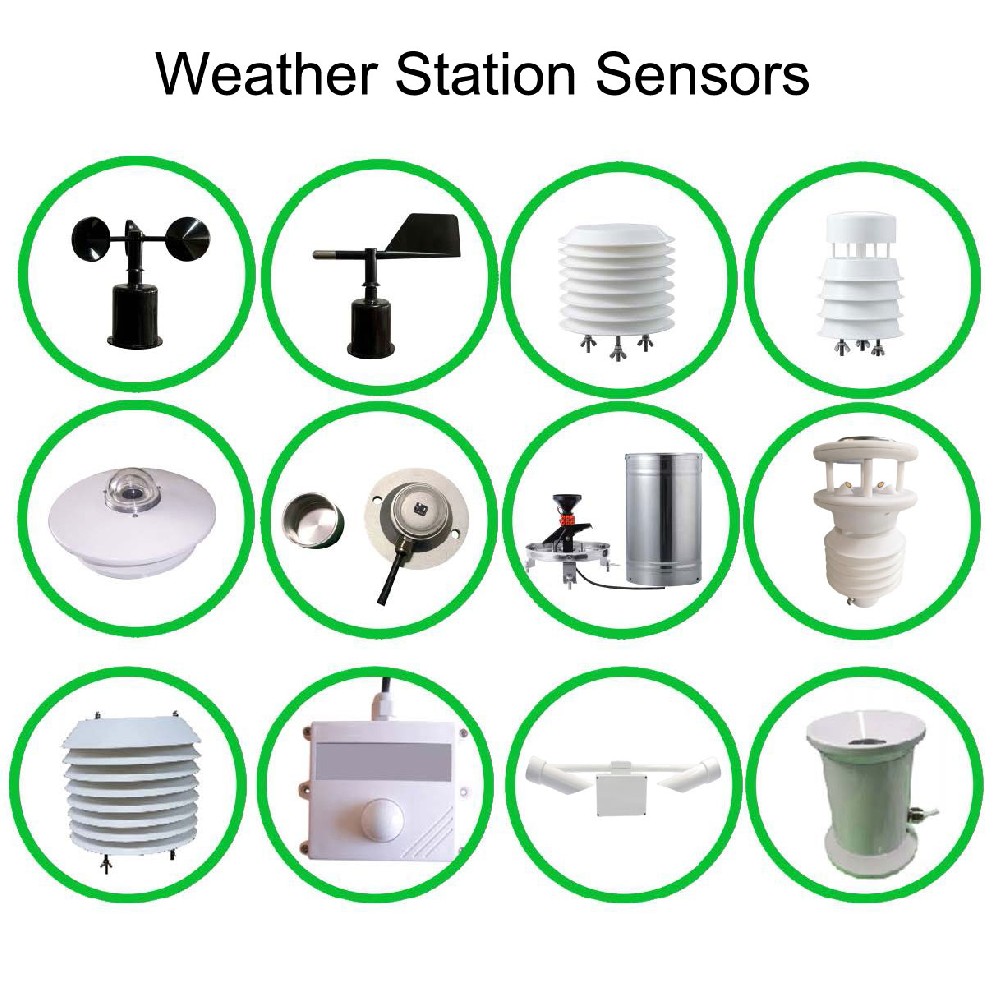
A mine may need several monitoring systems with different responsibilities. A weather station outside a process building describes local atmospheric conditions. A fixed particle sensor describes particles at its inlet. Neither establishes conditions throughout an underground working area or the exposure of a worker moving between tasks.
Define the installation area and intended decision before choosing equipment. If the task involves a potentially explosive atmosphere or a safety-critical alarm, obtain a separately assessed system with the required suitability evidence. IP65 or IP68 describes ingress protection; it does not establish explosion protection, intrinsic safety or a functional-safety capability.
| Monitoring task | Appropriate measurement layer | What it does not establish |
|---|---|---|
| Perimeter dust investigation | Suitable particle observations with local wind and activity records | Personal respirable exposure, silica content or proof of a particular source |
| Site weather context | Wind, rainfall, temperature and humidity at documented exposures | Underground ventilation conditions or slope stability |
| Process or runoff water observation | Selected pH, conductivity, turbidity or level instruments | Metal concentrations, discharge permission or complete water chemistry |
| Tailings or pit-wall stability | A separately engineered geotechnical monitoring system | Safety cannot be inferred from a general weather dashboard. |
For an investigation of dust near a haul road, crusher or boundary, record the inlet position, nearby obstructions and activity times. A monitor beside a source and one at the site perimeter serve different purposes. Place a wind instrument where its exposure is understood; a sheltered reading behind a building can mislead interpretation of a concentration increase.
The NiuBoL NBL-W-PM estimates PM2.5 and PM10 mass concentrations using laser scattering. It can support indicative fixed-location observations where the range and environmental limits suit the task. It does not identify mineral composition, and the response to a particular mine dust should be assessed rather than assumed from its response to another aerosol.
NIOSH's mining guidance distinguishes personal breathing-zone monitoring from other observations and explains that determining silica content traditionally involves filter analysis. An ambient PM2.5/PM10 record is therefore not a direct crystalline-silica result or an individual worker's exposure record. Keep the site's occupational-hygiene assessment separate.
Temperature and humidity provide context for particle observations and equipment exposure. Rainfall can help relate a runoff event to recent conditions, but a rain gauge does not measure runoff volume or sediment load. Wind direction can guide an investigation without proving which source produced the particles.
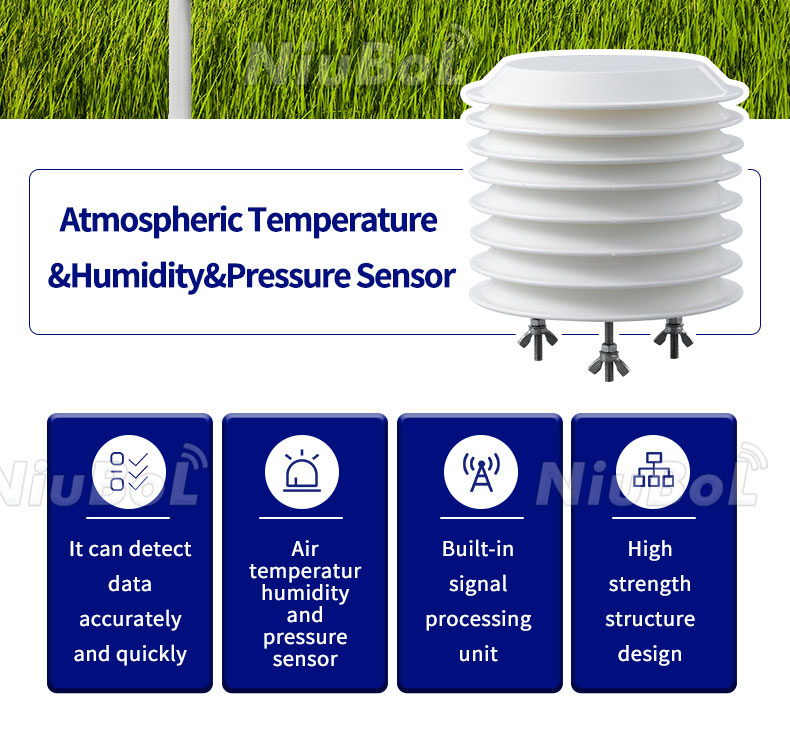
| NiuBoL component | Measurement and operating information | Mine-site implication |
|---|---|---|
| NBL-W-PM | PM2.5 0-1000 micrograms/m3; PM10 0-2000 micrograms/m3; RS485 Modbus RTU; DC 12-24 V | Check expected dust levels and local response. Neither channel measures silica composition. |
| NBL-W-PM exposure | -20 to 60 C; 0-99% RH, non-condensing; approximately 350 mW | Assess inlet contamination and condensation; include the complete station load in power design. |
| NBL-W-LBTH | Air temperature -40 to 80 C, +/-0.5 C; humidity 0-100% RH, +/-5% RH; pressure 10-1200 hPa, +/-1.5 hPa | Maintain shield airflow and avoid heat sources that bias the observation. |
| NBL-PH-1 logger | Local FLASH records; configured 4G connection; RS485/RS232; saving interval 1-240 minutes | Confirm receiving-system integration and data retrieval; not an emergency controller. |
For a treatment plant, a pH change may justify an operator check, while turbidity can indicate a change in optical scattering. Conductivity can reveal changes in the combined ionic response. None of these alone measures a particular dissolved metal. Select a suitable analytical method when the project needs metal concentrations, and keep sample location and preparation with the result.
Water sensors also need access for cleaning and checks. Describe the actual liquid, abrasive solids, chemical exposure, temperature and mounting before selecting probe materials. If an instrument will influence dosing, the process designer must define its control logic, permitted range and response to invalid data. Dosing settings require the actual water chemistry and process design.
Run the proposed equipment through representative operating conditions before ordering a network. Inspect particle inlets after dusty operations, compare readings with an appropriate method and record cleaning time. For water channels, compare observations before and after cleaning and suitable checks. This distinguishes a useful signal from a maintenance problem that would multiply across more sites.
Evaluate costs against a specific workflow. If the aim is to reduce unnecessary water-cart trips, record trips, water use and the site decision process before and during the pilot. Changes in weather or traffic can affect the comparison. Do not promise a return on investment, reduced downtime or compliance simply because the system delivers a continuous graph.
RS485 Modbus RTU can connect compatible sensor versions to a PLC, RTU or data logger. Verify serial settings, register type, units and scaling for each model. For a remote connection, define the logger's delivery format and the receiver. A local Modbus interface does not automatically provide wireless mesh, a cloud API or compatibility with every SCADA installation.
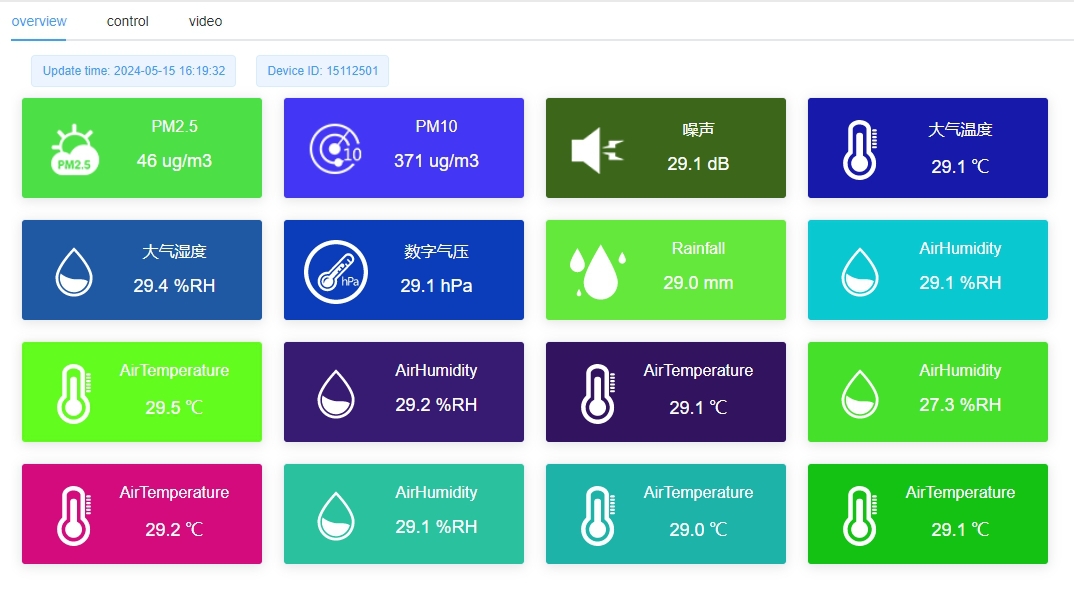
At acceptance, verify a reading from sensor to final display and deliberately test a lost connection. The operator should be able to distinguish stale, invalid and current measurements. The platform image below illustrates a display arrangement; it is not evidence that the proposed package includes every displayed channel or a particular mine's installed system.
Not directly. PM10 is a particle-size-related mass-concentration output, not a chemical identification of silica or a personal respirable-dust assessment. Use an appropriate sampling and analytical method for the required occupational-hygiene result.
Do not assume suitability. The selected models and complete installation require an area-specific assessment and the relevant evidence. An ingress-protection rating or ordinary RS485 communication does not establish explosion protection or suitability for a safety alarm.
They can provide selected observations, but do not establish every required parameter or sampling condition. The responsible project team must specify the applicable analytical and assessment requirements. Neither measurement identifies dissolved metal concentrations.
Only if the purpose is to observe that location and the conditions suit the instrument. A boundary investigation needs a different siting assessment. Keep source-area, boundary and personal measurements separate rather than treating one monitor as representative of the entire mine.
Provide the monitoring purpose, site layout, installation-area classification, expected ranges, dust or liquid characteristics, power and communications, and receiving-system details. Identify any required certifications or safety functions explicitly so ordinary environmental equipment is not quoted as a substitute.
Track usable data, comparison results, cleaning and inspection effort, and the actual decisions supported. Compare operating costs against a documented baseline under relevant conditions. Extend where the observations resolve a defined problem, not merely because a dashboard is available.
Environmental sensors for mining can support dust investigations, weather records and selected water-monitoring tasks when their limits are understood. NiuBoL can help match the measurement and data-collection configuration. Keep occupational exposure, hazardous-area suitability, geotechnical protection and emergency functions within separately qualified systems.
Prev:Soiling Monitoring for Middle East Solar Plants: When to Clean
Next:Soil Testing Kits for Universities: Field Screening and Research Methods
Related recommendations
Sensors & Weather Stations Catalog
 Agriculture Sensors and Weather Stations Catalog-NiuBoL.pdf
Weather Stations Catalog-NiuBoL.pdf
Agriculture Sensors Catalog-NiuBoL.pdf
Water Quality Sensor Catalog-NiuBoL.pdf
Related products
 Combined air temperature and relative humidity sensor
 TDR Soil Moisture & Temperature Sensor for irrigation| RS485 |4-20mA| NBL-S-THR
 Soil pH sensor RS485 soil Testing instrument soil ph meter for agriculture |NBL-S-PH
 Wind Speed sensor Output Modbus/RS485/Analog/0-5V/4-20mA
 Tipping bucket rain gauge for weather monitoring auto rainfall sensor RS485/Outdoor/stainless steel
 Pyranometer Solar Radiation Sensor 4-20mA/RS485


Screenshot, WhatsApp to identify the QR code
WhatsApp number:+8615367865107
(Click on WhatsApp to copy and add friends)

