





— Blogs —
—Products—
 Consumer hotline +8618073152920
 WhatsApp:+8615367865107
Address:Room 102, District D, Houhu Industrial Park, Yuelu District, Changsha City, Hunan Province, China
Product knowledge
Time:2026-02-18 10:25:50 Popularity:583
In agriculture, environmental protection, industrial services, and infrastructure projects, the automatic weather station serves as the core data acquisition node, providing real-time monitoring of seven elements (temperature, humidity, barometric pressure, wind speed, wind direction, rainfall, total radiation). It supports Modbus RTU protocol and cloud integration, enabling system integrators, IoT solution providers, and engineering contractors to build a reliable environmental perception layer.
The NiuBoL seven-element automatic weather station is built around industrial-grade design, low-power architecture, and flexible communication methods. It is suitable for grid-based forecasting, disaster early warning, and industry-specific monitoring projects. This article details its technical composition, integration compatibility, selection guide, typical application cases, and precautions to help project decision-makers optimize solution design and implementation.
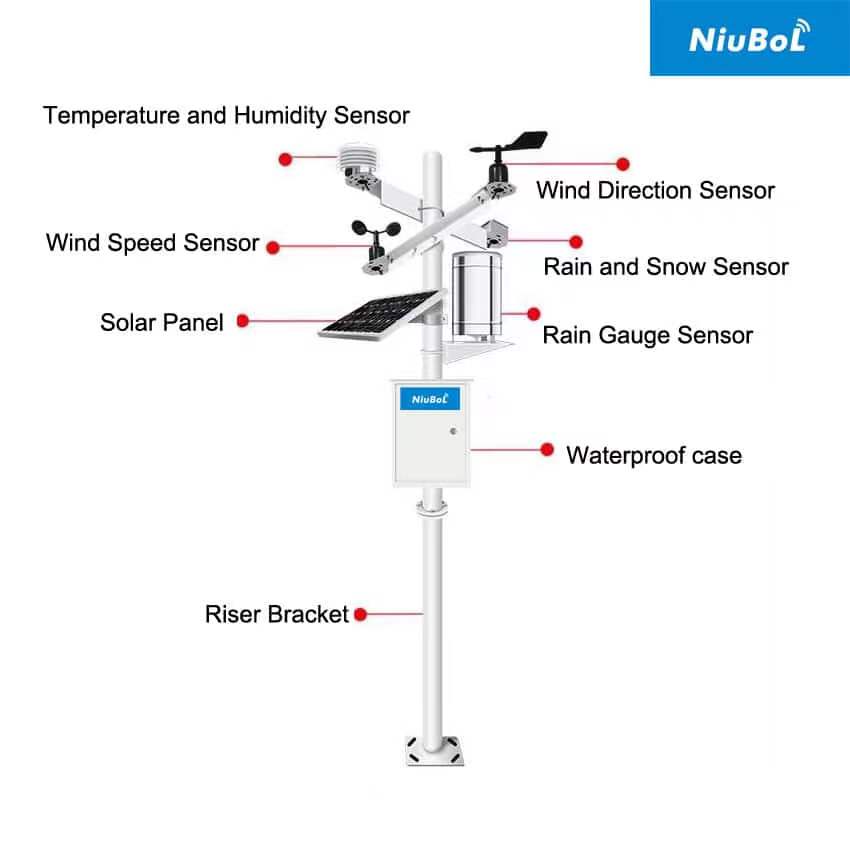
The NiuBoL seven-element automatic weather station adopts a modular and integrated design, combining sensor array, data logger, communication module, and power supply system into one unit. It meets industry standard requirements and ensures long-term stable operation in complex outdoor environments. The core components include multi-element sensor integration, data acquisition unit, protective structure, and software platform, supporting expansion from single-station deployment to multi-station networking.
The data logger serves as the central hub, equipped with an LCD display, built-in clock, and memory (standard 20,000 records, expandable). It features RS485/RS232 interfaces for connection to host computers or third-party systems. Even in offline conditions, the logger can operate independently and display meteorological parameters in real time. The accompanying meteorological monitoring software runs on PC or cloud, providing real-time data visualization, historical query, statistical chart generation, and report printing functions to facilitate engineering data analysis and decision support.
The system's key selling points are its adaptability and reliability: fully automatic operation suitable for unattended field deployment, low power consumption (typical whole-system power<5W) combined with backup battery to ensure continuous operation; new anti-theft materials and structural optimization to enhance wind and lightning resistance; support for 4G/5G/WiFi wireless transmission for remote unified data processing.
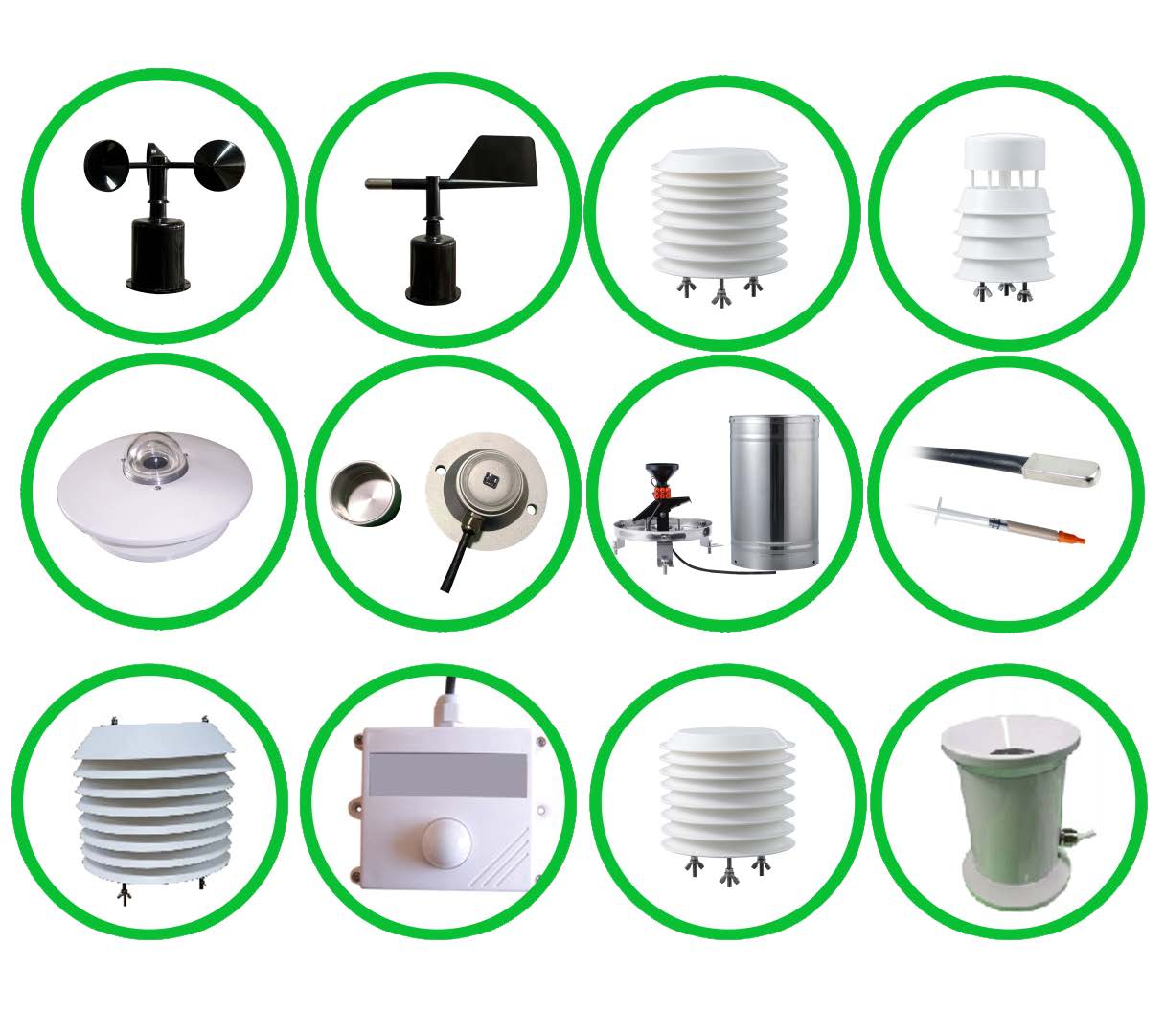
The NiuBoL seven-element automatic weather station integrates various industrial-grade sensors, each designed for specific meteorological elements to ensure measurement accuracy and stability. Below is a brief description of the core sensors' functions and their engineering value in projects:
Ambient Temperature Sensor: Uses PT100 or digital thermistor, range -40℃ to +80℃, accuracy ±0.2℃. Used to monitor crop heat/cold damage thresholds, supporting growth period prediction and greenhouse control linkage.
Ambient Humidity Sensor: Digital capacitive type, range 0-100%RH, accuracy ±2%RH. Combined with temperature data, assesses condensation risk and disease occurrence windows, suitable for irrigation scheduling.
Barometric Pressure Sensor: Digital silicon resonant type, range 10-1100hPa, accuracy ±0.5hPa. Provides pressure gradient analysis, supporting typhoon/storm warning and altitude correction.
Wind Speed Sensor: Three-cup or ultrasonic type, range 0-60m/s, accuracy ±(0.3+0.03V)m/s. Used for pesticide drift assessment and wind disaster protection planning.
Wind Direction Sensor: Wind vane or ultrasonic type, range 0-360°, accuracy ±3°. Combined with wind speed, analyzes pollutant diffusion paths and migratory pest trajectories.
Rainfall Sensor: Tipping bucket type, range 0-999.9mm, accuracy ±3%. Real-time monitoring of precipitation process, supporting flood warning and soil moisture correction.
Solar Radiation Sensor: Silicon photocell or thermopile, range 0-2000W/m², accuracy ±5%. Assesses photosynthetic productivity, supporting photovoltaic linkage and crop photoperiod management.
These sensors are integrated into a louvered box to avoid mutual interference and ensure data accuracy. In engineering projects, they form multi-parameter input sources, supporting edge computing threshold alarms to improve system response speed.
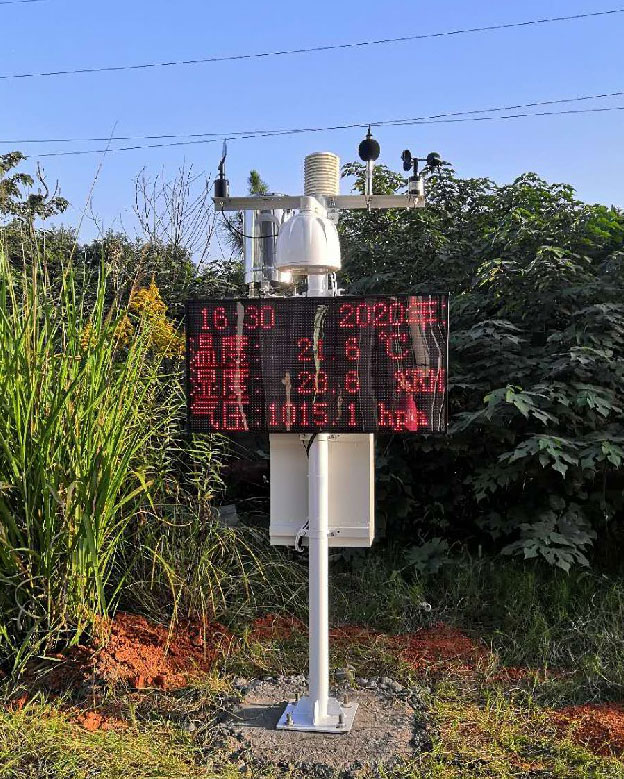
For easy project selection and integration evaluation, the following table summarizes the core technical parameters of the NiuBoL seven-element automatic weather station:
| Parameter Category | Specification/Value | Engineering Value Description |
|---|---|---|
| Power Supply System | AC220V / DC12V / Solar + Battery | Suitable for off-grid field scenarios, ≥7 days endurance under continuous cloudy/rainy conditions |
| Power Supply System | <5W (operating) / <1W (standby) | Low power design, reduces energy consumption and maintenance frequency |
| Communication & Transmission | RS485/RS232 (Modbus RTU) | Standard industrial protocol, easy integration with PLC or SCADA systems |
| Communication & Transmission | 4G/5G/WiFi / SD card / USB / RS485 | Multi-mode support for remote networking and local backup |
| Data Storage | ≥20,000 records, expandable | Offline caching ensures data integrity |
| Data Storage | 1min–1h configurable | Flexible adjustment to balance accuracy and power consumption |
| Protection Rating | IP65 | Dustproof and waterproof, suitable for long-term outdoor exposure |
| Mast Height | 2–10m optional (standard 3m) | Adapts to different terrains, optimizes wind and rain measurement |
| Operating Temperature Range | -40℃~+80℃ | Full climate adaptation, covers various environments north and south |
| Display & Software | LCD screen + PC/Cloud monitoring software | Real-time visualization, supports chart analysis and report export |
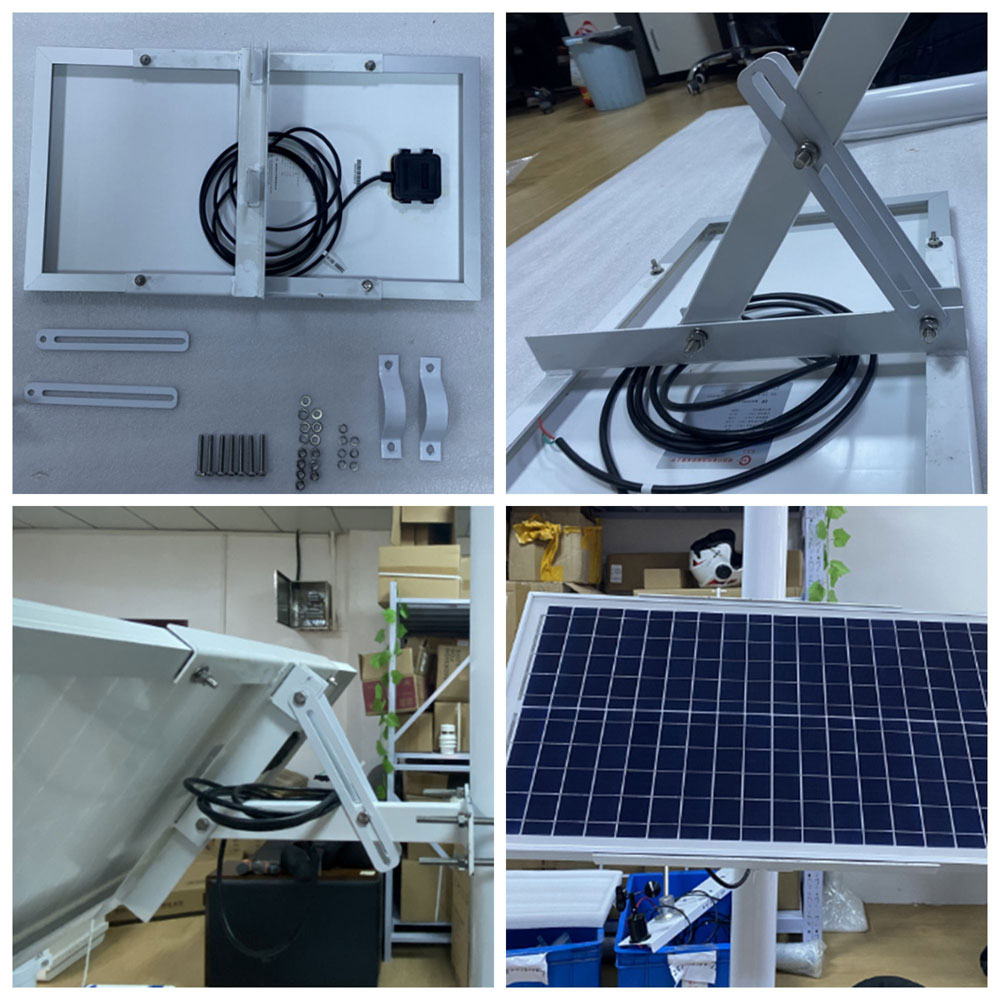
The NiuBoL seven-element automatic weather station is specifically designed for meteorological projects, emphasizing open architecture and seamless integration. The system reserves RS485/RS232 interfaces and supports Modbus RTU protocol, allowing direct connection to public clouds or custom cloud platforms for data uplink and command downlink. The edge gateway includes built-in API interfaces for easy linkage with GIS systems, drone inspections, or automatic irrigation controllers to form closed-loop control.
Compatibility highlights include:
Multi-power switching: AC220V primary, solar backup, dry battery emergency to ensure continuity of key monitoring nodes.
Networking expansion: single station independent or multi-station grid deployment, with centralized software for unified data aggregation, analysis, and visualization dashboard.
Anti-theft and protection: new material mast + integrated lightning rod, combined with wind-resistant guy wires, enhancing stability in coastal or high-wind areas.
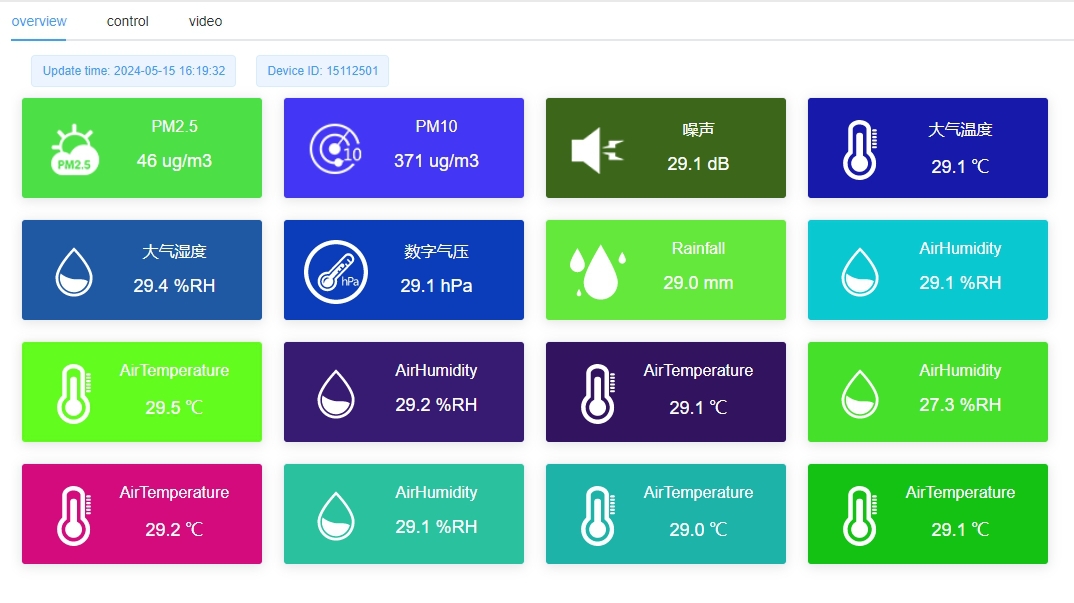
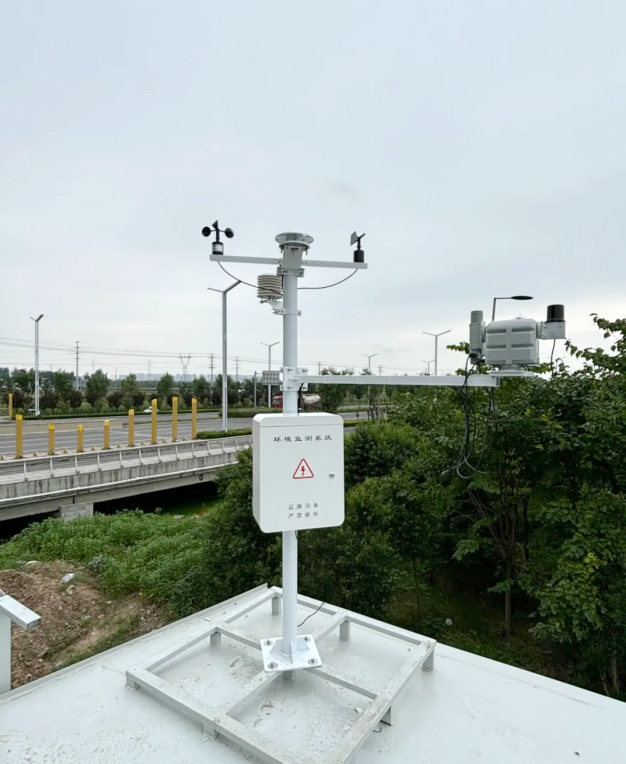
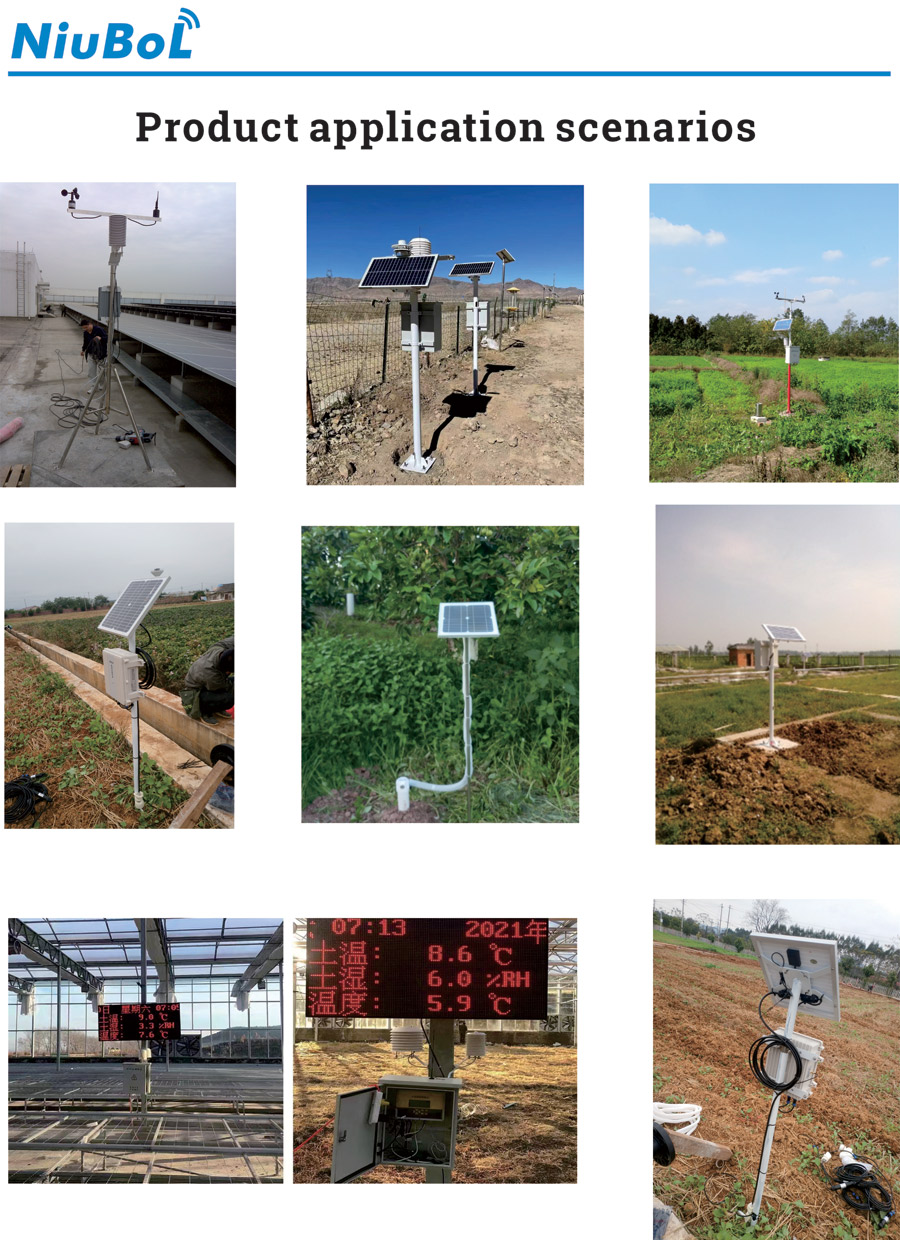
The NiuBoL system is widely used in meso-scale dense networks, grid forecasting services, refined weather forecast data sources, flash flood warning key monitoring, regional meteorological environment observation, industry service systems, campus meteorological systems, environmental meteorological monitoring, and general aviation airports.
Agricultural grid forecasting: In a central China rice base project, multi-station networking combined with wind speed/rainfall data and GIS overlay achieved 48-hour waterlogging warning, reducing crop losses by more than 15%.
Environmental and industrial monitoring: A coastal chemical park integrated the system via RS485 into SCADA for real-time monitoring of pressure/humidity changes, supporting pollutant diffusion simulation and emergency response.
Flash flood warning: In southwest mountainous areas, the solar-powered version linked with rainfall sensors provides hourly data uplink, assisting local governments in flood path prediction.
Campus and general aviation: In university meteorological education projects, 3m mast + LCD display facilitates teaching; airport applications extend wind direction/speed accuracy for runway safety assessment.
Refined forecast data source: In northern orchard cases, total radiation and temperature data optimize irrigation scheduling and improve fruit quality.
In these scenarios, the system serves as a data foundation, supporting full-process optimization from perception to decision-making.
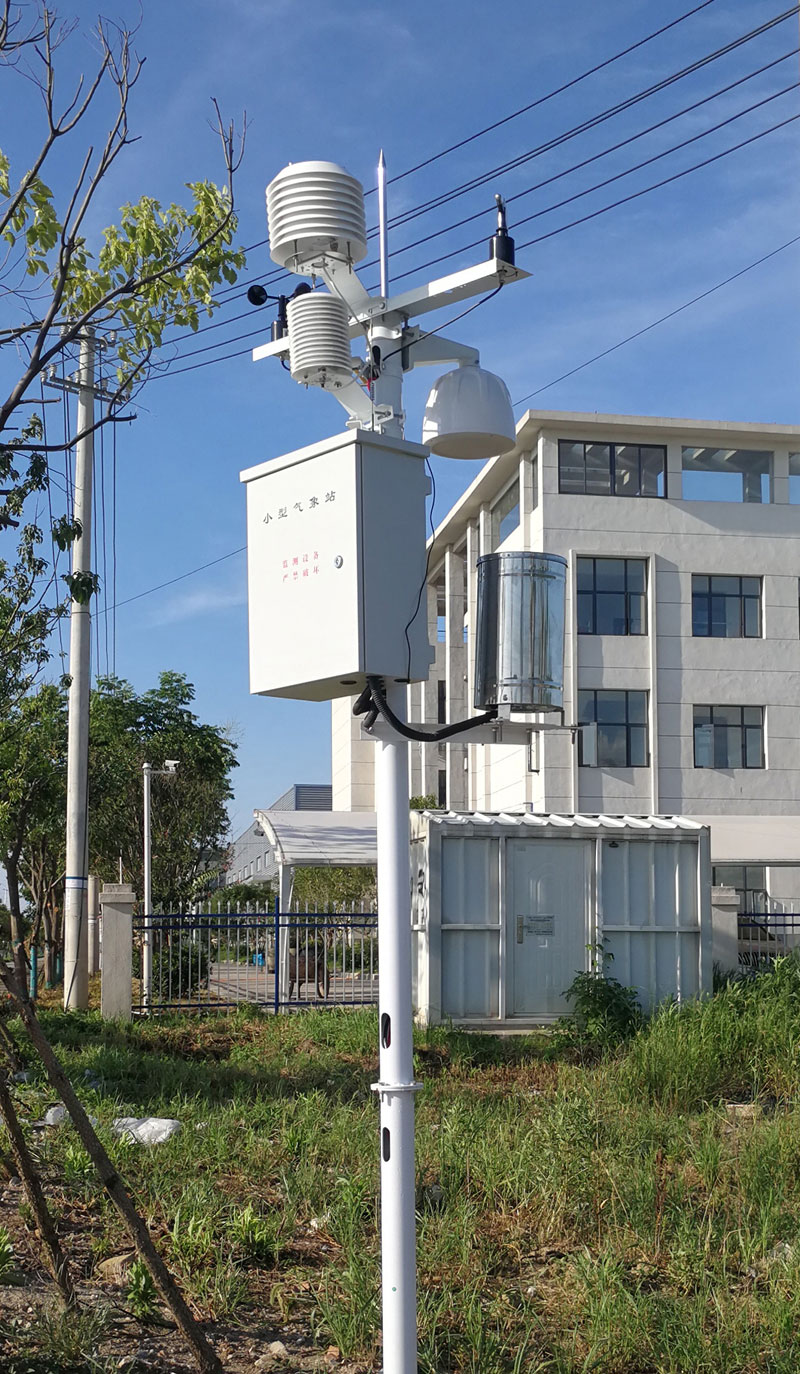
When selecting, evaluate project scale, environmental conditions, and integration requirements:
Scale orientation: For small-scale (e.g., campus) choose standard 3m mast + AC220V power; for large-scale grid (e.g., regional warning) prioritize solar + 4G transmission.
Element expansion: Beyond basic seven elements, UV or soil sensors can be added based on budget and needs.
Communication selection: Remote areas choose 4G/5G; industrial integration prefers RS485 Modbus.
Budget consideration: Standard system covers 80% of scenarios; extended storage or software customization added as needed.
Integration precautions for automatic weather station:
Installation foundation: Pour cement base on ground + expansion bolts for fixation; add wind-resistant guy wires and lightning rod on rooftops.
Electrical safety: Use PVC conduit for wiring protection, install air switch to prevent leakage.
Test verification: After deployment, calibrate sensor accuracy, simulate offline/extreme weather to test continuity.
Maintenance planning: Annual battery and mast inspection, quarterly sensor cleaning to avoid data drift.
| Question | Answer |
|---|---|
| Q1. What communication protocols does the system support for integration? | Supports Modbus RTU via RS485/RS232, convenient for connecting to industrial PLC or cloud platforms. |
| Q2. What is the endurance capability of solar power under continuous cloudy and rainy conditions? | Uses DC12V battery pack, typically ≥7 days, supports low-power mode by adjusting sampling interval. |
| Q3. How to ensure data transmission security and reliability? | 4G/5G transmission encryption, built-in SD card/USB backup, automatic retransmission after network recovery. |
| Q4. What are the project acceptance criteria? | Accuracy test report, continuous operation log, communication compatibility verification, software function demonstration, and maintenance manual. |
| Q5. What protective measures are suitable for high-wind or coastal projects? | IP65 protection + wind-resistant guy wires + lightning rod design, mast wall thickness ≥2mm, ensures wind resistance up to level 12. |
| Q6. How to achieve unified data management for multi-station networking? | Data aggregation through central station software, generating visualization dashboard, supports API export and third-party GIS integration. |
| Q7. Can non-professional personnel perform installation? | Modular design with detailed manual; plug-and-play after basic fixation, but engineering team verification of electrical safety is recommended. |
With industrial-grade reliability and open integration architecture as its core, the NiuBoL seven-element automatic weather station provides efficient environmental monitoring infrastructure for system integrators, IoT solution providers, and engineering contractors. Through precise data acquisition, multi-scenario adaptation, and seamless compatibility, it helps projects shift from passive response to active prediction, driving the digital transformation of refined forecasting, disaster defense, and industry services. In the context of increasingly complex climate change, such solutions are not only technical tools but also strategic investments in ensuring the resilience of agriculture and infrastructure.
Related recommendations
Sensors & Weather Stations Catalog
 Agriculture Sensors and Weather Stations Catalog-NiuBoL.pdf
Weather Stations Catalog-NiuBoL.pdf
Agriculture Sensors Catalog-NiuBoL.pdf
Water Quality Sensor Catalog-NiuBoL.pdf
Related products
 Combined air temperature and relative humidity sensor
 TDR Soil Moisture & Temperature Sensor for irrigation| RS485 |4-20mA| NBL-S-THR
 Soil pH sensor RS485 soil Testing instrument soil ph meter for agriculture |NBL-S-PH
 Wind Speed sensor Output Modbus/RS485/Analog/0-5V/4-20mA
 Tipping bucket rain gauge for weather monitoring auto rainfall sensor RS485/Outdoor/stainless steel
 Pyranometer Solar Radiation Sensor 4-20mA/RS485

Screenshot, WhatsApp to identify the QR code
WhatsApp number:+8615367865107
(Click on WhatsApp to copy and add friends)

