





— Blogs —
—Products—
 Consumer hotline +8618073152920
 WhatsApp:+8615367865107
Address:Room 102, District D, Houhu Industrial Park, Yuelu District, Changsha City, Hunan Province, China
Technical Support
Time:2026-07-14 09:21:14 Popularity:402
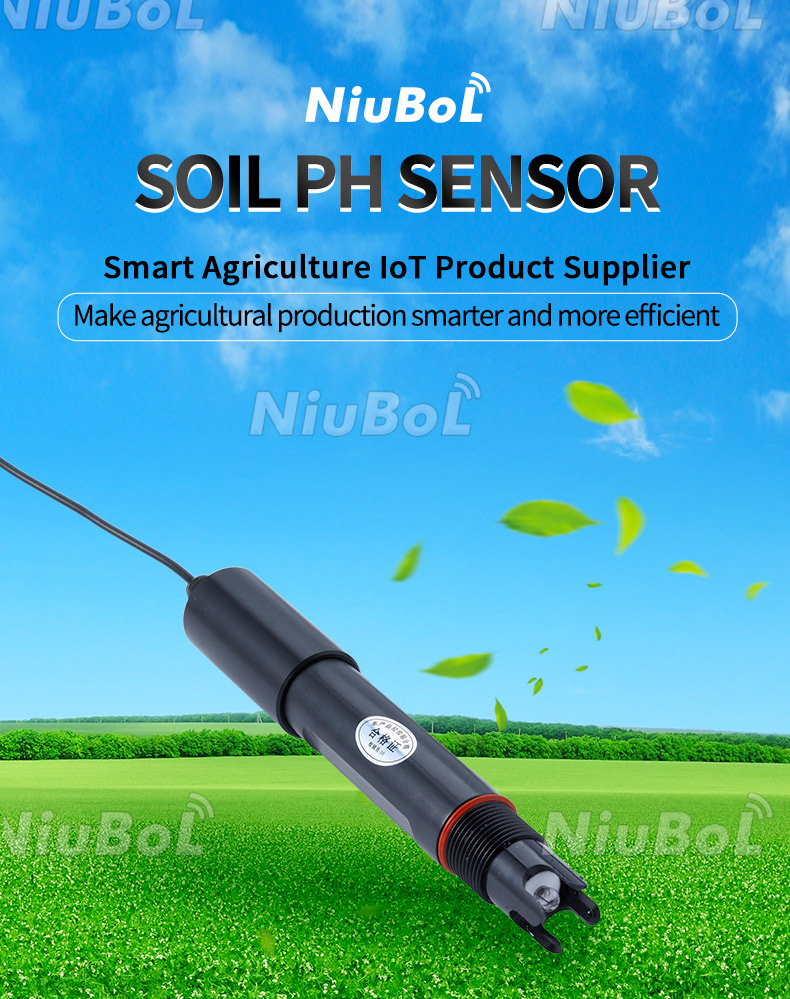
This guide explains how to install and use the NiuBoL NBL-S-PH soil pH sensor. The sensor is designed to solve common problems of traditional soil pH measurement, including special display requirements, complicated calibration, difficult integration, high power consumption, high cost and poor portability. It can be used in agricultural irrigation, horticulture, pasture management, soil rapid testing, plant cultivation and scientific experiments.
| Item | Specification |
|---|---|
| Measurement range | 0-14 pH |
| Accuracy | +/-0.1 pH |
| Resolution | 0.01 pH |
| Response time | <10 s in water |
| Power supply | DC 12-24V |
| Output options | 0-5V, 4-20mA, RS485 |
| Standard cable length | 5 m |
| Working temperature | 0-80 deg C |
| Working humidity | 0-95%RH |
| Power consumption | 0.2W |
| Housing material | Waterproof plastic shell |
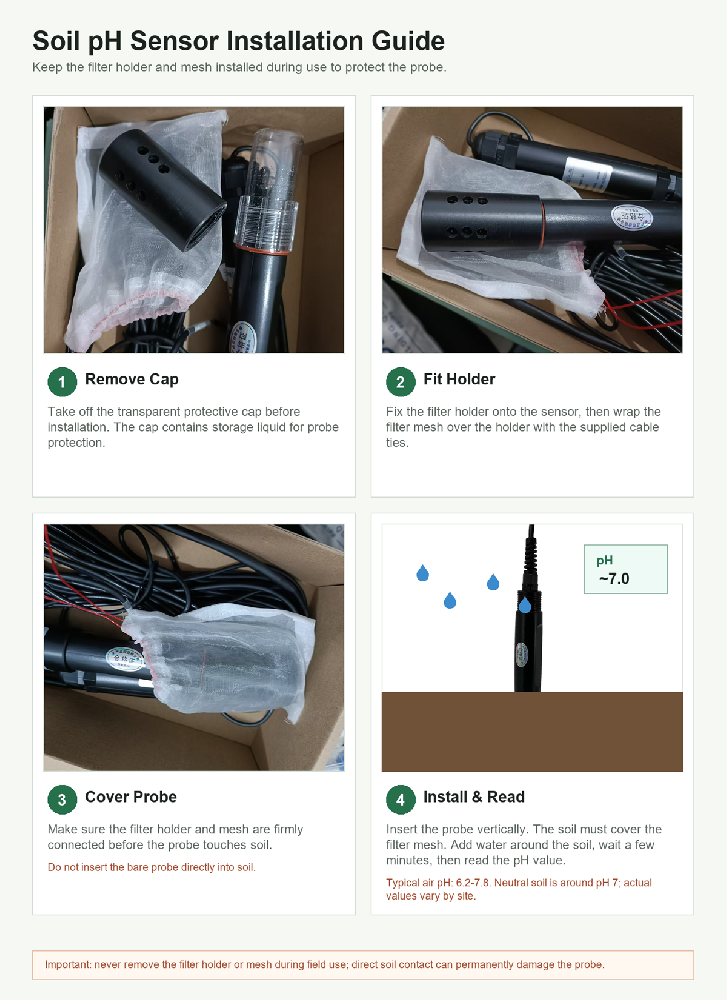
When the sensor leaves the factory, the probe is protected by a transparent protective cover with protective liquid inside. Do not insert the bare probe directly into soil immediately. First remove the protective cover, then fix the filter slot to the sensor and wrap the filter mesh around the filter slot with the supplied cable tie. The purpose is to prevent soil particles from directly contacting and damaging the probe.
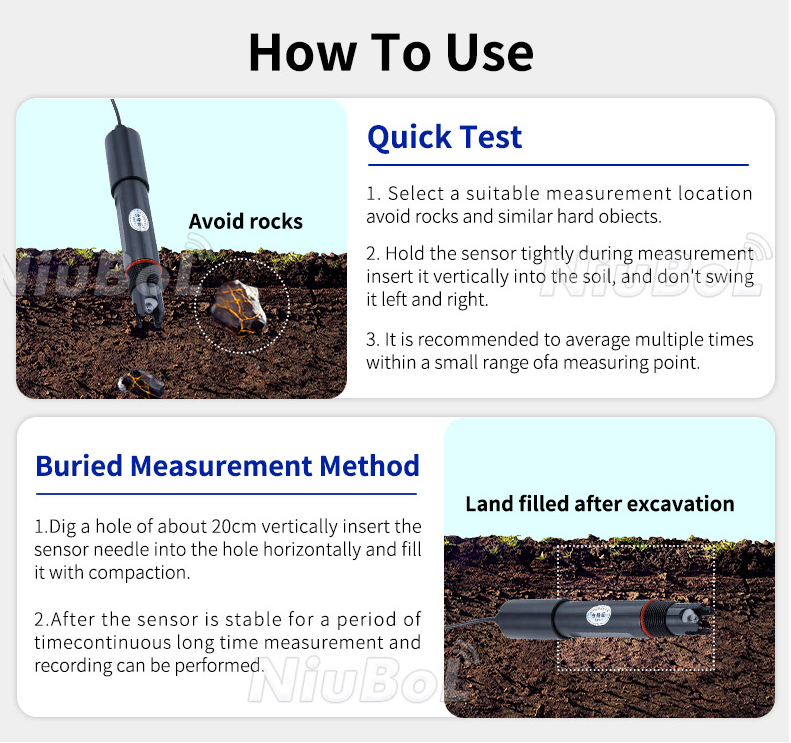
During actual use, make sure the filter slot and filter mesh are firmly connected. Do not remove them and do not push the probe directly into soil without protection. Direct soil contact can cause irreversible probe damage, especially in hard soil, gravelly soil or soil containing sharp particles.
| Step | Operation | Reason |
|---|---|---|
| 1 | Remove the transparent protective cover before use | The protective cover is only for storage and shipping protection |
| 2 | Install the filter slot and wrap the filter mesh securely | Prevents soil from directly damaging the probe |
| 3 | Insert the probe vertically into soil | Keeps the measurement area stable and repeatable |
| 4 | Insert deep enough to cover the filter mesh | Ensures the sensitive area contacts the wetted soil environment |
| 5 | Pour a suitable amount of water around the measured soil | Helps soil moisture reach the probe and supports pH measurement |
| 6 | Wait several minutes before reading data | Allows water to infiltrate and stabilize the measurement contact |
Under normal conditions, air reading may appear around pH 6.2 to 7.8. In neutral soil, the measured value is usually around pH 7, but actual soil pH varies by region, crop history, fertilizer use, irrigation water and soil composition. Buyers should evaluate readings according to local soil conditions rather than expecting every field to show the same value.
Users can use the supplied pH reagents to prepare standard solutions according to the configuration method. This is useful for checking whether the product performance is normal. If the sensor reading differs significantly from expected values, check the probe cleanliness, filter condition, wiring, power supply and calibration process before judging the sensor as faulty.
Do not wire the sensor while power is on. Complete the wiring first, check the connection carefully, and then power the device. Do not change factory-soldered components or wires. The sensor is a precision device, so users should not disassemble it or touch the sensing surface with sharp objects or corrosive liquids.
To obtain correct pH measurement in a pipe or measurement cell, avoid bubbles between measurement areas because bubbles can cause inaccurate readings. Check that the package is intact and confirm that the model matches the selected order before installation.
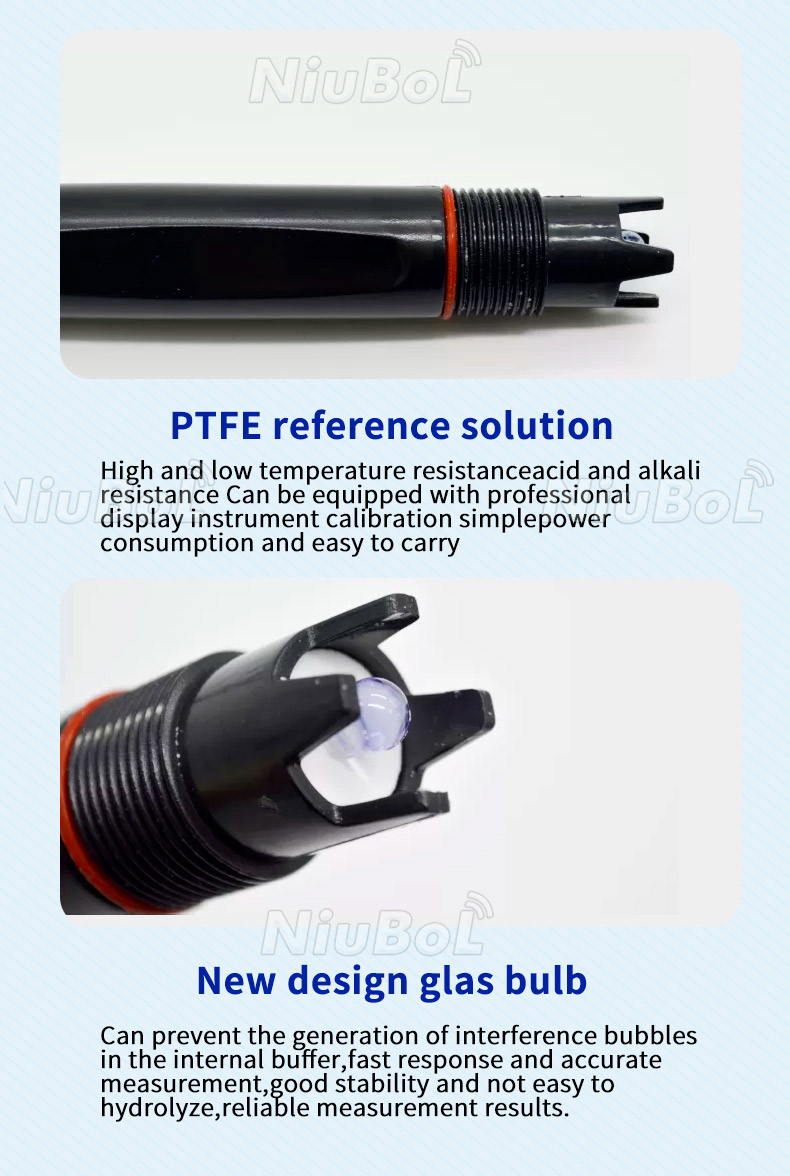
The probe should be cleaned once a week under normal use. The input end of the instrument, including the measurement electrode socket, must remain dry and clean to prevent dust and moisture from entering. Avoid long-term immersion of the electrode in protein solutions or acidic fluoride solutions, and avoid contact with silicone oil.
After long-term use, if the electrode slope decreases slightly, maintenance may be required according to professional procedures. The source instruction mentions short immersion in 4% HF solution followed by distilled-water cleaning and 0.1 mol/L hydrochloric acid soaking. Because hydrofluoric acid is dangerous, this step should only be handled by trained personnel with appropriate safety protection. For normal field users, routine cleaning, calibration and correct storage are the safer maintenance actions.
The transmitter should be installed in a dry environment or control box. Avoid water splash or moisture exposure that may cause leakage, signal drift or measurement error.
| Problem | Likely Cause | Corrective Check |
|---|---|---|
| Reading changes slowly | Soil moisture has not reached the probe or filter area | Add suitable water and wait several minutes before reading |
| Reading is unstable | Loose filter mesh, bubbles, poor wiring or wet transmitter | Check filter, measurement area, wiring and control box sealing |
| Reading is far from expected value | Dirty probe, calibration issue or wrong installation method | Clean the probe, test with standard reagent and verify installation depth |
| No output signal | Power or wiring problem | Check DC supply, output type, terminals and data logger setting |
| Probe damage | Bare probe inserted directly into soil or contacted by sharp particles | Use filter slot and mesh; do not install without protection |
If the sensor is used in a monitoring system, record installation date, output type, cable route, calibration check and cleaning schedule. These records make later troubleshooting much faster, especially when several pH sensors are installed in irrigation or greenhouse projects.
A: No. The filter slot and filter mesh should be installed before soil measurement. Direct insertion of the bare probe into soil can damage the probe and may cause irreversible failure.
A: Soil pH measurement needs stable contact between the probe and the soil solution environment. Adding water helps moisture reach the probe and improves measurement stability.
A: Clean the probe once a week under normal use. In dirty, sticky or chemically complex soil, shorten the cleaning interval and check the filter mesh more often.
A: The NBL-S-PH supports 0-5V voltage output, 4-20mA current output and RS485 output. Buyers should choose the output according to the data logger, controller or monitoring platform.
A: Check probe cleanliness, filter installation, soil moisture, bubbles in the measurement area, wiring, power supply, calibration status and whether the transmitter is protected from moisture.
A: Yes, when installed correctly with probe protection, stable power and proper maintenance. It is suitable for irrigation, horticulture, pasture, soil rapid testing and plant cultivation projects.
A: The transmitter should be installed in a dry control box or protected environment. Water splash, condensation and dust can cause leakage, drift or communication problems.
A: Check the sensor when readings drift, after long-term use, after cleaning, or before important monitoring periods. Standard pH reagents can be used to confirm whether the sensor response is normal.
A: Protect the probe. The filter slot and filter mesh are not optional accessories; they prevent direct soil damage and help keep the measurement area stable.
Correct installation is the main factor that protects the NBL-S-PH soil pH sensor and improves measurement reliability. Install the filter structure, avoid direct soil damage, wait for moisture to reach the probe, wire only after power is off, clean the probe regularly and keep the transmitter dry. If buyers need RS485, 4-20mA or 0-5V output for a monitoring system, NiuBoL can help match the sensor configuration to the project.
Prev:NiuBoL Automatic Weather Station Standardized Installation Full Process Guide
Next:How to Connect RS485 Sensors to PLCs, RTUs, Arduino and ESP32
Related recommendations
Sensors & Weather Stations Catalog
 Agriculture Sensors and Weather Stations Catalog-NiuBoL.pdf
Weather Stations Catalog-NiuBoL.pdf
Agriculture Sensors Catalog-NiuBoL.pdf
Water Quality Sensor Catalog-NiuBoL.pdf
Related products
 Combined air temperature and relative humidity sensor
 TDR Soil Moisture & Temperature Sensor for irrigation| RS485 |4-20mA| NBL-S-THR
 Soil pH sensor RS485 soil Testing instrument soil ph meter for agriculture |NBL-S-PH
 Wind Speed sensor Output Modbus/RS485/Analog/0-5V/4-20mA
 Tipping bucket rain gauge for weather monitoring auto rainfall sensor RS485/Outdoor/stainless steel
 Pyranometer Solar Radiation Sensor 4-20mA/RS485

Screenshot, WhatsApp to identify the QR code
WhatsApp number:+8615367865107
(Click on WhatsApp to copy and add friends)

