





— Products —
 Consumer hotline +8618073152920
 WhatsApp:+8615367865107
Address:Room 102, District D, Houhu Industrial Park, Yuelu District, Changsha City, Hunan Province, China
Agricultural Sensors
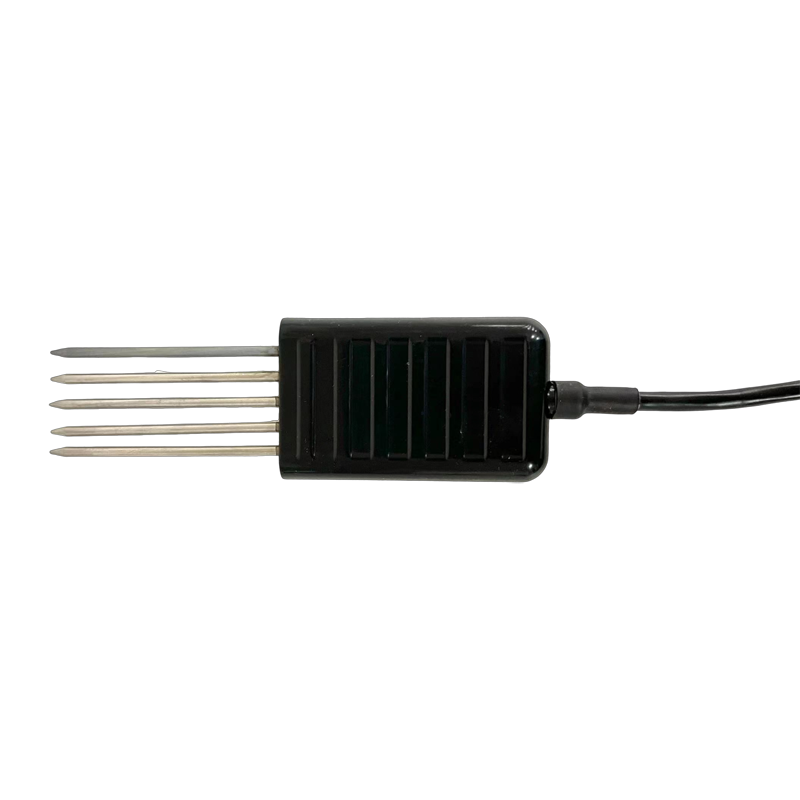
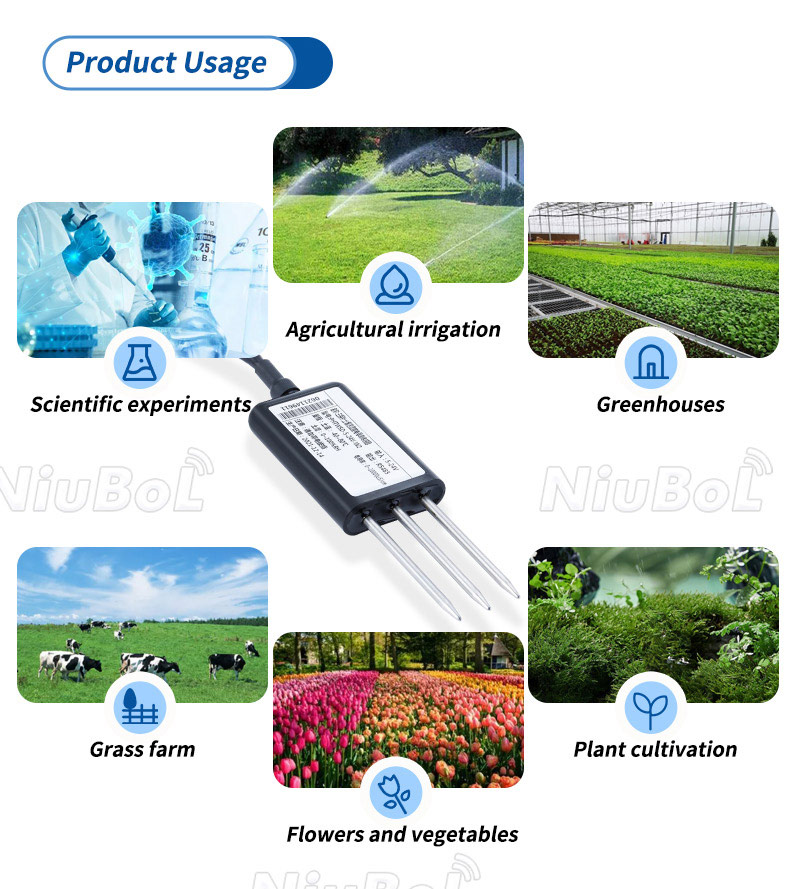
NBL-S-TMC-8 The 8-in-1 Integrated Soil Sensor is a multi-parameter sensor that combines temperature and humidity, conductivity, salinity, NPK and PH. By measuring the dielectric constant of soil, it can directly and stably reflect the real moisture content of various soils. It is suitable for soil moisture monitoring, scientific experiments, water-saving irrigation, greenhouses, flowers and vegetables, grass pastures, soil quick test, plant cultivation, sewage treatment, fine···
Tel/WhatsApp:+8615367865107
Email:Arvin@niubol.com +Nearly 100 partner companies in more than 75 countries. We are committed to providing high-quality, practical products to meet your needs and help you solve problems. Our products comply with international standards and are certified with ISO, CE and RoHS.Product Details
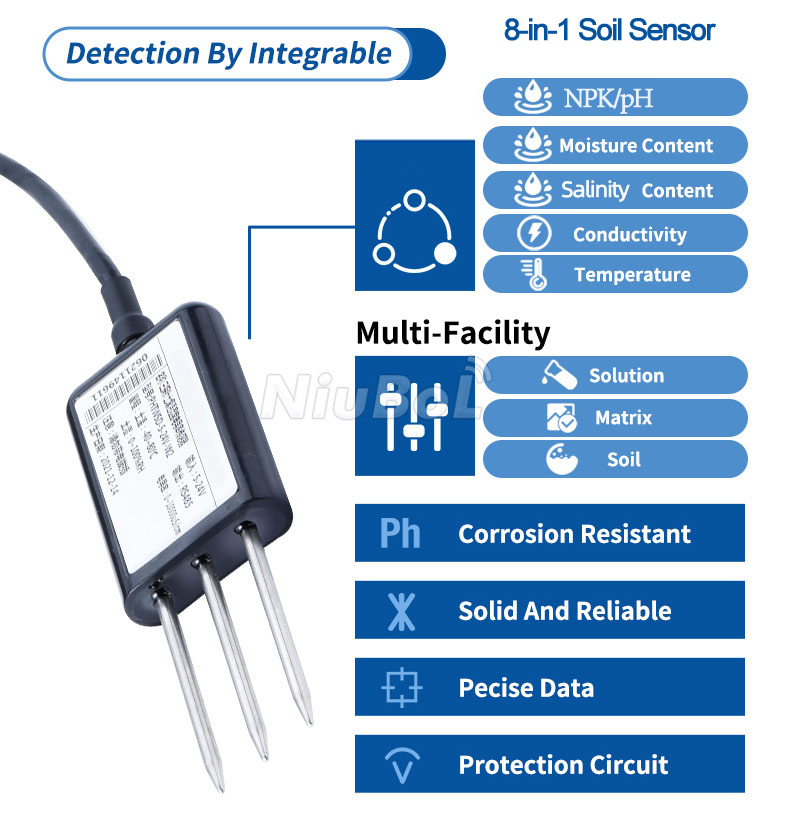
The NiuBoL NBL-S-TMC-8 is an 8-in-1 soil multi-parameter sensor designed to measure soil temperature, moisture, electrical conductivity (EC), salinity, pH and nitrogen, phosphorus and potassium (NPK) reference values through one RS485 Modbus RTU interface.
The sensor is suitable for smart agriculture, irrigation, greenhouse cultivation, soil research, field experiments and IoT monitoring projects where several soil parameters need to be collected from the same monitoring point.
Important: The integrated NPK and pH channels are intended mainly for field reference and trend monitoring. NPK values are derived from soil electrical characteristics and empirical coefficients, while the integrated pH channel is less accurate than a dedicated glass-electrode pH sensor.

| Parameter | Main Purpose |
|---|---|
| Soil Temperature | Monitors root-zone temperature conditions |
| Soil Moisture | Supports irrigation and water-management decisions |
| Electrical Conductivity | Monitors soil conductivity and dissolved salt trends |
| Salinity | Provides a soil salinity reference value |
| pH | Provides a reference for soil acidity and alkalinity |
| Nitrogen | Field reference / trend monitoring |
| Phosphorus | Field reference / trend monitoring |
| Potassium | Field reference / trend monitoring |
| Model | NBL-S-TMC-8 |
| Supply Voltage | 5–24 V DC |
| Power Consumption | Approx. 15 mA @ 12 V DC |
| Communication | RS485 |
| Protocol | Modbus RTU |
| Default Baud Rate | 9600 bps |
| Temperature Range | -40 to 80°C |
| Temperature Accuracy | ±0.5°C |
| Moisture Range | 0–100% |
| Moisture Accuracy | ±5% |
| EC Range | 0–10,000 μS/cm |
| EC Accuracy | ±10% |
| Salinity Range | 0–5500 mg/L |
| Salinity Accuracy | ±10% |
| pH Range | 0–10 pH |
| pH Accuracy | ±1 pH |
| NPK Range | 0–2000 mg/kg |
| NPK Specified Accuracy | ±2% under specified test conditions |
| Working Environment | -40 to 80°C |
| Sealing Material | Black epoxy resin |
| Sensor Size | 138 × 45 × 15 mm approx. |
| Probe Length | 65 mm |
Note: the pH and NPK channels are intended mainly for field reference and trend monitoring. For higher-accuracy pH measurement, use a dedicated glass-electrode soil pH sensor. For actual nutrient quantification, laboratory analysis is recommended.
The main advantage of an integrated soil sensor is that several parameters can be measured at one location using one probe, one power connection and one RS485 interface.
Compared with installing several separate sensors, this can reduce:
Number of probes
Field wiring
Installation time
RS485 network complexity
Data-logger input requirements
Maintenance points
The 8-in-1 model is particularly useful when salinity data is required in addition to the parameters available from the 7-in-1 version.
The NBL-S-TMC-8 does not perform laboratory chemical analysis of nitrogen, phosphorus and potassium.
The NPK values are derived from soil electrical characteristics and empirical coefficients. Soil moisture, EC, salinity, fertilizer concentration, soil texture and environmental conditions can therefore affect the displayed values.
The NPK channels are most useful for:
Trend monitoring over time
Relative comparison between monitoring points
Rapid field observation
IoT data collection
For accurate fertilizer formulation or actual soil nutrient concentration, laboratory analysis should be used.
The integrated pH channel provides convenient field reference data, but the sensor manual states that pH values should mainly be used as a reference.
If higher pH accuracy is required, use a dedicated glass-electrode soil pH sensor.
The salinity channel provides a reference value related to the electrical conductivity of the soil environment. It is useful for observing changes in soil salt conditions, particularly in irrigated agriculture, greenhouses and saline-soil monitoring.
The salinity value should be interpreted together with EC, soil moisture and irrigation conditions because these parameters are closely related.
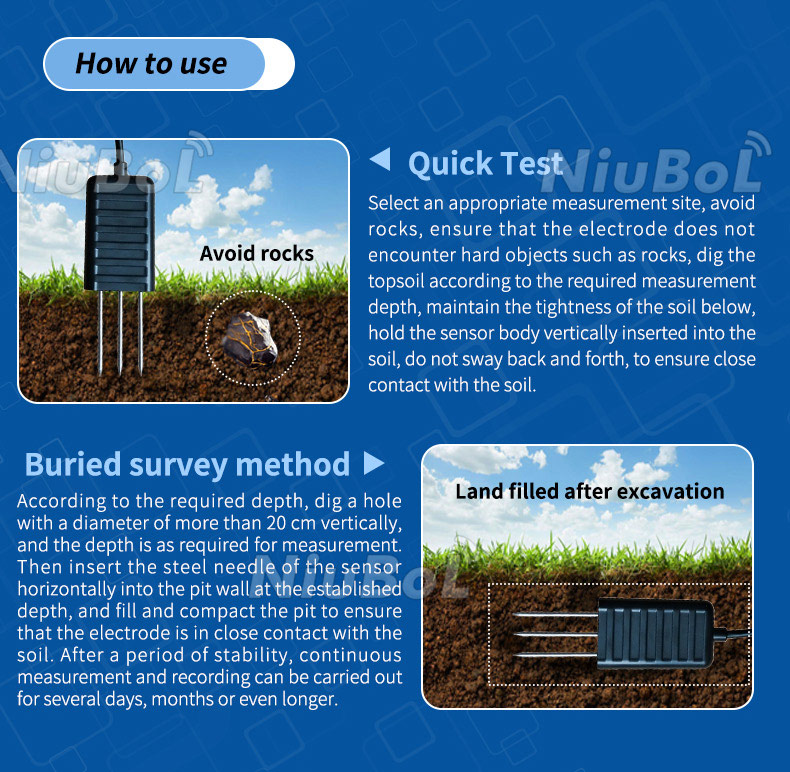
Select a representative location and avoid stones or other hard objects. Insert the probe vertically into the soil and ensure that the sensing rods maintain close contact with the surrounding soil.
Do not repeatedly move the probe from side to side during insertion because this can create air gaps and reduce measurement consistency.
For long-term monitoring, dig a pit to the required depth and insert the sensor horizontally into the undisturbed soil wall. Backfill and compact the soil so the electrodes remain in close contact with the soil.
After the measurement point stabilizes, the sensor can provide continuous data over extended periods.
The NBL-S-TMC-8 provides all eight measurement channels through one RS485 Modbus RTU connection.
8-in-1 Soil Sensor → RS485 Modbus → PLC / Data Logger → 4G / Ethernet / LoRaWAN Gateway → MQTT / HTTP → Cloud or Private Server
| Register | Parameter |
|---|---|
| 0000 | Temperature |
| 0001 | Moisture |
| 0002 | Conductivity |
| 0003 | pH |
| 0004 | Nitrogen |
| 0005 | Phosphorus |
| 0006 | Potassium |
| 0007 | Salinity |
The default communication configuration is 9600 baud, 8 data bits and no parity. The recommended interval between two communications is at least 1000 ms.
| Wire Color | Function |
|---|---|
| Red | Power + |
| Black | Power − |
| Yellow | RS485 + |
| Blue | RS485 − |
Multiple NBL-S-TMC-8 sensors can share one RS485 bus when each sensor has a unique Modbus address.
Assign a unique address to every sensor.
Use twisted-pair cable for RS485 communication.
Use daisy-chain wiring where practical.
Check power-voltage drop on long cable runs.
Use a suitable centralized DC power supply.
Add RS485 termination according to cable length and field conditions.
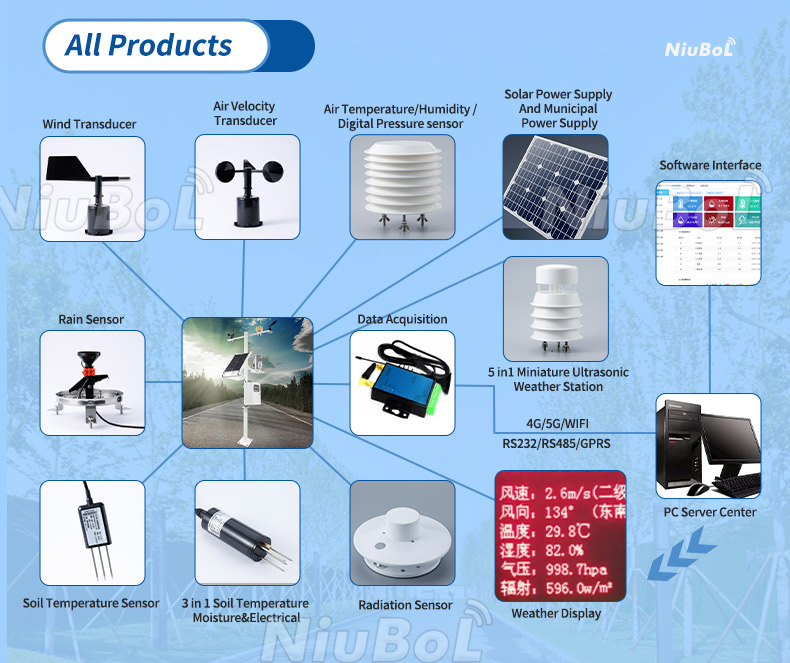
The 8-in-1 sensor can be integrated with 4G or LoRaWAN data-acquisition equipment for distributed agricultural monitoring.
8-in-1 Sensor → RS485 → IoT Gateway → 4G / LoRaWAN → MQTT / HTTP → Customer Server
For LoRaWAN projects, the RS485 sensor normally connects to a compatible RS485-to-LoRaWAN node rather than communicating wirelessly by itself.
Smart agriculture
Automatic irrigation
Greenhouse cultivation
Flowers and vegetables
Grassland and pasture monitoring
Soil research
Plant cultivation
Saline-soil monitoring
Remote IoT soil-monitoring systems
| Parameter | 7-in-1 | 8-in-1 |
|---|---|---|
| Temperature | Yes | Yes |
| Moisture | Yes | Yes |
| EC | Yes | Yes |
| pH | Yes | Yes |
| N | Yes | Yes |
| P | Yes | Yes |
| K | Yes | Yes |
| Salinity | No | Yes |
Choose the 8-in-1 model when salinity is required in addition to temperature, moisture, EC, pH and NPK reference monitoring. If salinity is not required, the 7-in-1 version may be sufficient.
A1. It measures soil temperature, moisture, EC, salinity and pH, and provides nitrogen, phosphorus and potassium reference values.
A2. The 8-in-1 version adds a salinity channel. The other main monitored parameters are similar.
A3. No. NPK values are empirical field-reference values derived from soil electrical characteristics. Laboratory analysis is recommended for actual nutrient quantification.
A4. The integrated pH channel is mainly suitable for reference monitoring. For higher pH accuracy, use a dedicated glass-electrode soil pH sensor.
A5. Yes. The sensor manual provides a buried measurement method for long-term monitoring when the probe is installed correctly and maintains close contact with the soil.
A6. Yes. The sensor uses RS485 Modbus RTU and can connect to compatible PLCs, RTUs and data loggers.
A7. Yes. Each sensor should use a unique Modbus address, and the RS485 wiring and power supply must be designed correctly.
A8. Yes. The RS485 sensor can connect to a compatible RS485-to-LoRaWAN node and gateway.
A9. No. It does not directly identify heavy metals, pesticides or other pollutants. It measures soil physical and electrical parameters plus reference pH and NPK values.
A10. Provide the quantity, cable length, monitoring depth, number of points, communication method and whether a data logger, LoRaWAN node, 4G gateway or solar power system is required.
1. NBL-S-TMC-8 8-in-1 Soil Integrated Sensor Instruction Manual
 8-in-1-Soil-Composite-Sensor-Manual.pdf
For quotation and system selection, provide the required quantity, cable length, installation depth, number of monitoring points and whether the sensors will connect to a PLC, data logger, LoRaWAN node, 4G gateway or private server.
Prev:7 in 1 Soil Integrated Sensor RS485|NBL-S-TMC-7
Next:8-in-1 Portable Soil Sensor for Android Type-C/USB Soil Multi-Parameter Tester & Analyzer
Sensors & Weather Stations Catalog
 Agriculture Sensors and Weather Stations Catalog-NiuBoL.pdf
Weather Stations Catalog-NiuBoL.pdf
Agriculture Sensors Catalog-NiuBoL.pdf
Water Quality Sensor Catalog-NiuBoL.pdf
Related recommendations
 TDR Soil Moisture & Temperature Sensor for irrigation| RS485 |4-20mA| NBL-S-THR
 Soil pH sensor RS485 soil Testing instrument soil ph meter for agriculture |NBL-S-PH
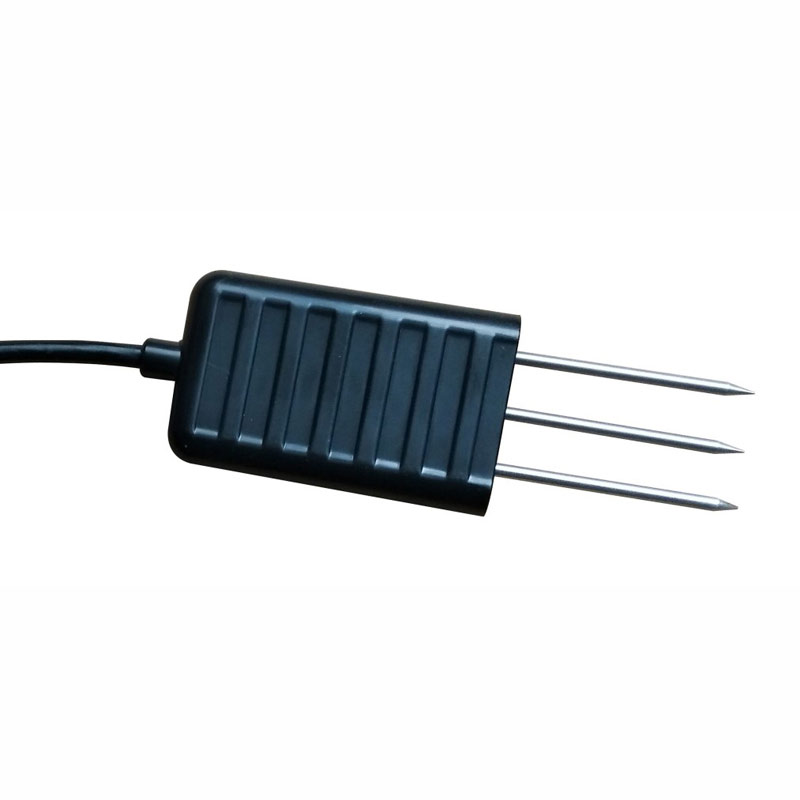 Soil NPK Sensor RS485 Modbus | NBL-S-NPK | NiuBoL
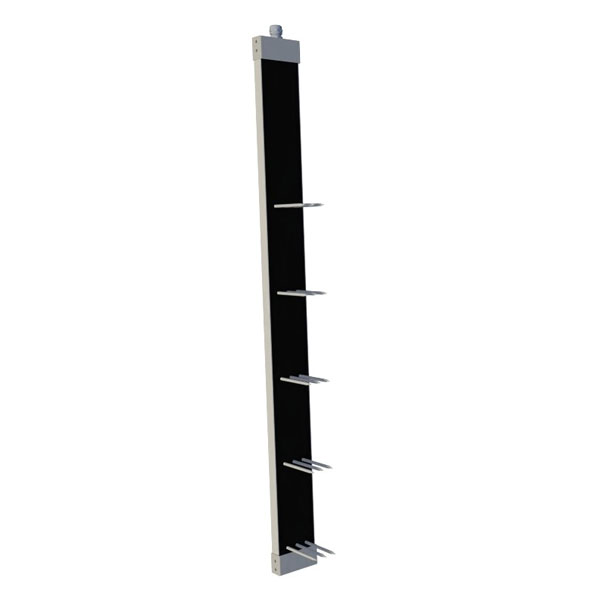 NBL-S-TM-MD Multi-Layer Soil Moisture Temperature Salinity Sensor | RS485 Modbus
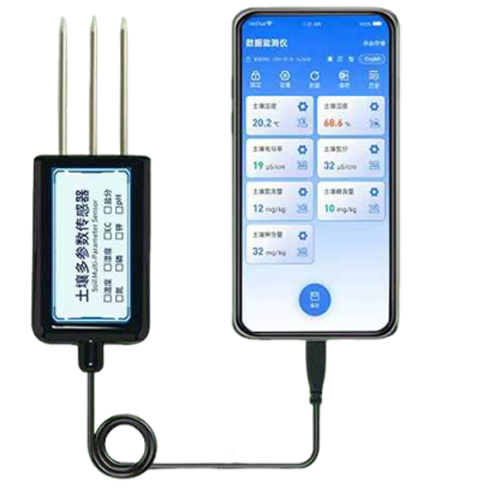 7-in-1 Soil Sensor for Android USB-Type-C
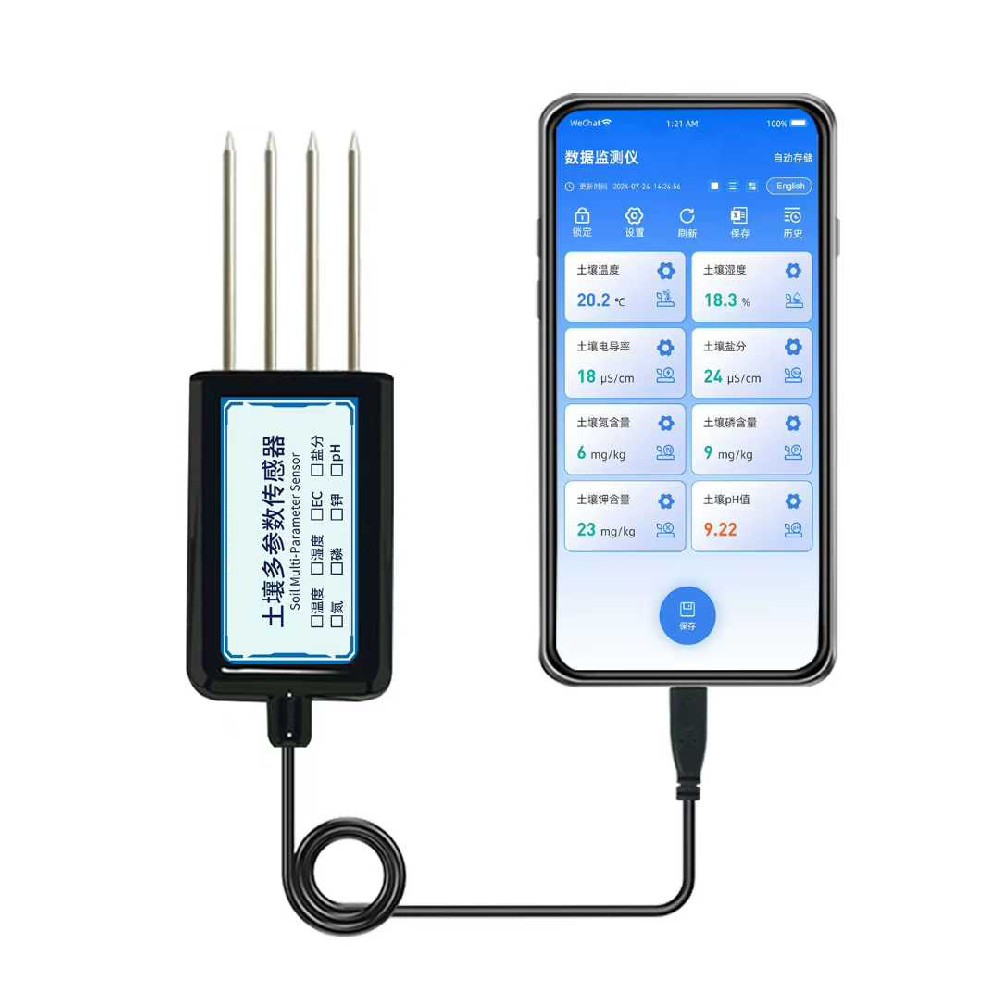 8-in-1 Portable Soil Sensor for Android Type-C/USB Soil Multi-Parameter Tester & Analyzer

Screenshot, WhatsApp to identify the QR code
WhatsApp number:+8615367865107
(Click on WhatsApp to copy and add friends)

