





— Products —
 Consumer hotline +8618073152920
 WhatsApp:+8615367865107
Address:Room 102, District D, Houhu Industrial Park, Yuelu District, Changsha City, Hunan Province, China
Agricultural Sensors
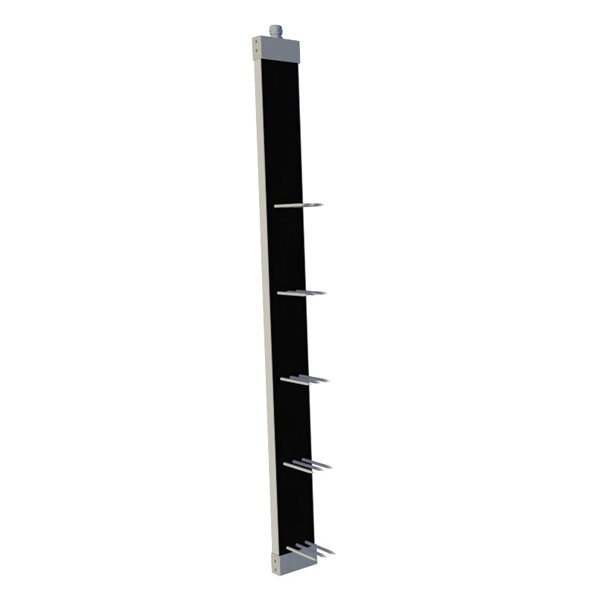
NBL-S-TM-MD multi-layer soil moisture, temperature and salinity sensor monitors multiple soil depths with adjustable measurement layers, Modbus communication, 12-24V DC power and IP68 protection. Suitable for irrigation, soil moisture monitoring, salinity monitoring, greenhouses, orchards and agricultural research.
Tel/WhatsApp:+8615367865107
Email:Arvin@niubol.com +Nearly 100 partner companies in more than 79 countries. We are committed to providing high-quality, practical products to meet your needs and help you solve problems. Our products comply with international standards and are certified with ISO, CE and RoHS.Product Details
The NBL-S-TM-MD is a multi-layer probe-type soil sensor designed for monitoring soil temperature, volumetric water content and soil salinity at multiple depths from a single installation point.
The number of measurement layers and the spacing between layers can be adjusted according to project requirements. This makes the sensor suitable for soil profile monitoring, irrigation management, soil moisture monitoring, saline soil research, greenhouse cultivation, orchards, grasslands and long-term agricultural research.
A conventional single-point soil sensor measures conditions at only one depth. The NBL-S-TM-MD integrates multiple sensing layers into one probe, allowing simultaneous monitoring of different soil depths.
Each measurement layer can provide:
Soil temperature
Volumetric soil moisture
Soil salinity
This makes it possible to observe how water, temperature and salinity vary throughout the soil profile.
Different crops, soils and research projects require different monitoring depths. The sensor can be configured according to the application, including:
Number of measurement layers
Measurement depth
Spacing between measurement layers
This provides greater flexibility for root-zone monitoring, irrigation studies and soil profile research.
Each sensing layer measures soil temperature, soil moisture and soil salinity. Combining these parameters helps users understand soil water and salt dynamics instead of evaluating soil moisture alone.
The sensor uses a sealed structure with black epoxy resin encapsulation and an IP68 protection rating, making it suitable for long-term installation in soil.
Modbus communication allows the sensor to be integrated with compatible data acquisition devices and monitoring systems, including:
Data loggers / RTU/ PLC/ Agricultural IoT gateways/ Remote monitoring platforms/ Customer-owned data systems
| Parameter | Specification |
|---|---|
| Model | NBL-S-TM-MD |
| Measurement Type | Multi-layer probe type |
| Measured Parameters | Soil temperature, soil moisture, soil salinity |
| Measurement Layers | Adjustable |
| Layer Spacing | Adjustable |
| Soil Temperature Range | -40 to 80°C |
| Temperature Resolution | 0.01°C |
| Temperature Accuracy | ±0.5°C |
| Soil Moisture Range | 0-100% |
| Moisture Resolution | 0.01% |
| Moisture Accuracy | ±5% |
| Soil Salinity Range | 0-5500 mg/L |
| Salinity Resolution | 1 mg/L |
| Salinity Accuracy | ±10% |
| Power Supply | DC 12-24V |
| Static Power Consumption | 20mA @ 12V DC |
| Protection Rating | IP68 |
| Operating Environment | -40 to 85°C |
| Sealing Material | Black epoxy resin |
| Communication | Modbus |
| Default Baud Rate | 9600 |
| Data Bits | 8 |
| Parity | None |
Soil moisture, temperature and salinity are rarely uniform throughout the soil profile. Conditions near the surface can be very different from those in the main root zone or deeper soil layers.
After irrigation, the upper soil layer may become wet quickly while water has not yet reached deeper roots. Excessive irrigation may cause water to continue moving below the effective root zone.
A single-point soil sensor only provides information from one depth. Multi-depth monitoring provides a more complete view of how soil conditions change vertically.
Rainfall response
Surface irrigation
Evaporation
Rapid temperature changes
Root-zone soil moisture
Soil temperature
Salinity changes
Water availability around active roots
Whether irrigation water has moved too deep
Whether deep drainage is occurring
Deep soil moisture conditions
Vertical movement of soil salts
Soil moisture is one of the most important parameters for irrigation management. The NBL-S-TM-MD measures volumetric soil water content from 0 to 100%.
Using several measurement depths makes it possible to observe how water moves through the soil after irrigation or rainfall.
Multi-depth soil moisture data can help determine:
Whether irrigation is needed
Whether irrigation water has reached the main root zone
Whether the irrigation depth is appropriate
Whether excessive water is moving below the root zone
How quickly different soil layers are drying
Soil temperature can vary significantly with depth. Surface soil is strongly affected by solar radiation and ambient temperature, while deeper soil normally changes more slowly.
Multi-layer temperature measurements can be used to observe:
Temperature differences between shallow and deep soil
Day and night soil temperature changes
Temperature conditions within different root zones
Seasonal soil temperature changes
Soil temperature measurement range: -40 to 80°C;Accuracy: ±0.5°C;Resolution: 0.01°C;
Soil salinity is an important parameter for agricultural production, saline soil monitoring and soil improvement projects.
The sensor detects the electrical response of soluble ions in the soil to indicate soil salinity conditions.
Measurement range: 0-5500 mg/L;Accuracy: ±10%;Resolution: 1 mg/L
Soil moisture directly affects salinity measurement because dissolved ions require sufficient water to produce a representative electrical response.
When volumetric soil moisture is above approximately 20%, soluble ions can better reflect soil salinity conditions. For long-term monitoring, measurements taken after irrigation or rainfall are generally more suitable for observing salinity trends.
The sensor is suitable for:
Saline soil monitoring
Soil water and salt dynamics research
Monitoring salinity changes before and after irrigation
Comparing salinity at different soil depths
Long-term soil improvement monitoring
For applications requiring precise chemical analysis of soil salinity, laboratory testing with standardized soil sampling should also be used.
Continuous monitoring of soil moisture at different depths for agricultural soil moisture assessment and field monitoring.
Monitor how irrigation water moves through different soil layers and evaluate irrigation depth and effectiveness.
Suitable for fruit trees and other crops with roots distributed across multiple soil depths.
Monitor root-zone moisture and temperature for vegetables, flowers and other greenhouse crops.
Monitor moisture and salinity changes at multiple depths to study soil water and salt dynamics.
Suitable for research on soil water movement, soil temperature, water-salt dynamics and crop root-zone environments.
Select a representative measurement location and avoid stones or other hard objects. Prepare the soil according to the required measurement depth and insert the sensor into the soil.
Keep the probes in close contact with the surrounding soil
Do not move the sensor from side to side during insertion
Avoid contact between the probes and stones
Do not strike the sensor with hard objects
For rapid field measurements, several measurements within a small representative area can be used to reduce the influence of local soil variation.
For long-term monitoring, dig an installation pit according to the required measurement depths.
Insert the probes horizontally into the undisturbed soil wall at the required depths, then refill and compact the soil.
The probes must maintain close contact with the surrounding soil.
Air gaps around the probes may affect measurement stability. In hard soil, a small pilot hole can be prepared before inserting the probe. The hole diameter should be smaller than the probe diameter, and the surrounding soil should be compacted after installation.
The sensor uses a black housing. When directly exposed to strong sunlight, the surface temperature of exposed parts may increase significantly and affect temperature measurements near the soil surface.
Install the sensing sections correctly in the soil
Avoid unnecessary exposure to strong direct sunlight
Provide shading for exposed parts when necessary
Avoid mechanical impact and strong vibration
Do not damage the sensor surface with sharp objects
| Wire Color | Function |
|---|---|
| Red | Power + |
| Black | Power Ground |
| Yellow | A+ / TX |
| Blue | B- / RX |
Power Supply: DC 12-24V
Disconnect the power before wiring. Check all connections carefully before powering the sensor.
| Parameter | Default Setting |
|---|---|
| Baud Rate | 9600 |
| Data Bits | 8 |
| Parity | None |
| Communication Interval | ≥1000 ms |
| Device Address Range | 0-255 |
A multi-layer sensor can return measurements from several soil depths in one data-reading process.
For example, a four-layer configuration provides:
| Measurement Layer | Temperature | Moisture | Salinity |
|---|---|---|---|
| Layer 1 | Temperature 1 | Moisture 1 | Salinity 1 |
| Layer 2 | Temperature 2 | Moisture 2 | Salinity 2 |
| Layer 3 | Temperature 3 | Moisture 3 | Salinity 3 |
| Layer 4 | Temperature 4 | Moisture 4 | Salinity 4 |
The data can be collected by a compatible data logger, RTU, PLC or IoT gateway and then transmitted to a server or agricultural monitoring platform.
| Feature | Single-Point Soil Sensor | NBL-S-TM-MD Multi-Layer Sensor |
|---|---|---|
| Measurement Depth | One depth | Multiple depths |
| Soil Temperature | Yes | Yes |
| Soil Moisture | Yes | Yes |
| Soil Salinity | Depends on model | Yes |
| Soil Profile Monitoring | Limited | Yes |
| Multi-Depth Root-Zone Monitoring | Limited | Yes |
| Adjustable Layer Spacing | No | Yes |
| Long-Term Buried Monitoring | Yes | Yes |
| Water-Salt Dynamics Monitoring | Limited | More suitable |
There is no single depth configuration suitable for every application. Measurement depth should be selected according to crop type, root distribution, soil conditions and monitoring objectives.
Measurement layers should cover the main active root zone of the crop.
Drip irrigation, sprinkler irrigation and surface irrigation create different soil moisture distributions and may require different measurement depths.
Sandy soil, loam and clay have different water movement and retention characteristics, which should be considered when selecting monitoring depths.
If the main objective is root-zone irrigation management, measurement layers can be concentrated around the active root zone.
If the project involves water infiltration, deep drainage, salinity movement or complete soil profile research, additional measurement depths should be included.
It measures soil temperature, volumetric soil moisture and soil salinity at multiple depths.
Yes. The sensor uses multiple measurement layers positioned along one probe body.
No. The number of layers can be adjusted according to project requirements.
Yes. The spacing can be configured according to the required soil monitoring depths.
Yes. The sensor has an IP68 protection rating and is designed for long-term soil monitoring.
The soil moisture range is 0-100%, with ±5% accuracy and 0.01% resolution.
The soil salinity range is 0-5500 mg/L, with ±10% accuracy and 1 mg/L resolution.
Salinity measurement depends on soil moisture and soluble ions. When the soil is too dry, the electrical response of soluble ions may not adequately represent soil salinity conditions.
Yes. The default baud rate is 9600.
Yes. It can be connected to compatible data loggers, RTUs, PLCs and IoT gateways.
Yes. Multi-depth moisture measurements can show whether irrigation water has reached the main root zone or moved into deeper soil layers.
Yes. It is suitable for observing long-term changes in soil moisture and salinity at different depths.
No. It is mainly intended for continuous field monitoring and trend analysis. Applications requiring precise chemical analysis should use standardized soil sampling and laboratory testing.
Please provide the following information when selecting the NBL-S-TM-MD:
Number of measurement layers
Required depth of each layer
Spacing between measurement layers
Cable length
Power supply
Data acquisition method
Installation environment
Whether long-term buried monitoring is required
Selecting appropriate measurement depths and layer spacing provides more useful soil profile data for irrigation management, soil moisture monitoring, salinity monitoring and agricultural research.
 NBL-S-TM-MD Multi-Layer Soil Moisture Temperature Salinity Sensor Data Sheet.pdf
Prev:Soil Water Potential Sensor | NBL-S-WPS
Next:no more
Sensors & Weather Stations Catalog
Agriculture Sensors and Weather Stations Catalog-NiuBoL.pdf
Weather Stations Catalog-NiuBoL.pdf
Agriculture Sensors Catalog-NiuBoL.pdf
Water Quality Sensor Catalog-NiuBoL.pdf
Related recommendations
 Soil Moisture Temperature sensor for irrigation|NBL-S-THR
 Soil pH sensor RS485 soil Testing instrument soil ph meter for agriculture |NBL-S-PH
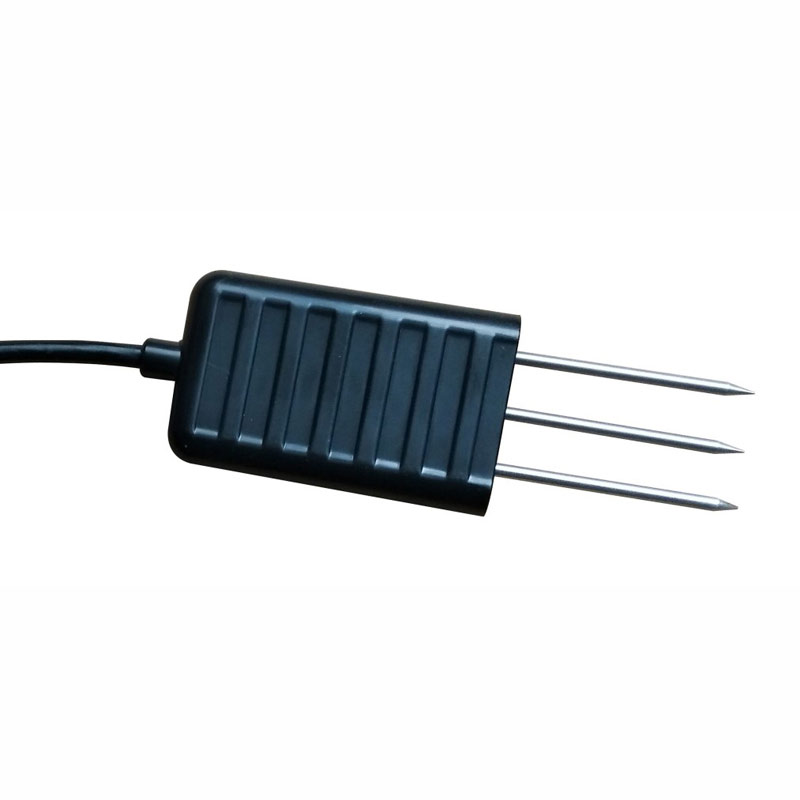 Soil NPK Sensor RS485 Meter Soil Nutrient Fertility Tester Soil Sensor For Precision Agriculture|NBL-S-NPK
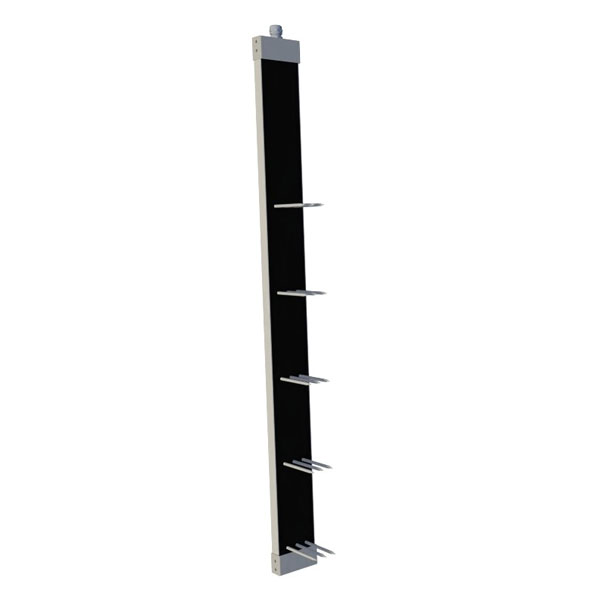 NBL-S-TM-MD Multi-Layer Soil Moisture Temperature Salinity Sensor | RS485 Modbus
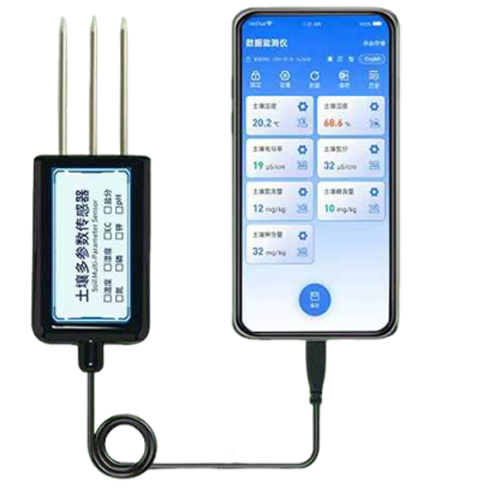 7-in-1 Soil Sensor for Android USB-Type-C
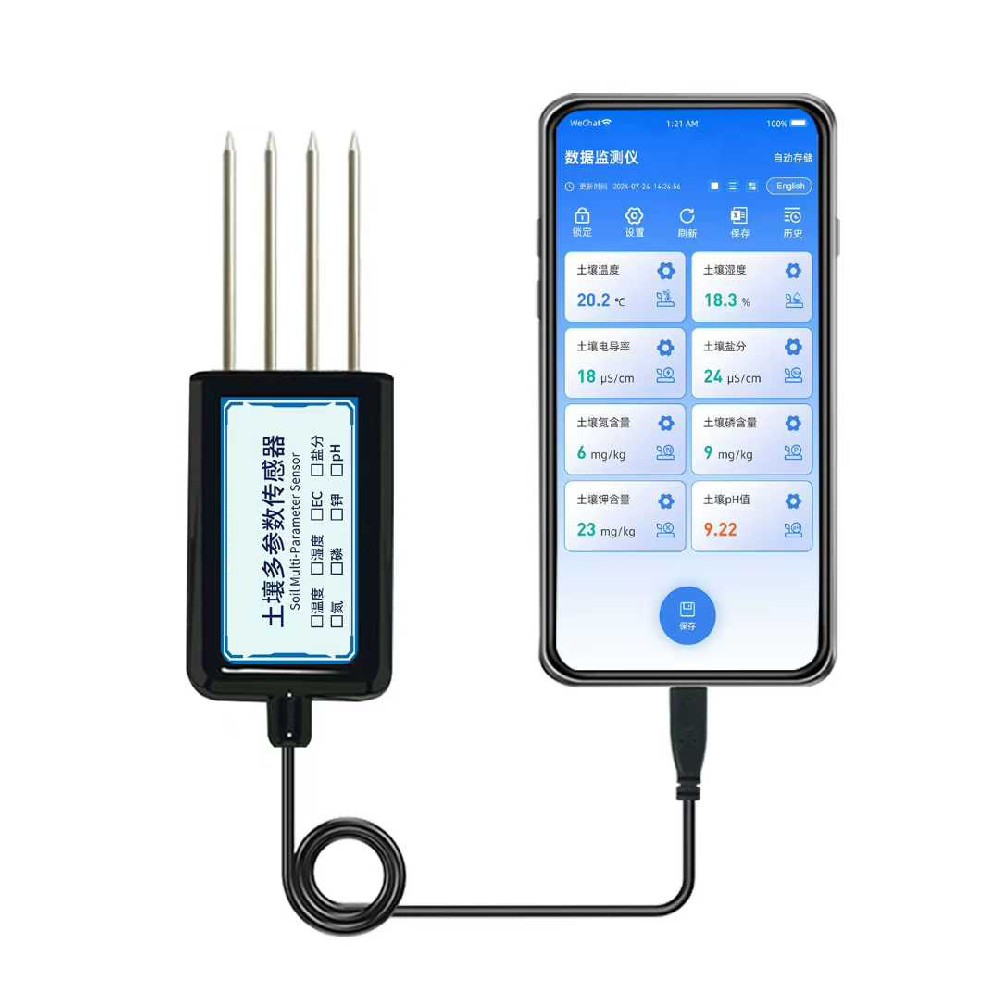 8-in-1 Soil Sensor Portable Type-C/USB Soil Multi-Parameter Tester & Analyzer

Screenshot, WhatsApp to identify the QR code
WhatsApp number:+8615367865107
(Click on WhatsApp to copy and add friends)

