





— Products —
 Consumer hotline +8618073152920
WhatsApp:+8615367865107
Address:Room 102, District D, Houhu Industrial Park, Yuelu District, Changsha City, Hunan Province, China
Agricultural Sensors
NiuBoL provides agricultural sensors and soil sensors for measuring soil moisture, soil temperature, electrical conductivity (EC), salinity, pH, nutrient indicators, leaf wetness and other crop or field conditions used in precision agriculture and irrigation monitoring.
Available products include single-parameter soil probes, multi-parameter integrated soil sensors and crop-environment sensors. Depending on the selected model, signal options can include RS485 Modbus, 4–20mA, voltage or other interfaces for connection to PLCs, data loggers, RTUs and agricultural IoT gateways.
The correct sensor should be selected according to the parameter to be measured, soil type, installation depth, required accuracy, output interface, cable length, power supply and whether the data will be used for local monitoring, irrigation management, research or remote IoT systems.
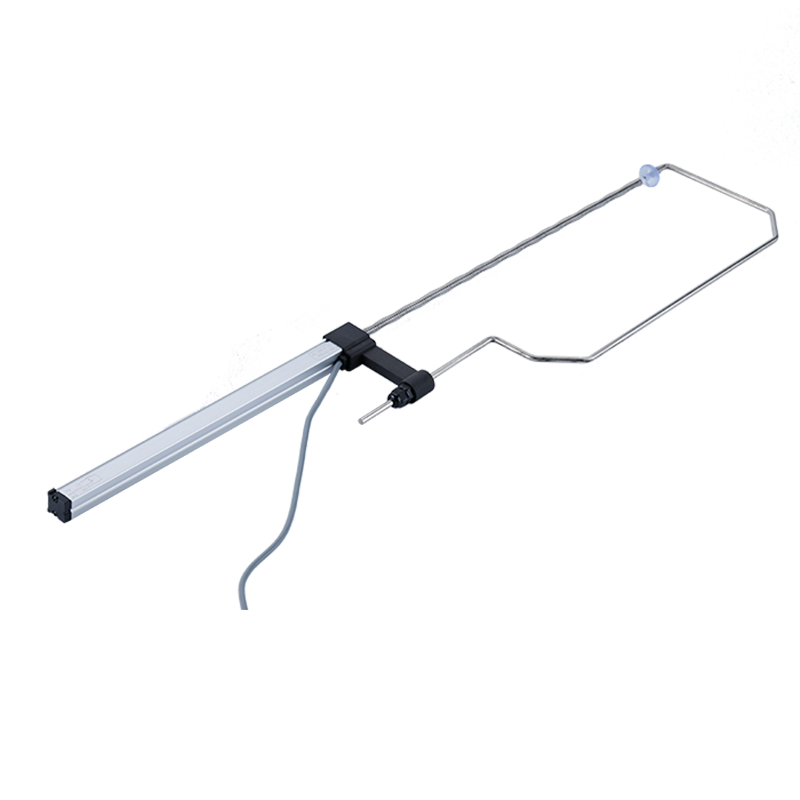 Fruit & Stem Growth Sensor | RS485 4-20mA |NBL-W-FGS
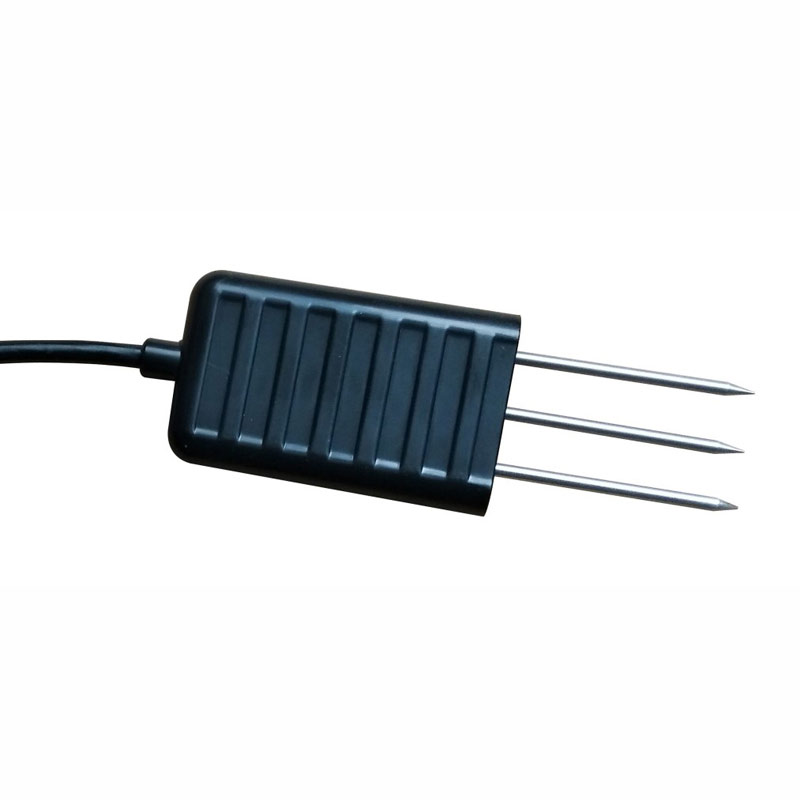 Soil EC Sensor Stainless Steel Probe Support Modbus/RS485
 Smart Multi-parameters Handheld Tester Soil Testing Equipment Agriculture sensor Measuring Instrumen···
Soil NPK Sensor RS485 Modbus | NBL-S-NPK | NiuBoL
 Soil heat flux sensor used to measure Soil energy balance and thermal conductivity of soil layers
 7-in-1 Soil Sensor RS485 Modbus for pH, EC & NPK | NBL-S-TMC-7
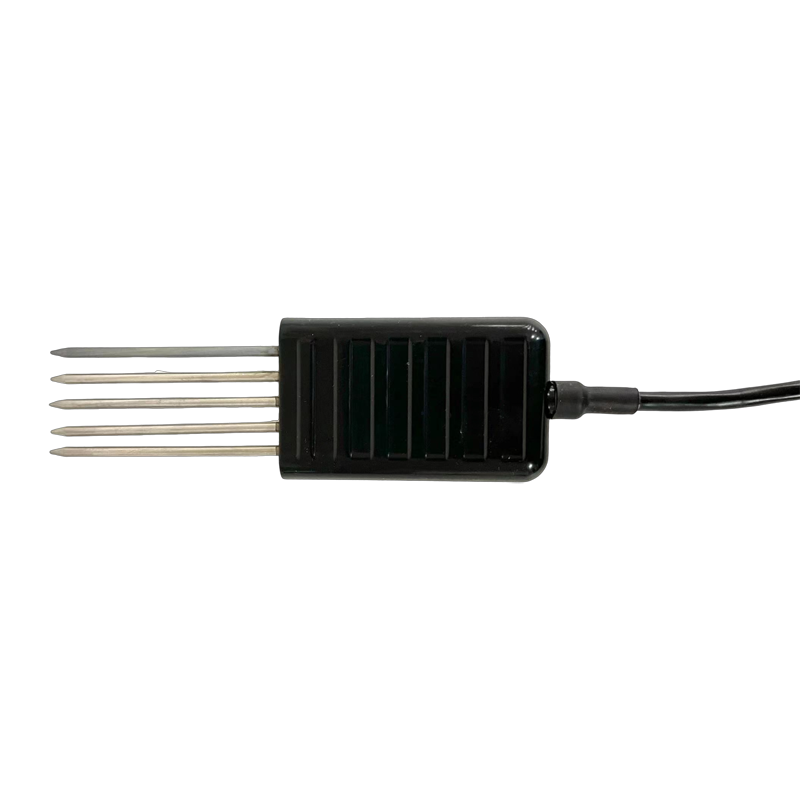 8 in 1 Integrated Soil Sensor RS485 Modbus NBL-S-TMC-8
 Water level sensor Submersible Level Transmitter | RS485 Modbus| NBL-L-WLPS
 Soil Salinity & EC Sensor | RS485 4-20mA 0-5V|NBL-S-SC
Start by identifying the parameter that actually affects the agricultural decision. Soil moisture is commonly used for irrigation monitoring, EC and salinity indicate soluble-ion conditions, pH indicates soil acidity or alkalinity, while multi-parameter probes can combine several measurements at one location.
| Parameter | Typical Sensor | Typical Use |
| Soil Moisture | Soil Moisture Sensor | Irrigation scheduling, root-zone monitoring and water-management research |
| Soil Temperature | Soil Temperature Sensor | Root-zone temperature, germination and agricultural research |
| Soil EC | Soil EC Sensor | Monitoring electrical conductivity and soluble-ion conditions |
| Soil Salinity | Salinity / EC Sensor | Salinity management, irrigation-water influence and salt-stress monitoring |
| Soil pH | Soil pH Sensor | Monitoring soil acidity and alkalinity |
| N / P / K Indicators | Soil NPK Sensor | Field trend and comparative nutrient-indicator monitoring |
| Multiple Soil Parameters | Integrated Soil Sensor | Multi-parameter field monitoring with one installed probe |
| Leaf Wetness | Leaf Wetness Sensor | Crop microclimate, dew and disease-risk monitoring |
A single-parameter sensor is useful when only one measurement is required or when individual parameters need to be installed at different depths. A multi-parameter soil sensor reduces the number of probes and cables when several measurements are required at the same location.
| Selection Item | Single-Parameter Sensor | Multi-Parameter Sensor |
| Parameters | One parameter or a simple combination | Several soil parameters in one probe |
| Installation | Flexible installation at independent depths or locations | Convenient when parameters are required at the same sampling point |
| Cabling | More individual cables when several sensors are used | Fewer probes and cables for multiple measurements |
| Typical Use | Dedicated irrigation, research or single-variable monitoring | Precision agriculture, soil profiling and IoT monitoring |
For combined soil monitoring, see the 7-in-1 soil integrated sensor. For a dedicated pH measurement, see the soil pH sensor.
Soil moisture sensors are commonly used to estimate volumetric water content in the root zone. Depending on the product, measurement technologies can include FDR, TDR or related dielectric methods.
Installation quality is critical. The sensing area should have firm contact with the surrounding soil, with minimal air gaps around the probe. Soil texture, salinity, compaction and installation method can influence field readings.
For projects requiring both temperature and moisture, see the soil temperature and moisture sensor.
Soil pH sensors provide field measurements of soil acidity or alkalinity using a probe-based measurement method. Field pH readings can be useful for monitoring and comparison, but sampling conditions, soil moisture and probe contact can influence the result.
NiuBoL soil NPK sensors provide field nutrient indicators derived from electrical characteristics and empirical relationships. These values are useful for trend monitoring, comparative field measurements and IoT applications, but they should not be treated as a replacement for laboratory chemical analysis when accurate fertilizer recommendations or certified nutrient analysis is required.
For laboratory-grade nutrient determination, use appropriate soil sampling and recognized laboratory analysis methods.
See the soil NPK sensor for field nutrient-indicator monitoring.
Many agricultural sensors are available with RS485 Modbus for digital integration with PLCs, RTUs, data loggers and IoT gateways. Other output types may be available depending on the selected model.
Agricultural Sensor → RS485 / Analog Signal → Data Logger / RTU / PLC → 4G / Ethernet / LoRaWAN → Cloud Platform or Private Server
The sensor performs the physical measurement and provides a local output signal. Remote 4G, Ethernet, LoRaWAN, MQTT, HTTP or cloud communication normally requires a compatible data logger, RTU or IoT gateway rather than being provided directly by the basic soil sensor.
Agricultural sensors can support continuous monitoring in open fields, orchards, greenhouses, irrigation systems and agricultural research projects.
Precision Agriculture
•
Irrigation Monitoring
•
Greenhouses
•
Orchards
Field Crops
•
Soil Research
•
Fertigation Monitoring
•
Agricultural IoT
Sensor selection should begin with the agricultural decision that the measurement needs to support. Different crops, soil layers and management zones may require different sensor types or installation depths.
| Selection Item | Information to Provide |
| Required Parameters | Moisture, temperature, EC, salinity, pH, nutrient indicators, leaf wetness or other parameters |
| Crop / Application | Greenhouse, orchard, field crop, research, irrigation or fertigation |
| Soil Type | Sand, loam, clay, substrate or other growing medium |
| Installation Depth | Root-zone depth or multiple depths required by the monitoring strategy |
| Output Interface | RS485 Modbus, 4–20mA, voltage or other required signal |
| Cable Length | Distance from the sensor to the data logger, controller or junction point |
| Data System | PLC, RTU, data logger, IoT gateway, cloud platform or private server |
| Quantity | Sample, pilot farm or project quantity |
A1. Common sensors include soil moisture, soil temperature, EC, salinity, pH, multi-parameter soil sensors, leaf wetness sensors and weather-station sensors. The correct combination depends on the crop and management objective.
A2. Soil moisture is one of the main measurements used for irrigation monitoring. For deeper-rooted crops, sensors at more than one depth can help show whether irrigation water is reaching the active root zone.
A3. EC measures electrical conductivity and is related to the concentration of dissolved ions in the soil environment. Salinity is related to soluble salt concentration and may be estimated or represented from conductivity depending on the selected sensor and method.
A4. No. Field NPK sensors are useful for comparative and trend monitoring, but laboratory chemical analysis should be used when accurate nutrient determination or fertilizer recommendations are required.
A5. Yes, multiple compatible RS485 Modbus devices can share a properly designed bus when each device has a unique address and the power supply, cable topology and polling configuration are suitable.
A6. Yes. RS485 or analog sensors can connect to a compatible 4G data logger, RTU or IoT gateway. The basic sensor itself should not automatically be assumed to include cellular communication.
A7. Install the sensing area in firm contact with representative soil and minimize air gaps around the probe. The depth should represent the crop root zone or the soil layer that the project needs to monitor.
A8. Provide the required parameters, crop or application, installation depth, soil or growing medium, output interface, cable length, quantity and the PLC, data logger or gateway that will receive the sensor data.
For product selection and quotation, provide the required soil or crop parameters, application, installation depth, output signal, cable length, quantity, power supply and receiving PLC / RTU / data logger / IoT gateway.
For complete precision-agriculture monitoring systems, also specify whether weather sensors, a 4G gateway, solar power, cloud monitoring, MQTT / HTTP transmission or private-server integration is required.


Screenshot, WhatsApp to identify the QR code
WhatsApp number:+8615367865107
(Click on WhatsApp to copy and add friends)

