





— Solutions —
—Products—
 Consumer hotline +8618073152920
WhatsApp:+8615367865107
Address:Room 102, District D, Houhu Industrial Park, Yuelu District, Changsha City, Hunan Province, China
Industrial & Energy
Time:2025-11-14 16:56:15 Popularity:1400
A power station weather monitoring system should be designed around operational decisions, not a generic sensor list. PV sites may need irradiance, module temperature, ambient conditions and wind; wind plants need exposed wind measurements; thermal and hydro facilities have different rainfall, temperature and safety needs. Use model-specific sensors, documented RS485 or analog interfaces, local storage, resilient power and channel-by-channel acceptance.
A PV performance station, wind-turbine control input, hydro catchment station and thermal-plant safety point should not share an identical bill of materials. List the operational decision, parameter, interval and required availability for each point.
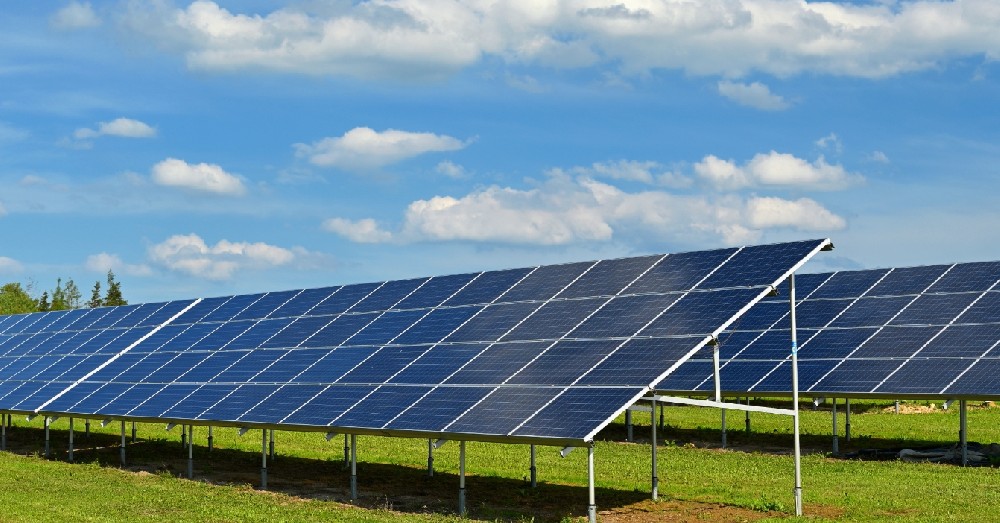
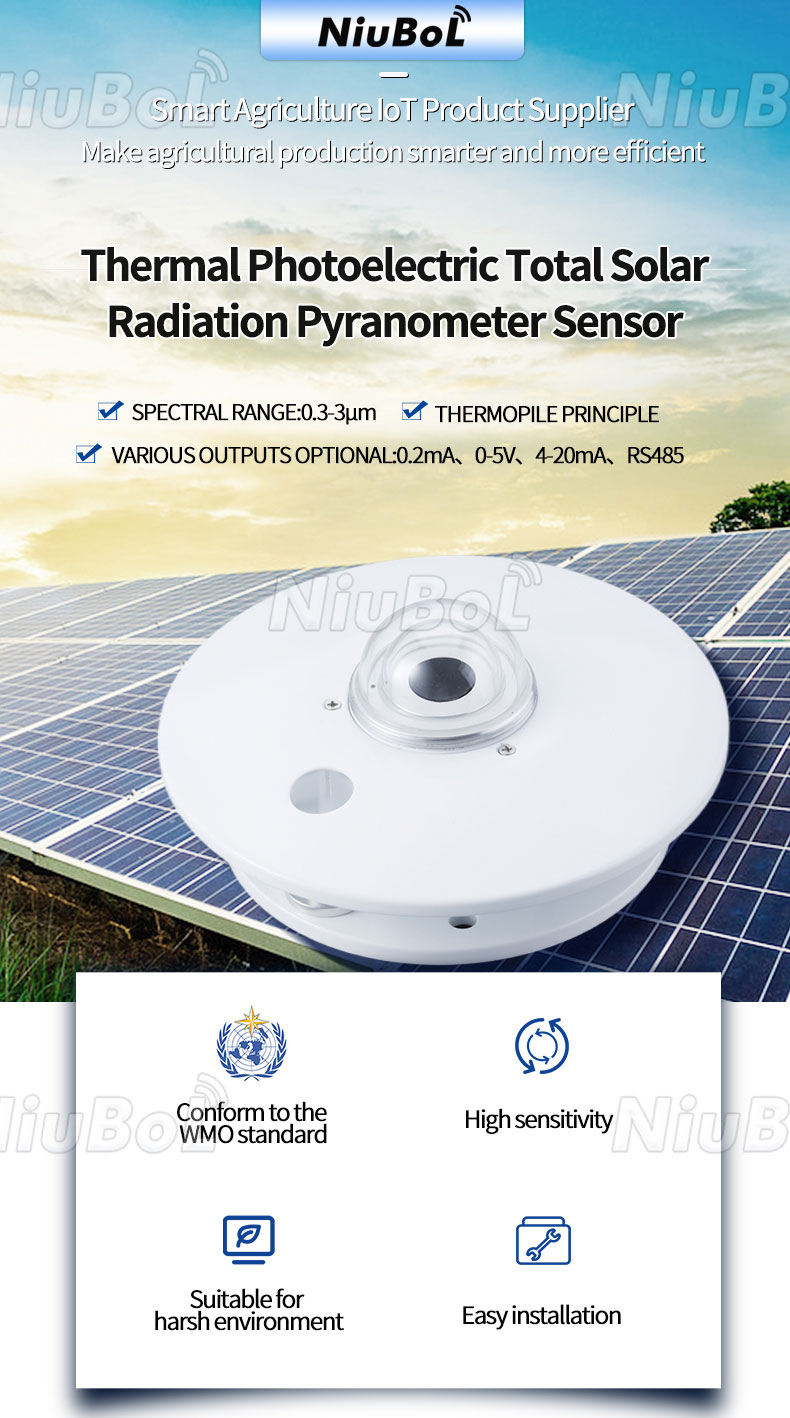
PV performance work normally needs solar irradiance in W/m2 and representative module temperature, not Lux alone. Record sensor plane, module position and cleaning condition. Time-align these channels with electrical production data.
State whether operations need one-minute values, gust maxima, ten-minute averages, daily rainfall, irradiance totals or event alarms. The logger configuration must preserve the statistic required by the procedure. A sensor range alone does not define the data product delivered to SCADA.
A second measurement point can improve availability or spatial coverage, but only when independence is understood. Two sensors on the same mast, power supply and logger do not protect against every common failure. Define whether redundancy concerns the sensor, acquisition, communications or complete station.
On-site instruments measure local conditions at the station. Forecast services estimate future conditions across an area. Store source and timestamp separately, then use approved logic to compare forecast thresholds with observed confirmation.
| System element | Design requirement |
|---|---|
| System layers | Sensors, acquisition, communications, storage/platform and operational use |
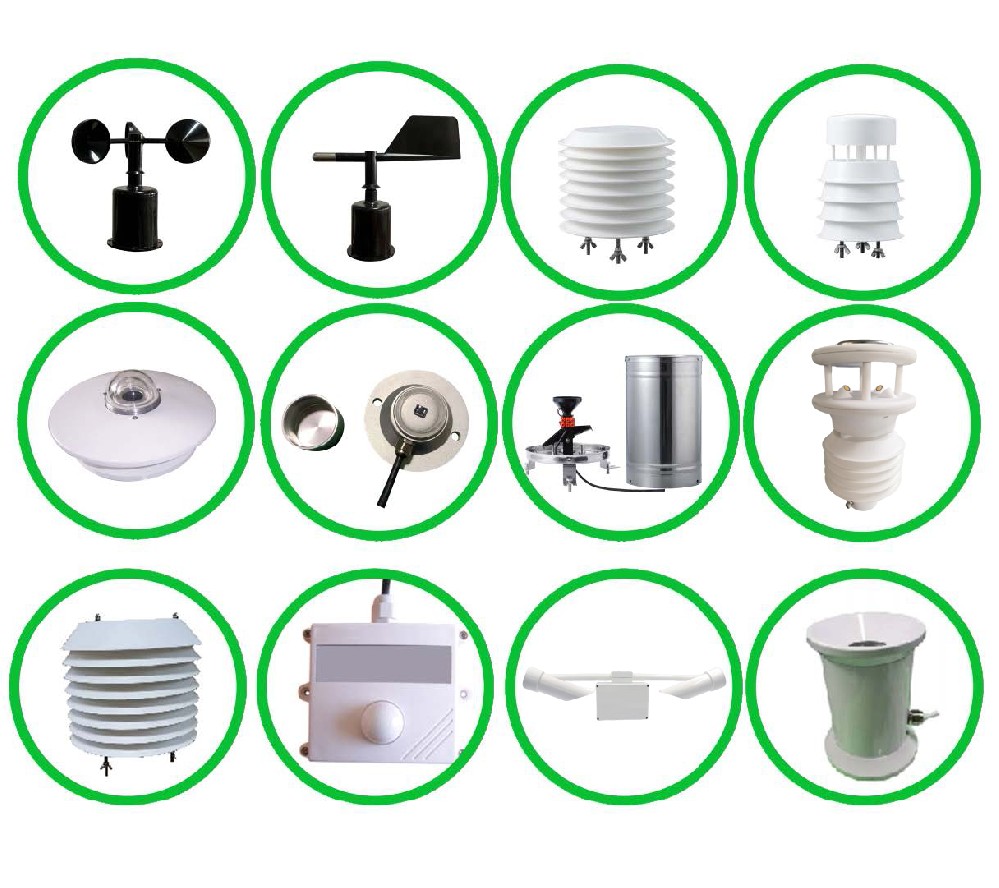
| Core weather options | Wind, rainfall, air temperature, humidity and pressure |
| Energy-specific options | Solar irradiance and PV module temperature |
| Interfaces | RS485 Modbus, pulse or analog according to sensor model |
| Acquisition | Logger, PLC or RTU with local storage |
| Backhaul | 4G/5G, Ethernet or project-approved network |
| Power | Plant supply or solar/battery for remote points |
| Acceptance | Physical response through final SCADA value and fault handling |
Wind sensors need clearance from structures and a documented north reference. Rain gauges need a level, open catch and maintenance access. Power-station buildings and arrays can create wakes, splash and heat that make convenient locations unrepresentative.
Use local storage sized for the expected outage. Define clock synchronization, upload retry, duplicate handling and missing-data flags. A communications loss must not appear as zero wind, zero rainfall or normal temperature.
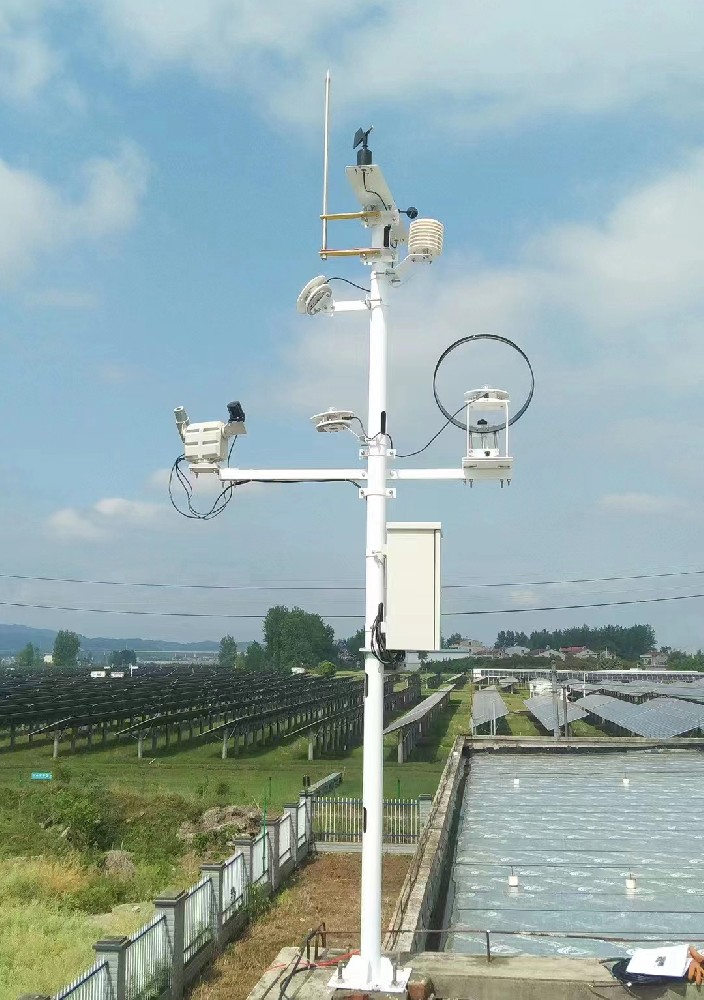
A maintainable power-station system separates sensing, acquisition and remote communications:
Weather and energy sensors → RS485 / pulse / analog inputs → data logger, PLC or RTU → plant network or 4G/5G → SCADA or private server
This division keeps local data acquisition operating when the external network is unavailable and prevents a sensor interface from being described as a cloud connection.
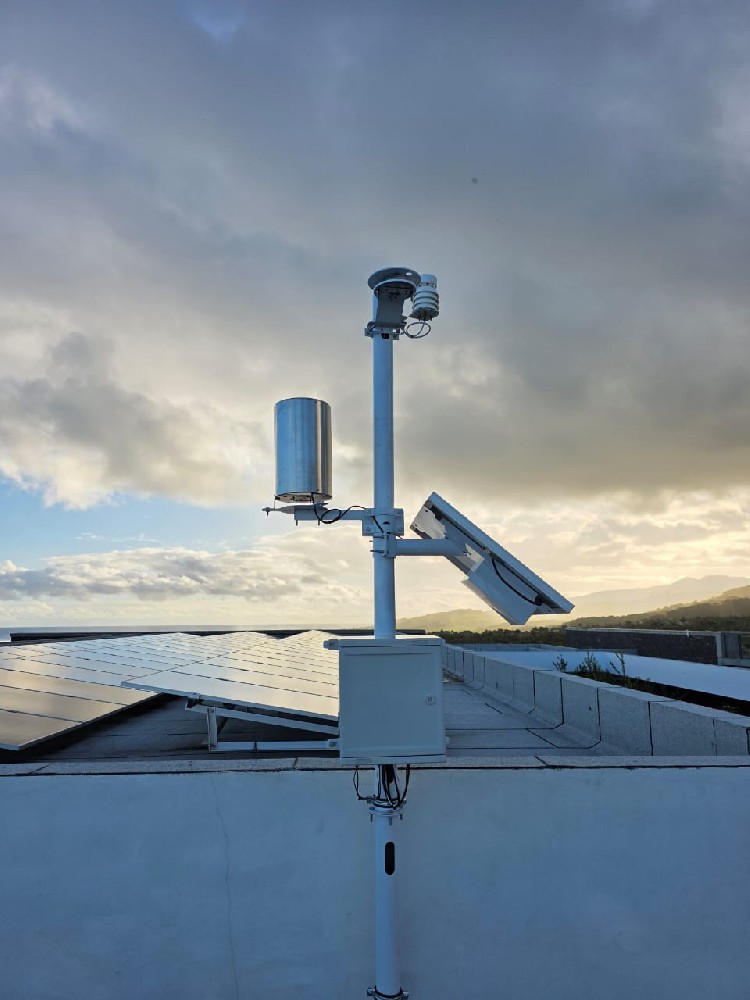
A PV station commonly combines plane-of-array or horizontal irradiance, module rear-surface temperature, ambient temperature, humidity and wind. Rainfall may support cleaning and event review. Sensor geometry and time synchronization should match the performance-analysis method used by the plant.
Wind plants may need nacelle, meteorological mast or site-level data for different purposes. Transmission yards and lines may focus on wind, icing, temperature or lightning context. Define the operational use before choosing height, range and station density.
Provide as-built coordinates and heights, obstruction photographs, wiring and network diagrams, channel map, serial list, calibration or test documents, power calculations, logger configuration, platform export and alarm-test results. This package allows the plant to maintain and audit the system after handover.
Private-server and plant-network connections need approved protocols, accounts, certificates, ports and update responsibilities. Keep sensor buses separated from external network functions through the logger or gateway. Define who owns raw data, configuration backups and platform exports.
Rain gauges need cleaning and level checks, radiation instruments need clean optical surfaces, and wind sensors need safe inspection. Include access, isolation and fall-protection requirements in mast and platform design rather than discovering them during the first service visit.
Perform factory or bench integration first, then verify installation, channel response, communications, storage and alarms on site. Run an agreed trial period and review missing data, clock behavior and power status before final handover.
Calculate load for sensors, logger, modem and heaters or accessories. Review cable loss, backup autonomy, grounding, surge exposure and shutdown behavior. Remote stations need a recovery strategy after low voltage.
Weather values become useful when thresholds, alarms and operator actions are approved. The monitoring system supplies measured inputs; it does not by itself replace plant protection, forecasting or safety procedures.
Operating condition: Performance analysis needs irradiance and module thermal context.
System approach: Synchronize pyranometer, module temperature, ambient and wind channels with SCADA production.
Project value: Engineers can investigate losses using measured site conditions.
Operating condition: Terrain and turbine wakes complicate representative wind measurement.
System approach: Define mast locations and separate resource, operational and safety objectives.
Project value: Teams avoid applying one wind point to decisions it cannot represent.
Operating condition: Rain events and remote communications affect inflow awareness.
System approach: Combine local rainfall storage with level or flow systems on one clock.
Project value: Operators retain event evidence through backhaul outages.
Operating condition: Heat, wind and rainfall affect cooling and exposed equipment.
System approach: Place atmospheric points outside local exhaust and building effects.
Project value: Maintenance teams gain environmental context for plant events.
No. Select parameters from plant type, decisions, exposure and applicable requirements.
No. Lux and solar irradiance are different quantities.
Only through approved plant logic, independent protection and validated failure handling.
It preserves measurements during communications outages and supports later event reconstruction.
Yes when electrical interfaces, registers, capacity, isolation and polling are compatible.
Sensors, mounting, enclosure, logger, communications, power, platform, documents and commissioning.
Stimulate or simulate the channel, verify threshold and delay, confirm notification and record the operator action.
Define protocol, endpoint, security, payload, timestamps, retry and ownership before ordering.
Provide drawings, channel map, settings, serials, test results, accounts, maintenance and recovery procedures.
Provide the plant type, required parameters, site plan, measurement heights, interfaces, logger or SCADA requirements, power availability, communications, quantity and acceptance criteria. NiuBoL can prepare a system scope without assuming that every plant needs the same station.
Prev:Wind Energy Site Monitoring — Anemometer, Wind Speed and Direction Sensor
Next:Solar Radiation & PV Monitoring — Solar Radiation Sensor, Pyranometer, Solar Tracker
Related recommendations
Sensors & Weather Stations Catalog
 Agriculture Sensors and Weather Stations Catalog-NiuBoL.pdf
Weather Stations Catalog-NiuBoL.pdf
Agriculture Sensors Catalog-NiuBoL.pdf
Water Quality Sensor Catalog-NiuBoL.pdf
Related products
 Combined air temperature and relative humidity sensor
 TDR Soil Moisture & Temperature Sensor for irrigation| RS485 |4-20mA| NBL-S-THR
 Soil pH sensor RS485 soil Testing instrument soil ph meter for agriculture |NBL-S-PH
 Wind Speed sensor Output Modbus/RS485/Analog/0-5V/4-20mA
 0.2mm Tipping Bucket Rain Gauge for Weather & Hydrology | NiuBoL
 Pyranometer Solar Radiation Sensor 4-20mA/RS485


Screenshot, WhatsApp to identify the QR code
WhatsApp number:+8615367865107
(Click on WhatsApp to copy and add friends)

