





— Blogs —
—Products—
 Consumer hotline +8618073152920
WhatsApp:+8615367865107
Address:Room 102, District D, Houhu Industrial Park, Yuelu District, Changsha City, Hunan Province, China
Company news
Time:2025-02-21 10:15:31 Popularity:1658
NiuBoL exported soil and leaf wetness sensors to the Netherlands. The two sensor groups observe different parts of the growing environment: conditions around the roots and moisture on a leaf-like surface near the canopy. Bringing those observations together can help an agricultural monitoring team investigate irrigation response, surface drying and crop microclimate.

Soil moisture indicates water conditions around the installed probe, while soil temperature provides thermal context at that depth. A leaf wetness sensor responds to moisture on its exposed sensing surface. Wet foliage can persist after rain or condensation even when root-zone moisture is not high, and irrigation can wet the soil without wetting leaves.
For a similar installation, choose soil channels according to the intended decision. Moisture and temperature support root-zone observation; pH describes acidity or alkalinity and requires the appropriate probe. Not every soil sensor includes all three measurements. Select the required parameters before comparing models in the NiuBoL agricultural sensor range.

The leaf wetness sensor uses a leaf-like sensing surface whose dielectric response changes as moisture accumulates or dries. Its temperature channel adds information about surface conditions. The instrument is intended to experience the crop's microclimate; it does not need to be attached directly against a living leaf.
| Observation | Useful comparison |
|---|---|
| Soil moisture and temperature | Compare root-zone changes with rainfall or irrigation events |
| Leaf wetness and surface temperature | Examine wetting, drying and cool surface conditions near the crop |
| Air humidity and rainfall, if recorded separately | Help distinguish humid air, precipitation and persistent surface moisture |
Wetness duration and temperature can be inputs to a crop-specific disease-risk assessment. They do not identify a pathogen or prove that infection has occurred. A wetness reading also should not be treated as an air relative-humidity measurement: one describes a surface response, the other water vapor in the surrounding air.
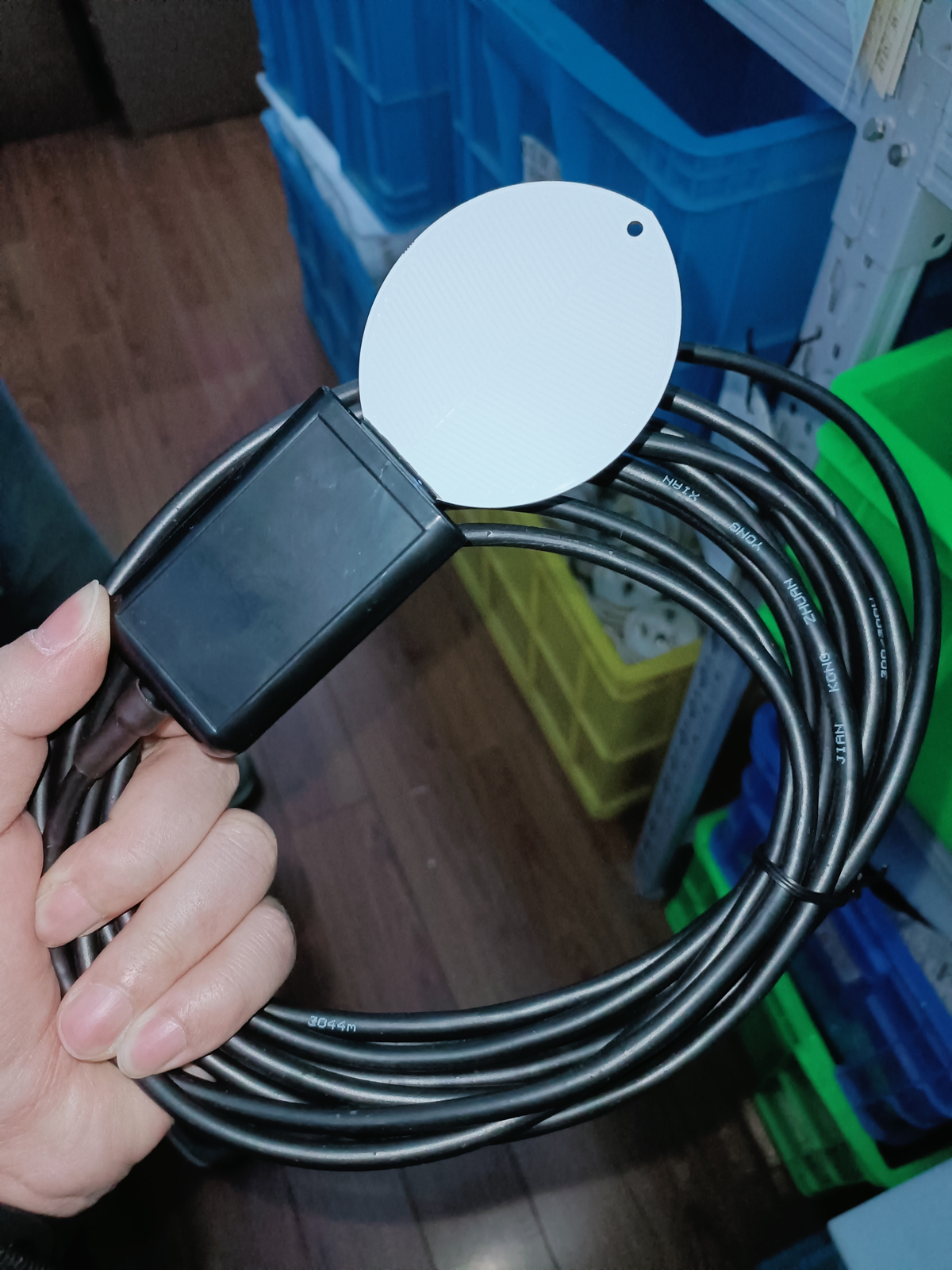
Place the soil probe in representative soil at the required depth, with firm contact around its sensing elements. In drip-irrigated areas, record its distance from the emitter. A probe directly in the wetted zone and one between irrigation lines may legitimately produce different readings.
Position the leaf wetness sensor beside representative foliage, where it can experience similar rainfall, dew and drying. A non-metallic tie can pass through the mounting hole to secure it to a suitable support or branch. Avoid shading or shielding the surface unintentionally, and leave enough cable slack for plant movement and maintenance.
Record irrigation and cleaning times with both channels. Surface residue can alter the wetting behavior of the leaf-like sensor, while disturbed soil contact can change the probe response. Checking those physical conditions helps the team investigate an unexpected trend before changing an irrigation rule.
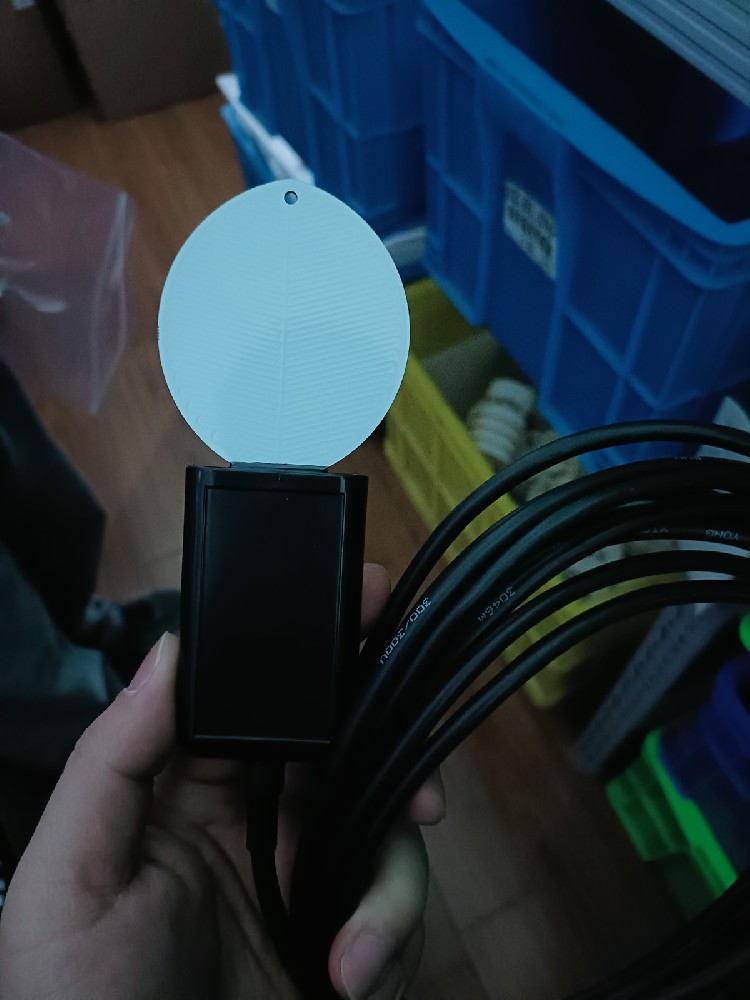
The receiving system must support the selected output of each instrument. For RS485 Modbus RTU versions, assign suitable device addresses and map the correct units and register scaling in the logger or controller. Time-align the two channels so root-zone and canopy events can be compared rather than displayed as unrelated values.
For a Netherlands monitoring project, send NiuBoL a sketch showing the crop, root-zone measurement depth and proposed leaf wetness position, together with the receiving controller details. The leaf wetness sensor and the required soil probe can then be specified as measurement inputs. Irrigation control and disease-risk calculations, where needed, belong in the controller or software configuration rather than being assumed functions of the sensors.
Prev:Export of Meteorological Sensors to Sri Lanka
Next:Automatic weather stations and soil sensors exported to South Korea
Related recommendations
Sensors & Weather Stations Catalog
 Agriculture Sensors and Weather Stations Catalog-NiuBoL.pdf
Weather Stations Catalog-NiuBoL.pdf
Agriculture Sensors Catalog-NiuBoL.pdf
Water Quality Sensor Catalog-NiuBoL.pdf
Related products
 Combined air temperature and relative humidity sensor
 TDR Soil Moisture & Temperature Sensor for irrigation| RS485 |4-20mA| NBL-S-THR
 Soil pH sensor RS485 soil Testing instrument soil ph meter for agriculture |NBL-S-PH
 Wind Speed sensor Output Modbus/RS485/Analog/0-5V/4-20mA
 Tipping bucket rain gauge for weather monitoring auto rainfall sensor RS485/Outdoor/stainless steel
 Pyranometer Solar Radiation Sensor 4-20mA/RS485


Screenshot, WhatsApp to identify the QR code
WhatsApp number:+8615367865107
(Click on WhatsApp to copy and add friends)

