





— Blogs —
—Products—
 Consumer hotline +8618073152920
WhatsApp:+8615367865107
Address:Room 102, District D, Houhu Industrial Park, Yuelu District, Changsha City, Hunan Province, China
Company news
Time:2026-11-02 09:30:00 Popularity:11
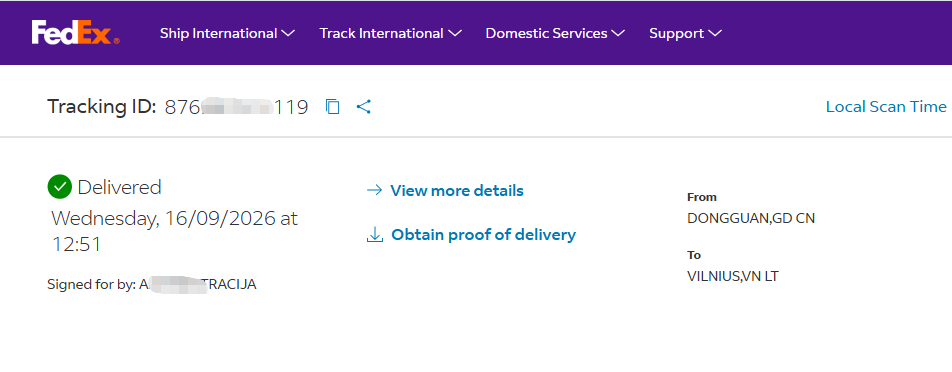
NiuBoL has completed an international delivery of NBL-W-LUX illuminance sensors to Lithuania, extending its supply of environmental measurement instruments to customers in the Baltic region. The shipment highlights a straightforward but important task in monitoring systems: measuring the light available at a particular location and converting that measurement into a signal that a controller can use.
An illuminance sensor, also called a Lux sensor, measures how much visible light reaches a surface. Its output is expressed in Lux (lx), a unit based on the brightness perceived by the human eye. This is useful when a system needs to observe daylight conditions, compare brightness at different times or make decisions about artificial lighting.
The NiuBoL NBL-W-LUX illuminance sensor uses a light-sensitive detector to turn incoming light into an electrical measurement. The model has a measurement range of 0–200,000 Lux, making it applicable to a wide variety of indoor and outdoor lighting conditions. The version supplied in this order uses a 4–20 mA analog output, which can be read by a compatible PLC, data logger or industrial controller.

The NBL-W-LUX converts ambient light levels into a signal for compatible monitoring and control equipment.
In greenhouses and horticultural facilities, illuminance readings can help operators observe changes in daylight and provide a reference for supplemental lighting control. In commercial buildings and warehouses, light measurements can inform daylight-responsive lighting strategies. Outdoor monitoring systems may also use Lux readings to document variations in ambient brightness.
Lithuania, a Baltic country in Northern Europe, experiences substantial seasonal changes in daylight hours. Those variations make light observation relevant to building management, controlled-environment agriculture and environmental research. The particular application depends on how the sensor is positioned and connected to the rest of the system.
Illuminance should not be confused with solar irradiance (W/m²) or photosynthetically active radiation (PAR). These measurements serve different purposes, and the correct sensor should be selected according to the project goal.
NiuBoL offers illuminance sensing solutions for different monitoring and control configurations. For advice on selecting a suitable model, please share your intended measurement location, required light range, power supply and signal interface.
Contact NiuBoL for specifications and a quotation or visit our contact page.
Prev:NiuBoL Radar Flow and Water Level Instruments Shipped to Zimbabwe
Next:NiuBoL Solar Insect Trap Systems Delivered to New Zealand
Related recommendations
Sensors & Weather Stations Catalog
 Agriculture Sensors and Weather Stations Catalog-NiuBoL.pdf
Weather Stations Catalog-NiuBoL.pdf
Agriculture Sensors Catalog-NiuBoL.pdf
Water Quality Sensor Catalog-NiuBoL.pdf
Related products
 Combined air temperature and relative humidity sensor
 TDR Soil Moisture & Temperature Sensor for irrigation| RS485 |4-20mA| NBL-S-THR
 Soil pH sensor RS485 soil Testing instrument soil ph meter for agriculture |NBL-S-PH
 Wind Speed sensor Output Modbus/RS485/Analog/0-5V/4-20mA
 Tipping bucket rain gauge for weather monitoring auto rainfall sensor RS485/Outdoor/stainless steel
 Pyranometer Solar Radiation Sensor 4-20mA/RS485


Screenshot, WhatsApp to identify the QR code
WhatsApp number:+8615367865107
(Click on WhatsApp to copy and add friends)

