





— Blogs —
—Products—
 Consumer hotline +8618073152920
 WhatsApp:+8615367865107
Address:Room 102, District D, Houhu Industrial Park, Yuelu District, Changsha City, Hunan Province, China
Company news
Time:2026-08-21 16:22:00 Popularity:254
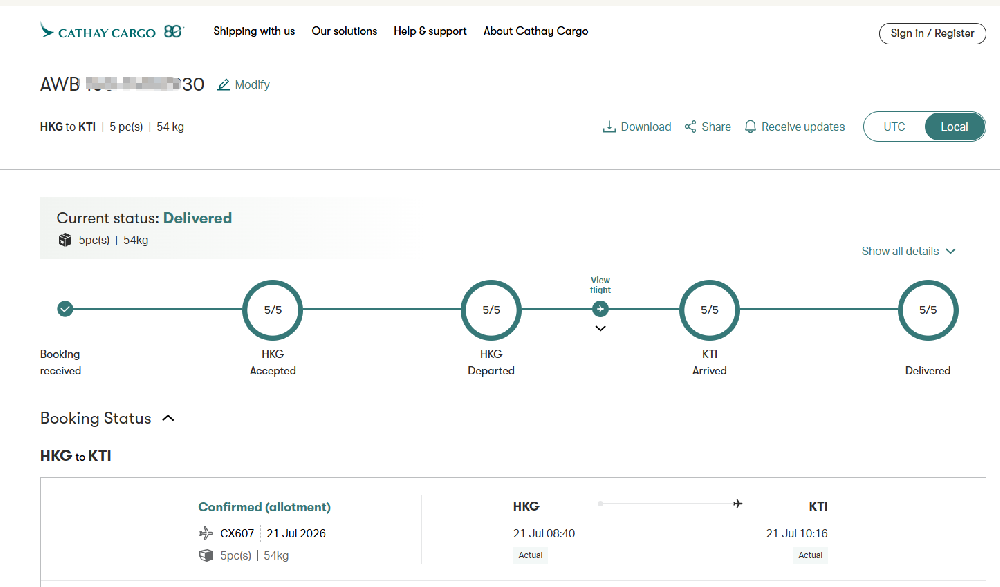
A modular NiuBoL automatic weather station package has arrived in Cambodia by air freight. The shipment combines meteorological measurement channels with the power, communications, mounting and protection items needed to build a working outdoor station. It was supplied as a project package rather than a collection of unrelated sensors.
| Item | Model | Function |
|---|---|---|
| Wind speed sensor | NBL-W-SS | Measures 0-70 m/s wind speed for the station record |
| Wind direction sensor | NBL-W-DS | Measures 0-360 degrees wind direction |
| Temperature, humidity and pressure sensor | NBL-W-LBTH | Provides the core atmospheric state variables |
| Stainless-steel tipping-bucket rain gauge | NBL-W-RS | Measures rainfall increments and intensity |
| Industrial router | TR341 | Provides RS485/RS232 and IP communications for remote data transfer |
| Solar power system | NBL-282-GD83 | 60 W panel, controller, 30 Ah lithium battery and power cable |
| Mounting structure | NBL-282-ZJ3 | Three-metre galvanized mast with embedded parts |
| Protection equipment | NBL-282-FL and PH-282-FHX | Lightning-protection parts and a protective equipment box |
Weather-station tenders often list sensors clearly but leave the power and installation scope vague. This order includes a mast, solar panel, battery, controller, cabinet and lightning-protection components. Those items determine whether the station can operate through cloudy periods, keep connectors dry and remain serviceable after installation.
The solar package should still be checked against the final logging and transmission interval. A 60 W panel and 30 Ah battery define the supplied hardware; actual autonomy depends on router duty cycle, sensor load, local solar resource, battery temperature and communications availability. The project engineer should document the load calculation and low-voltage behavior during commissioning.
| Sensor | Range and accuracy | Power and output |
|---|---|---|
| NBL-W-SS wind speed | 0-70 m/s; 0.1 m/s resolution; accuracy +/- (0.3 + 0.03V) m/s; start speed <=0.5 m/s | DC 12-24 V, RS485, 50 mW, IP45 |
| NBL-W-DS wind direction | 0-360 degrees; 1-degree resolution; +/-3 degrees; start speed <=0.5 m/s | DC 12-24 V, RS485, 0.15 W, IP45 |
| NBL-W-LBTH atmospheric sensor | -40 to 80 degrees C, 0-100% RH, 10-1200 hPa; stated accuracies +/-0.5 degrees C, +/-5% RH and +/-1.5 hPa | DC 12-24 V, RS485 |
| NBL-W-RS rain gauge | 0-4 mm/min; 0.2 mm resolution; +/-4% under the stated indoor static test condition | DC 12-24 V and RS485 in this order |
The mast foundation and lightning path should be completed before final electronics are installed. Mount the wind sensors where the mast and nearby structures do not create avoidable turbulence. Install the temperature-humidity-pressure sensor in its radiation shield with free airflow. Level the rain-gauge rim, keep it clear of splash and obstruction, and document its height.
After mechanical work, label every cable at both ends. Connect one RS485 device at a time, assign unique addresses and verify live values before adding the next device. The router should then be tested with the actual SIM or network service, including a controlled outage. A weather station is accepted when sensing, storage, power and transmission recover together, not merely when values appear once on a screen.
On receipt, the contractor should inspect the rain-gauge body, wind cups and vane, mast sections, solar panel, cabinet seals and cable glands before moving the equipment to the installation site.
It includes the main sensing, communications, solar-power, mast, cabinet and lightning-protection components listed in the order. The final completeness check must also cover the receiving platform, SIM or network service, civil work and installation labor.
They can when their serial settings are compatible, each address is unique and the cable/power design is suitable. Confirm the register maps and test the complete bus before raising the mast.
Measure charging and loaded battery voltage, document average station load, test low-voltage behavior and compare the result with expected local low-sun conditions. Panel wattage alone does not prove autonomy.
A tilted catchment and tipping mechanism can bias rainfall collection and tipping behavior. The level, mounting height and surrounding obstruction should be recorded after installation.
State the required parameters, measurement ranges, output protocol, mast height, solar autonomy target, communications network, platform interface, lightning conditions, enclosure scope, installation responsibility and destination.
The Cambodia delivery shows the difference between buying sensors and procuring an operable station. The package joins wind, atmospheric and rainfall measurement with a router, solar supply, mast, cabinet and lightning protection. Project success now depends on site layout, RS485 addressing, power verification, communications recovery and a documented acceptance test. NiuBoL can prepare the equipment list and interface documents for similar modular weather-station projects when the site and platform requirements are defined.
Prev:NiuBoL Delivers RS485 Soil Sensors and a Modbus Gateway to Germany
Next:NiuBoL Weather Station System Exported to Armenia for Outdoor Monitoring
Related recommendations
Sensors & Weather Stations Catalog
 Agriculture Sensors and Weather Stations Catalog-NiuBoL.pdf
Weather Stations Catalog-NiuBoL.pdf
Agriculture Sensors Catalog-NiuBoL.pdf
Water Quality Sensor Catalog-NiuBoL.pdf
Related products
 Combined air temperature and relative humidity sensor
 TDR Soil Moisture & Temperature Sensor for irrigation| RS485 |4-20mA| NBL-S-THR
 Soil pH sensor RS485 soil Testing instrument soil ph meter for agriculture |NBL-S-PH
 Wind Speed sensor Output Modbus/RS485/Analog/0-5V/4-20mA
 Tipping bucket rain gauge for weather monitoring auto rainfall sensor RS485/Outdoor/stainless steel
 Pyranometer Solar Radiation Sensor 4-20mA/RS485

Screenshot, WhatsApp to identify the QR code
WhatsApp number:+8615367865107
(Click on WhatsApp to copy and add friends)

