





— Blogs —
—Products—
 Consumer hotline +8618073152920
 WhatsApp:+8615367865107
Address:Room 102, District D, Houhu Industrial Park, Yuelu District, Changsha City, Hunan Province, China
Company news
Time:2026-07-14 09:21:14 Popularity:331
NiuBoL recently exported soil sensors to Germany, including the NBL-S-TM soil temperature and moisture sensor and the NBL-S-PH soil pH sensor. The shipment supports projects that need reliable soil moisture, soil temperature and soil acidity or alkalinity data for irrigation, greenhouse management, soil rapid testing, plant cultivation and scientific experiments.
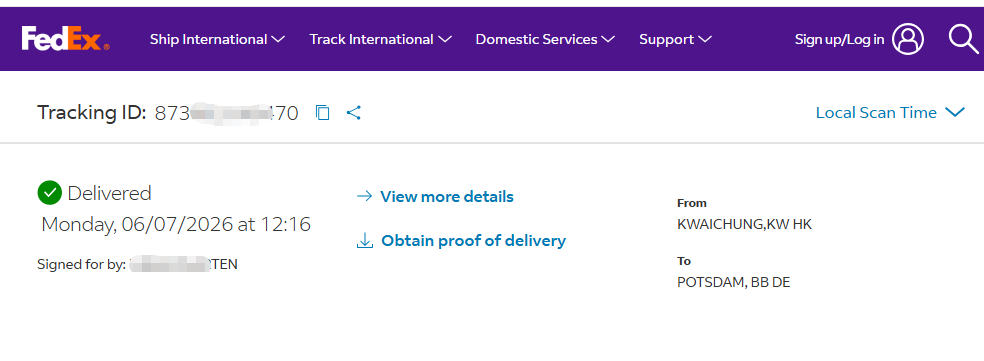
Germany has a strong agricultural technology market, with demand from farms, research institutions, greenhouse operators and environmental monitoring users. Soil data is important because irrigation and fertilization decisions depend on what is happening around the root zone. A sensor that can remain in soil and provide repeatable readings helps users move from experience-only decisions to data-supported management.
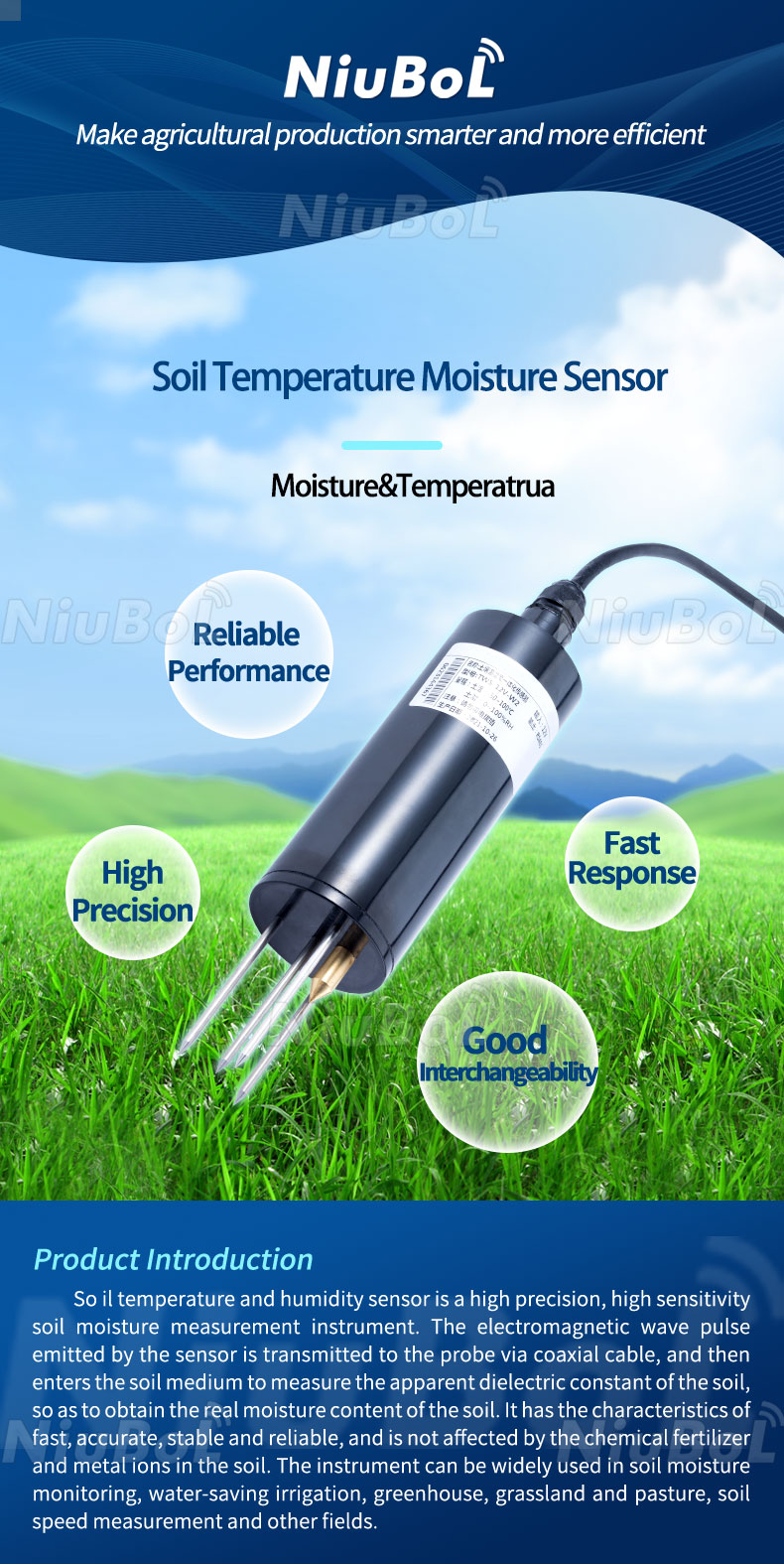
The NBL-S-TM sensor measures soil temperature and soil moisture at the same time. It uses the FDR method to measure soil moisture by detecting the dielectric constant of soil, which can directly and stably reflect real soil water content. The sensor outputs volumetric soil water percentage and is suitable for soil moisture monitoring, scientific experiments, agricultural irrigation, greenhouse production, flowers, vegetables, pasture and plant cultivation.
| Item | Specification |
|---|---|
| Soil temperature range | -40 to 80 deg C |
| Temperature resolution | 0.1 deg C |
| Temperature accuracy | +/-0.5 deg C |
| Soil moisture range | 0-100% |
| Moisture resolution | 0.1% |
| Moisture accuracy | 5% |
| Power supply | DC 5-24V |
| Signal output | RS485, Modbus protocol |
| Protection rating | IP68, long-term use in water immersion conditions |
| Default cable length | 5 m, customizable |
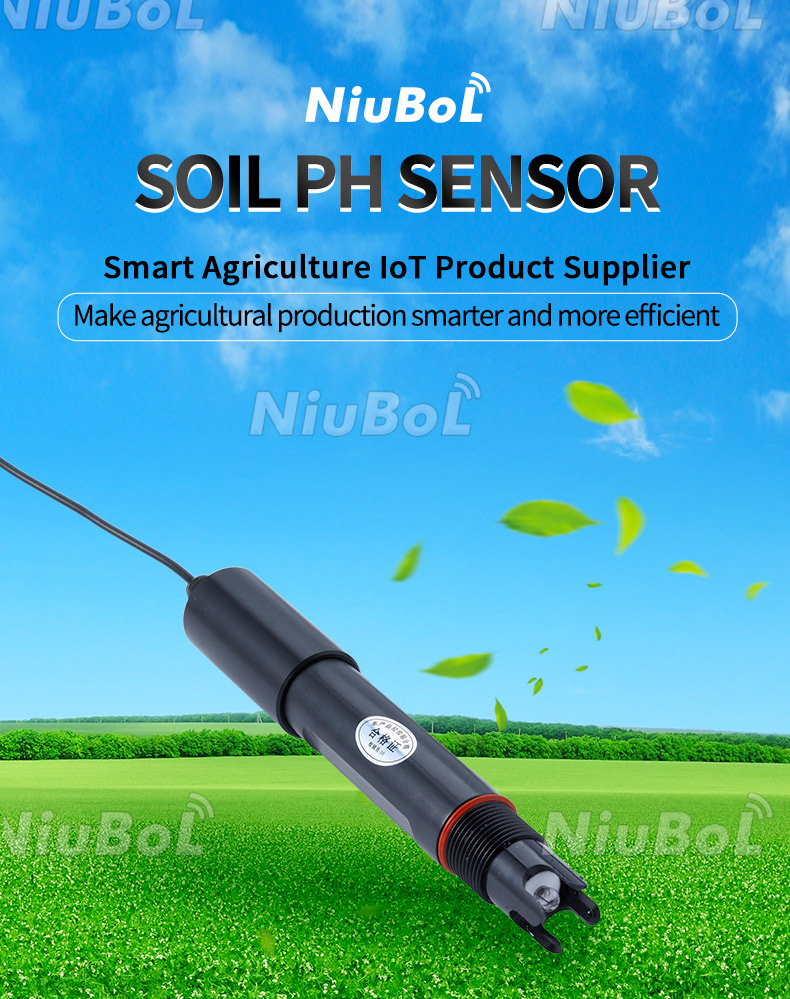
The NBL-S-PH sensor solves several problems found in traditional soil pH measurement: complex calibration, difficult integration, higher power consumption, special display requirements and poor portability. It can be used in agricultural irrigation, horticulture, grassland, soil rapid testing, plant cultivation and scientific experiments.
| Item | Specification |
|---|---|
| Measurement range | 0-14 pH |
| Accuracy | +/-0.1 pH |
| Resolution | 0.01 pH |
| Response time | <10 s in water |
| Power supply | DC 12-24V |
| Output options | 0-5V, 4-20mA, RS485 |
| Standard cable | 5 m |
| Working environment | 0-80 deg C, 0-95%RH |
| Power consumption | 0.2W |
| Housing | Waterproof plastic shell |
The two sensor types answer different questions. Soil temperature and moisture data help users judge irrigation timing, root-zone water status and environmental change. Soil pH data helps users understand acidity and alkalinity, which affects nutrient availability and crop suitability. When used together, they provide a more complete soil condition profile for growers, researchers and system integrators.
For system integration, RS485 and Modbus output are important because the sensors can be connected to data loggers, gateways, controllers or remote monitoring platforms. Buyers should confirm cable length, installation depth, output type, power supply and data collection method before ordering.
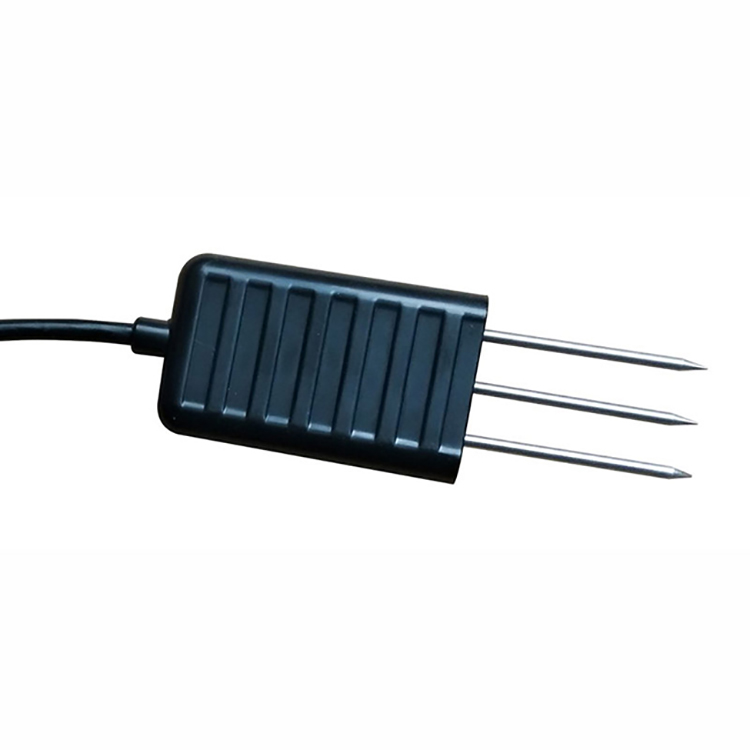
These sensors fit long-term soil condition monitoring, greenhouse irrigation control, research plots, horticulture projects and pasture monitoring. They are useful when the user needs continuous or repeatable soil data from the root zone. They are not the right replacement for full laboratory soil chemistry analysis, and the pH sensor should be installed and maintained correctly if the user expects stable readings over time.
For German system integrators, the practical question is how the sensor will be connected. A farm may need a gateway and cloud platform; a greenhouse may connect the sensor to an irrigation controller; a research project may need data logging and export. The same sensor can support these uses, but wiring, communication address, installation depth and maintenance plan should be defined before shipment.
For export orders, sensor acceptance should include more than checking the package quantity. The buyer should verify model labels, cable length, output type, probe appearance and communication response before field installation. For RS485 projects, at least one sensor should be tested with the intended data logger or gateway to confirm Modbus address, baud rate and data interpretation.
Installation records are also useful. A greenhouse or research project should record the installation depth, soil type, sensor ID, cable route and connected controller. If a reading changes later, these records help the technician decide whether the issue comes from soil condition, wiring, power supply, calibration or probe contact.
A clear inquiry should include the measured variables, quantity, output signal, required cable length, target controller or platform, soil depth, installation environment and whether the project needs only sensors or a complete monitoring system. For distributors, it is also useful to state whether the sensors will be sold as individual parts or packaged with gateways, displays or irrigation controllers.
A: Moisture, temperature and pH describe different parts of soil condition. Moisture affects irrigation, temperature affects root activity, and pH affects nutrient availability. Together they support better field decisions.
A: Yes. The sensor is fully sealed, resistant to corrosion and rated IP68. It can be buried in soil or placed in water for long-term dynamic monitoring when installed correctly.
A: RS485 Modbus allows the sensors to connect with industrial data loggers and monitoring systems. This is useful for greenhouse automation, research monitoring and irrigation control projects.
A: Confirm measured parameters, output signal, cable length, installation method, power supply and whether the sensors will connect to an existing platform or controller.
A: Yes. The standard cable length is 5 m, and cable length can be customized according to project requirements.
A: The probe should be fully inserted into the measured soil layer with good soil contact around the electrodes. Air gaps, loose soil and partial insertion can reduce the usefulness of moisture readings.
A: Soil moisture shows water availability, while pH shows acidity or alkalinity that affects nutrient availability. A field can have enough water but still perform poorly if pH is outside the suitable range for the crop.
A: Application type, soil depth, cable length, output signal, controller model, quantity, installation environment and whether the buyer needs only sensors or a complete monitoring system all help improve quotation accuracy.
This shipment to Germany shows practical demand for soil sensors that can be integrated into agricultural and research monitoring systems. For buyers who need temperature, moisture and pH data, NiuBoL can provide sensor options that support field installation, RS485 communication and long-term soil condition monitoring.
Prev:NiuBoL Exports More Than 600 Portable Type-C 8-in-1 Soil Sensors to Africa
Next:NiuBoL Soil Nutrient Analyzer Exported to Syria for Field Soil Testing
Related recommendations
Sensors & Weather Stations Catalog
 Agriculture Sensors and Weather Stations Catalog-NiuBoL.pdf
Weather Stations Catalog-NiuBoL.pdf
Agriculture Sensors Catalog-NiuBoL.pdf
Water Quality Sensor Catalog-NiuBoL.pdf
Related products
 Combined air temperature and relative humidity sensor
 TDR Soil Moisture & Temperature Sensor for irrigation| RS485 |4-20mA| NBL-S-THR
 Soil pH sensor RS485 soil Testing instrument soil ph meter for agriculture |NBL-S-PH
 Wind Speed sensor Output Modbus/RS485/Analog/0-5V/4-20mA
 Tipping bucket rain gauge for weather monitoring auto rainfall sensor RS485/Outdoor/stainless steel
 Pyranometer Solar Radiation Sensor 4-20mA/RS485

Screenshot, WhatsApp to identify the QR code
WhatsApp number:+8615367865107
(Click on WhatsApp to copy and add friends)

