





— Blogs —
—Products—
 Consumer hotline +8618073152920
 WhatsApp:+8615367865107
Address:Room 102, District D, Houhu Industrial Park, Yuelu District, Changsha City, Hunan Province, China
Company news
Time:2026-07-14 09:21:14 Popularity:314
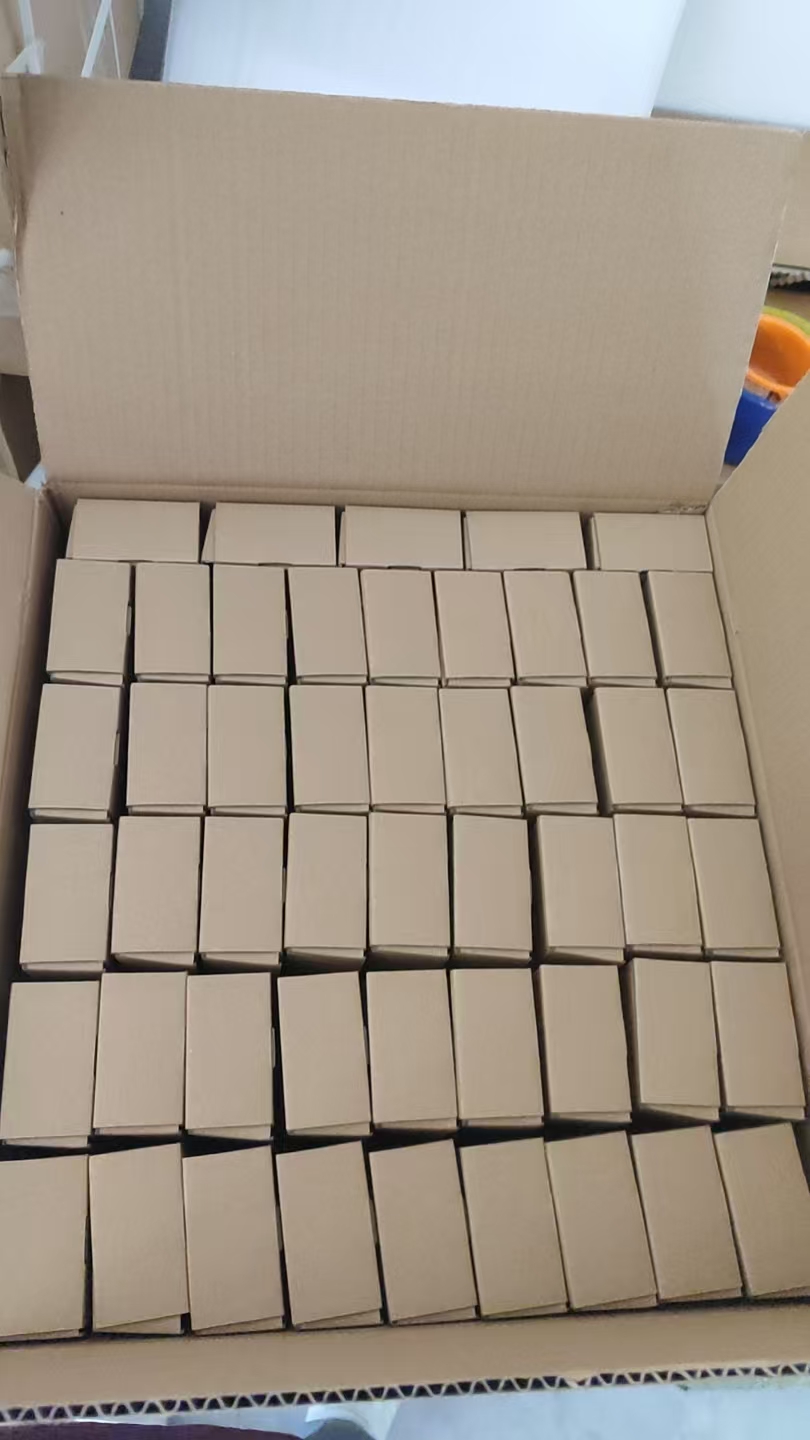
NiuBoL recently exported more than 600 portable Type-C/USB 8-in-1 soil multi-parameter testers to Africa. The shipment is designed for users who need fast field measurement of soil temperature, soil moisture, soil EC, salinity, available nitrogen, available phosphorus, available potassium and soil pH. For agricultural service teams, distributors, farms and field technicians, a portable soil tester provides a practical way to collect soil information without moving every sample to a laboratory first.
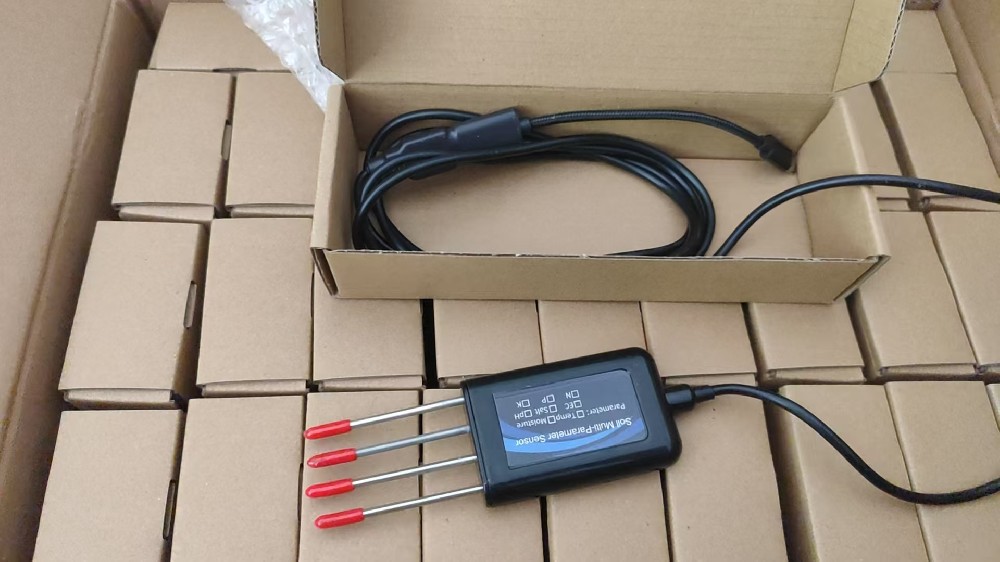
Africa has diverse farming environments, from irrigated vegetable areas to dryland grain production and greenhouse projects. Soil water, salinity, nutrient status and pH directly affect fertilizer efficiency and crop growth. A portable instrument helps local users make faster decisions in the field, especially where laboratory access is limited, sampling logistics are expensive, or growers need quick screening before detailed soil testing.
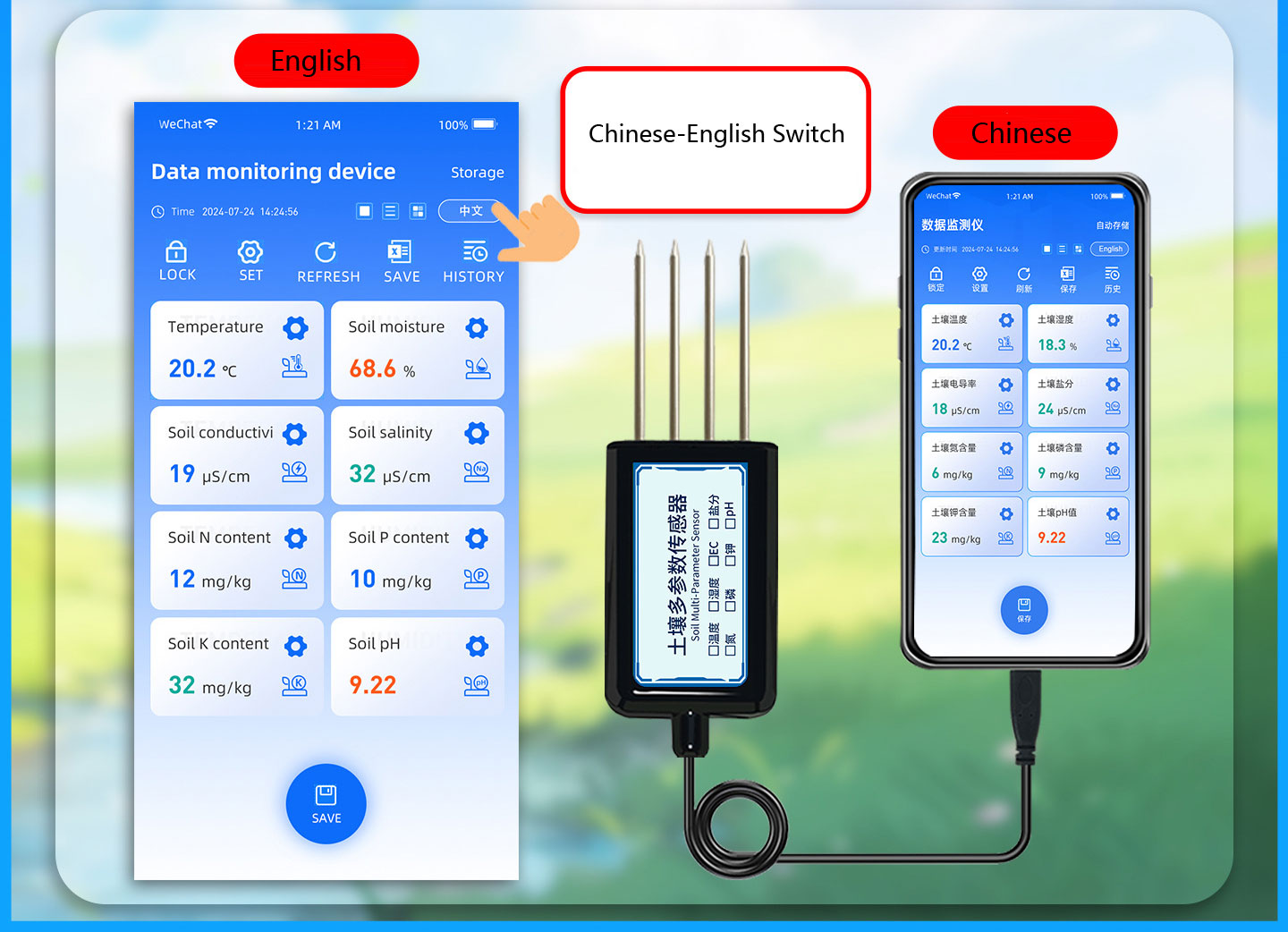
The instrument works with Android and HarmonyOS mobile phones through an APP. After the APP is installed, the user can measure and record multiple soil parameters, adjust settings, correct data, store readings, export Excel files, view historical data curves and switch between Chinese and English interfaces. This is useful for export markets because technicians can collect data, save it by field or location, and share records with farm managers.
| Parameter | Range | Accuracy | Resolution |
|---|---|---|---|
| Soil temperature | -40 to 80 deg C | +/-0.3 deg C | 0.1 deg C |
| Soil moisture | 0-100% m3/m3 | +/-2% | 0.1% m3/m3 |
| Soil EC | 0-20000 uS/cm | +/-3% | 1 uS/cm |
| Soil salinity | 0-20000 mg/L | +/-3% | 1 mg/L |
| Available nitrogen | 0-1999 mg/kg | +/-3% | 1 mg/kg |
| Available phosphorus | 0-1999 mg/kg | +/-3% | 1 mg/kg |
| Available potassium | 0-1999 mg/kg | +/-3% | 1 mg/kg |
| Soil pH | 3-10 | +/-0.2 | 0.01 |
In many field projects, the main challenge is not that farmers do not understand soil importance; it is that soil information is not available at the right time. A portable tester helps screen moisture stress, salinity risk, nutrient trend and pH condition before irrigation or fertilization decisions. This can support water-saving irrigation, greenhouse management, flower and vegetable production, pasture management, soil rapid testing, plant cultivation and scientific trials.
The tester is especially practical for agricultural distributors and service teams. One technician can visit several fields, collect readings, export records and discuss fertilizer or irrigation decisions with growers. This does not replace full laboratory testing where certified values are required, but it improves field-level decision speed.
The NPK part of this type of sensor is based on soil electrical conductivity and empirical conversion. Because real soils and environments vary, it gives a practical reference value rather than a certified laboratory nutrient result. Buyers should use it for field screening, trend comparison and practical management, and use laboratory testing when exact nutrient certification is required.
The pH measurement uses an electrode method. When the probe contacts the soil environment, the measurement reflects acidity or alkalinity through electrode response. For higher-precision pH work, especially laboratory or compliance testing, a glass electrode pH meter may still be preferred. Stating this boundary clearly helps customers choose the right tool instead of expecting one portable tester to replace every test method.
For a shipment of more than 600 units, the product is not being used as a single demonstration device. It may be distributed to local service teams, dealers, farm technicians or cooperative staff. That means the buyer should prepare a simple operating workflow: how to insert the probe, how long to wait for a stable reading, how to name fields in the APP, how to export Excel files and how to explain reference values to growers.
A good deployment plan also defines when to use the portable tester and when to send samples to a laboratory. For daily screening, irrigation adjustment and field comparison, the portable tester is efficient. For fertilizer formula certification, research-grade nutrient analysis or dispute reports, laboratory testing may still be needed. Clear boundaries improve customer satisfaction after large-volume distribution.
A: It is suitable for agricultural service providers, distributors, cooperatives, farms, greenhouse operators and field technicians who need fast soil screening across multiple sites.
A: No. It is useful for rapid field screening and management decisions, but laboratory testing is still recommended when certified nutrient values or legal reports are required.
A: Excel export, history records and data curves allow users to compare fields, keep service records and share results with managers or growers. This makes the tool more useful than a one-time handheld reading.
A: They should confirm phone compatibility, language interface, measured parameters, training needs, spare units, field workflow and whether the instrument will be used by distributors, cooperatives or farm staff.
A: NiuBoL can provide model matching, export packing, product documentation and configuration advice based on target crops, user type and quantity requirements.
A: The NPK value is a practical reference calculated from soil electrical conductivity and empirical conversion. It is useful for trend screening, but it should not be presented as a certified laboratory nutrient result.
A: EC and salinity help users identify salt accumulation and irrigation water problems. In dry or irrigated areas, salinity stress can reduce crop growth even when water is available.
A: Distributors should prepare APP installation guidance, parameter explanation, cleaning instructions, field reading workflow, spare-unit policy and clear explanation of the difference between screening data and laboratory data.
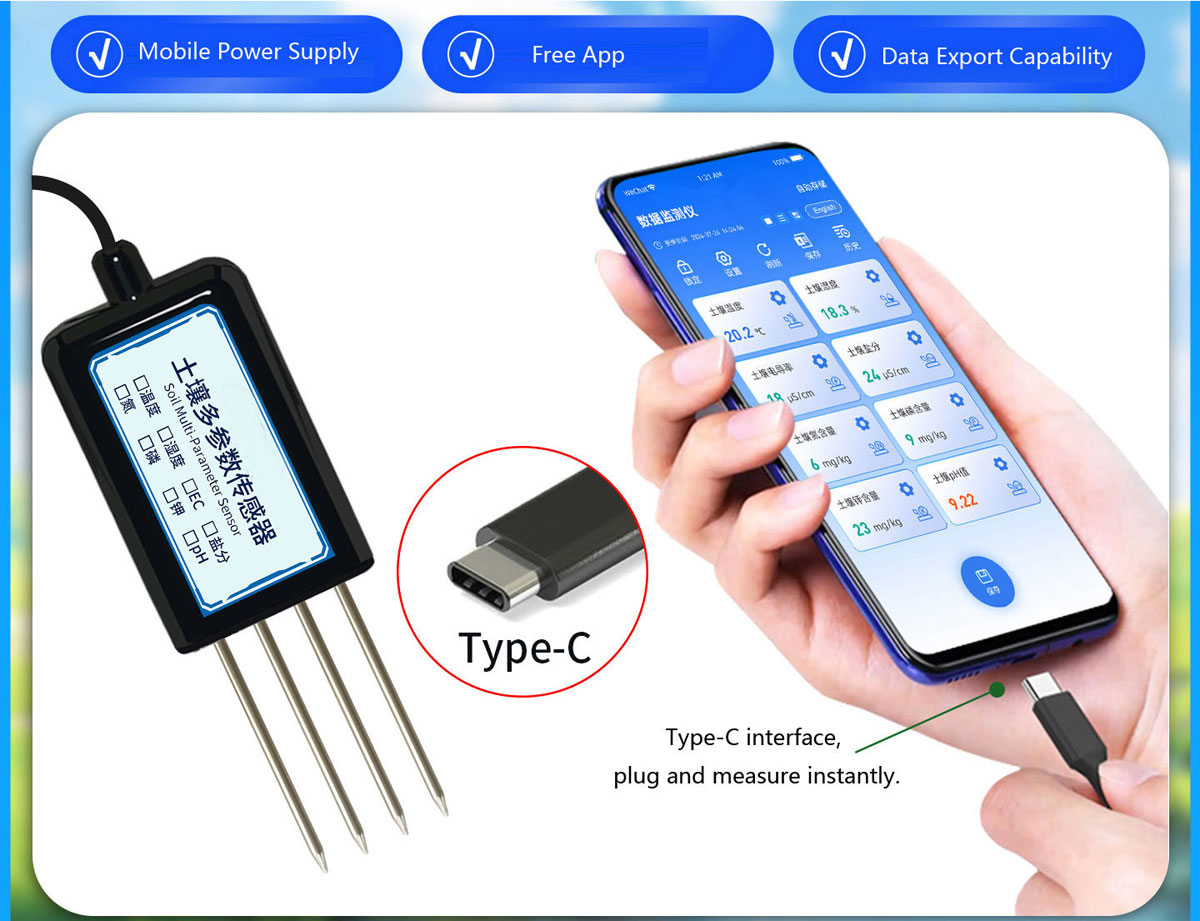
The export of more than 600 portable Type-C 8-in-1 soil sensors to Africa shows the growing need for field-ready soil testing tools. For buyers who need quick soil temperature, moisture, EC, salinity, NPK and pH screening, this portable tester offers a practical balance between convenience, data recording and multi-parameter measurement.
Prev:NiuBoL Exports 65 Multi-Parameter Weather Sensors to Guinea
Next:NiuBoL Soil Temperature, Moisture and pH Sensors Exported to Germany
Related recommendations
Sensors & Weather Stations Catalog
 Agriculture Sensors and Weather Stations Catalog-NiuBoL.pdf
Weather Stations Catalog-NiuBoL.pdf
Agriculture Sensors Catalog-NiuBoL.pdf
Water Quality Sensor Catalog-NiuBoL.pdf
Related products
 Combined air temperature and relative humidity sensor
 TDR Soil Moisture & Temperature Sensor for irrigation| RS485 |4-20mA| NBL-S-THR
 Soil pH sensor RS485 soil Testing instrument soil ph meter for agriculture |NBL-S-PH
 Wind Speed sensor Output Modbus/RS485/Analog/0-5V/4-20mA
 Tipping bucket rain gauge for weather monitoring auto rainfall sensor RS485/Outdoor/stainless steel
 Pyranometer Solar Radiation Sensor 4-20mA/RS485

Screenshot, WhatsApp to identify the QR code
WhatsApp number:+8615367865107
(Click on WhatsApp to copy and add friends)

