





— Blogs —
—Products—
 Consumer hotline +8618073152920
 WhatsApp:+8615367865107
Address:Room 102, District D, Houhu Industrial Park, Yuelu District, Changsha City, Hunan Province, China
Company news
Time:2026-07-14 09:21:14 Popularity:309
NiuBoL recently exported 65 multi-parameter weather sensors to Guinea. The order uses an integrated ultrasonic weather sensor design for projects that need wind speed, wind direction, air temperature, relative humidity, atmospheric pressure and rainfall data in a compact outdoor device. For buyers working in agriculture, environmental monitoring, ports, transport and industrial sites, this type of integrated sensor reduces installation complexity while keeping the main meteorological variables in one system.
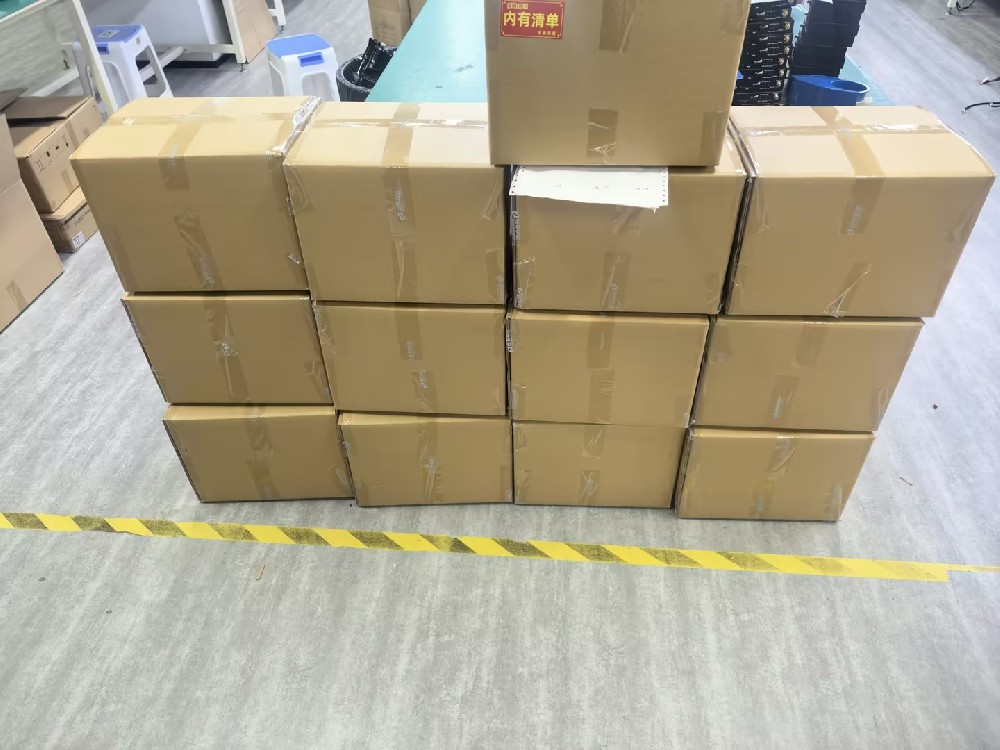
Guinea has agricultural areas, mining activity, coastal environments and infrastructure projects where weather data can affect field work. Rainfall, humidity, heat and wind conditions are practical factors for crop management, outdoor equipment protection, road operation and site safety. A multi-parameter sensor helps local teams collect repeatable measurements without installing separate wind, temperature, humidity, pressure and rainfall instruments one by one.
The NBL-W-61GUWS type sensor uses an ultrasonic principle for wind speed and wind direction. It compares the transmission time of ultrasonic signals between opposite directions. For example, when wind comes from the north, the signal moving from north to south travels differently from the signal moving from south to north. By calculating the time difference, the sensor can determine wind speed and wind direction. This method avoids mechanical moving parts and reduces maintenance in outdoor applications.
The rainfall part uses a piezoelectric kinetic rainfall measurement principle. It identifies the impact force of falling raindrops and converts that impact into rainfall information. This supports rainfall monitoring from light rain to heavy rain and is useful when a project needs compact rainfall measurement without a traditional large tipping-bucket structure.
| Item | Specification | Procurement Meaning |
|---|---|---|
| Power supply | DC 12-24V | Suitable for solar power, DC cabinets and common field power systems |
| Signal output | RS485 | Supports integration with data loggers, gateways and control systems |
| Protocol | Standard Modbus protocol | Convenient for integrators and monitoring platforms |
| Baud rate | 9600 bps | Common communication setting for field devices |
| Average power | 0.4W without dust sensor; 1W with dust sensor | Low power consumption for remote monitoring sites |
| Working temperature | -40 to 80 deg C | Suitable for harsh outdoor climate conditions |
| Working humidity | 0-95%RH | Supports humid field environments |
| Protection | IP65 | Outdoor enclosure protection against dust and water spray |
| Measured Variable | Range | Accuracy | Resolution |
|---|---|---|---|
| Wind speed | 0-60 m/s | +/-0.3 + 3%FS | 0.01 m/s |
| Wind direction | 0-359 degrees | +/-3 degrees | 1 degree |
| Air temperature | -40 to 80 deg C | +/-0.5 deg C | 0.1 deg C |
| Relative humidity | 0-100%RH | +/-5%RH | 0.1%RH |
| Atmospheric pressure | 10-1100 hPa | +/-1.5 hPa | 0.1 hPa |
| Rainfall | 0-8 mm/min | +/-10% | 0.01 mm |
The sensor should be installed away from vibration sources, strong radio or radar transmitters, engines and structures that create airflow turbulence. If it must be installed near radar scanning equipment, the installation should not be on the same plane and should keep sufficient distance. For reliable wind data, surrounding buildings, trees, poles and high structures should be considered before mounting.
The source requirements also referenced common meteorological installation logic: in open areas, wind instruments are commonly mounted around 10 meters above ground; if installed on a building, the height should be evaluated against building influence; if mounted on a mast arm, the arm should extend enough distance from the mast and be placed on the prevailing wind side where possible.
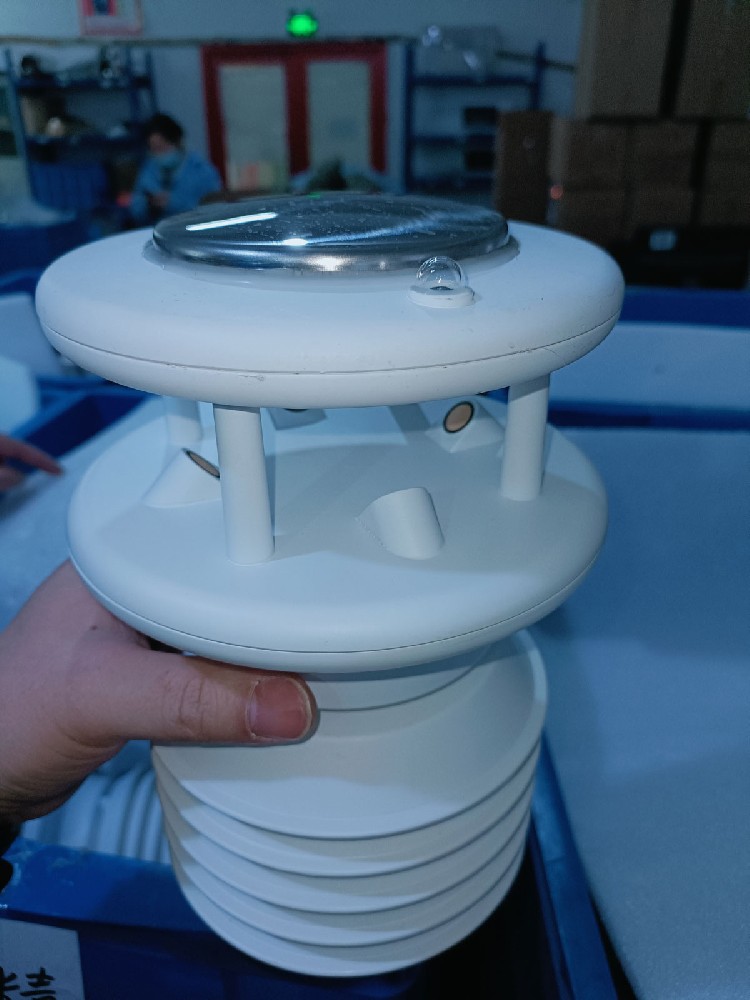
For agricultural users, local weather data helps plan irrigation, spraying, planting windows and field risk management. For transport, ports and industrial applications, wind and rainfall records help teams understand unsafe outdoor conditions. For environmental monitoring, temperature, humidity, pressure and rainfall add context to other sensor data such as dust, noise or gas readings.
For a batch order, acceptance should be more systematic than powering on one sample. The buyer should check model labels, output protocol, sensor appearance, cable condition and sample communication before field distribution. If the sensors will be installed across several sites, each device should be numbered and matched with its installation position. This makes later maintenance and data troubleshooting much easier.
Because the sensor uses RS485 and Modbus, the integrator should test at least one unit with the intended data logger or gateway before full installation. A simple communication test can confirm baud rate, address setting, register reading and data unit conversion. This avoids the common problem where field hardware is installed correctly but the platform reads the wrong values.
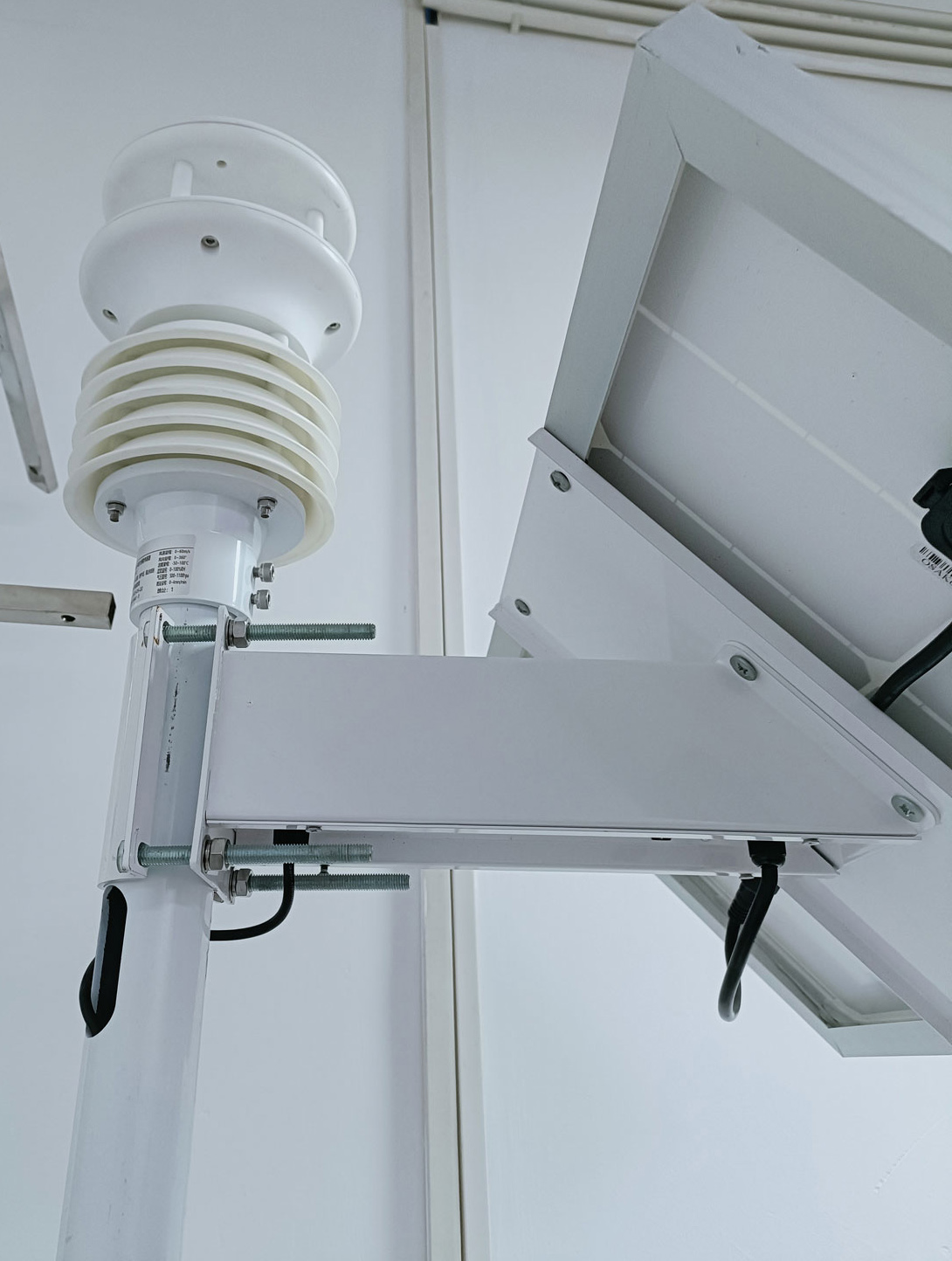
A: An integrated sensor reduces wiring, mounting points and maintenance work. It is useful when the project needs several meteorological variables but does not want a large station structure.
A: Ultrasonic wind measurement has no rotating cups or vanes, so there are fewer moving parts to wear. It is suitable for long-term outdoor monitoring where maintenance access may be limited.
A: Yes. RS485 and standard Modbus protocol make it suitable for data loggers, gateways and industrial monitoring platforms. The buyer should confirm register definitions and data upload format before integration.
A: IP65 supports outdoor protection against dust and water spray, but installation still matters. Cable sealing, connector protection, mounting strength and lightning protection should be handled according to site risk.
A: Provide required parameters, quantity, installation site type, power supply, communication method, mounting height, platform requirement and destination country. These details help NiuBoL prepare a correct configuration.
A: Ultrasonic and electronic sensors can be affected by strong interference sources. Keeping distance from radar, engines and high-power radio equipment reduces the risk of abnormal readings and communication instability.
A: Rainfall data helps users connect field events with weather conditions. For agriculture, it supports irrigation decisions; for roads and industrial sites, it helps explain operating risk and environmental records.
A: The buyer should create an inspection schedule for mounting condition, cable sealing, power supply and communication status. For batch projects, device numbering and location records are important for fast maintenance.
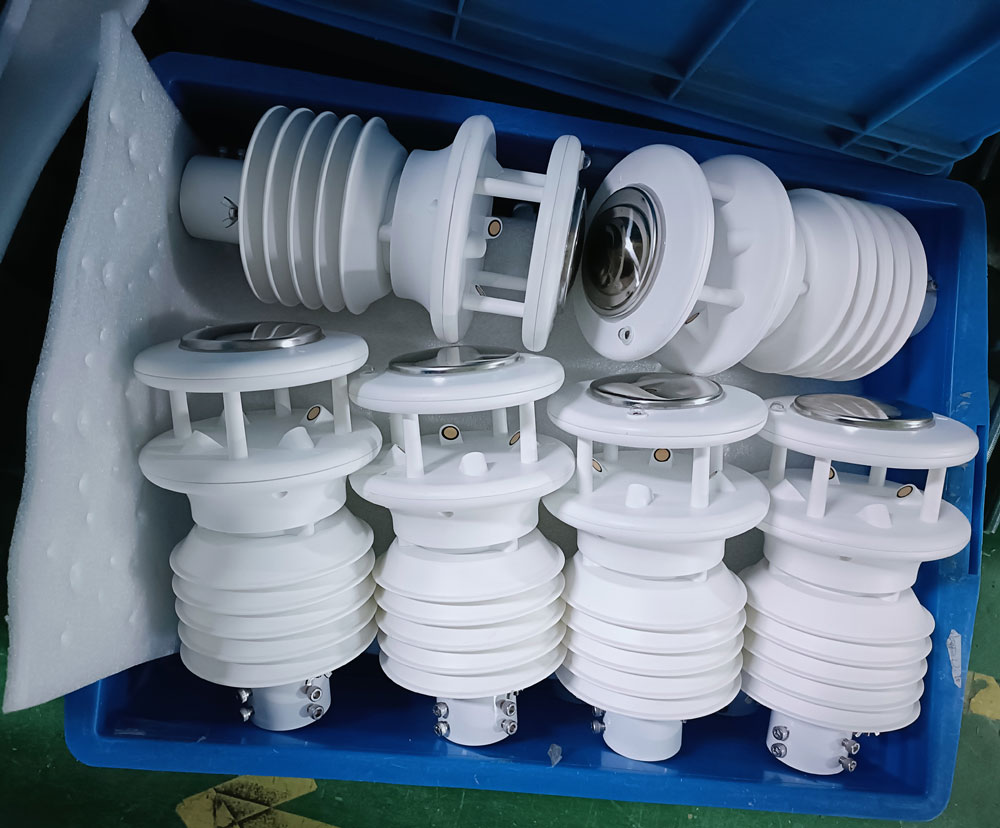
The export of 65 multi-parameter weather sensors to Guinea reflects a practical demand for compact weather monitoring in agriculture, environment and infrastructure projects. By combining ultrasonic wind measurement, temperature, humidity, pressure and rainfall in one device, the system helps buyers reduce installation work while keeping useful field data available for monitoring and decision-making.
Prev:NiuBoL Ships Four Automatic Weather Stations to Cambodia for Environmental Monitoring
Next:NiuBoL Exports More Than 600 Portable Type-C 8-in-1 Soil Sensors to Africa
Related recommendations
Sensors & Weather Stations Catalog
 Agriculture Sensors and Weather Stations Catalog-NiuBoL.pdf
Weather Stations Catalog-NiuBoL.pdf
Agriculture Sensors Catalog-NiuBoL.pdf
Water Quality Sensor Catalog-NiuBoL.pdf
Related products
 Combined air temperature and relative humidity sensor
 TDR Soil Moisture & Temperature Sensor for irrigation| RS485 |4-20mA| NBL-S-THR
 Soil pH sensor RS485 soil Testing instrument soil ph meter for agriculture |NBL-S-PH
 Wind Speed sensor Output Modbus/RS485/Analog/0-5V/4-20mA
 Tipping bucket rain gauge for weather monitoring auto rainfall sensor RS485/Outdoor/stainless steel
 Pyranometer Solar Radiation Sensor 4-20mA/RS485

Screenshot, WhatsApp to identify the QR code
WhatsApp number:+8615367865107
(Click on WhatsApp to copy and add friends)

