





— Blogs —
—Products—
 Consumer hotline +8618073152920
 WhatsApp:+8615367865107
Address:Room 102, District D, Houhu Industrial Park, Yuelu District, Changsha City, Hunan Province, China
Company news
Time:2026-07-14 09:21:13 Popularity:296
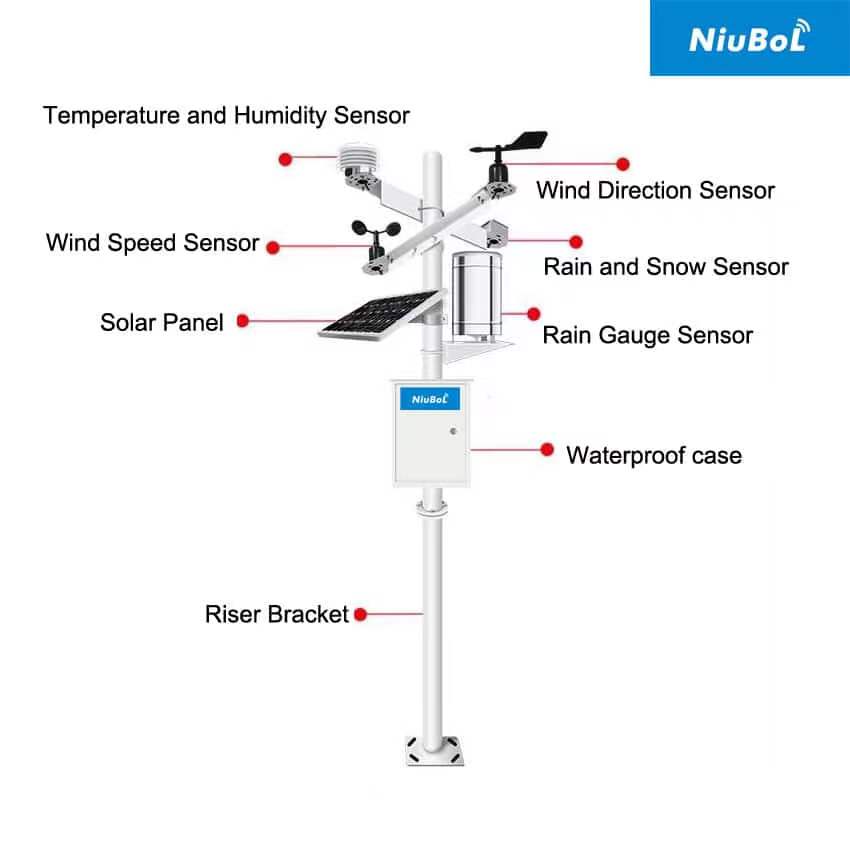
NiuBoL recently completed the delivery of four automatic weather stations for a project in Cambodia. The systems are configured for environmental monitoring and include wind speed sensors, wind direction sensors, temperature-humidity-pressure sensors, rainfall sensors and radiation sensors. For the customer, the value is not only the number of instruments shipped; it is the ability to build a local weather data source that can support field decisions, site records and long-term monitoring.
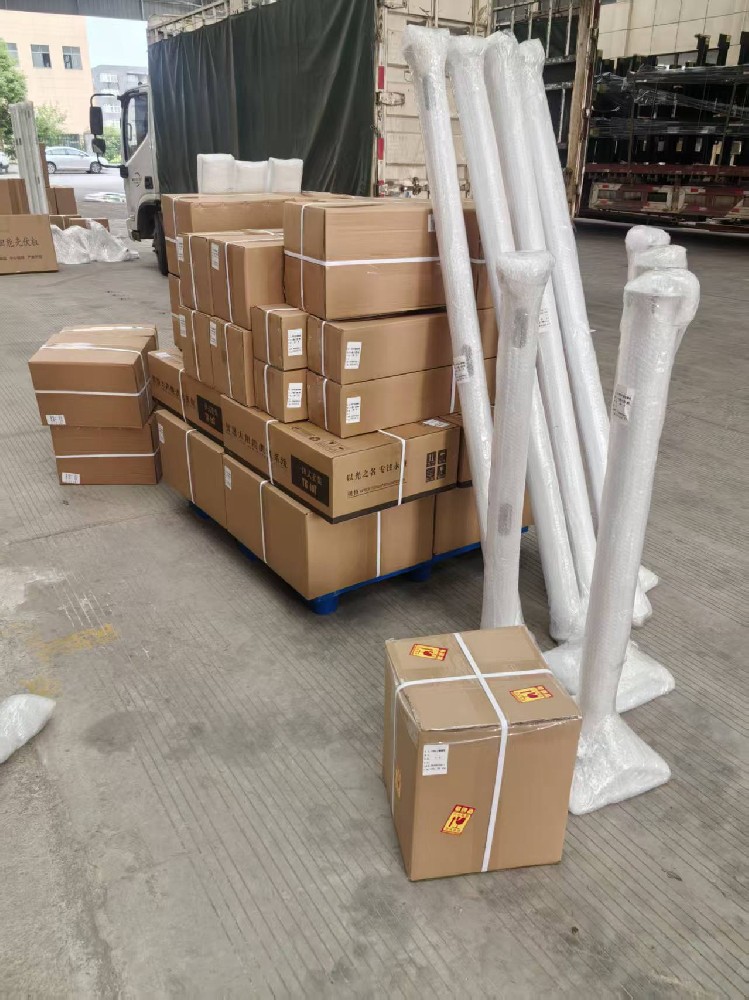
Cambodia has a tropical climate with a clear wet season and dry season. Rainfall distribution, heat, humidity and solar radiation affect agriculture, construction scheduling, environmental observation and infrastructure management. In this context, an automatic weather station gives project teams local data rather than relying only on regional forecasts. That difference matters when the user needs to understand what is happening at a specific farm, campus, industrial site or monitoring point.
Many monitoring projects fail because they treat weather as background information. For Cambodia, local rainfall intensity can change road conditions, irrigation timing and flood risk. Wind direction can explain pollutant movement or spray drift. Radiation data can support solar resource evaluation, crop management and heat-stress analysis. A station that collects these values continuously gives the user a record that can be reviewed later instead of a single manual observation.
The four stations in this shipment are suitable for environmental monitoring because the selected sensors cover the main variables used in field weather observation. The configuration can be connected to data acquisition equipment and a monitoring platform when the project requires remote viewing or reporting.
| Sensor | Measured Data | Project Value |
|---|---|---|
| Wind speed sensor | Wind speed at the installation point | Supports wind risk assessment, pollution dispersion review and field operation planning |
| Wind direction sensor | Wind direction in degrees or direction sectors | Helps explain where weather influence or airborne materials may move |
| Temperature, humidity and pressure sensor | Air temperature, relative humidity and atmospheric pressure | Provides basic climate records for agriculture, environment and site management |
| Rainfall sensor | Rainfall amount and rainfall process | Supports storm records, irrigation decisions and environmental event analysis |
| Radiation sensor | Solar radiation intensity | Useful for solar energy assessment, crop growth context and heat-load evaluation |
For a procurement team, an automatic weather station should be evaluated as a system. The sensor list is important, but field value depends on installation position, power supply, communication method, data storage and maintenance access. If the system is installed in a shaded or blocked location, even good sensors will not represent the site correctly. If the data cannot be exported or viewed remotely, the station may become a local display only.
For environmental monitoring projects, the buyer should define the reporting purpose before ordering. Some users need daily records, some need alarm thresholds, and others need data for a city, farm, school or industrial platform. NiuBoL can match sensor configuration, mounting structure and communication output based on those requirements.
NiuBoL prepares export shipments with attention to configuration consistency, packing, model identification and application guidance. For this Cambodia order, the key requirement was to provide a practical weather station package that can be deployed for outdoor environmental monitoring. The shipment reflects the type of project where local weather data needs to be measured directly and stored in a reusable form.
A buyer planning a similar project should not start only from the number of stations. The first question is what each station must prove. If the project is for environmental monitoring, wind direction and rainfall records may be used to explain events. If it is for agriculture, rainfall, humidity and radiation may be used for irrigation and crop decisions. If it is for a campus or public site, the display, data export and long-term maintenance plan may be as important as the sensor list.
For export buyers, packing and documentation also matter. Each station should be identifiable by model and configuration, and the installation team should know which sensor is used for which measurement. This reduces mistakes when several stations arrive at the same time and need to be installed at different sites.
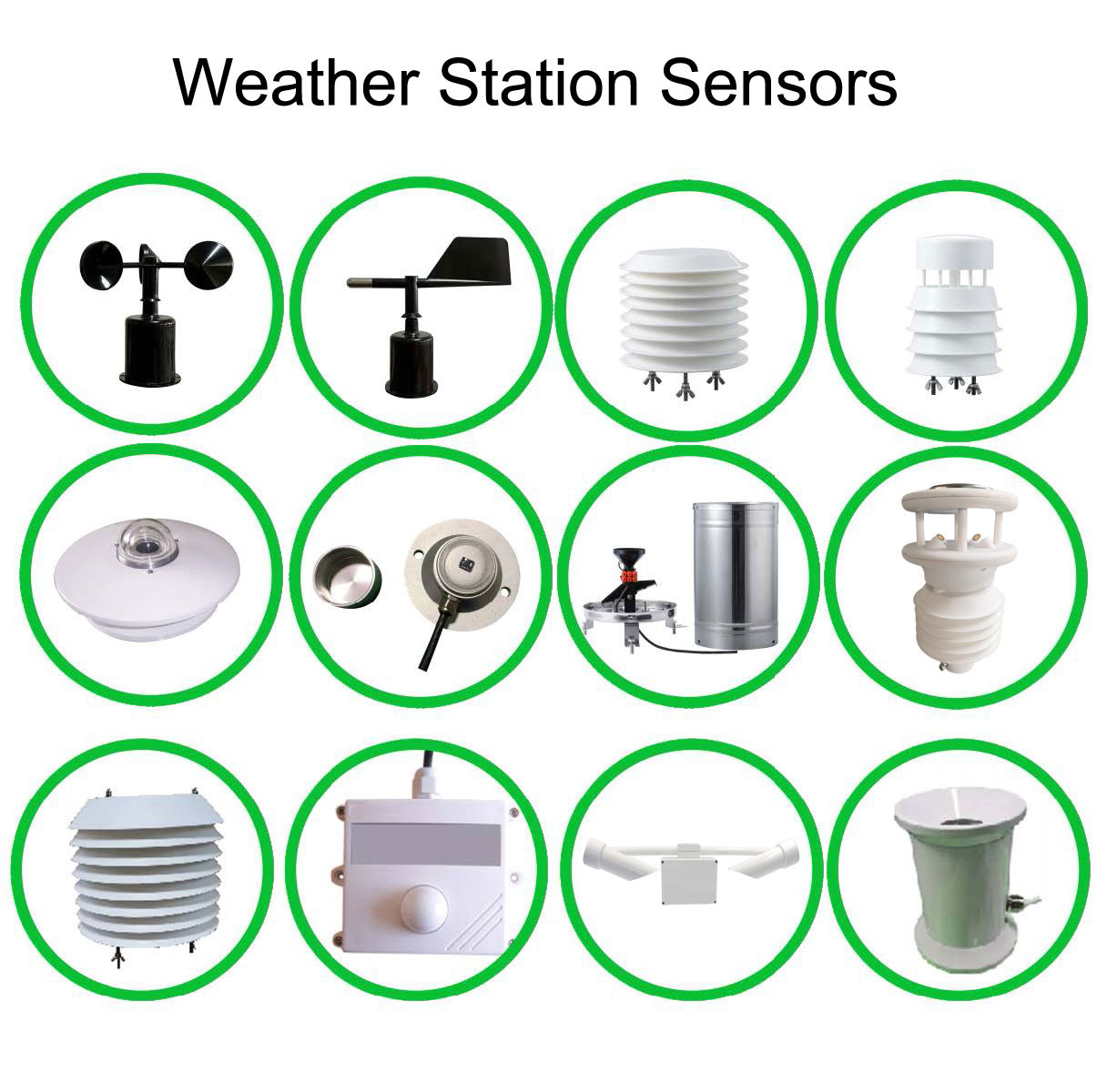
A: The configuration includes wind, temperature, humidity, pressure, rainfall and radiation measurement. These variables give the customer a practical weather record for site-level environmental analysis, rather than only a basic temperature reading.
A: Yes. The same weather variables are useful for irrigation planning, crop stress analysis, disease-risk review and field operation scheduling. The final configuration should be selected according to crop type, installation site and data reporting needs.
A: The buyer should confirm measured parameters, installation height, mounting method, power supply, communication output, platform requirement and maintenance owner. These details affect whether the station works reliably after delivery.
A: Yes. Cambodia's seasonal rainfall pattern makes local rainfall records useful for agriculture, drainage planning and environmental event review. A site rainfall sensor helps the user record actual rainfall at the project location.
A: NiuBoL can provide sensor configuration advice, export packing, model documentation and system matching based on the buyer's project scenario. Buyers can send site conditions and required parameters for a suitable proposal.
A: The station should not be installed beside walls, tall trees, exhaust outlets or shaded structures if the goal is representative weather data. Poor exposure can make wind, rainfall and radiation values less useful even when the sensors are correct.
A: The customer should check live values for wind speed, wind direction, temperature, humidity, pressure, rainfall and radiation. If remote monitoring is required, the platform should also show device status, time stamps and history records.
A: Multiple stations are useful when sites are far apart, terrain is different, or one monitoring point cannot represent all working areas. Four stations can cover separate locations more reliably than one station used as a general reference.
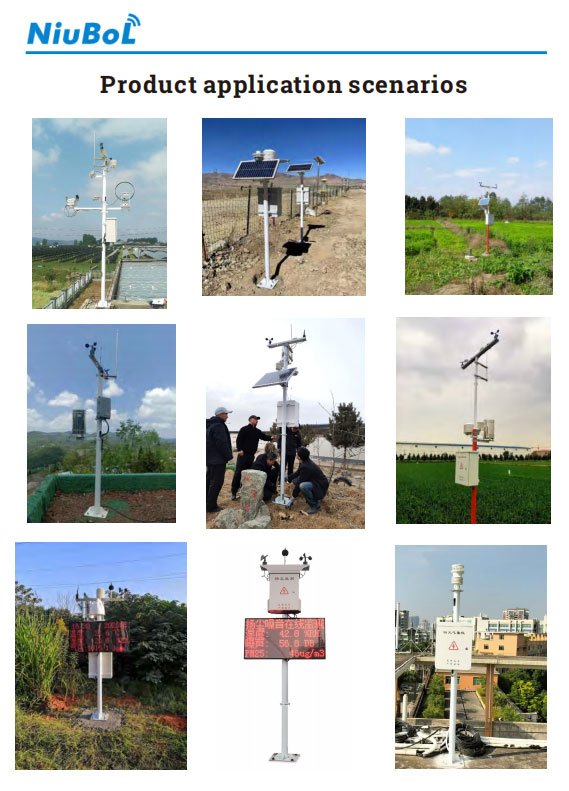
The shipment of four automatic weather stations to Cambodia shows how environmental monitoring projects are becoming more data-driven. For buyers who need wind, rainfall, temperature, humidity, pressure and radiation records, a properly configured automatic weather station can provide practical site data for daily decisions and long-term analysis. If a project has specific monitoring objectives, NiuBoL can help match the sensor set and system configuration before quotation.
Prev:NiuBoL Solar Insect Killer Lamps Exported to Romania for Agricultural Pest Control
Next:NiuBoL Exports 65 Multi-Parameter Weather Sensors to Guinea
Related recommendations
Sensors & Weather Stations Catalog
 Agriculture Sensors and Weather Stations Catalog-NiuBoL.pdf
Weather Stations Catalog-NiuBoL.pdf
Agriculture Sensors Catalog-NiuBoL.pdf
Water Quality Sensor Catalog-NiuBoL.pdf
Related products
 Combined air temperature and relative humidity sensor
 TDR Soil Moisture & Temperature Sensor for irrigation| RS485 |4-20mA| NBL-S-THR
 Soil pH sensor RS485 soil Testing instrument soil ph meter for agriculture |NBL-S-PH
 Wind Speed sensor Output Modbus/RS485/Analog/0-5V/4-20mA
 Tipping bucket rain gauge for weather monitoring auto rainfall sensor RS485/Outdoor/stainless steel
 Pyranometer Solar Radiation Sensor 4-20mA/RS485

Screenshot, WhatsApp to identify the QR code
WhatsApp number:+8615367865107
(Click on WhatsApp to copy and add friends)

