





— Blogs —
—Products—
 Consumer hotline +8618073152920
 WhatsApp:+8615367865107
Address:Room 102, District D, Houhu Industrial Park, Yuelu District, Changsha City, Hunan Province, China
Product knowledge
Time:2022-05-15 20:29:33 Popularity:1776
The soil moisture monitoring station developed and supplied by NiuBoL is suitable for long-term field monitoring of soil moisture and soil temperature.
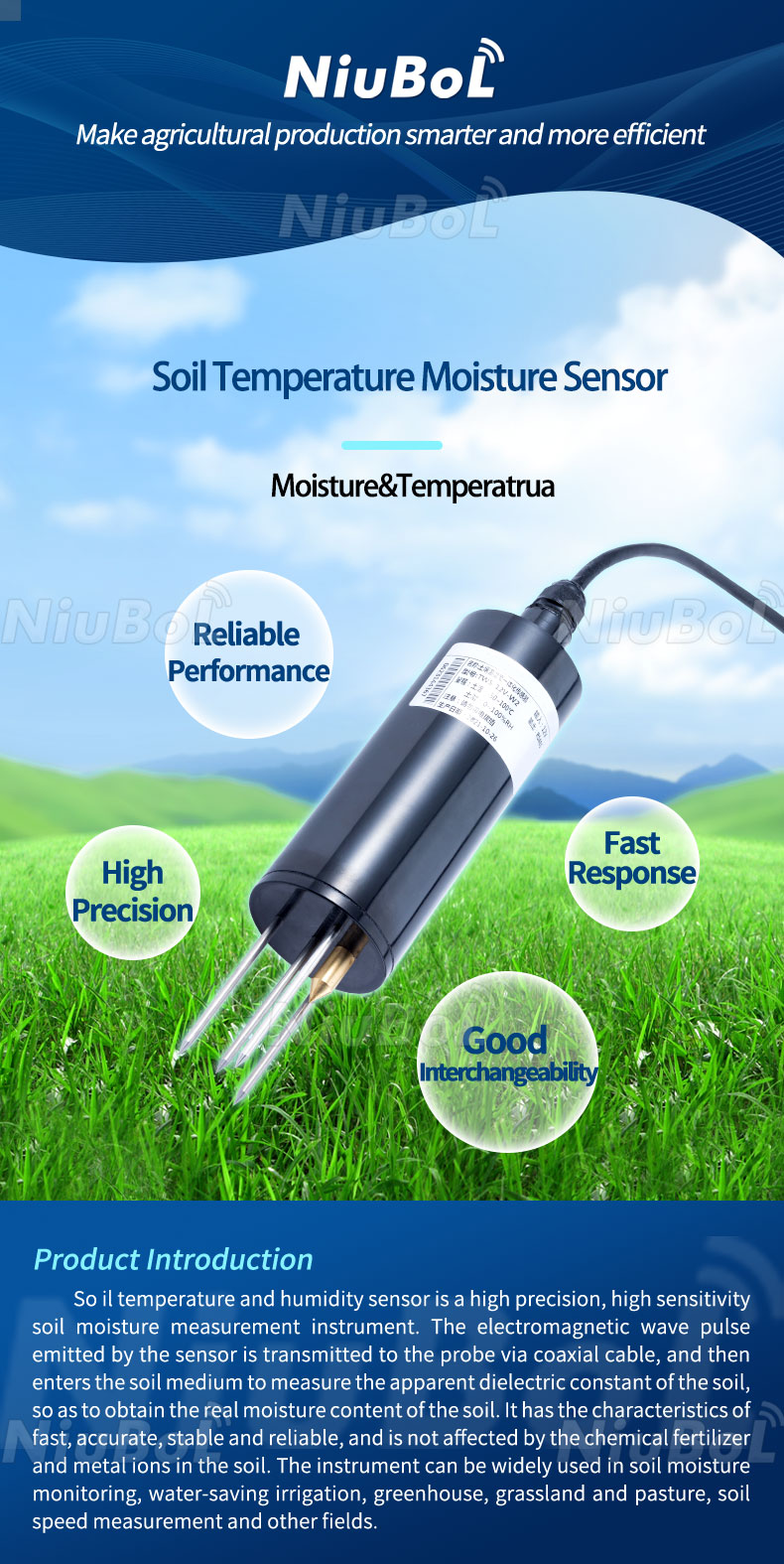
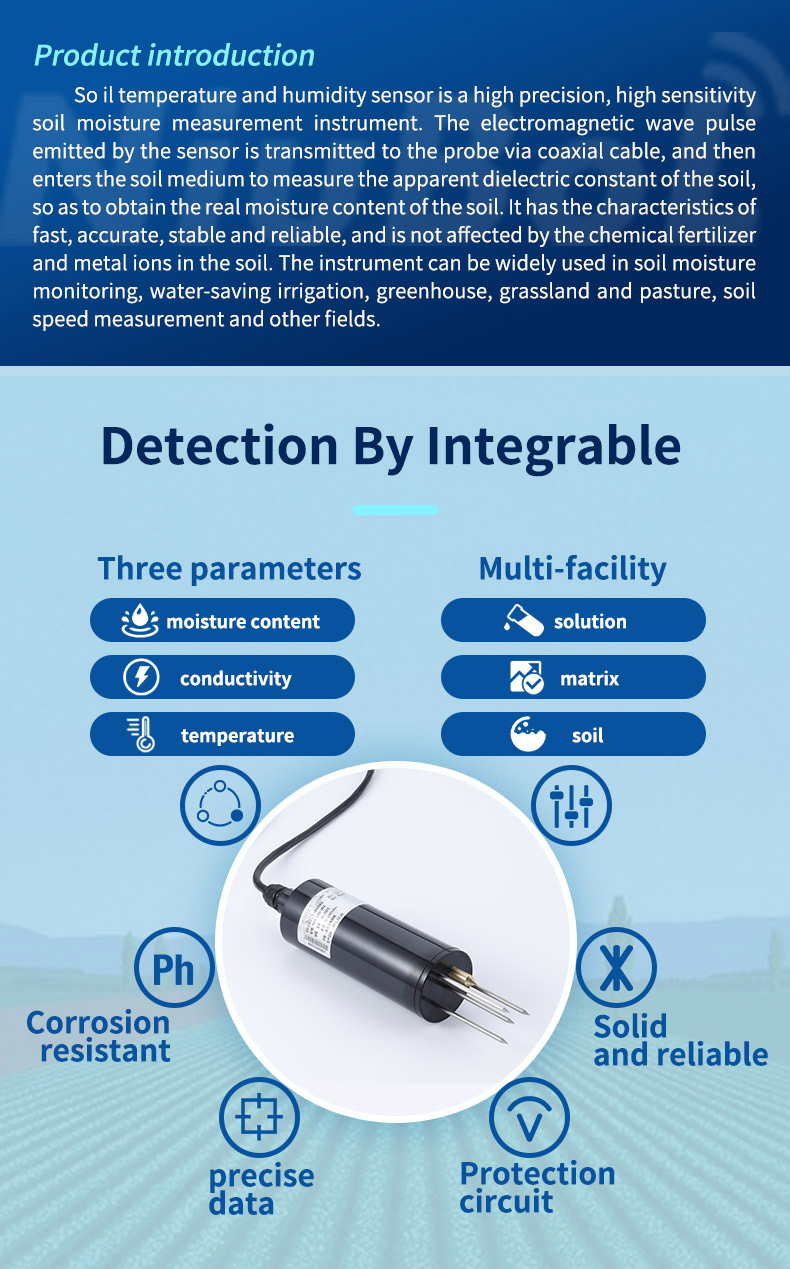
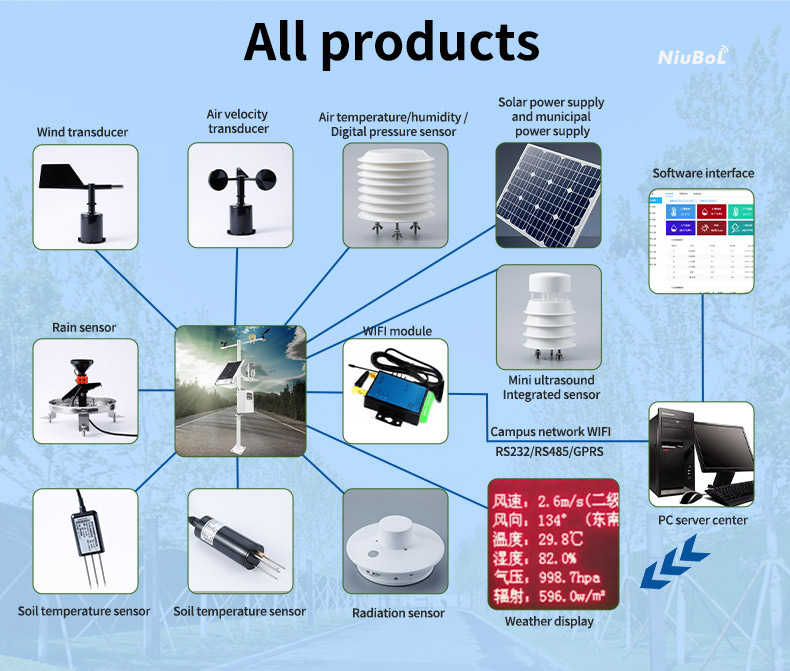
Users can flexibly arrange sensors according to monitoring needs, and can arrange sensors in different soils to measure soil moisture. The system also provides additional expansion capabilities, adding corresponding sensors according to monitoring needs, such as soil temperature and soil conductivity. , Soil pH value, groundwater level, groundwater quality, air temperature, air humidity, light intensity, wind speed and direction, rainfall and other sensors.
The soil moisture monitoring system includes soil temperature and moisture sensor, soil PH sensor, and soil NPK sensor, which can realize long-term continuous monitoring of soil temperature, moisture, PH, NPK content and other parameters, and upload the data to the soil in real time. Moisture monitoring platform for managers to scientifically formulate relevant scheduling plans and decide whether fertilization and irrigation are required.
Therefore, the agricultural field has been seeking an efficient, accurate and effective soil moisture monitoring method.
The soil moisture monitoring station can realize real-time automatic collection and storage of soil moisture data, and can automatically upload the collected information to the management cloud platform on a regular basis. and other situations, timely forecast drought conditions, provide farmers with scientific sowing and intelligent irrigation, provide scientific theoretical support for the realization of sustainable agricultural development, and give full play to its guiding role in agricultural production.
In the development of water-saving agriculture, the use of soil moisture monitoring stations to guide agricultural irrigation effectively avoids the waste of water resources in the traditional empirical irrigation process, and at the same time greatly improves the grain production capacity of the vast area, and promotes agricultural efficiency and farmers' income. The advantages of water-saving agriculture have been demonstrated.
Prev:Soil Moisture Sensor Products
Next:What are the applications of humidity sensors in intelligent drip irrigation water saving system?
Related recommendations
Sensors & Weather Stations Catalog
 Agriculture Sensors and Weather Stations Catalog-NiuBoL.pdf
Weather Stations Catalog-NiuBoL.pdf
Agriculture Sensors Catalog-NiuBoL.pdf
Water Quality Sensor Catalog-NiuBoL.pdf
Related products
 Combined air temperature and relative humidity sensor
 TDR Soil Moisture & Temperature Sensor for irrigation| RS485 |4-20mA| NBL-S-THR
 Soil pH sensor RS485 soil Testing instrument soil ph meter for agriculture |NBL-S-PH
 Wind Speed sensor Output Modbus/RS485/Analog/0-5V/4-20mA
 Tipping bucket rain gauge for weather monitoring auto rainfall sensor RS485/Outdoor/stainless steel
 Pyranometer Solar Radiation Sensor 4-20mA/RS485

Screenshot, WhatsApp to identify the QR code
WhatsApp number:+8615367865107
(Click on WhatsApp to copy and add friends)

