





— Blogs —
—Products—
 Consumer hotline +8618073152920
 WhatsApp:+8615367865107
Address:Room 102, District D, Houhu Industrial Park, Yuelu District, Changsha City, Hunan Province, China
Product knowledge
Time:2026-02-19 09:37:19 Popularity:536
In an era of increasingly intensified climate change, small weather stations have become indispensable tools for agricultural production, scientific research, and environmental monitoring. These devices can collect key parameters such as temperature, humidity, wind speed, and rainfall in real time, helping users make scientific decisions. However, due to various factors, the detection data of small weather stations often deviates, leading to misguided decisions or resource waste. For example, in agriculture, inaccurate data may trigger improper irrigation, affecting crop yields.
This article systematically analyzes the main causes of data inaccuracy and, combined with practical experience, provides targeted maintenance strategies and usage recommendations. Through these guidelines, users can improve the reliability and service life of the equipment, ensuring that accurate data serves practical needs. As a professional manufacturer, NiuBoL is committed to providing high-quality solutions to support users in achieving stable monitoring in complex environments.
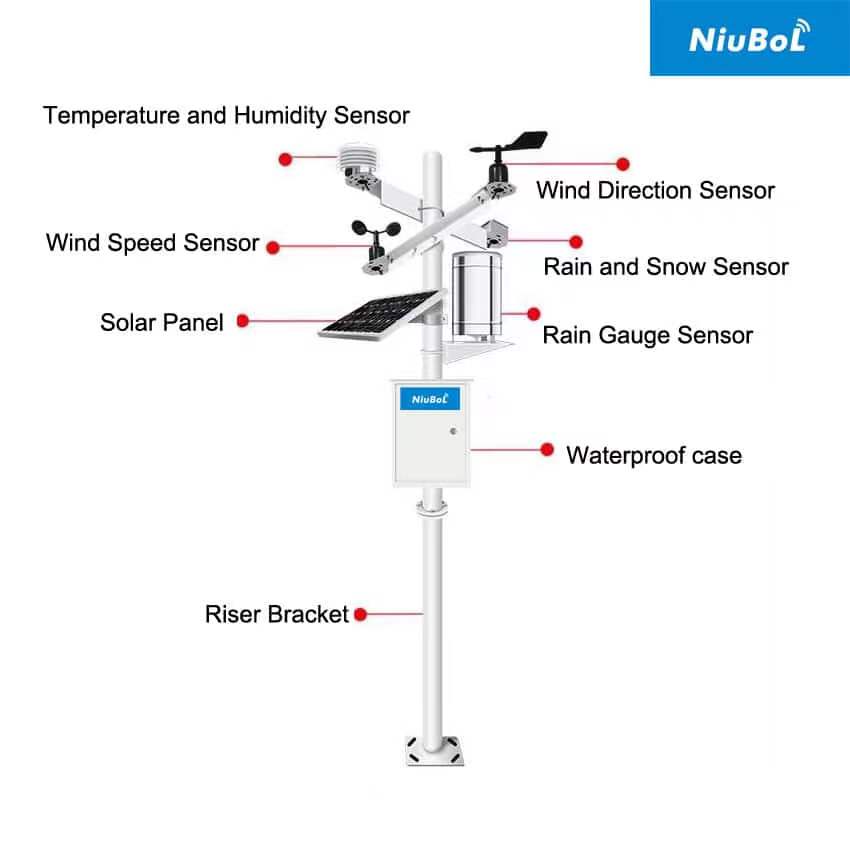
The data accuracy of small weather stations directly affects their application value. The following analyzes common issues from multiple dimensions and discusses potential impacts and improvement paths.
Instrument selection is the foundation of data accuracy. If the selected sensors lack sufficient precision or are mismatched with the monitoring environment, data deviation is inevitable. For example, using low-end temperature sensors in extreme weather may produce errors above ±2°C, far exceeding the professional standard of ±0.5°C. In addition, systematic errors (such as zero drift) and random errors (such as noise interference) are inherent characteristics of all instruments, and uncalibrated equipment will amplify these issues.
When purchasing, priority should be given to products that comply with national standards, and their range, resolution, and stability should be evaluated. It is recommended that users verify instrument performance through laboratory comparison tests to avoid long-term risks caused by blind selection. The NiuBoL series products undergo strict calibration to ensure high precision in various scenarios.
The impact of the surrounding environment on small weather stations is often underestimated. Dust, smoke, or industrial emissions in the air may adhere to the sensor surface, causing reading offsets. For example, in areas near highways or factories, particulate pollution can increase humidity sensor errors by more than 10%. At the same time, terrain factors such as building shading or heat island effects can also interfere with wind speed and direction measurements, leading to data distortion. To reduce such errors, the installation location should be open and well-ventilated, at least 50 meters away from pollution sources, and the sensor surface should be cleaned regularly. For long-term monitoring projects, GIS tools can be used to assess environmental risks and optimize site layout. Through these measures, users can significantly improve data reliability, suitable for agricultural fields or urban green space monitoring.
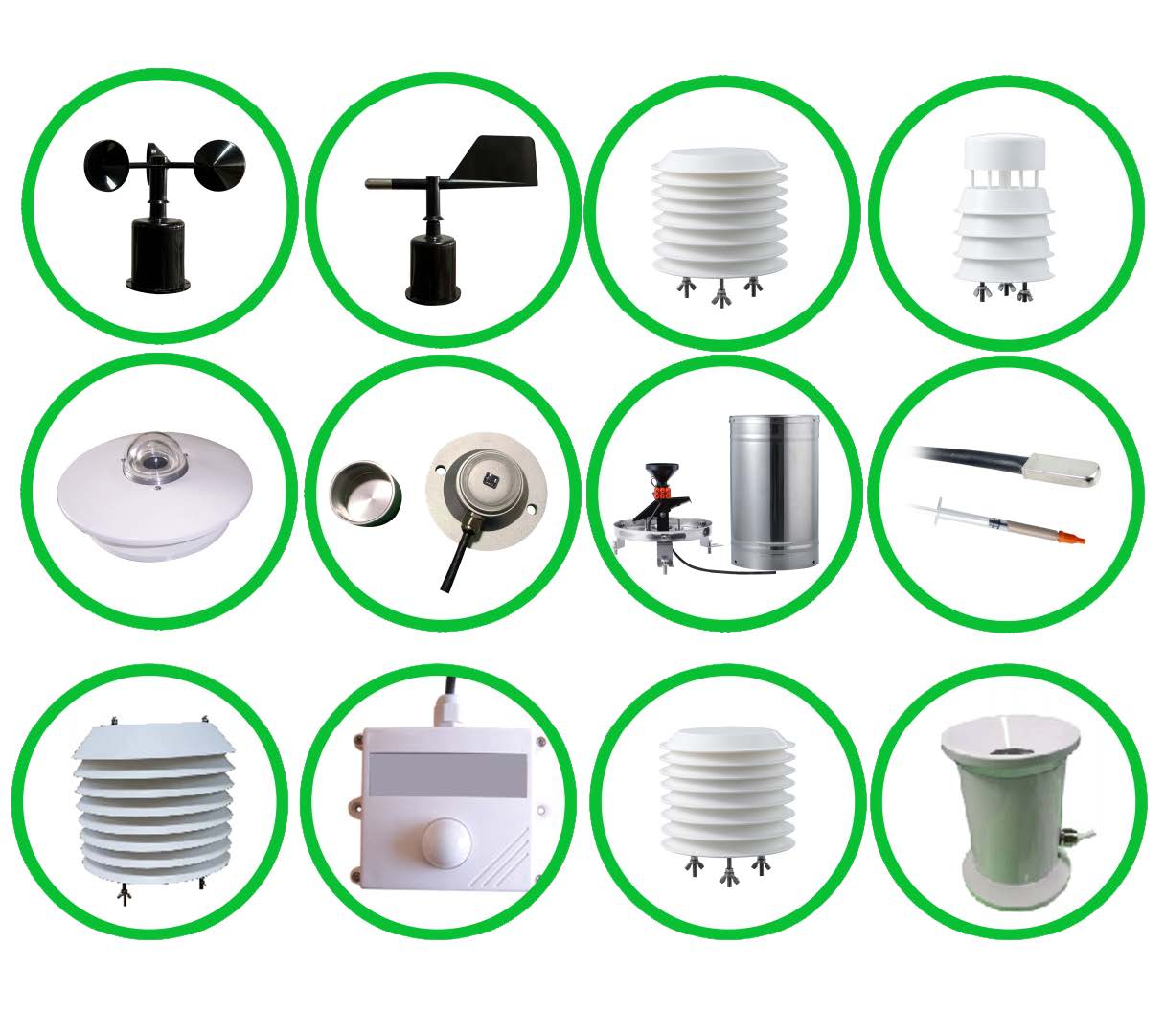
The design, manufacturing, and inspection technology of small weather stations determine their overall performance. Insufficient technical requirements may manifest as poor weather resistance of circuit boards or inadequate algorithm optimization, leading to data drift in high-temperature and high-humidity environments. For example, if the manufacturing process does not meet the IP65 protection level, rainwater infiltration can cause short circuits and affect measurement accuracy. Users need to understand relevant standards, such as ISO 9001 quality management system, and choose products certified by third parties. At the same time, software technology is also critical: advanced filtering algorithms can suppress noise interference and improve signal quality. NiuBoL focuses on technological innovation, adopts modular design, and facilitates users to expand functions according to needs, ensuring long-lasting durability of the equipment.
Testing and verification are key links in maintaining data accuracy. Hardware aging, wear, or external interference may cause gradual errors that are difficult to detect without regular inspection. For example, a full-parameter calibration should be performed at least once a year, using standard reference instruments to compare readings and ensure errors are within a controllable range. If the wind speed sensor response is sluggish, it should be replaced in time. The verification process can be divided into laboratory testing (accuracy calibration) and field verification (environmental adaptability assessment). For scientific research users, it is recommended to establish a log system to record each test result for easy tracking of problem sources. Through systematic verification, users can not only extend equipment life but also accumulate valuable data to support model optimization and predictive analysis.
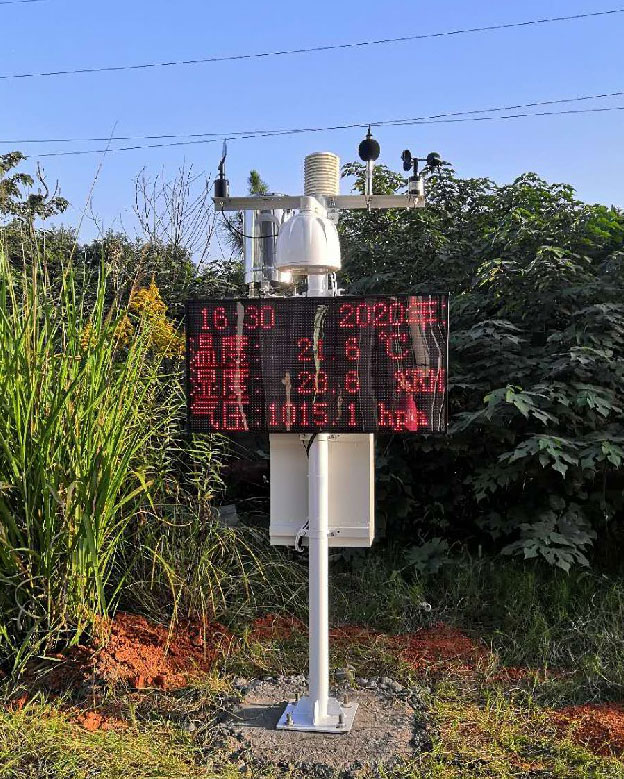
The power supply system is the guarantee for the stable operation of small weather stations. Improper maintenance may cause equipment failure or safety hazards. The following details are provided from two aspects: external power supply and generator power supply.
External power supply is common in fixed site power supply and should be equipped with power surge protectors to prevent lightning damage to circuit boards. The grounding resistance of the surge protector should be controlled to less than 4Ω (corrected to the standard value to avoid errors in the original text) and checked once a year to ensure secure connections. In actual operation, it is recommended to use waterproof junction boxes to fix cables to avoid exposure to rainwater. Regular inspection of power cable aging can effectively reduce failure rates. For multi-site projects, using UPS backup power can ensure continuous data collection and support remote monitoring.
In areas without mains power, using generator power supply must strictly comply with safety regulations. First, disconnect the mains access to avoid grid-connection conflicts. During operation, monitor the voltmeter and ammeter to maintain the output within the normal voltage range and prevent voltage fluctuations from affecting sensor accuracy. Solar-assisted power supply can improve energy efficiency. In remote agricultural fields, this configuration can ensure long-term unattended monitoring.
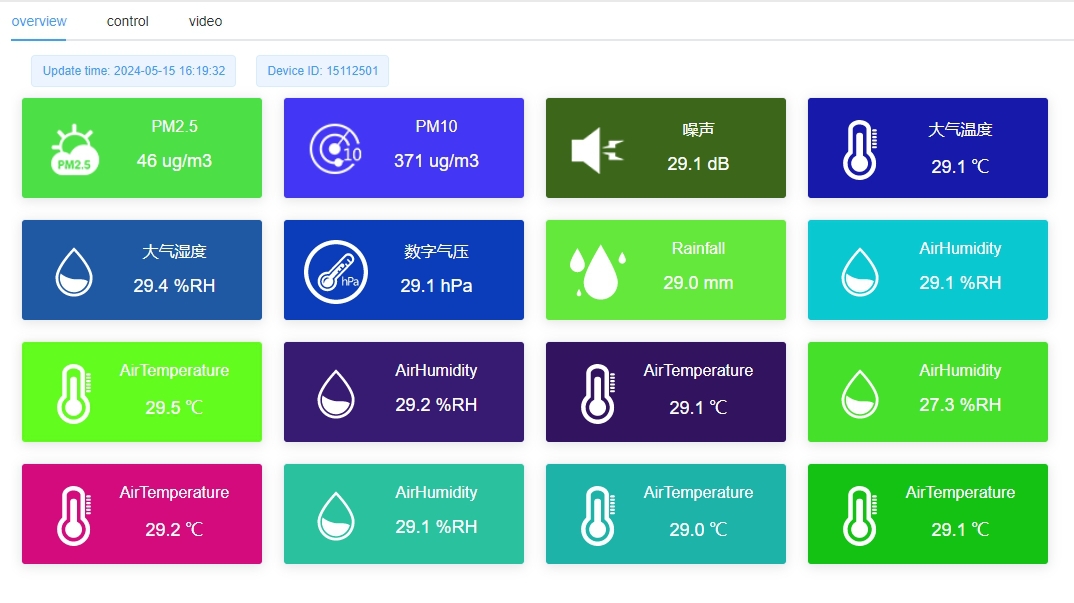
Proper use and maintenance are key to extending the life of small weather stations. The following are expanded practical recommendations to ensure efficient equipment operation.
1. Battery Discharge Temperature Control
Battery discharge temperature should be controlled between 20°C and 50°C. Too low may lead to capacity decline, while too high accelerates aging. Avoid exposure to extreme weather.
2. Avoid Over-Discharge
Over-discharge will permanently damage the battery structure. Charge immediately after discharge, use an intelligent charger to control current, and avoid no-load operation. Setting a low-voltage alarm threshold can promptly remind users to intervene.
3. Safety of Sealed Series Batteries
Sealed battery packs must not be disassembled during use to prevent electrolyte leakage. In case of contact with sulfuric acid, rinse the skin with plenty of water and seek medical help. Store in a dry and ventilated environment.
4. Regular Battery Inspection
Measure the total voltage monthly and adjust to float voltage × number of cells (typically 2.25V/cell). Check individual cell voltages every six months; if the deviation exceeds 0.05V, observe or replace. Tighten connection wires annually to prevent poor contact caused by loosening.
In addition, overall maintenance includes cleaning the enclosure, calibrating sensors, and backing up data. It is recommended to develop an annual maintenance plan and combine cloud platform remote diagnostics to reduce on-site intervention.
| Question | Answer |
|---|---|
| Q1. How to correct the data of a small weather station? | Data correction is completed by comparing readings with standard equipment, using dedicated calibration instruments to adjust parameters, ensuring deviation from the reference value is less than 1%. |
| Q2. Where are small weather stations suitable for use? | Suitable for open areas with clean air and no tall obstacles, avoid industrial zones or transportation hubs to reduce interference. |
| Q3. How to improve the data accuracy of small weather stations? | Purchase high-quality instruments, perform regular maintenance and calibration, and optimize the installation environment, such as adding protective covers to prevent dust. |
| Q4. What is the general service life of a small weather station? | Under good maintenance, it can reach 3-5 years, depending on usage intensity and environmental conditions. |
| Q5. How to choose the power supply for a small weather station? | Choose mains power or solar power according to the site, ensuring stability and backup solutions. |
| Q6. What to do if a small weather station malfunctions? | First check the power supply and connections. If there is no problem, refer to the user manual or contact professional technical support. |
| Q7. What meteorological monitoring can small weather stations be used for? | Can monitor multiple parameters such as temperature, humidity, wind speed, wind direction, rainfall, light, etc., supporting agricultural and scientific research applications. |
| Q8. What are the manifestations of inaccurate data? | Common manifestations include abnormal reading fluctuations and inconsistency with reality, such as sudden humidity changes or zero wind speed values. |
As a modern monitoring tool, small weather stations play an important role in agricultural yield increase, scientific research innovation, and environmental protection. By analyzing the causes of instrument selection, surrounding environment, technical requirements, and testing verification, users can effectively avoid the risk of data inaccuracy. At the same time, paying attention to power safety maintenance and usage precautions can ensure long-term stable operation of the equipment. These practices not only improve data reliability but also reduce operating costs and promote the development of information-based meteorology. NiuBoL is committed to providing reliable products and services to support users in achieving intelligent monitoring and jointly addressing climate challenges.
Related recommendations
Sensors & Weather Stations Catalog
 Agriculture Sensors and Weather Stations Catalog-NiuBoL.pdf
Weather Stations Catalog-NiuBoL.pdf
Agriculture Sensors Catalog-NiuBoL.pdf
Water Quality Sensor Catalog-NiuBoL.pdf
Related products
 Combined air temperature and relative humidity sensor
 TDR Soil Moisture & Temperature Sensor for irrigation| RS485 |4-20mA| NBL-S-THR
 Soil pH sensor RS485 soil Testing instrument soil ph meter for agriculture |NBL-S-PH
 Wind Speed sensor Output Modbus/RS485/Analog/0-5V/4-20mA
 Tipping bucket rain gauge for weather monitoring auto rainfall sensor RS485/Outdoor/stainless steel
 Pyranometer Solar Radiation Sensor 4-20mA/RS485

Screenshot, WhatsApp to identify the QR code
WhatsApp number:+8615367865107
(Click on WhatsApp to copy and add friends)

