





— Blogs —
—Products—
 Consumer hotline +8618073152920
 WhatsApp:+8615367865107
Address:Room 102, District D, Houhu Industrial Park, Yuelu District, Changsha City, Hunan Province, China
Product knowledge
Time:2026-02-19 09:50:04 Popularity:574
Agricultural Internet of Things (Agri-IoT), as the systematic application of IoT technology in agricultural production, has become a key infrastructure for promoting precision agriculture and sustainable development. For different agricultural scenarios, solutions need to cover aspects such as environmental perception, data transmission, analysis and decision-making, and execution control. As a professional manufacturer of sensors and monitoring systems, NiuBoL provides modular meteorological environment monitoring stations that support multi-protocol integration, helping system integrators, IoT solution providers, and project contractors build efficient and reliable agricultural monitoring networks.
This article focuses on the main application dimensions of agricultural IoT and, taking the NiuBoL IoT meteorological environment monitoring station as an example, analyzes its integration paths, compatibility, and practical deployment value in projects.
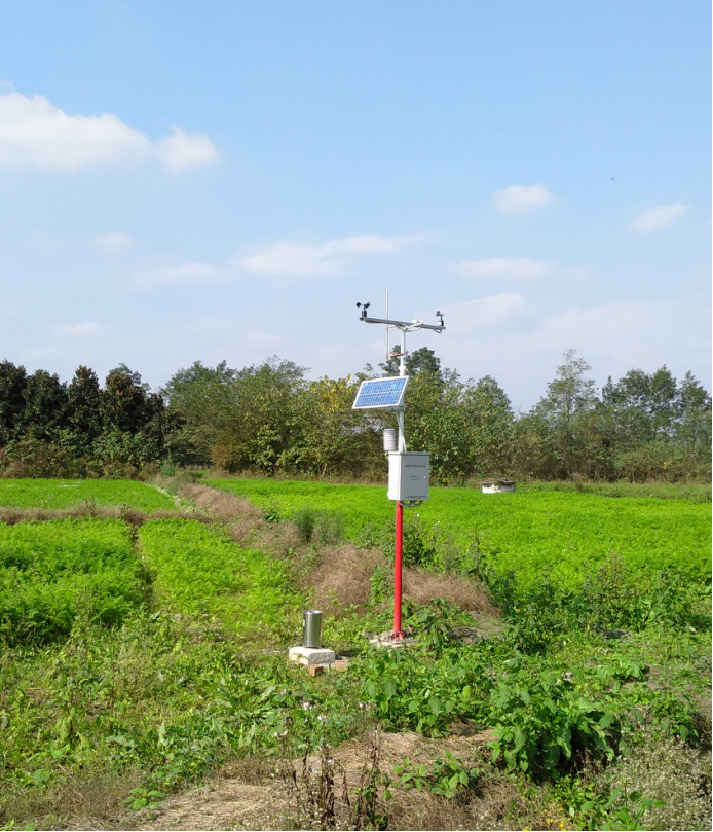
Agricultural IoT solutions can be divided into the following core aspects based on production stages and technical requirements, each emphasizing data-driven decision-making and system interconnection.
1. Facility Agriculture Environmental Regulation
Facility agriculture relies on microclimate control in greenhouses or sheds. IoT solutions use multi-element sensors to collect parameters such as temperature, humidity, light, and CO₂ concentration in real time, achieving automatic ventilation, shading, supplemental lighting, and irrigation linkage. In engineering projects, PLC controllers or edge gateways are often integrated, supporting Modbus/TCP or MQTT protocols to ensure compatibility with existing automation equipment. Fine-tuned regulation can reduce energy consumption by 15%-25% and improve crop consistency and yield stability.
2. Agricultural Product Quality and Safety Traceability
In supply chain management, IoT enables full-chain data recording from field to table. Sensors collect planting environment, production process, and logistics temperature and humidity data, forming an immutable traceability chain through blockchain or cloud platforms. System integrators can use NiuBoL devices as perception nodes, combined with RFID or QR code interfaces, to support consumer scan queries, enhancing brand compliance and market trust.
3. Plant Protection and Pest Monitoring and Early Warning
Pest and disease control is a core pain point in agricultural production. IoT solutions deploy image recognition cameras, spore traps, and environmental sensors, combined with meteorological data to predict occurrence risks. The platform supports threshold alarms and linkage with spraying equipment, achieving precise pesticide application and reducing pesticide usage by more than 20%. In projects, it is necessary to ensure sensor data integration with GIS systems for regional-level risk assessment.
4. Precision Irrigation and Integrated Water-Fertilizer Management
By using soil moisture, EC values, and meteorological forecast data, the system optimizes irrigation strategies. Integrated drip irrigation controllers enable variable water and fertilizer application, significantly saving water resources. This aspect is often linked with weather stations to form closed-loop control.
5. Livestock and Poultry Breeding Environment Monitoring
Deploy temperature, humidity, ammonia, CO₂ sensors, and cameras in breeding farms to achieve automatic environmental adjustment and health early warning. Suitable for digital transformation in large-scale breeding projects.
6. Storage and Logistics Environment Control
Monitor temperature, humidity, and gas concentrations in grain warehouses to prevent mold and losses, supporting remote ventilation control.
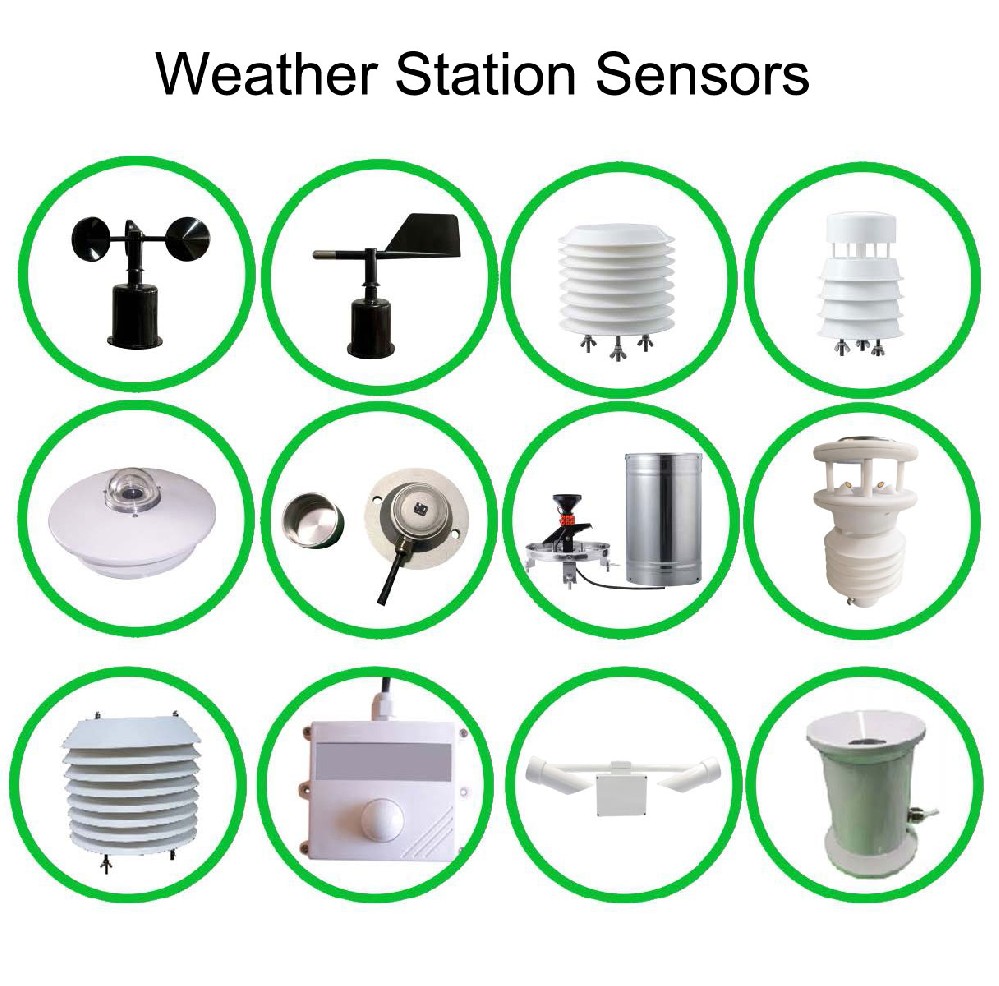
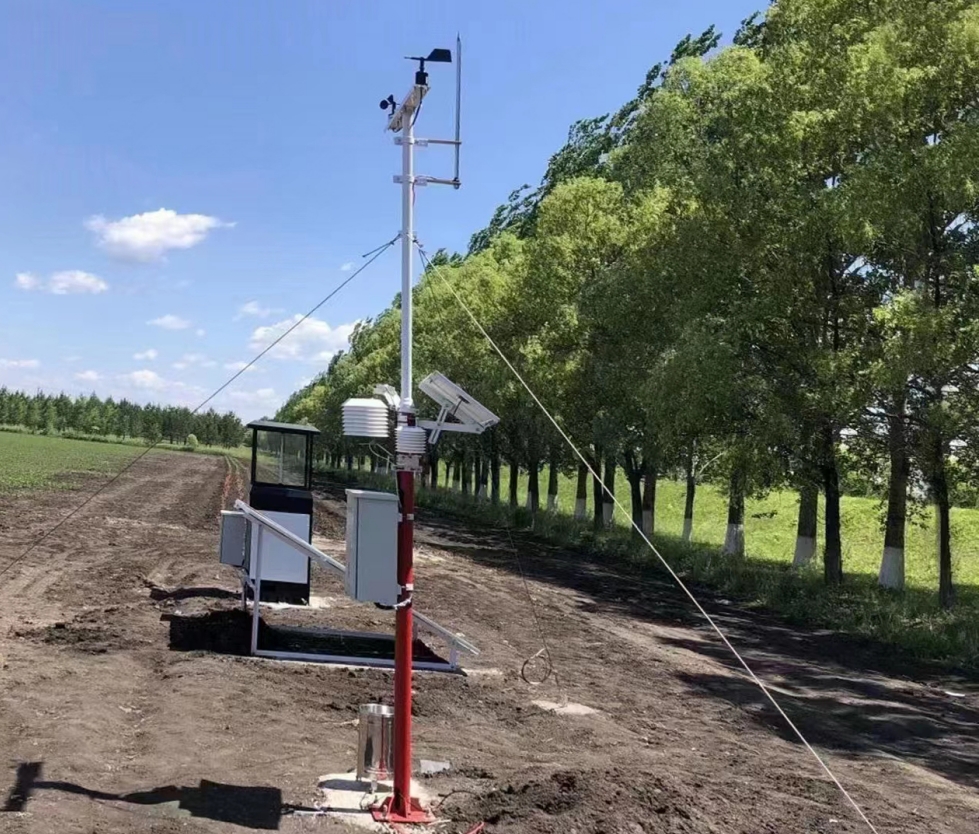
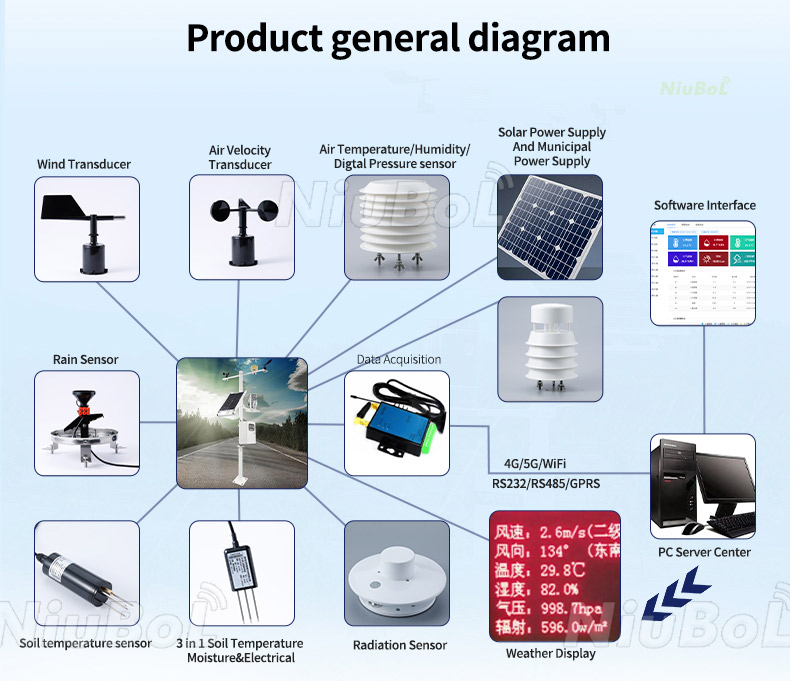
The NiuBoL IoT meteorological environment monitoring station is an industrial-grade device that integrates multi-sensor integration, data acquisition, wireless transmission, and cloud analysis, suitable for projects in agriculture, environmental protection, hydrology, and other fields. The station consists of a high-precision sensor array, data acquisition module, wireless communication module, cloud server, and client software, supporting real-time measurement, transmission, storage, and big data analysis.
Core monitoring parameters of the agricultural meteorological environment monitoring station include:
Meteorological elements: temperature, humidity, atmospheric pressure, wind speed, wind direction, rainfall, photosynthetically active radiation
Environmental elements: CO₂ concentration
Soil elements: soil temperature, humidity
Water quality elements: pH, dissolved oxygen, EC, etc. (optional expansion)
The system adopts a modular design, facilitating on-site expansion of sensor types and supporting multiple communication methods to ensure flexible deployment in distributed projects.
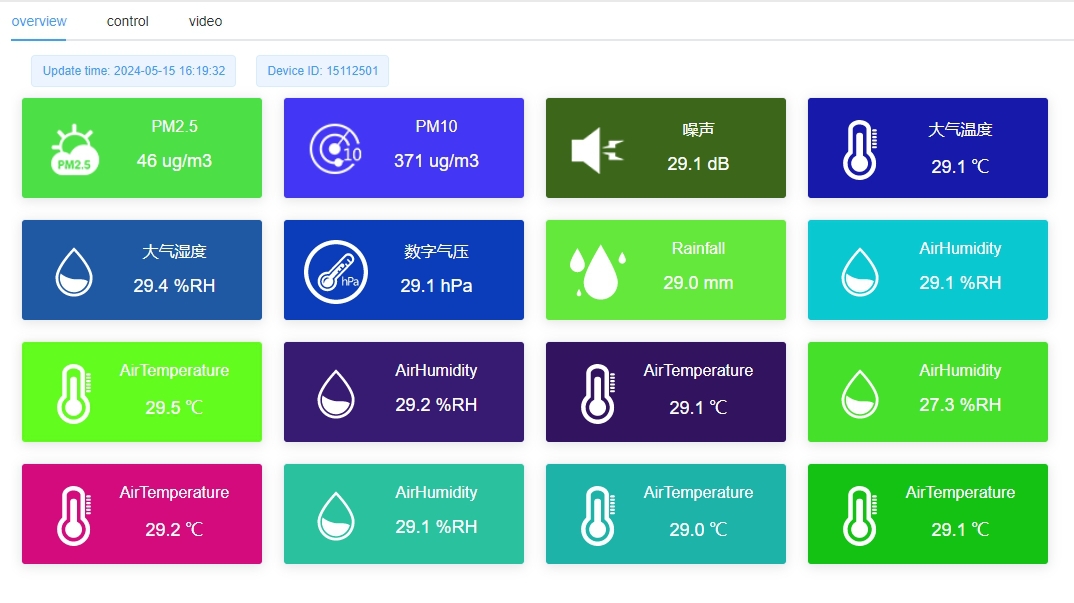
The NiuBoL cloud platform provides multi-terminal access, including Web, mobile App, and visualized large screens. The platform supports:
Real-time data display and historical curve query
Automatic generation of analysis reports and prediction models
Data export (CSV/Excel format)
Threshold alarm push (SMS/email)
API interfaces for easy integration with third-party systems
The platform architecture supports MQTT/HTTP protocols, ensuring low-latency transmission and suitable for edge computing and cloud collaboration scenarios.
The NiuBoL weather station emphasizes engineering-grade compatibility, making it easy to integrate into existing agricultural IoT architectures.
Communication protocols: Supports RS485, Modbus RTU/TCP, MQTT, LoRa (optional), compatible with mainstream industrial gateways and IoT platforms.
Interface expansion: Reserved interfaces and analog inputs for easy access to actuators (such as solenoid valves, fans).
Power supply and protection: Dual power supply (solar/mains), IP65 or higher protection, suitable for long-term outdoor operation.
Data integration: Cloud platform opens RESTful API, supporting docking with SCADA, ERP, or GIS systems for unified data management.
In project implementation, engineering companies can use the monitoring station as a perception layer node, combined with LoRaWAN or 4G/5G backhaul, to form star or mesh topologies, ensuring coverage of large areas of farmland.
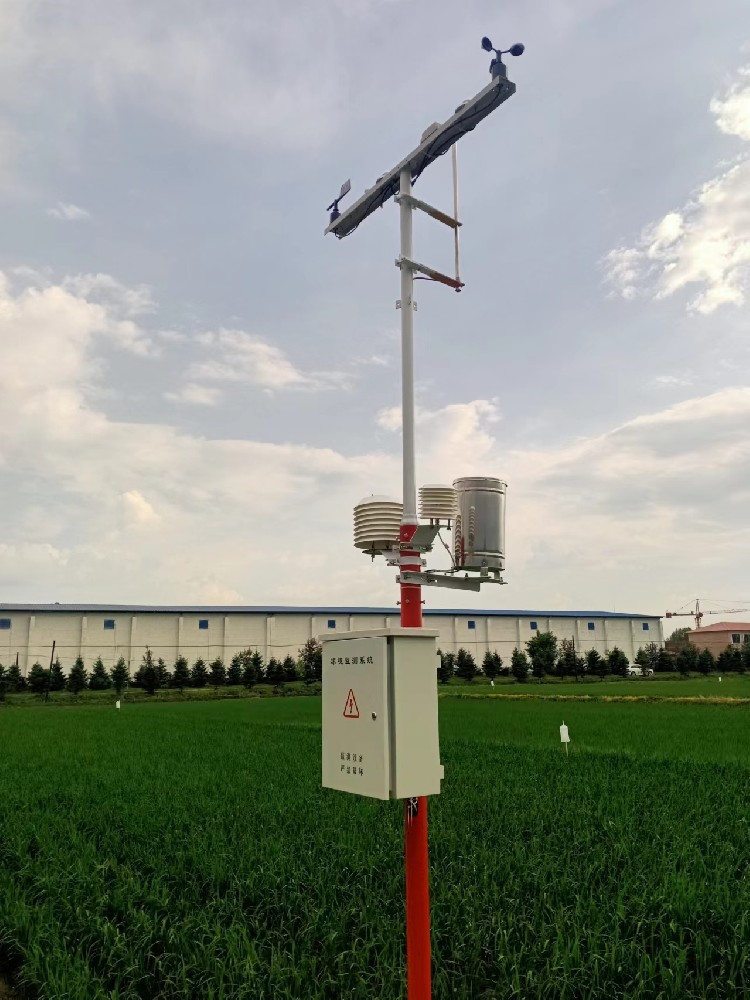
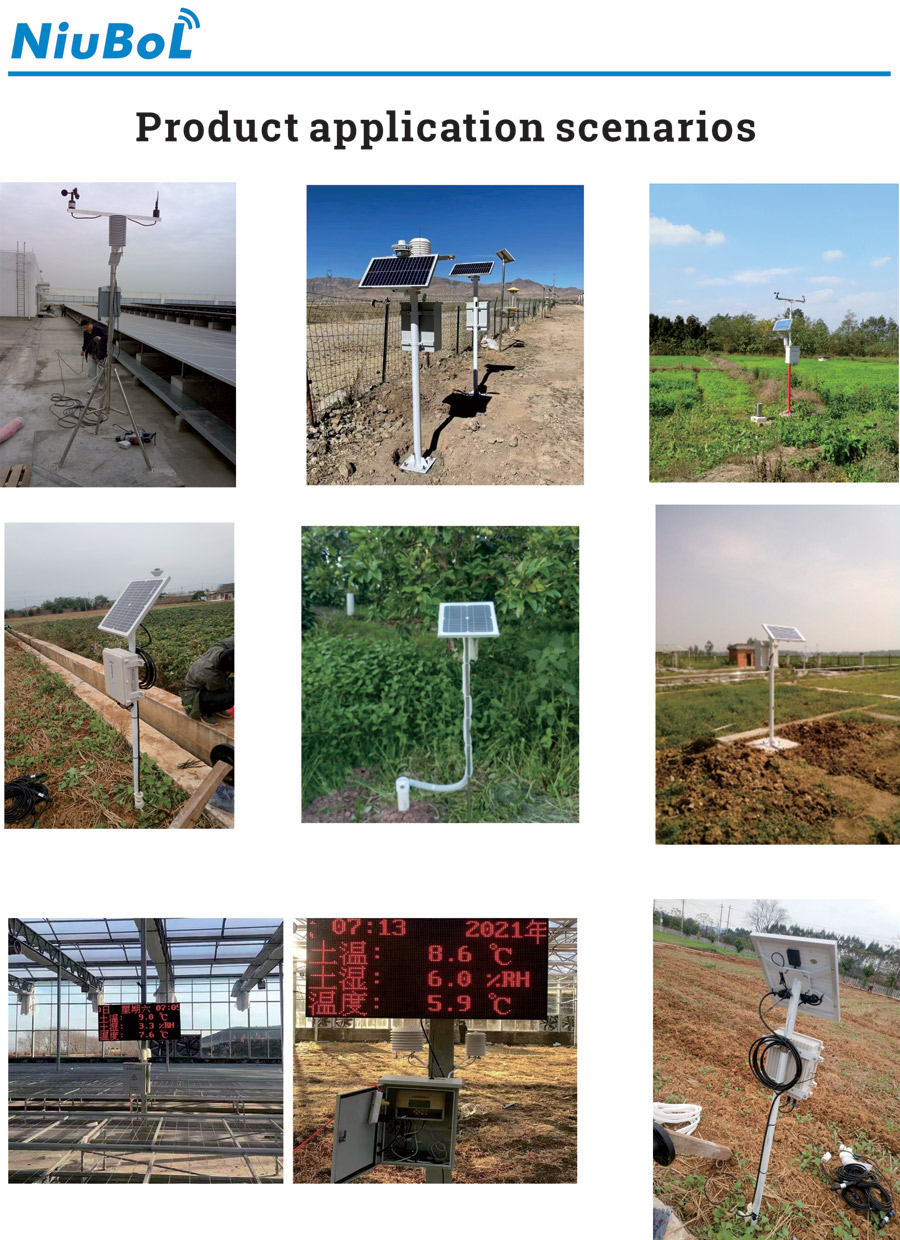
The NiuBoL IoT meteorological environment monitoring station is suitable for various B2B scenarios, focusing on professional field deployments:
Facility agriculture projects: Microclimate monitoring in greenhouse clusters, supporting linkage with shading nets and supplemental lights for adaptive environmental control.
Precision agriculture bases: Field crop environmental data collection, integrated with drones or agricultural machinery systems to support variable operations.
Scientific research and demonstration parks: Long-term fixed observation stations providing multi-element data to support academic analysis and model validation.
Environmental and ecological monitoring: Deployment at wetland or forest edges to monitor the impact of climate change on ecosystems.
Hydrology and geological exploration: Combined with water quality sensors for monitoring in irrigation districts or water sources.
Urban greening and tourist attractions: Environmental quality assessment, providing public display data.
Schools and research institutions: Teaching experiment platforms supporting remote data sharing.
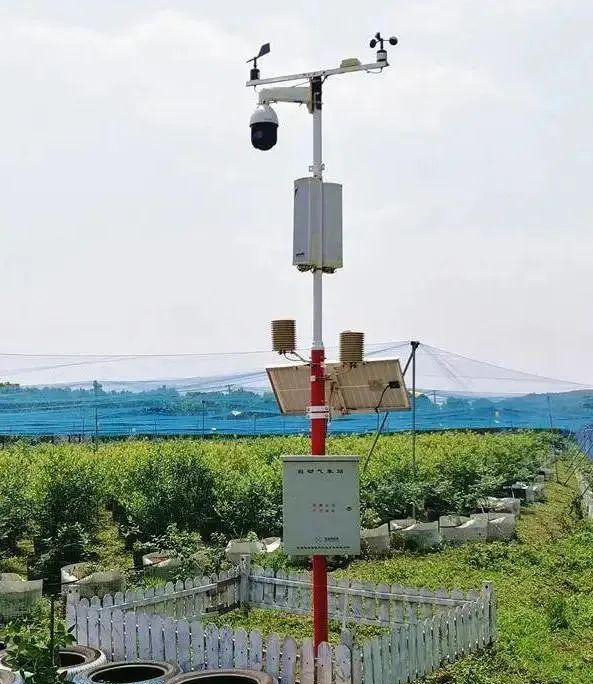
Case One: Southern Facility Vegetable Base Environmental Regulation Project
The system integrator deployed NiuBoL stations in multiple multi-span greenhouses to monitor CO₂, photosynthetic radiation, temperature, and humidity. Data is uploaded to the cloud via MQTT, linked with ventilation windows and CO₂ generators. After integrating video surveillance, automatic alarms for environmental anomalies are achieved. The base's yield stability improved by 12%, and energy costs decreased by approximately 20%. The visualized large screen is used for management decision-making and supports remote operation and maintenance.
When selecting for projects, consider:
Monitoring element requirements: Select sensor combinations based on crop types.
Communication coverage: Prioritize LoRa or satellite in remote areas.
Power stability: Solar configurations need to assess sunlight conditions.
Data security: Enable encrypted transmission and permission control.
Maintenance convenience: Modular design facilitates on-site replacement.
| Question | Answer |
|---|---|
| Q1. What communication protocols does the NiuBoL weather station support? | Supports RS485 Modbus, MQTT, HTTP, etc., compatible with mainstream IoT platforms. |
| Q2. How to achieve integration with existing SCADA systems? | Docking via Modbus TCP or API interfaces, supporting bidirectional data interaction. |
| Q3. What outdoor environments is the equipment protection level suitable for? | IP65 or higher protection, supports operation from -40℃ to 85℃, suitable for most agricultural scenarios. |
| Q4. Does the cloud platform support multi-terminal access? | Yes, including Web, App, and large screens, supporting real-time viewing and report generation. |
| Q5. Can other sensors be expanded? | Yes, the modular design allows adding soil, water quality, or gas sensors. |
| Q6. What is the data storage and backup mechanism? | Cloud big data storage, supporting historical data query and automatic backup. |
| Q7. What is the typical project deployment cycle? | Single station deployment takes 1-2 days; large-scale networks depend on the number of sites, usually completed in 2-4 weeks. |
Agricultural IoT solutions are driving the transformation of agriculture toward data-driven and intelligent approaches, covering multiple dimensions such as facility regulation, quality traceability, plant protection early warning, and more. With its high-precision perception, flexible integration, and reliable cloud platform, the NiuBoL IoT meteorological environment monitoring station provides a solid foundational component for system integrators and engineering companies. In actual projects, the station helps build end-to-end monitoring networks, enhancing resource efficiency and production resilience. Choosing professional and reliable hardware and platforms is a key step in advancing agricultural modernization.
Related recommendations
Sensors & Weather Stations Catalog
 Agriculture Sensors and Weather Stations Catalog-NiuBoL.pdf
Weather Stations Catalog-NiuBoL.pdf
Agriculture Sensors Catalog-NiuBoL.pdf
Water Quality Sensor Catalog-NiuBoL.pdf
Related products
 Combined air temperature and relative humidity sensor
 TDR Soil Moisture & Temperature Sensor for irrigation| RS485 |4-20mA| NBL-S-THR
 Soil pH sensor RS485 soil Testing instrument soil ph meter for agriculture |NBL-S-PH
 Wind Speed sensor Output Modbus/RS485/Analog/0-5V/4-20mA
 Tipping bucket rain gauge for weather monitoring auto rainfall sensor RS485/Outdoor/stainless steel
 Pyranometer Solar Radiation Sensor 4-20mA/RS485

Screenshot, WhatsApp to identify the QR code
WhatsApp number:+8615367865107
(Click on WhatsApp to copy and add friends)

