





— Blogs —
—Products—
 Consumer hotline +8618073152920
 WhatsApp:+8615367865107
Address:Room 102, District D, Houhu Industrial Park, Yuelu District, Changsha City, Hunan Province, China
Product knowledge
Time:2026-01-03 15:26:26 Popularity:815
In the pursuit of high yield and quality in modern agricultural production, pesticide application plays an irreplaceable role in improving crop resistance to insects and diseases. However, pesticides are essentially chemically synthesized agents, and their degradation requires specific cycles. If degradation is incomplete, the original pesticide bodies and toxic metabolites remaining in grains, vegetables, and fruits constitute "pesticide residues."
Long-term consumption of food with excessive pesticide residues not only causes side effects on the human body but may even lead to acute poisoning. In this context, the NiuBoL pesticide residue rapid detector emerges. It builds a solid firewall for our dietary health through precise photoelectric technology and biochemical reaction monitoring.

To use the equipment well, one must first understand its scientific foundation. The NiuBoL pesticide residue detector adopts the internationally accepted "enzyme inhibition method."
Positive Correlation Between Inhibition Rate and Concentration
Under specific conditions, organophosphorus and carbamate pesticides have obvious inhibitory effects on the normal function of cholinesterase. This inhibition rate is positively correlated with pesticide concentration.
From Color Reaction to Digital Reading
Normally, the enzyme catalyzes the hydrolysis of nerve conduction metabolites (acetylcholine), and its products react with the chromogenic agent to produce a yellow substance. The NiuBoL instrument calculates the inhibition rate by measuring the change in absorbance of this yellow substance over time.
Calculation Logic: The higher the inhibition rate, the greater the pesticide residue in the sample. Through preset thresholds, the instrument can quickly determine whether the sample is safe.
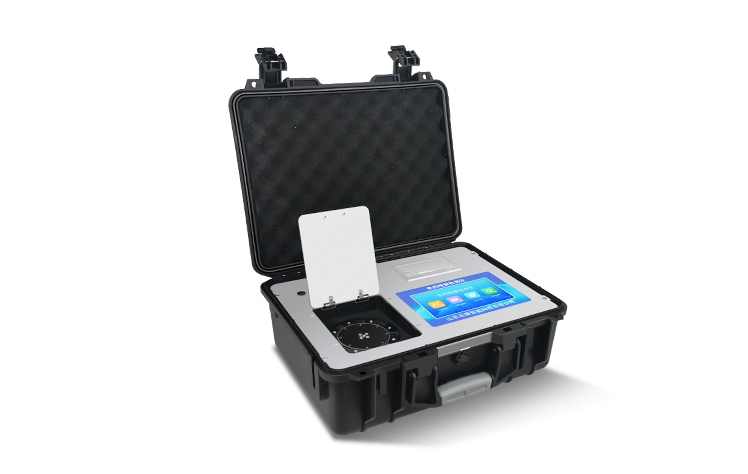
To ensure the rigor of detection results, operators must follow the following "four-step process":
1.Startup and Preheating
Connect the power to the NiuBoL pesticide residue rapid tester and turn on the system. To shorten preheating time and ensure internal optical component stability, cover the instrument lid during preheating. Then, adjust the computer output mode to printer output mode as needed for real-time archiving.
2.Blank Control Test (Baseline Establishment)
Control testing is the reference system for all subsequent sample data and must be strictly operated:
Adding Sample: Take a cuvette, sequentially add 100μl enzyme solution and 2.5ml buffer solution, shake well.
Reaction Start: Add 10μl chromogenic agent and 20μl substrate, quickly seal and shake well.
Data Reading: Place in the first channel of the instrument, press the "Control" key; after 1 minute, the instrument will display the control absorbance change value.
3.Sample Extraction and Incubation
Extraction: Take 1g chopped sample, add 5ml extraction solution for 10 minutes immersion. If equipped with NiuBoL recommended ultrasonic oscillator, extraction time can be shortened to 2 minutes.
Reaction: Take 2.5ml immersion solution, add 100μl enzyme solution and 100μl chromogenic agent. Incubate for 15 minutes in a 30℃ constant temperature environment (ambient temperature is crucial for enzyme activity).
Endpoint Control: Add 100μl substrate, shake well and pour into cuvette.
4.Sample Testing and Result Printing
Place the cuvette in the corresponding measurement channel and press the "Sample" key. The instrument will automatically calculate the inhibition rate. After testing, print the pesticide residue inhibition rate report for the tested vegetables via the built-in printer.
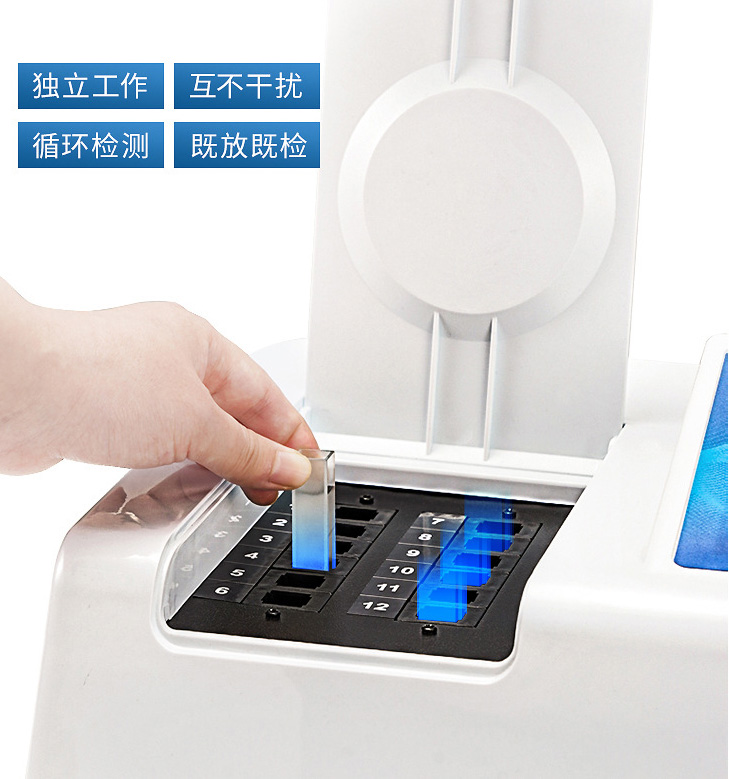
In actual operation, environmental factors and sample characteristics often interfere with data. NiuBoL reminds you to note the following details:
1.Battery and Power Management
First Activation: Fully charge (about 8 hours) on first use of the pesticide residue rapid detector.
Low Battery Reminder: If the prompt light is off, battery is low; charge promptly to prevent automatic shutdown causing data loss.
Reset Mechanism: If keys are unresponsive, use a small probe to press the "RESET" switch at the bottom to restore the system.
2.Avoid "False Positive" Traps
Certain vegetables (such as onions, garlic, radishes, leeks, celery, cilantro, mushrooms, etc.) contain natural plant secondary substances that inhibit enzymes similarly to pesticides, producing "false positive" errors.
Countermeasure: For such samples, recommend whole plant immersion extraction or surface measurement to reduce precipitation of internal plant secondary substances.
3.Environmental Sensitivity
Color reaction requires sufficient water as medium. Each batch of samples should be processed synchronously to avoid substrate or enzyme solution drying due to prolonged waiting, leading to experimental failure.
Although equipped with NiuBoL monitoring, mastering some cleaning techniques at the consumer end is equally important:
Wash First, Then Soak: Especially for leafy vegetables, rinse surface dirt first before soaking. Strictly prohibit cutting before washing, otherwise residual pesticides will penetrate along cut surfaces.
Alkaline Water Soaking Method: Most pesticides decompose faster in alkaline environments. Soak fruits and vegetables in alkaline water for 5-15 minutes to effectively improve removal rate.
Heating Method (Blanching): Carbamate insecticides are heat-unstable. Blanch green peppers, cauliflower, etc., in boiling water before cooking to accelerate pesticide residue decomposition.
Physical Peeling and Storage: Fruits and vegetables with uneven surfaces or fine hairs easily retain pesticides; peeling is the most direct method. Additionally, using oxygen and light in air, moderate storage can also allow some pesticide residues to naturally degrade.
Q1: What inhibition rate is considered unqualified?
A: Generally, inhibition rate above 50% is considered positive (exceeding standard), with greater food safety risk. Between 30%-50%, further observation or confirmation with precise chromatography is recommended.
Q2: Can NiuBoL pesticide residue rapid detector detect all pesticides?
A: It is targeted design, mainly for rapid detection of organophosphorus and carbamate pesticides. As these two classes are most widely used in agriculture and highly toxic, it has extremely high monitoring performance.
Q3: Why can't cuvettes have scratches during testing?
A: The core of the instrument is optical absorbance measurement. Scratches or fingerprints on cuvette surfaces cause light scattering, directly leading to deviation in calculated inhibition rate. Recommend using special lens paper to wipe cuvette light-transmitting surfaces.
The pesticide residue rapid detector is not just an instrument but a key link in the modern food safety assurance system. Through NiuBoL's standardized monitoring process, whether regulatory departments or production bases can quantify pesticide residue risks in extremely short time.
From precise laboratory controls to random field sampling, standardized operation, scientific early warning, and transparent data will ensure every fruit and vegetable entering the market withstands inspection. NiuBoL is committed to providing precise, stable, and easy-to-use food safety perception equipment, letting technology flow into every green leaf and health stay in every family.
Related recommendations
Sensors & Weather Stations Catalog
 Agriculture Sensors and Weather Stations Catalog-NiuBoL.pdf
Weather Stations Catalog-NiuBoL.pdf
Agriculture Sensors Catalog-NiuBoL.pdf
Water Quality Sensor Catalog-NiuBoL.pdf
Related products
 Combined air temperature and relative humidity sensor
 TDR Soil Moisture & Temperature Sensor for irrigation| RS485 |4-20mA| NBL-S-THR
 Soil pH sensor RS485 soil Testing instrument soil ph meter for agriculture |NBL-S-PH
 Wind Speed sensor Output Modbus/RS485/Analog/0-5V/4-20mA
 Tipping bucket rain gauge for weather monitoring auto rainfall sensor RS485/Outdoor/stainless steel
 Pyranometer Solar Radiation Sensor 4-20mA/RS485

Screenshot, WhatsApp to identify the QR code
WhatsApp number:+8615367865107
(Click on WhatsApp to copy and add friends)

