





— Blogs —
—Products—
 Consumer hotline +8618073152920
 WhatsApp:+8615367865107
Address:Room 102, District D, Houhu Industrial Park, Yuelu District, Changsha City, Hunan Province, China
Product knowledge
Time:2025-12-19 14:30:34 Popularity:755
In vast farmlands, beyond the visible water and fertilizers, there lies an “invisible pulse” that determines the life or death of crops—the soil pH value. It is a physical indicator measuring soil acidity and alkalinity, directly determining the solubility of nutrients in the soil and their absorbability by plants.
If the soil pH value deviates from the optimal range for crops, even with abundant fertilizer application, plants cannot effectively absorb them. For example, in strongly acidic soil, phosphorus is easily fixed by iron and aluminum, becoming ineffective; in alkaline soil, trace elements like iron and zinc are difficult for roots to uptake. To break away from this “relying on the weather” blindness, NiuBoL has launched the NBL-S-PH series soil pH sensor, transforming traditional complex laboratory analysis into real-time digital monitoring.
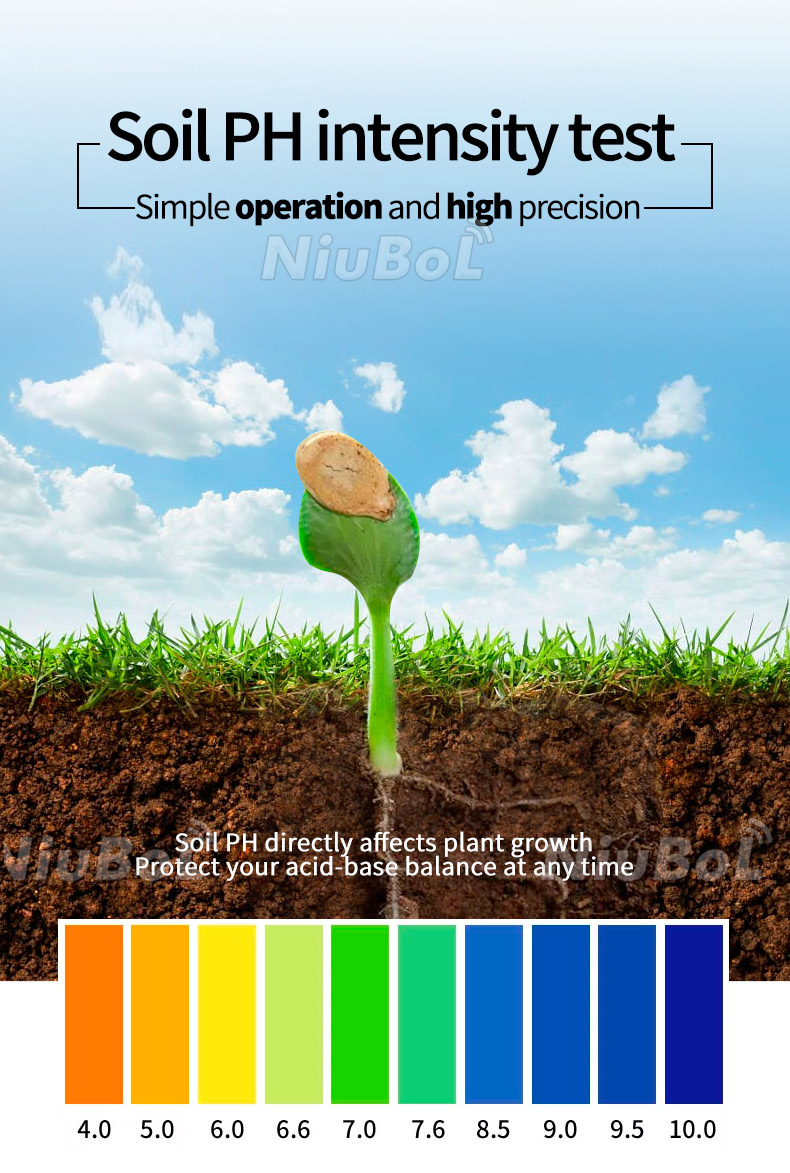
A soil pH sensor is a precision measurement device based on electrochemical sensing technology, specifically designed for real-time, continuous online monitoring of hydrogen ion (H+) concentration in soil or other media.
The core significance of the NiuBoL NBL-S-PH sensor lies in its “industrial-grade civilianization” design philosophy. It solves the pain points of traditional soil pH testing equipment, such as cumbersome calibration, difficult integration, high power consumption, and high cost, allowing ordinary farmers and horticulturists to monitor soil acidity and alkalinity in a low-cost, high-precision way, just like monitoring temperature.
The essence of the soil pH sensor's operation is to establish a “chemical battery” measurement circuit.
Glass Electrode and Ion Exchange
The core component of the sensor is the glass electrode. It contains a special glass membrane bulb highly sensitive to hydrogen ions. When the sensor is inserted into moist soil, the glass membrane surface exchanges reactions with hydrogen ions in the soil solution, generating a potential difference inside and outside the membrane.
Stability of Reference Electrode
To accurately quantify this potential difference, the sensor integrates an internal reference electrode (usually silver/silver chloride electrode). The reference electrode provides a constant reference potential. A high-input impedance circuit measures the potential difference between the glass electrode and the reference electrode, converting it to a pH value signal according to the Nernst Equation.
Digital Signal Conversion
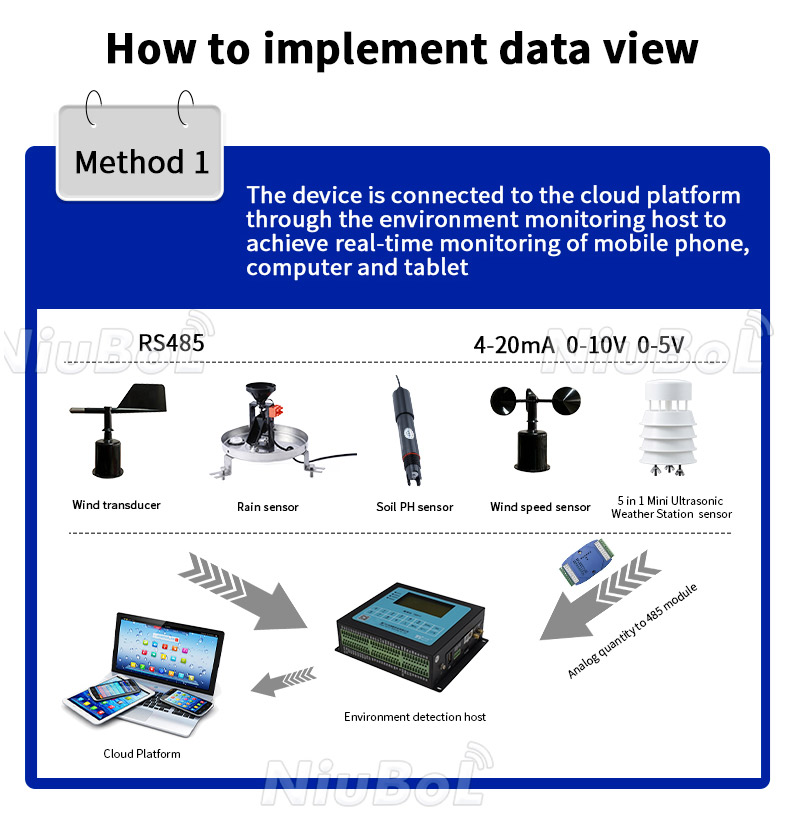
The built-in micro-conversion module in NiuBoL amplifies and linearizes the weak potential signal, converting it into standard industrial signals (such as RS485, 4-20mA, or 0-5V), directly interfacing with agricultural IoT platforms.
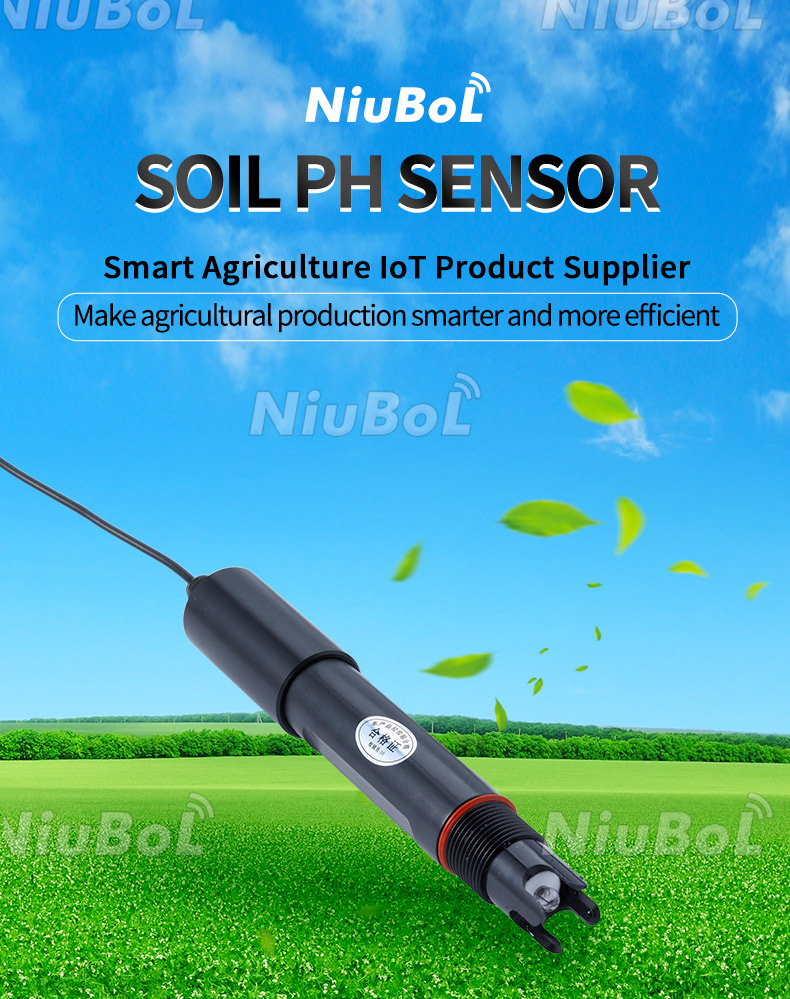
The NiuBoL NBL-S-PH sensor fully considers the complexity and corrosiveness of soil environments in its structural design:
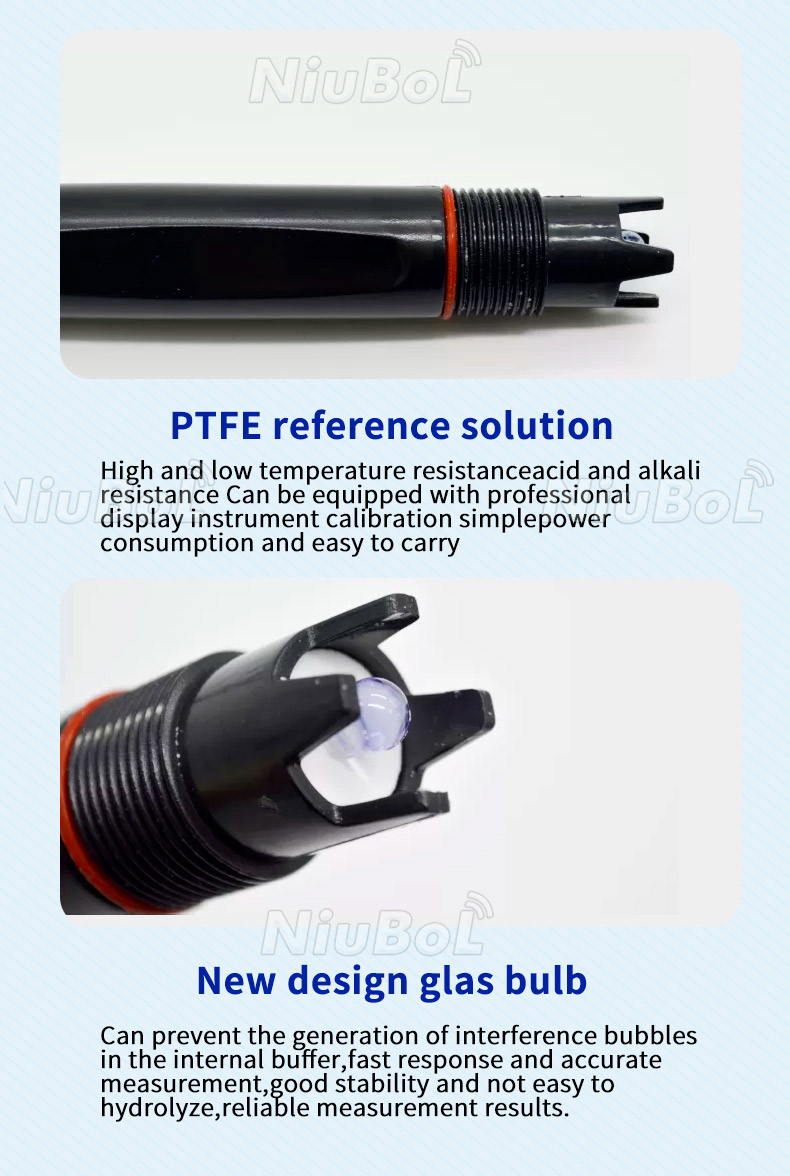
Sensing Probe: Adopts high-sensitivity electrochemical balance electrode with fast response speed, typically less than 10 seconds in water.
External Signal Conversion Module: Encapsulated in a waterproof plastic shell, with internal circuits sealed for strong anti-interference capability, ensuring undistorted data transmission over long distances.
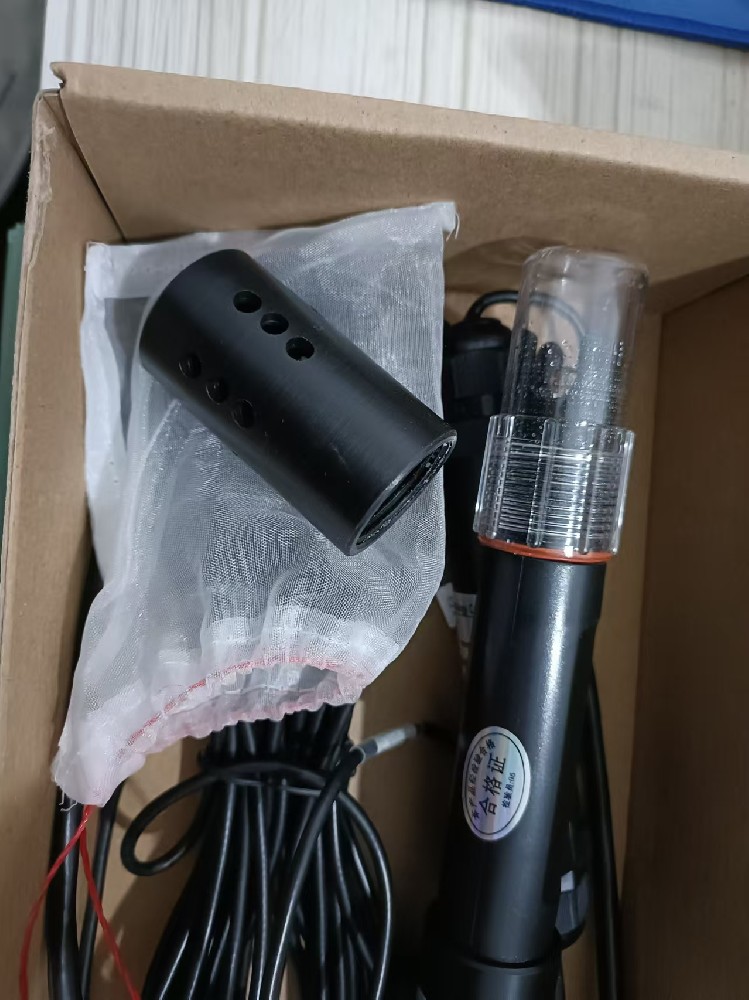
Physical Protection Structure: Comes standard with a transparent protective cover and built-in protective solution. In actual use, a unique filter slot and filter net combination ensures full contact between soil solution and probe while physically isolating hard sand and stones from impacting the glass membrane.
Weather-Resistant Cable: Standard 5-meter high-quality shielded cable with good tensile and corrosion resistance.
| Parameter Name | Technical Specifications |
|---|---|
| Measurement Range | 0-14 pH |
| Accuracy | ±0.1pH |
| Resolution | 0.01 pH |
| Response Time | <10 seconds (in water) |
| Power Supply | DC 12V-24V (wide voltage supply) |
| Output Format | RS485 (Modbus protocol) / 4-20mA / 0-5V optional |
| Power Consumption | Extremely low power consumption, about 0.2W |
| Operating Environment | Temperature 0-80℃ / Humidity 0-95%RH |
| Housing Material | Industrial-grade waterproof plastic |
High Precision and Real-Time: Compared to pH test strips (large error from visual color judgment and non-continuous) or chemical kits (troublesome operation), NiuBoL sensor provides digital feedback accurate to 0.01 and supports second-level refresh.
Strong Anti-Interference: The external signal conversion module effectively shields electromagnetic interference from field variable frequency pumps, high-voltage lines, etc.
Easy Installation and Maintenance-Free: Compact design, supports underwater use or direct soil insertion. No need for expensive professional display instruments; directly connects to PLC or data logger.
Long-Life Design: With regular probe cleaning and calibration, the sensor maintains stable operation for years, greatly reducing per-measurement cost.
Wireless Expansion Potential: Outputs standard RS485 signal, can connect to RS485-to-LoRaWAN module for easy kilometers-range wireless data transmission via LoRaWAN gateway, suitable for large-scale smart farms.
Agricultural Precision Irrigation and Fertilization
Different crops have different pH preferences. Through real-time monitoring, farmers can decide whether to apply lime (for acidic soil) or ammonium sulfate (for alkaline soil) based on data, achieving “one plot, one strategy”.
Flower Horticulture and Greenhouse Cultivation
In high-end cultivation of pH-sensitive plants like orchids and azaleas, NiuBoL sensor can real-time alert horticulturists to adjust nutrient solution formulas, preventing root poisoning.
Grassland Pastures and Rapid Soil Testing
In degraded grassland restoration, monitoring dynamic pH changes helps select suitable reseeding grass species, improving ecological restoration success rates.
Environmental Protection and Industrial Wastewater Treatment
Beyond agriculture, the sensor is also suitable for sewage treatment plants, dyeing, pharmaceutical, electroplating, and other industries to monitor neutralization processes for discharged wastewater, ensuring compliance.
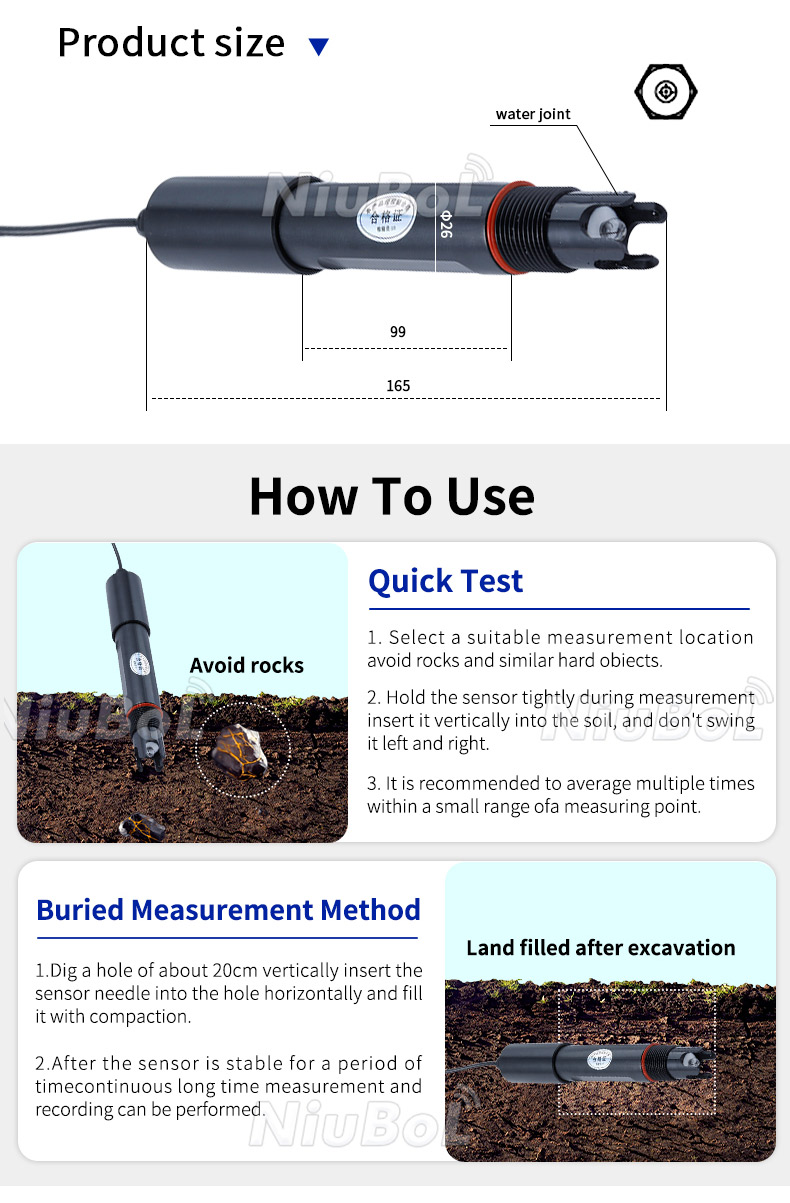
Correct Installation Steps
Remove Protective Cover: Must remove the transparent cover protecting the probe before use.
Install Filter System: Fix the filter slot and wrap with tie straps and filter net. Strictly prohibit direct insertion of bare probe into hard soil.
Vertical Insertion: Depth must cover the filter net, ensuring full contact between probe and soil solution.
Water Intervention: After burial, pour appropriate water and wait a few minutes for penetration to the probe before reading data.
Regular Calibration and Cleaning
Calibration: Perform once monthly or per growth season using standard buffer solutions (pH 4/7/10) to compensate for electrode aging drift.
Cleaning: Recommend weekly cleaning of probe surface. Avoid sharp objects or strong acids/bases to prevent damage to sensitive glass membrane.
Q1: Can the sensor measure directly in dry soil?
A: No. pH measurement relies on ion movement and requires water to form a current loop. Ensure soil is moist before measurement or pour water around the sensor.
Q2: Why does the response time vary?
A: Very fast in water (within 10 seconds), but in soil depends on water penetration speed to probe surface and ion exchange rate; recommend waiting a few minutes for stable values.
Q3: Can this sensor connect to LoRaWAN system?
A: Yes. NiuBoL NBL-S-PH outputs standard RS485 signal, can directly connect to LoRaWAN-compatible wireless transmission module for ultra-long distance, low-power data upload to cloud.
Q4: Why is the air pH reading not equal to 7?
A: In air, residual liquid on probe surface reacts with CO2 or lacks ions, producing meaningless high-impedance signals. Normal drift in air readings between 6.2-7.8 is acceptable and does not indicate sensor fault.
The soil pH sensor is not just a tool for measuring acidity and alkalinity but a strategic resource for achieving sustainable agriculture and refined management. Through NiuBoL's technological empowerment, agricultural practitioners can gain insights into the true needs of the land from vast underlying data, thereby reducing blind use of chemical amendments, protecting soil structure, and enhancing crop yields.
In today's accelerating development of smart agriculture, choosing a high-precision, easy-to-integrate, cost-effective sensor like NBL-S-PH will lay the most solid foundation for your digital agriculture base.
Interested in more about NiuBoL soil pH sensor (NBL-S-PH) selection advice, latest quotes, or smart agriculture integration solutions? Welcome to contact our technical experts; we will provide you with one-on-one professional consulting services to jointly safeguard the health of every inch of land.
Prev:Core Technology, Applications, and Future Trends of NiuBoL Residual Chlorine Sensor
Next:“Digital Sentinel” of Smart Agriculture: NiuBoL Soil Moisture Monitoring Station
Related recommendations
Sensors & Weather Stations Catalog
 Agriculture Sensors and Weather Stations Catalog-NiuBoL.pdf
Weather Stations Catalog-NiuBoL.pdf
Agriculture Sensors Catalog-NiuBoL.pdf
Water Quality Sensor Catalog-NiuBoL.pdf
Related products
 Combined air temperature and relative humidity sensor
 TDR Soil Moisture & Temperature Sensor for irrigation| RS485 |4-20mA| NBL-S-THR
 Soil pH sensor RS485 soil Testing instrument soil ph meter for agriculture |NBL-S-PH
 Wind Speed sensor Output Modbus/RS485/Analog/0-5V/4-20mA
 Tipping bucket rain gauge for weather monitoring auto rainfall sensor RS485/Outdoor/stainless steel
 Pyranometer Solar Radiation Sensor 4-20mA/RS485

Screenshot, WhatsApp to identify the QR code
WhatsApp number:+8615367865107
(Click on WhatsApp to copy and add friends)

