





— Blogs —
—Products—
 Consumer hotline +8618073152920
 WhatsApp:+8615367865107
Address:Room 102, District D, Houhu Industrial Park, Yuelu District, Changsha City, Hunan Province, China
Product knowledge
Time:2023-07-02 20:41:18 Popularity:2338
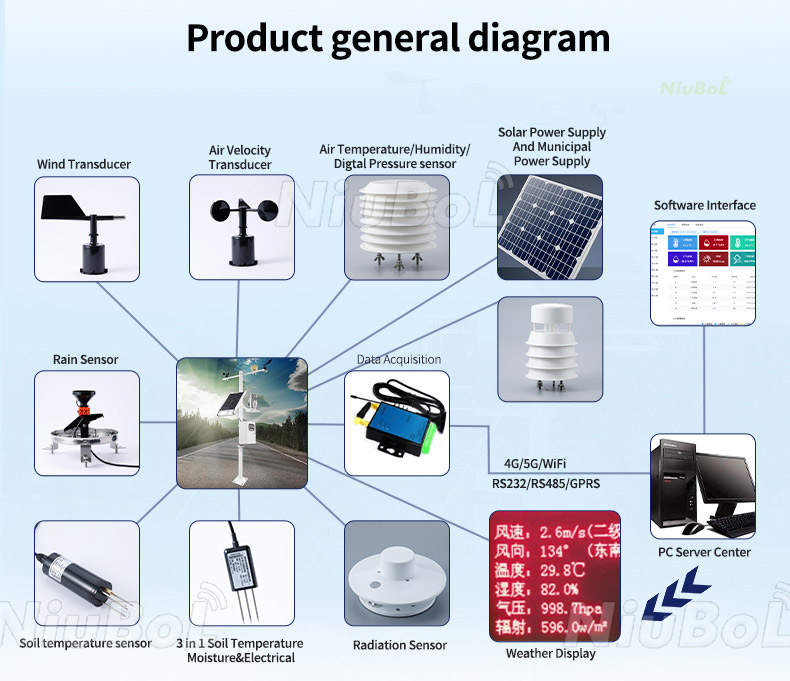
The PV automatic weather station is a small agricultural weather station that monitors conventional weather elements such as solar radiation, air temperature, humidity, wind speed, wind direction, light intensity, rainfall, etc. The instrumentation can add corresponding observation items independently according to the actual needs of the user, including soil temperature and humidity, carbon dioxide concentration, etc.
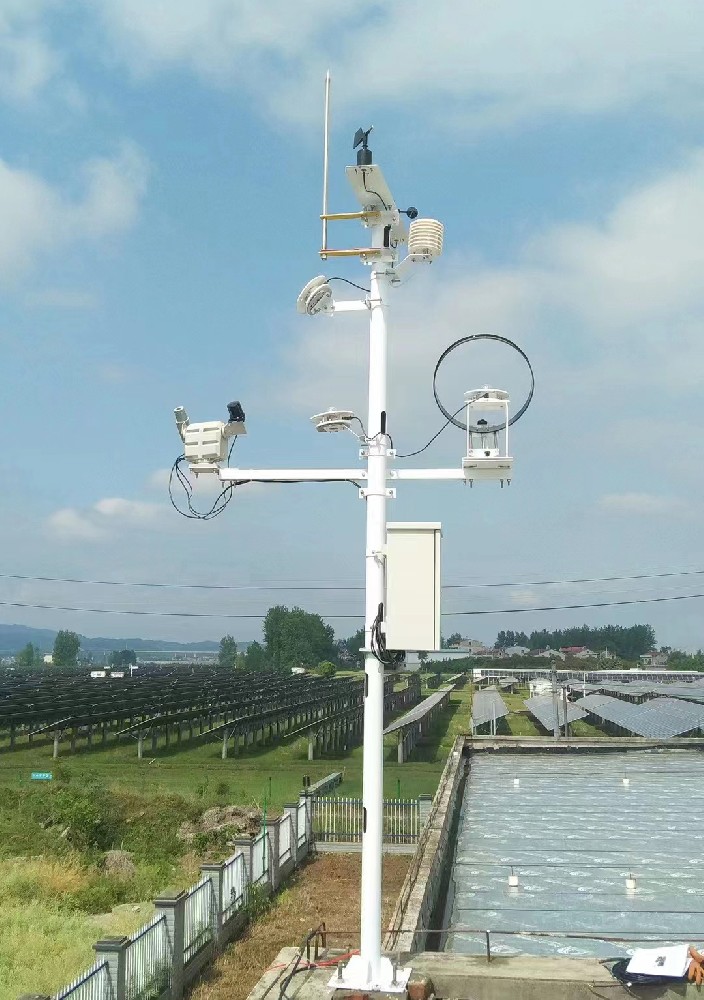
Photovoltaic automatic weather stations can provide an important service for agriculture. In agriculture, solar energy is an important renewable energy source, and PV automatic weather stations can help farmers maximize solar resources and make decisions about farm management and crop planting.
PV automatic weather stations can monitor and record weather elements such as solar radiation, temperature, humidity and wind speed in real time. This data can be used to optimize the layout and positioning of PV panels, ensuring that they capture as much solar energy as possible. In addition, PV automated weather stations can predict weather conditions, such as rainfall amounts and cloud coverage levels, to help farmers better plan and manage their farmland.
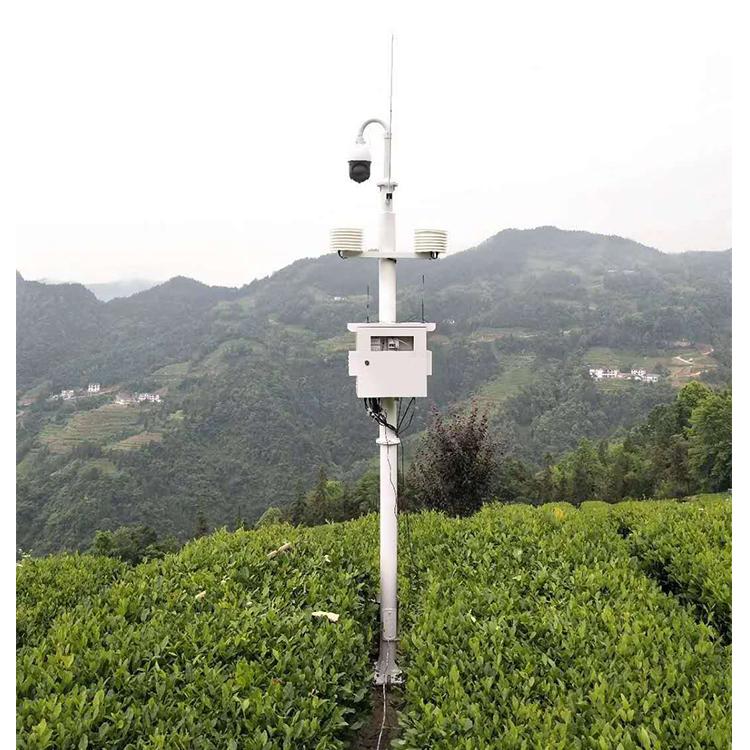
In addition to solar energy use and weather forecasting, PV automatic weather stations can also provide farmers with references for soil moisture regulation and irrigation decisions by monitoring parameters such as soil moisture, soil temperature and air temperature. These data can help farmers use water wisely, reduce waste, and minimize stress and damage to crops.
Photovoltaic automatic weather stations are small in appearance but comprehensive in function, not only monitoring comprehensive meteorological parameters, but also a high degree of automation can be monitored around the clock, and realize wireless transmission of data, remote viewing of meteorological monitoring data, to facilitate timely understanding of changes in agricultural microclimate, more conducive to the relevant departments to carry out meteorological analysis work to reduce agricultural losses caused by meteorological disasters.
In conclusion, PV automatic weather stations have a wide range of applications in the field of agriculture, weather changes and the development of agriculture are closely linked, the combination of PV automatic weather stations and agriculture can provide farmers with more accurate decision support, improve agricultural production efficiency, reduce energy consumption, and play a positive role in promoting sustainable agricultural development.
 NBL-W-HPRS-Solar-Radiation-Sensor-Instruction-Manual-V3.0.pdf
NBL-W-SRS-Solar-radiation-sensor-instruction-manual-V4.0.pdf
Prev:Automatic weather stations for 24-hour unattended uninterrupted weather monitoring
Next:How to buy and cost agricultural weather station equipment
Related recommendations
Sensors & Weather Stations Catalog
 Agriculture Sensors and Weather Stations Catalog-NiuBoL.pdf
Weather Stations Catalog-NiuBoL.pdf
Agriculture Sensors Catalog-NiuBoL.pdf
Water Quality Sensor Catalog-NiuBoL.pdf
Related products
 Combined air temperature and relative humidity sensor
 TDR Soil Moisture & Temperature Sensor for irrigation| RS485 |4-20mA| NBL-S-THR
 Soil pH sensor RS485 soil Testing instrument soil ph meter for agriculture |NBL-S-PH
 Wind Speed sensor Output Modbus/RS485/Analog/0-5V/4-20mA
 Tipping bucket rain gauge for weather monitoring auto rainfall sensor RS485/Outdoor/stainless steel
 Pyranometer Solar Radiation Sensor 4-20mA/RS485

Screenshot, WhatsApp to identify the QR code
WhatsApp number:+8615367865107
(Click on WhatsApp to copy and add friends)

