





— Blogs —
—Products—
 Consumer hotline +8618073152920
 WhatsApp:+8615367865107
Address:Room 102, District D, Houhu Industrial Park, Yuelu District, Changsha City, Hunan Province, China
Product knowledge
Time:2026-05-17 10:09:13 Popularity:415
In seawater recirculating aquaculture systems (RAS), nearshore cage monitoring, and marine ecological assessment projects, balancing various physicochemical factors is the core task for system integrators (SI) when designing automation control solutions. Nitrogen pollution (ammonia nitrogen and nitrite) caused by high-density excretion and feed input, combined with harsh operating conditions, can easily lead to complete ecosystem collapse.
To prevent excessive toxin concentrations in water, an online continuous monitoring mechanism must be established. Traditional chemical colorimetric methods (such as the diazo-azo spectrophotometric method) are prone to significant salinity interference in high-salinity seawater backgrounds and cannot provide real-time, continuous trend warning. To ensure the safety of high-density aquaculture and water treatment assets, projects must integrate digital online ammonia nitrogen sensors and multi-parameter monitoring terminals based on the RS-485 bus and standard industrial protocols.
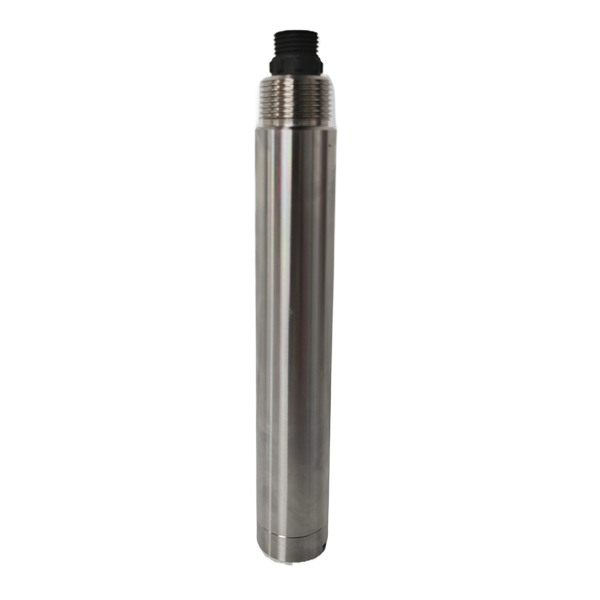
During system software development and PLC control logic design, integrators should use the following 8 authentic field measurement data points as baselines for system alarms and actuator interlocking:
| No. | Parameter | Industrial/Fishery Standard Range | Engineering Impact & Control Mechanism |
|---|---|---|---|
| 1 | Temperature | 18–35 °C | Normal growth temperature. Optimal range: 25–32 °C. Directly affects metabolic rate and dissolved oxygen upper limit. |
| 2 | pH value | 6.5–8.5 | Below 6.5, fertilizer efficiency fails and toxicity of ammonia nitrogen & hydrogen sulfide increases significantly, easily causing hypoxia and surface floating. |
| 3 | Salinity | 0–1% | Osmotic pressure control. High salinity severely affects normal growth and reproduction of freshwater organisms. |
| 4 | Ammonia Nitrogen (TAN) | 0–0.02 mg/L | Core toxicity indicator. Excess damages gill tissue. When molecular ammonia (NH₃) > 0.5 mg/L, causes feeding cessation and respiratory failure. |
| 5 | Hydrogen Sulfide (H₂S) | 0–0.1 mg/L | Highly toxic sediment indicator. Excess damages central nervous system. >0.5 mg/L causes disease or mass mortality. |
| 6 | Nitrite (NO₂⁻) | 0–0.02 mg/L | Key nitrogen conversion indicator. Excess causes hemorrhagic disease. >0.5 mg/L leads to severe disease or mass mortality. |
| 7 | Available Phosphorus | 0.2–1 mg/L | Nutrient indicator. Below 0.2 mg/L suppresses high-quality algae growth, may cause harmful algal blooms. |
| 8 | Transparency | 20–30 cm | Optical & fertility indicator. Too high (clear water) indicates insufficient fertility; too low affects benthic photosynthesis and worsens oxygen consumption. |
In the IoT multi-parameter water quality monitoring system architecture, the NiuBoL all-in-one online ammonia nitrogen sensor (model: NBL-WQ-NHN) serves as the underlying digital sensing unit.
The sensor is directly submersed into the seawater biofilter, protein skimmer outlet, or recirculation pipeline via 3/4 NPT threads or flange components. Because the sensor outputs a standard RS-485 digital signal supporting the Modbus RTU communication protocol, system integrators can easily connect the ammonia nitrogen probe, pH probe, dissolved oxygen (DO) probe, and salinity probe in series (daisy-chain topology) using a single twisted pair. Data is transmitted directly to the on-site PLC (e.g., Siemens S7-1200) or industrial RTU, eliminating the budget for multi-channel analog input (A/D conversion) modules.
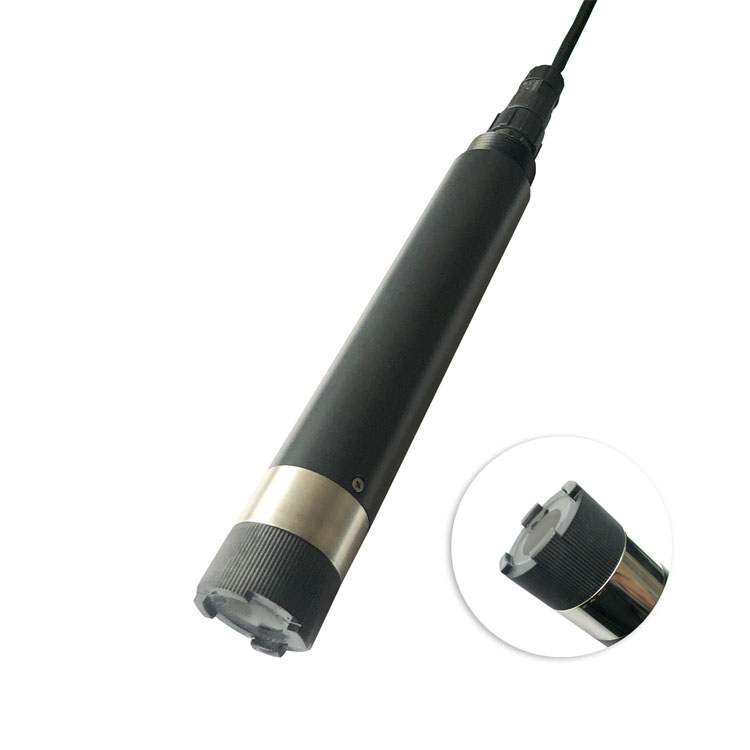
| Parameter | Specification / Industrial Grade Value |
|---|---|
| Model / Brand | NBL-WQ-NHN / NiuBoL |
| Measurement Principle | Ion Selective Electrode (ISE) |
| Housing Material | ABS, PVC, POM (anti-biofouling & high salinity corrosion resistance) |
| Measuring Range | 0–10.00 mg/L; 0–100.00 mg/L (configurable per conductivity & expected concentration) |
| Resolution | 0.01 mg/L (for both ranges), Temperature: 0.1 °C |
| Accuracy | 0–10.00 mg/L: ±10% of reading or ±1 mg/L (whichever greater), ±0.5 °C |
| Temperature Compensation | Automatic, built-in Pt1000 RTD |
| Response Time (T90) | < 60 seconds (supports high-frequency continuous data streaming) |
| Lower Detection Limit | 0.09 mg/L |
| Output Interface | Standard RS-485 (Modbus RTU) / Optional 4-20 mA |
| Power Supply | 12–24V DC / Power consumption: 0.2W @ 12V (ultra-low power design) |
| Protection Rating / Thread | IP68; 3/4 NPT; Cable length: 5 meters (customizable) |
| Limitations | Operating environment: 0–40 °C; Pressure:<0.1 MPa; pH: 4–10 |
5.1 Anti-corrosion Material Performance
Seawater and high-density aquaculture environments are typical high-conductivity, highly corrosive media. The NiuBoL sensor housing uses ABS, PVC, and POM composite materials, which effectively resist chloride ion attack in seawater. The smooth plastic surface also provides certain anti-biofouling capability (e.g., against barnacles and algae), ensuring long-term physical protection.
5.2 Salinity & Background Ion Compensation
In seawater environments (salinity typically 1%–3.5%), high concentrations of sodium (Na⁺) and chloride (Cl⁻) ions affect the overall activity coefficient of the electrode. When deploying ion selective electrode sensors, system integrators should perform two-point calibration using actual on-site water samples to eliminate the influence of high background salinity on voltage slope.
5.3 Dynamic pH & Temperature Interlocking Control
Because the ratio of free ammonia (NH₃) to ammonium ion (NH₄⁺) increases significantly with rising temperature and pH, integrators writing PLC or SCADA control algorithms must correlate the digital output of the online ammonia nitrogen sensor with pH and temperature data in real time to calculate the true unionized ammonia toxicity window. When pH drops below 6.5 or ammonia nitrogen spikes above 0.5 mg/L, the system must immediately activate biofilter recirculation or the external water make-up valve.
Q1: Why do the 8 indicators emphasize that ammonia nitrogen and hydrogen sulfide toxicity increase when pH drops below 6.5 in aquaculture water?
A: This is a classic chemical equilibrium issue. Low pH (acidic environment) changes the speciation of sulfides and free ammonia, increasing the proportion of highly toxic molecular hydrogen sulfide. Simultaneously, low pH severely weakens the fertilizer efficiency of high-quality algae in the water, reducing photosynthesis and easily causing oxygen depletion, which leads to large-scale fish and shrimp poisoning and surface floating.
Q2: Does the ion selective electrode online ammonia nitrogen sensor require a dedicated transmitter instrument?
A: No. The NiuBoL uses an all-in-one intelligent digital probe. Signal amplification, A/D conversion, and Modbus protocol parsing are all completed on a chip inside the sensor. It directly outputs a standard RS-485 signal, which can be directly connected to a PLC or IoT gateway, eliminating the need for a dedicated separate transmitter and significantly reducing system integration costs.
Q3: When nitrite exceeds 0.5 mg/L, what control actions should the system execute?
A: Nitrite above 0.5 mg/L is a high-risk trigger point for explosive hemorrhagic disease. Since aerators alone cannot rapidly degrade nitrite, when the automation system detects critical exceedance of ammonia nitrogen or nitrite, the control layer PLC should immediately actuate the bypass biological purification filter or start an ozone/special bacterial agent dosing pump for combined physical and biological degradation.
Q4: When transparency is below 20 cm, what specific effect does this have on the sensor’s measurement?
A: Transparency below 20 cm indicates high levels of suspended colloids, residual feed, feces, or overgrown algae in the water. These particles easily adhere to the PVC sensitive membrane surface of the sensor, hindering ion exchange. Therefore, in low-transparency environments, system integrators need to increase the frequency of manual probe cleaning (e.g., every two weeks) to maintain measurement sensitivity.
Q5: For remote field projects without mains power using solar-powered buoys, how is the power consumption of this sensor?
A: The sensor features ultra-low power design, with static power consumption of only 0.2W @ 12V. It is highly suitable for integration with solar-battery power systems. Paired with a low-power wireless RTU terminal, it ensures stable operation of the entire multi-parameter monitoring station even during extended cloudy or rainy periods.
Q6: How should the sensor’s 3/4 NPT thread be configured during on-site engineering installation?
A: 3/4 NPT is an industrial standard pipe thread. For submersible installation, it can be directly connected to a PVC or stainless steel extension pipe of the corresponding size to prevent water flow from shaking the sensor. For flow-through installation, it can be fitted into a standard 3/4-inch three-way flow cell connected to a bypass recirculation line.
Q7: Can the device be directly placed into high-density aquaculture water for measurement after long-term dry storage?
A: Absolutely not. If the sensor has been stored dry for an extended period, its sensitive membrane is dehydrated. Before commissioning, you must remove the protective cap and soak the sensor in clean water or deionized water for 2 hours to fully rehydrate and activate it. After activation, rinse with clean water before performing two-point calibration and field deployment.
In high-density aquaculture and environmental monitoring projects, maintaining ammonia nitrogen and nitrite within the 0–0.02 mg/L safety range, while continuously monitoring the 8 core physicochemical factors (temperature, pH, hydrogen sulfide, etc.), is the baseline for engineering contractors to achieve stable system delivery. The NiuBoL all-in-one online ammonia nitrogen sensor, with its reagent-free operation, robust ABS/PVC/POM anti-corrosion housing, standard Modbus RTU industrial protocol, and ultra-low power design, successfully overcomes the limitation of traditional laboratory analysis methods (which cannot provide continuous monitoring). It offers solution providers a highly integrable, long-maintenance-cycle front-end digital tool suitable for harsh high-salinity or high-organic-load conditions. This represents a professional selection solution for achieving smart aquaculture and digital water quality projects.
 NBL-WQ-CL Water Quality Sensor Online Residual Chlorine Sensor.pdf
NBL-WQ-DO Online Fluorescence Dissolved Oxygen Sensor.pdf
NBL-WQ-NHN Ammonia Nitrogen Water Quality Sensor.pdf
NBL-WQ-COD Online Water Quality COD Sensor.pdf
NBL-WQ-PH Online pH Water Quality Sensor.pdf
NBL-WQ-EC water quality conductivity sensor.pdf
Related recommendations
Sensors & Weather Stations Catalog
Agriculture Sensors and Weather Stations Catalog-NiuBoL.pdf
Weather Stations Catalog-NiuBoL.pdf
Agriculture Sensors Catalog-NiuBoL.pdf
Water Quality Sensor Catalog-NiuBoL.pdf
Related products
 Combined air temperature and relative humidity sensor
 TDR Soil Moisture & Temperature Sensor for irrigation| RS485 |4-20mA| NBL-S-THR
 Soil pH sensor RS485 soil Testing instrument soil ph meter for agriculture |NBL-S-PH
 Wind Speed sensor Output Modbus/RS485/Analog/0-5V/4-20mA
 Tipping bucket rain gauge for weather monitoring auto rainfall sensor RS485/Outdoor/stainless steel
 Pyranometer Solar Radiation Sensor 4-20mA/RS485

Screenshot, WhatsApp to identify the QR code
WhatsApp number:+8615367865107
(Click on WhatsApp to copy and add friends)

