





— Blogs —
—Products—
 Consumer hotline +8618073152920
 WhatsApp:+8615367865107
Address:Room 102, District D, Houhu Industrial Park, Yuelu District, Changsha City, Hunan Province, China
Product knowledge
Time:2026-05-17 09:51:12 Popularity:432
In drinking water safety supervision, swimming pool water quality management, industrial circulating water treatment, and hospital water supply system projects, residual chlorine is a key control indicator for ensuring disinfection effectiveness. Chlorine disinfection has the characteristics of low cost, convenient operation, and strong continuous bactericidal ability. However, too low residual chlorine concentration will lead to microbial growth, while too high will generate disinfection by-products such as trihalomethanes (THMs) and haloacetic acids (HAAs), which have potential carcinogenic and mutagenic risks.
The main challenges faced by system integrators during project implementation include: traditional laboratory testing has a long cycle and cannot meet real-time process control requirements; analog signals are easily interfered with during long-distance transmission; pH and temperature changes under different water quality conditions affect measurement accuracy. The NBL-WQ-CL industrial online residual chlorine sensor adopts the constant voltage method measurement principle, combined with digital communication interfaces, providing continuous and stable residual chlorine and temperature data for PLC, DCS, and IoT platforms, supporting disinfection process optimization and water quality safety assurance.
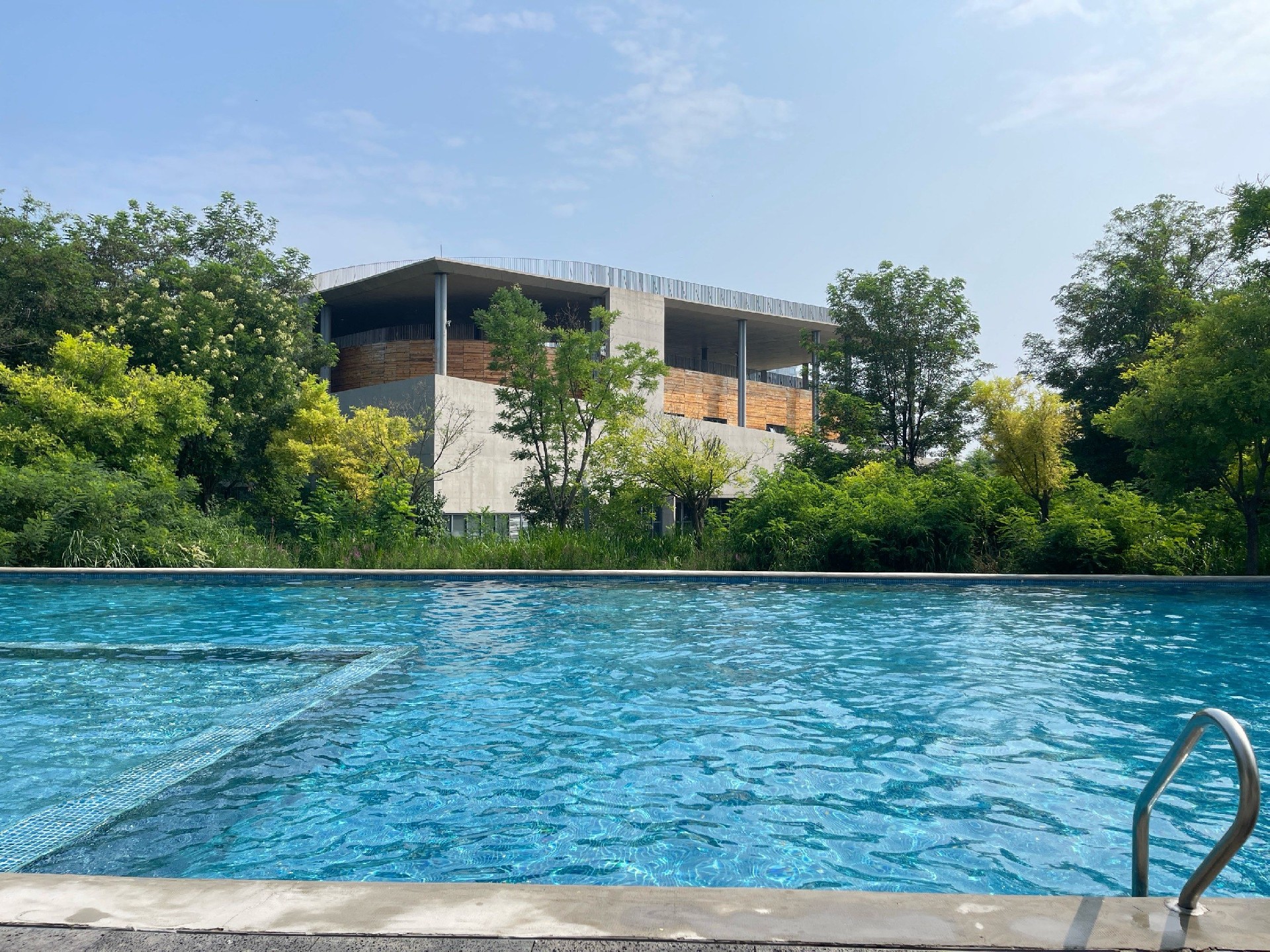
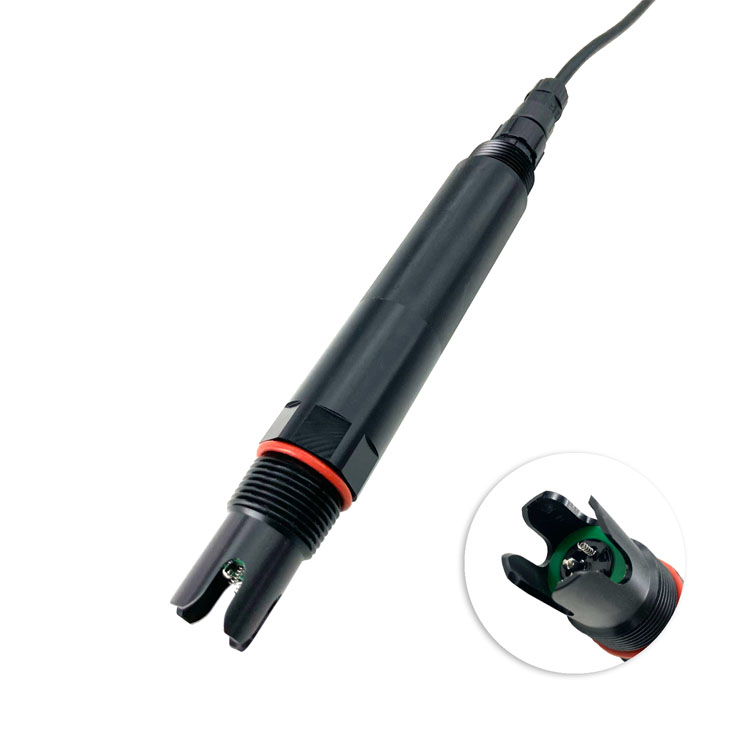
As a field process measurement instrument, NBL-WQ-CL is installed at the mixing tank outlet after chlorination, factory water pipelines, pipe network terminals, swimming pool circulating systems, or cooling tower return pipelines to monitor free residual chlorine (HClO) concentration in real time. Data is uploaded to the central control system via RS485 bus to achieve linkage control with chlorination equipment and pH regulation systems. It is a key monitoring node for verifying residual chlorine after contact time in drinking water disinfection processes and preventing secondary pollution.
The sensor supports RS-485 interface and adopts Modbus RTU protocol. It is highly compatible with mainstream PLCs and DCS systems such as Siemens, Schneider, Rockwell, and Huichuan, supporting multi-instrument bus networking and remote diagnosis. Optional 4-20mA output meets different control system integration requirements.
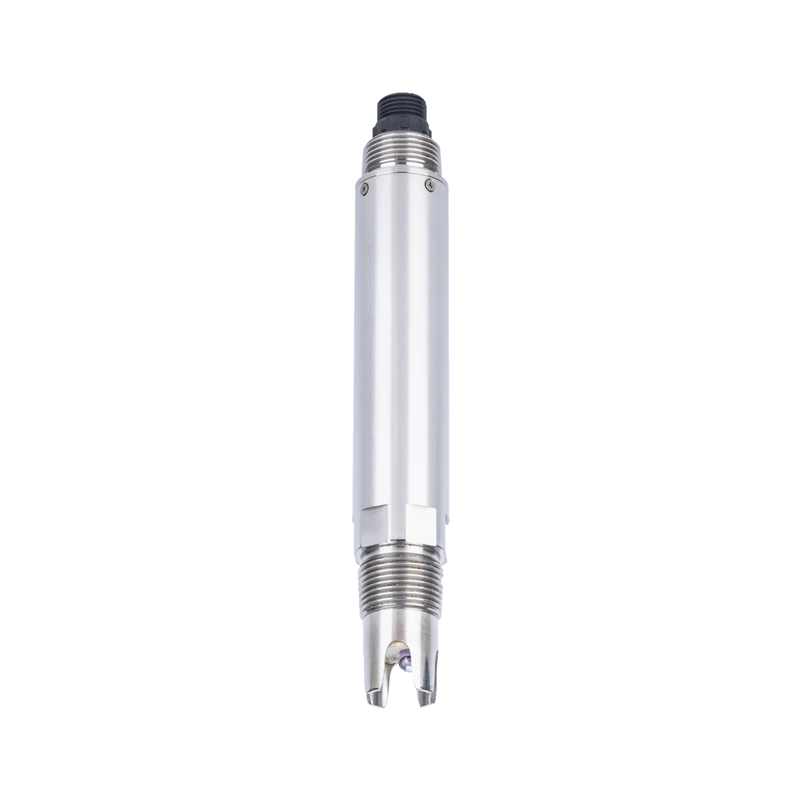
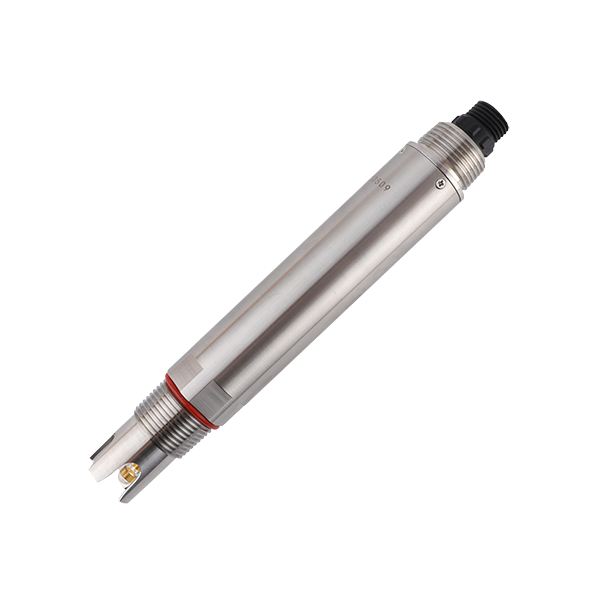
Automatic temperature compensation (Pt1000) and industrial-grade design enhance anti-interference capability, suitable for complex field environments. IP68 protection rating and ABS/PC alloy shell ensure long-term reliable operation of the sensor in humid and corrosive media.
| Parameter | Specification |
|---|---|
| Model | NBL-WQ-CL |
| Measurement Principle | Constant voltage method |
| Range | 0~2.000 mg/L (HClO) 0~20.00 mg/L (HClO) |
| Resolution | 0.001 mg/L (0-2 range) 0.01 mg/L (0-20 range) |
| Accuracy | 0-2mg/L: ±5% of reading 0-20mg/L: ±0.05 of reading |
| Temperature Compensation | Automatic (Pt1000), ±0.3℃ |
| Response Time (T90) | <90s |
| Minimum Detection Limit | 0.05 mg/L |
| Calibration Method | Two-point calibration (zero + slope) |
| Output Mode | RS-485 (Modbus RTU), 4-20mA (optional) |
| Power Supply | 12~24V DC |
| Power Consumption | 0.2W @12V |
| Working Conditions | 5~50℃, ≤0.2MPa, pH 4~9 |
| Protection Rating | IP68 |
| Installation Method | Flow cell installation, 3/4 NPT |
| Shell Material | ABS/PC alloy |
| Cable Length | 5 meters (customizable) |
Residual chlorine refers to the chlorine remaining after reaction with microorganisms, organic matter, and inorganic matter in water, including free residual chlorine and combined residual chlorine. China's "Drinking Water Hygienic Standard" requires factory water residual chlorine not less than 0.3mg/L and pipe network terminal not less than 0.05mg/L.
NBL-WQ-CL adopts the constant voltage method (potentiostatic electrolysis), applying a constant voltage between the working electrode and reference electrode, measuring the relationship between electrolytic current and residual chlorine concentration to achieve direct measurement of HClO. This method has a relatively fast response and is suitable for continuous online monitoring.
1. Drinking Water Plant Residual Chlorine Monitoring: Installed at the contact tank outlet after chlorination and factory water pipelines to monitor disinfection effect in real time and link with the chlorination system to ensure stable compliant factory water residual chlorine.
2. Swimming Pool Water Quality Control: Used in swimming pool circulating water treatment systems to maintain appropriate residual chlorine concentration, prevent algae and bacterial growth, and ensure water quality safety.
3. Industrial Circulating Cooling Water Treatment: Monitor residual chlorine in power plants and chemical plant cooling tower systems to control microbial growth and reduce pipeline scaling and corrosion.
4. Hospital and Bottled Water Production: In hospital water supply systems and drinking water bottling production lines to ensure high-standard disinfection effect and reduce cross-infection risks.
5. Municipal Pipe Network Terminal Monitoring: Deployed in secondary water supply facilities and pipe network monitoring points to prevent secondary pollution in the pipe network and achieve digital water quality safety management.
Range Selection: The 0-2mg/L range is suitable for conventional monitoring in drinking water and swimming pools. The 0-20mg/L range is suitable for high residual chlorine industrial water treatment or pre-chlorination point monitoring. Select the appropriate range according to the actual process residual chlorine control range.
Communication Method Selection: The RS485 Modbus RTU version is recommended first, supporting bus networking, long-distance transmission, and digital integration, reducing wiring costs and signal interference. 4-20mA is optional for existing analog control system renovation projects.
Installation Environment Selection: Dedicated flow cell installation is required. It is recommended to control the flow rate at 30-60L/h, with the sensor measuring part near the inlet and stable water flow. Working pH range 4-9, temperature 5-50℃.
Power Supply Selection: 12-24V DC wide voltage input, low power consumption, adapting to various on-site power conditions in industrial environments.
New sensors or those idle for a long time need to be activated by soaking in tap water for 24 hours, then perform zero point and slope calibration.
Zero point calibration uses chlorine-free water. Slope calibration is performed in flowing 1-2mg/L standard solution. It is recommended to perform regularly to maintain accuracy.
Use 4-core (or 5-core) twisted shielded cable. All wiring points must be waterproofed.
During installation, the sensor measuring part should avoid facing the outlet directly to maintain stable flow velocity.
Strictly check wiring sequence (red positive, black negative, blue A, white B) before powering on to prevent equipment damage due to incorrect wiring.
Regularly check the cleanliness of the flow cell to avoid impurities affecting measurement accuracy.
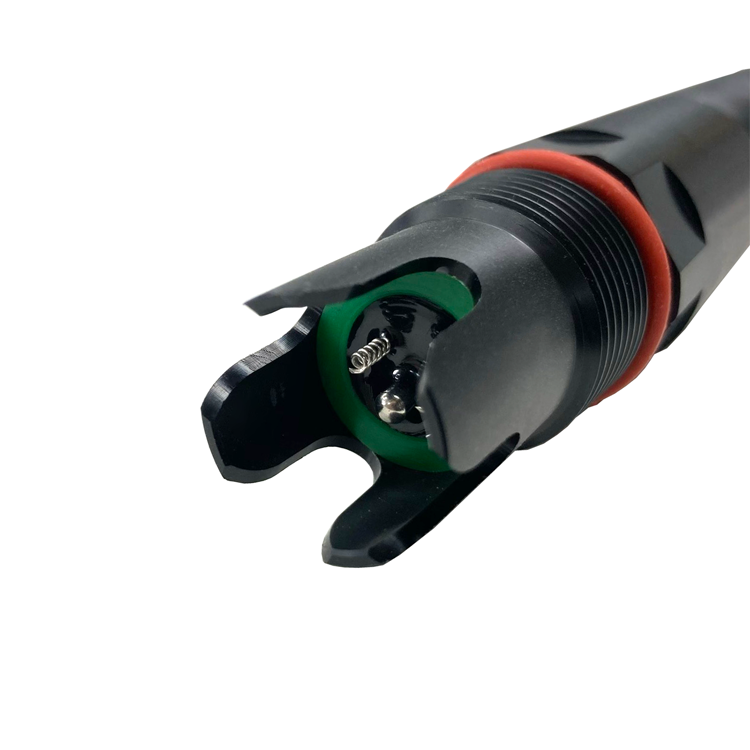
Technical Questions
Q1: Why does a new residual chlorine sensor need activation before use?
The surface condition of new electrodes or electrodes that have been placed for a long time is unstable. Activation by soaking in tap water for 24 hours can significantly improve measurement accuracy and stability.
Q2: How to calibrate a constant voltage residual chlorine sensor?
Zero point calibration is performed in chlorine-free water. Slope calibration is performed in flowing 1-2mg/L standard solution. It is recommended to perform regularly to maintain accuracy.
Q3: Is residual chlorine measurement greatly affected by pH and temperature?
The sensor has built-in Pt1000 automatic temperature compensation with a working pH range of 4-9. In cases with large pH changes, it is recommended to monitor pH simultaneously and make process adjustments.
Selection Questions
Q1: How to choose between RS485 and 4-20mA output?
RS485 Modbus RTU is suitable for projects requiring networking, multi-parameter integration, and remote monitoring; 4-20mA is suitable for renovation of existing analog input systems.
Q2: Which range should be selected for high-concentration residual chlorine scenarios?
The 0-20mg/L range is suitable for pre-chlorination points or industrial high-chlorine water treatment. The 0-2mg/L range is recommended for conventional drinking water and swimming pools.
Q3: Is this sensor suitable for seawater or high-salt environments?
It is mainly suitable for freshwater and low-salt water bodies. High-salt environments require actual working condition evaluation and compatibility testing.
Procurement/Project Questions
Q1: Does it support cable customization and technical documentation?
Yes. Cable lengths beyond 5 meters can be customized. Modbus register mapping tables, flow cell installation drawings, and calibration guidance can be provided.
Q2: How to reduce long-term operation and maintenance costs in projects?
Standard activation and regular calibration, keeping the flow cell clean, and correct installation with flow velocity control can effectively extend sensor service life and reduce overall maintenance costs.
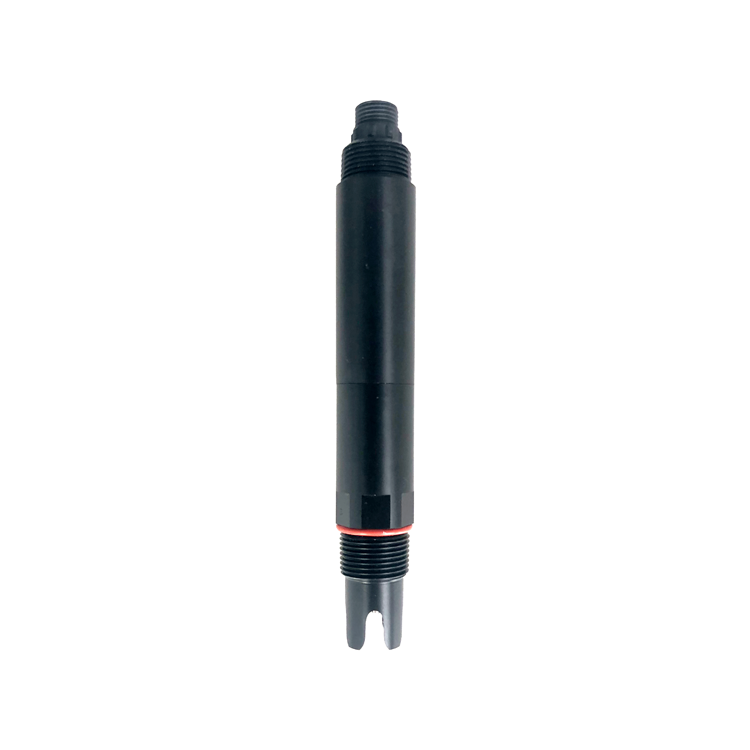
The NBL-WQ-CL industrial online residual chlorine sensor takes the constant voltage method as the core measurement technology, combined with RS485 Modbus RTU communication protocol and engineering design details, providing system integrators, IoT solution providers, and engineering contractors with a reliable online residual chlorine monitoring solution. In scenarios such as drinking water treatment, swimming pool water quality management, industrial circulating cooling water, and municipal pipe network monitoring, reasonable selection, standardized installation and calibration, and system integration can effectively ensure disinfection safety, reduce disinfection by-product risks, and improve overall water treatment process control levels.
It is recommended to conduct prototype verification during the project design stage based on actual water quality conditions and develop scientific calibration and maintenance plans to achieve long-term stable operation and optimal engineering application effects of the project.
 NBL-WQ-CL Water Quality Sensor Online Residual Chlorine Sensor.pdf
NBL-WQ-CL-4A Industrial-grade Online Residual Chlorine Sensor.pdf
NBL-WQ-CL-4S Series Online Water quality Residual Chlorine Sensor.pdf
Related recommendations
Sensors & Weather Stations Catalog
Agriculture Sensors and Weather Stations Catalog-NiuBoL.pdf
Weather Stations Catalog-NiuBoL.pdf
Agriculture Sensors Catalog-NiuBoL.pdf
Water Quality Sensor Catalog-NiuBoL.pdf
Related products
 Combined air temperature and relative humidity sensor
 TDR Soil Moisture & Temperature Sensor for irrigation| RS485 |4-20mA| NBL-S-THR
 Soil pH sensor RS485 soil Testing instrument soil ph meter for agriculture |NBL-S-PH
 Wind Speed sensor Output Modbus/RS485/Analog/0-5V/4-20mA
 Tipping bucket rain gauge for weather monitoring auto rainfall sensor RS485/Outdoor/stainless steel
 Pyranometer Solar Radiation Sensor 4-20mA/RS485

Screenshot, WhatsApp to identify the QR code
WhatsApp number:+8615367865107
(Click on WhatsApp to copy and add friends)

