


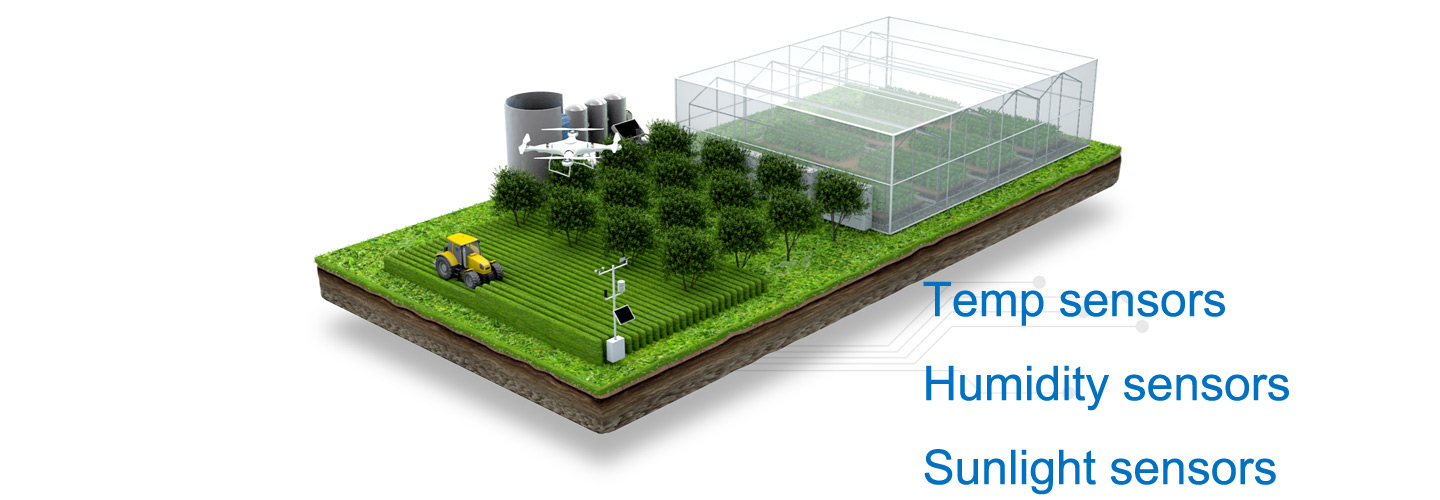

Outdoor noise monitoring records sound at an identified position over a defined period. To calculate LAeq, combine compatible A-weighted sound-energy measurements, not the arithmetic average of displayed decibels. Confirm that the instrument supplies the required integrating quantity, then preserve durations, calibration checks and weather flags before interpreting a boundary or construction-site report.
Ten minutes can expose a misleading decibel average
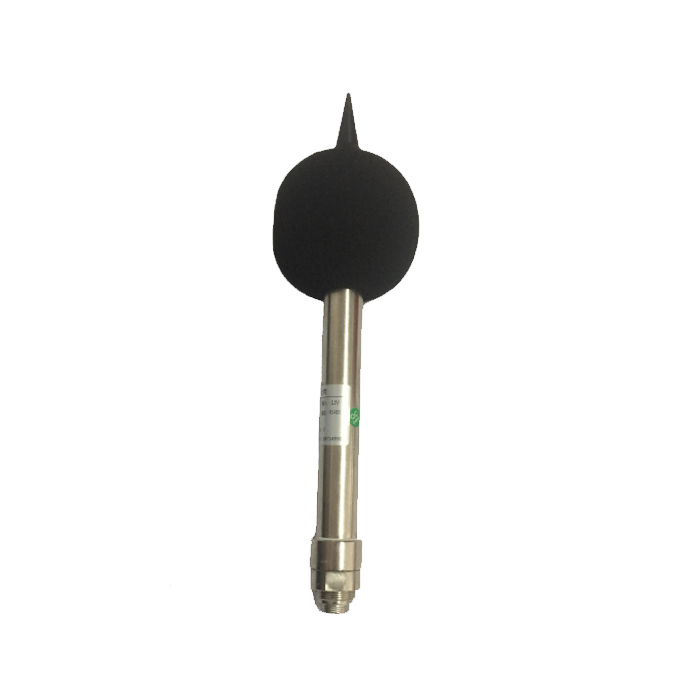
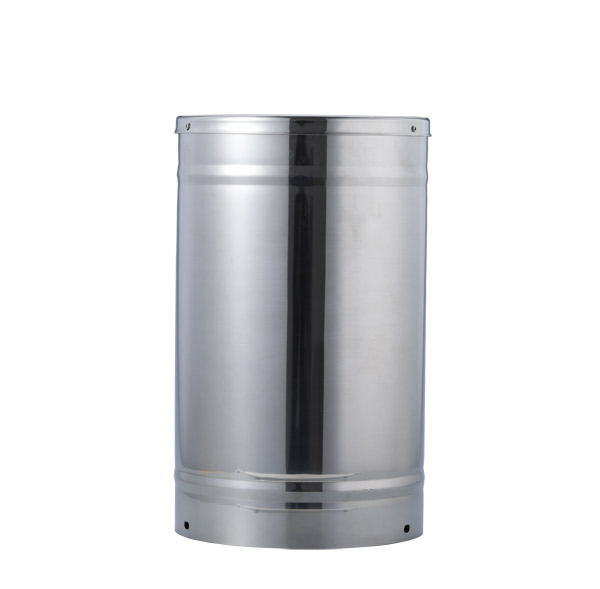
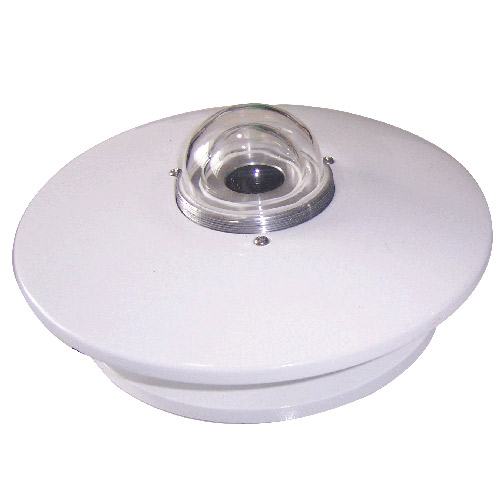
NBL-W-NS environmental noise sensor RS485 and 4-20mA for outdoor sound level monitoring
Consider a boundary observation containing a brief, louder operating period. The table uses assumed, valid one-minute LAeq measurements from a suitable integrating instrument. It does not assume that any numerical sound sensor produces these measurements. This is an illustrative calculation based on assumed site values, not a measured field record.
Each row represents an entire contiguous interval with the same frequency weighting and no missing data. The energy multiplier is relative to a 55 dB(A) reference interval, calculated as 10 raised to ((L − 55) / 10). Equal durations make these multipliers directly additive for the time-average calculation; they are not sound-pressure amplitudes.
| Minute interval | Duration, s | Assumed LAeq, dB(A) | Relative energy multiplier |
|---|---|---|---|
| 1 | 60 | 55 | 1 |
| 2 | 60 | 55 | 1 |
| 3 | 60 | 55 | 1 |
| 4 | 60 | 55 | 1 |
| 5 | 60 | 55 | 1 |
| 6 | 60 | 55 | 1 |
| 7 | 60 | 55 | 1 |
| 8 | 60 | 55 | 1 |
| 9 | 60 | 65 | 10 |
| 10 | 60 | 75 | 100 |
The arithmetic mean is (8 × 55 + 65 + 75) / 10 = 58 dB(A). The energy mean instead uses (8 × 1 + 10 + 100) / 10 = 11.8 relative units. Converting back gives 55 + 10 × log10(11.8) = 65.72 dB(A). Directly averaging the decibel numbers understates this assumed interval by 7.72 dB.
The final minute supplies 100 / 118 = 84.75% of the total relative energy, although it occupies only 10% of the elapsed time. That result explains why a quiet-looking trend with one short event can have a much higher equivalent level than its middle readings suggest. Investigate the event rather than smoothing it away.
What must a noise monitoring channel actually measure?
LAeq is the constant A-weighted level with the same sound energy as the varying sound over the stated duration. A maximum time-weighted level answers another question. An acoustic peak is different again. A database field named LAeq does not establish that its input is an integrating measurement or that the calculation preserves the required energy.
The NiuBoL NBL-W-NS sound-level sensor has a published 30–130 dB measurement range and 31.5 Hz–8 kHz frequency range. Its listed time response is 200 ms. These figures describe the selected sound-level channel; they do not independently establish a native LAeq, maximum, peak or octave-band reporting function.
For noise monitoring that specifically requires LAeq, ask for the delivered instrument's measurement definition and evidence of the integrating function. If only periodically read time-weighted levels are available, retain that label. Do not promote a numerical estimate into a validated acoustic result because a gateway can calculate logarithms or draw an attractive daily graph.
Frequency weighting must also match throughout the record. The suffix A identifies an A-weighted quantity; a generic dB output must not be renamed dB(A) without confirmation. Likewise, a suitable measuring range is not a calibration certificate. Keep metric suitability, measurement traceability and interface compatibility as separate purchasing questions.
Combine unequal durations without changing the question
For valid interval equivalent levels Lᵢ and durations tᵢ, use Leq = 10 × log10(sum(tᵢ × 10^(Lᵢ / 10)) / sum(tᵢ)). All inputs must refer to compatible acoustic quantities at the same observation point. Contiguous, nonoverlapping intervals can be combined; overlapping rolling averages would count some sound energy more than once.
Extend the assumed record with a further 5 minutes at 55 dB(A). The first 10 minutes contribute 10 × 11.8 relative energy-minutes, and the additional period contributes 5 × 1. The 15-minute result is 55 + 10 × log10((118 + 5) / 15) = 64.14 dB(A). It is not the simple average of the two period levels.
The lower extended result does not show that equipment became quieter during the original event. It shows that the reporting window now includes more quiet time. Choose the window to match the monitoring question before comparing operating periods. A rolling display and a fixed reporting interval can legitimately differ even when both calculations are correct.
Noise monitoring records should identify interval start, interval end, weighting and valid duration alongside the level. If an instrument resets an accumulator, preserve the reset boundary. Timestamping an uploaded summary at its arrival time can move an event into the wrong reporting period. Keep acoustic observation time distinct from network delivery time.
Why missing data must remain visible
Remove the final minute from the assumed table. The remaining relative energy sum is 18 across 9 minutes, giving 55 + 10 × log10(18 / 9) = 58.01 dB(A). That is a result for the available nine minutes, not a ten-minute result. The original ten-minute value cannot be recovered without the missing measurement.
Time coverage is 90%, yet the missing minute contains 84.75% of the original assumed energy. Coverage percentage alone therefore cannot bound the acoustic error. A dropout during a loud activity has a different consequence from a dropout during a quiet period. Report coverage and operating context together instead of presenting completeness as an accuracy claim.
Do not replace missing values with zero decibels or repeat the last received level as though it were newly measured. Both substitutions invent information. Use an explicit invalid-data flag and preserve the outage interval. If a report permits a partial-period statistic, label the valid duration and the calculation rule so the reader can distinguish it from full coverage.
For unattended noise monitoring, test this behavior by interrupting the permitted data connection and checking the exported report. The screen may show a communication alarm while the archive silently fills its gaps. Review the export itself, including recovery and delayed records, before accepting the software's daily summary as a faithful representation of acquisition.
Separate outdoor exposure from acoustic calibration
A microphone beside a vibrating panel may respond differently from one at an unobstructed boundary position. Reflections, barriers and nearby local activity can also change the observation. Record the position and its acoustic purpose before relocation. A more convenient mast location is not necessarily an equivalent replacement for an established monitoring point.
Inspect the windscreen after rain, contamination or physical damage using the approved service method. Wind-generated sound and wet protection can make an interval unsuitable for its intended interpretation. Store weather observations with noise monitoring data, but do not subtract an invented wind correction. The correction, if any, needs an appropriate validated method.
An acoustic reference check tests the microphone measurement path under specified conditions. A register check tests transfer and interpretation. Passing the latter cannot show that a blocked acoustic opening is measuring correctly. Use the compatible calibrator, adapter and procedure, and distinguish a reference verification from an adjustment that changes instrument response.
The NBL-W-NS specification identifies a 94 dB calibration reference. As an assumed check example, readings of 93.6 dB before a session and 94.1 dB afterwards have errors of −0.4 dB and +0.1 dB relative to 94 dB. The change is +0.5 dB. This is an illustrative calculation based on assumed site values, not a measured field record. These differences establish neither an acceptance tolerance nor the cause of drift.
Set the permissible check difference through the applicable measurement plan and equipment requirements. An unexplained change should trigger review of the affected record, not an automatic subtraction from every sample. A single reference level cannot establish performance across all frequencies, levels and outdoor conditions, and no pass against a regulatory limit follows from this example.
Request a reproducible outdoor noise monitoring report
Start with the operational question: for example, which defined operating interval warrants further investigation at an identified boundary point? Specify the acoustic quantity and reporting duration before choosing connectivity. A fixed sound-level indication can support investigation without being represented as a complete formal assessment. Requirements for formal work must be established separately.
Keep an instrument record containing identity, output definition, relevant configuration and reference-check results. Add site photographs and a description of nearby reflecting surfaces or barriers. Note changes in major equipment operation, not just microphone service. Otherwise, a step in a long-term graph can be mistaken for acoustic drift when the physical scene has changed.
For a numeric connection, choose the ordered sensor interface and a compatible weather-data acquisition unit. Confirm which processing occurs in the measuring instrument, which in acquisition and which in the reporting software. Neither storage nor remote transmission supplies a missing integrating acoustic capability.
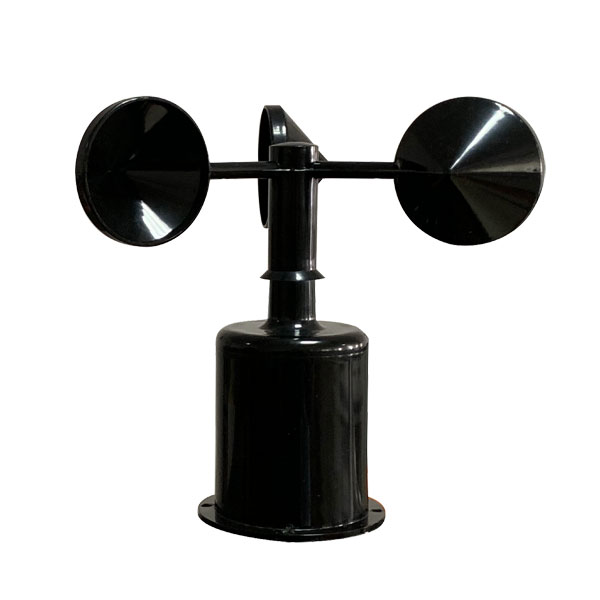
Where weather context is required, a separate outdoor wind-speed sensor provides a different measurement channel. It does not measure sound. Record its location and timestamps independently, and assess any further weather measurements needed for the actual acoustic method rather than assuming a shared pole satisfies every requirement.
An acceptance export should let another person reproduce one complete interval from its valid input measurements. Include the applied averaging rule and quality exclusions, retaining the original observations. If that reproduction fails, correct the data-processing chain before interpreting a trend or comparing it with a project-specific decision criterion.
Outdoor sound averaging FAQ
Can I average decibel readings in a spreadsheet?
Yes, but first establish what each value represents. Compatible interval equivalent levels can be combined with duration-weighted energy arithmetic. Arbitrary snapshots cannot automatically become LAeq. The table's result assumes complete one-minute integrating measurements with matching weighting. Retain the duration and quantity definition with every input rather than averaging an unlabeled column.
Does the 200 ms sensor response define the reporting window?
No. The listed response describes measurement behavior, not a complete reporting period or a guaranteed peak function. A logger's polling schedule and an integrating instrument's accumulation window are separate definitions. Confirm each for the delivered configuration. Reading a numerical output more frequently does not establish the acoustic information missing between observations.
Can I merge two LAeq periods of different lengths?
Yes, if their weighting, observation point and measurement definitions are compatible and the periods do not overlap. Multiply each linear energy ratio by its duration before dividing by total duration. In the assumed extension, the quieter additional period changes the combined value; directly averaging the two displayed levels would give the wrong time weighting.
Does a successful calibration check prove the site meets a limit?
No. It establishes a reference observation under the check conditions, subject to the equipment and procedure used. A site decision also needs the required acoustic metric, valid observation period, representative position and applicable decision method. Do not infer regulatory acceptance from a reference level, a stated range or an electrical communication test.
Should a rain-affected interval simply be deleted?
Not without a documented quality rule. Retain the original record, mark the reason for exclusion and show the valid duration of any replacement summary. Investigate windscreen condition and weather context. Removing an inconvenient event after seeing its level can bias a report just as filling a gap with a quiet value can.
What happens if the loudest minute is missing?
The available-period statistic may be far below the complete-period result, even with high time coverage. The assumed example retains nine minutes but loses most of the energy. Flag the missing interval and avoid claiming a complete-period level. Recover the instrument's original observation if available; network interpolation cannot reconstruct an unmeasured acoustic event.
Keep the energy calculation attached to its evidence
Outdoor noise monitoring is interpretable when quantity, duration and quality remain attached to the number. The assumed ten-minute record gives 65.72 dB(A) by energy averaging, compared with a 58 dB arithmetic mean. Verify the instrument's integrating capability, reproduce the calculation and retain acoustic check results before using the report for a site decision.
Use the acoustic project enquiry to describe the required metric, observation period and outdoor location. Include the receiving equipment and required calibration evidence so the proposed measurement chain can be assessed against the actual task.