





— Blogs —
—Products—
 Consumer hotline +8618073152920
 WhatsApp:+8615367865107
Address:Room 102, District D, Houhu Industrial Park, Yuelu District, Changsha City, Hunan Province, China
Product knowledge
Time:2026-02-20 11:29:03 Popularity:692
Water measurement in irrigation districts serves as the prerequisite for rational allocation of agricultural water, directly supporting planned water use, volumetric billing, and implementation of water-saving measures. Traditional methods such as the velocity-area method (requiring manual velocity measurement), Manning's formula (relying on roughness coefficient estimation), stage-discharge curve method (requiring frequent calibration), and weir/flume method (high civil engineering costs, susceptible to sedimentation) are limited in accuracy and stability under complex channels, high sediment content, or non-standard cross-section conditions.
The ultrasonic Doppler flowmeter directly measures the average velocity by capturing the frequency shift of particle scattering in the fluid based on the Doppler effect, and calculates the wetted area using the built-in water level gauge to achieve non-contact, real-time flow calculation. This method requires no fixed weirs/flumes or complex hydraulic assumptions and is particularly suitable for irrigation channels with large seasonal variations and high sediment transport.
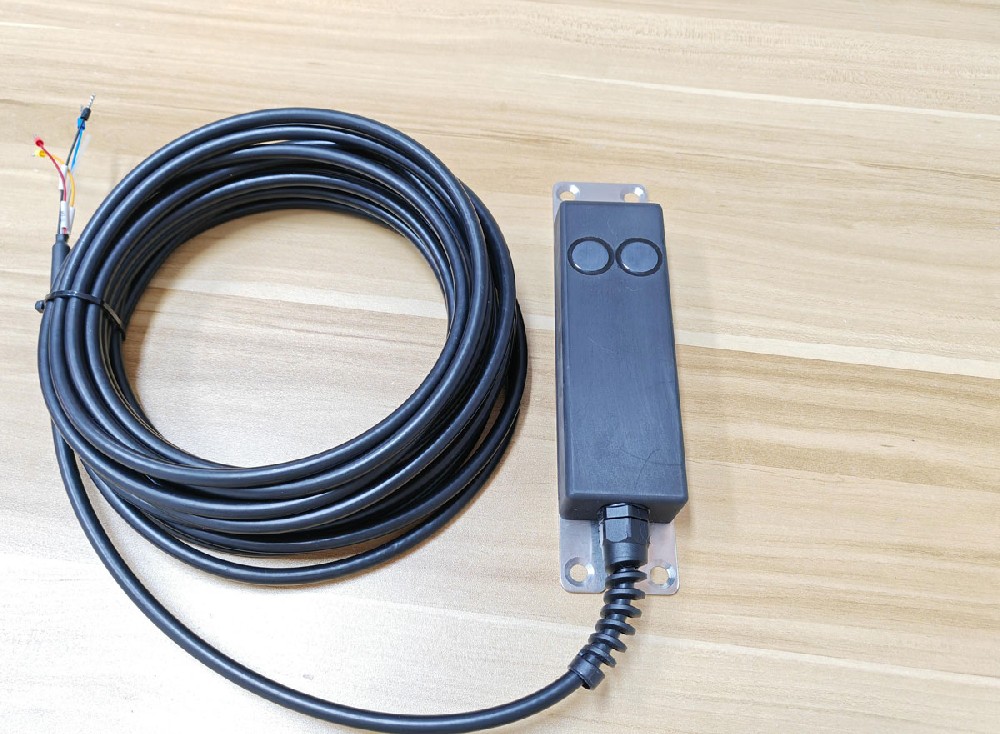
Measurement Principle: Doppler effect velocity measurement + pressure-based water level gauge, realizing velocity-area method flow calculation
Communication & Integration: RS485 interface, supports Modbus-RTU protocol, easy integration with RTU, PLC, or IoT gateways
Environmental Adaptability: IP68 full submersion protection, ABS engineering plastic housing, impact-resistant and corrosion-resistant; wide voltage, low-power design, supports solar power supply
Additional Functions: Integrated water temperature measurement, customizable measurement interval (default 3 seconds)
Reliability: No mechanical moving parts, strong anti-interference capability, high long-term stability
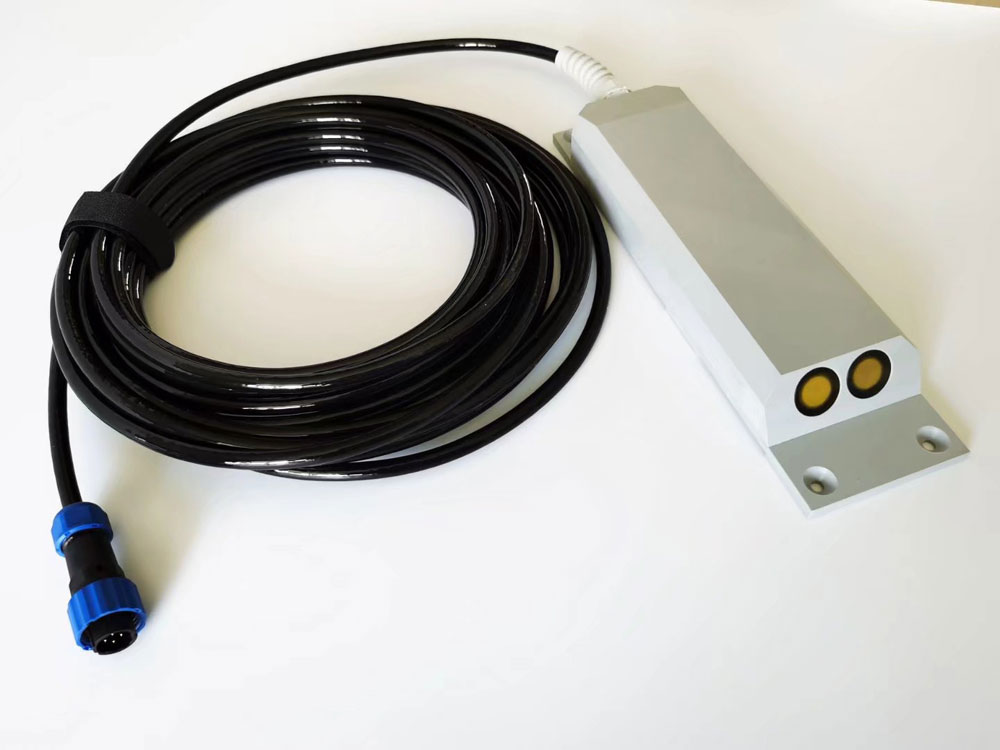
| Parameter | Specification |
|---|---|
| Power Supply Voltage | DC 10~30V |
| Power Consumption | Standby 65mA@12V, Measurement 106mA@12V |
| Velocity Range | 0.03 ~ 5 m/s |
| Velocity Accuracy | ±1.0% ±1 cm/s |
| Water Level Range | 0.03 ~ 5 m |
| Water Level Accuracy | 0.3% ±0.5 cm |
| Temperature Range | -10℃ ~ 60℃ |
| Temperature Accuracy | ±1℃ |
| Instantaneous Flow Range | 0 ~ 99.99 m³/s |
| Cumulative Flow Range | 0.1 ~ 999999 m³ |
| Measurement Interval | Configurable, default 3 s |
| Communication Interface | RS485 (Modbus-RTU) |
| Operating Temperature | -10 ~ 60℃ |
| Protection Rating | IP68 |
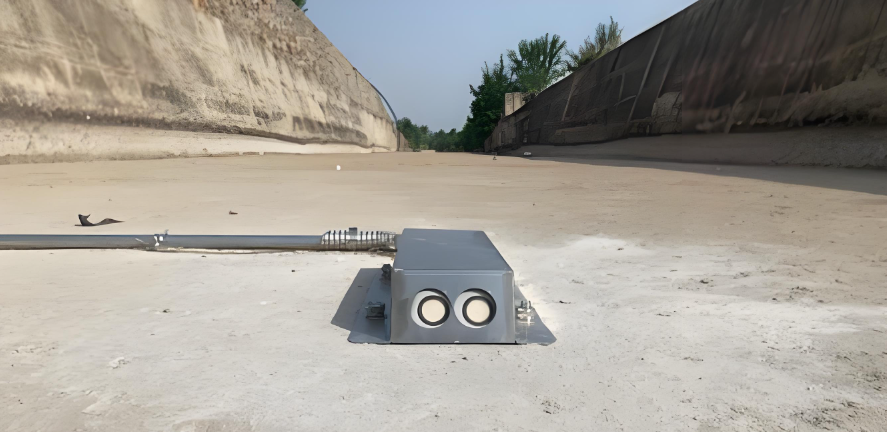
Communication Protocol: Modbus-RTU over RS485, supports multi-device bus networking (configurable addresses to avoid conflicts)
Data Transmission: Access to cloud platforms via 4G/5G modules or fiber optics, enabling remote real-time query, historical data storage, and report generation
Platform Compatibility: Standard data format, supports MQTT/HTTP extension, easy integration with provincial water resources information platforms, irrigation district management APPs, or SCADA systems
Expansion Capability: Can be paralleled with rain gauges and water level sensors to form a complete hydro-meteorological + flow monitoring chain; reserved expansion ports for later access to video surveillance or gate controllers
During integration, it is recommended to preset the flowmeter data along with channel geometric parameters (bottom width, side slope ratio) in the RTU or cloud algorithm module to achieve automatic flow calculation and alarm threshold setting.
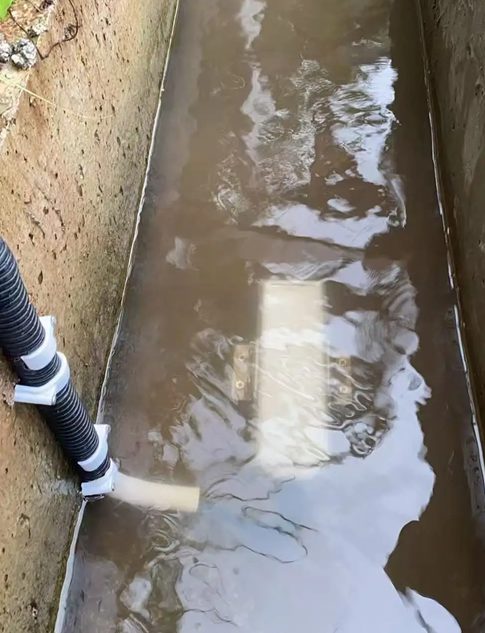
1. Large Irrigation District Branch/Lateral Channel Metering
Deployed at main canal diversion outlets or branch canal inlets to achieve hierarchical metering and volumetric charging. No need to modify channel cross-sections; capable of handling non-rectangular channel types and seasonal water level fluctuations.
Project reference: Similar agricultural irrigation projects deployed in multiple open channels (main + branch), achieving precise water consumption statistics and dispatch optimization, reducing water resource waste.
2. Medium and Small Irrigation District Terminal Open Channel Monitoring
Suitable for terminal canal systems with high sediment content, curved channels, or vegetation interference. Non-contact measurement avoids sedimentation effects; IP68 protection ensures reliable operation during flood seasons.
Value: Real-time flow data supports rotational irrigation scheduling, reduces leakage and waste, and improves canal system water use efficiency.
3. River Diversion and Cross-Boundary Water Allocation Monitoring
Deployed at river water intake points or cross-administrative boundary monitoring stations, supporting long-distance wireless transmission. Combined with platform GIS maps, enables flow heat maps and water use trend analysis.
4. Smart Agriculture Irrigation Demonstration Projects
Linked with pump station control and soil moisture sensors to form a closed-loop irrigation system. Flow data serves as feedback input to optimize drip/sprinkler irrigation quotas.
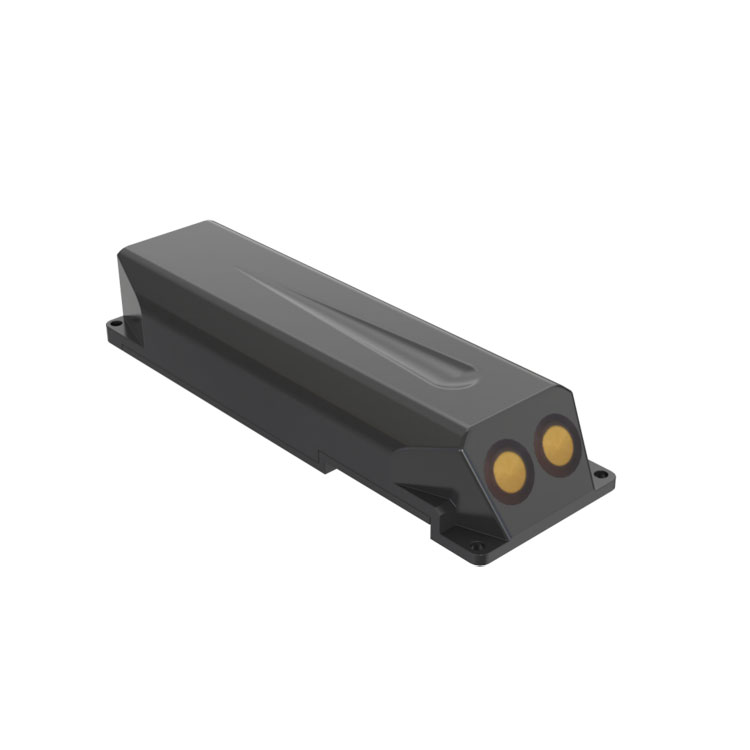
Selection Key Points
Velocity range: Typical irrigation channels 0.1–2 m/s, select 0.03–5 m/s range for sufficient margin
Water depth adaptation: Common channel depths 0.3–2 m, prioritize 0.03–5 m water level range
Field conditions: For high sediment/weeds, equip upstream isolation grilles; solar power suitable for remote non-electrified sections
Transmission needs: Short-distance RS485 bus, long-distance add 4G module
Integration & Installation Notes
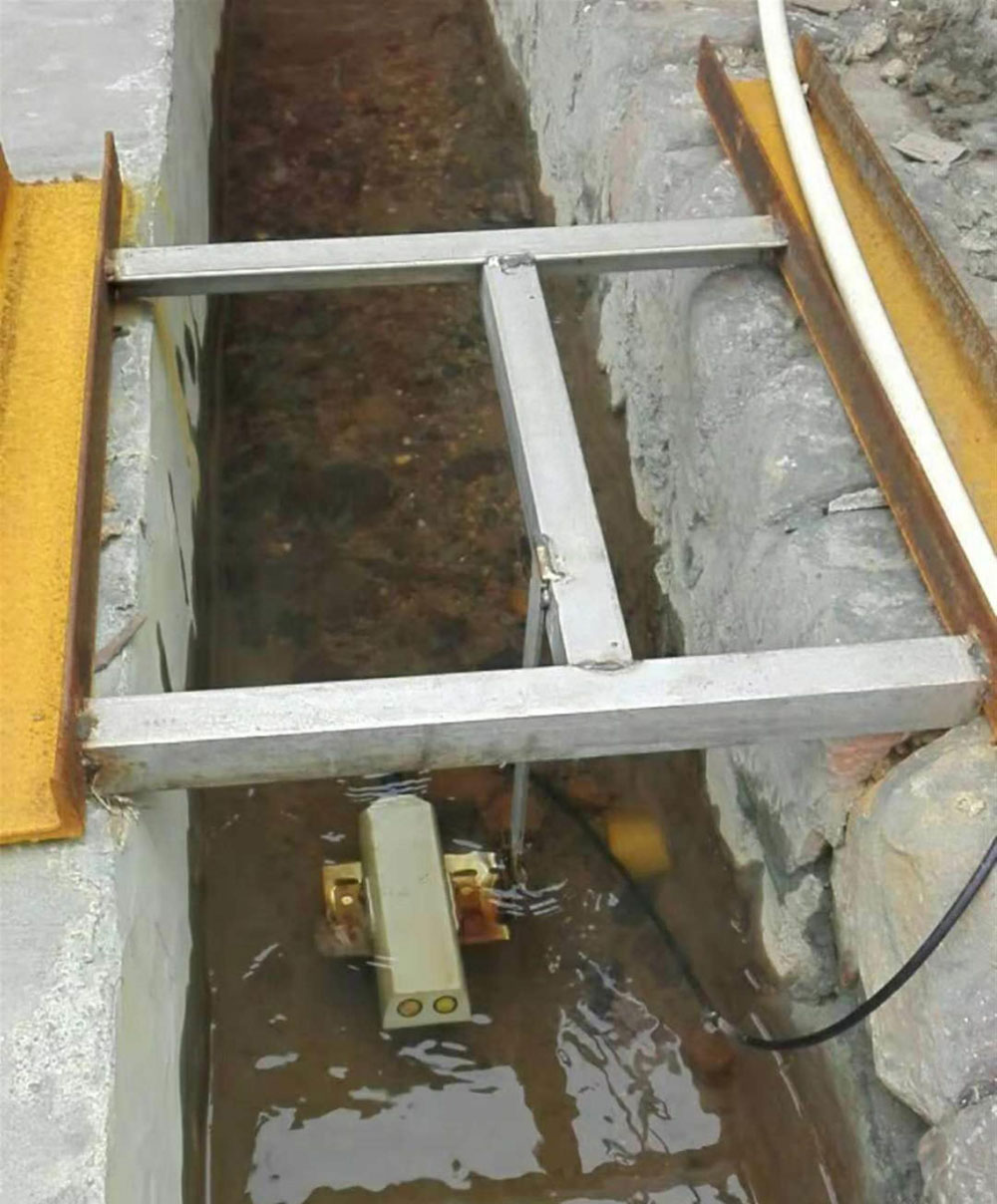
1. Installation position: Sensor head placed at least 20 cm below the lowest water level (minimum not less than 5 cm) to avoid exposure
2. Fixing method: Use M5 round holes to fix on channel sidewall or bottom plate, ensuring probe faces upstream
3. Front-end protection: For channels with branches, stones, or high sediment, install upstream isolation grilles and regularly clean sensor surface
4. Wiring specification: RS485 bus A/B line sequence consistent, avoid reverse connection; preset unique addresses for multi-device networking
5. Initial configuration: Upload channel cross-section parameters (bottom width, side slope, gradient), perform zero and full-scale calibration
6. Commissioning verification: On-site float test or comparison with standard flowmeter, confirm error within ±2%
Operation & Maintenance Focus
Sediment/weed interference: Upstream isolation grilles + quarterly sensor surface cleaning can reduce anomaly rate to<1%.
Power reliability: Recommend ≥60W PV + 100Ah gel battery configuration for ≥5–7 days autonomy during continuous rainy weather.
Data validation: First month after commissioning — weekly comparison (float method or portable velocimeter), then monthly; platform supports automatic zero-drift compensation.
Spare parts strategy: Suggest reserving 1–2 spare units + sensor components per project; fault response ≤24 hours, switch to backup within 72 hours to avoid data interruption affecting acceptance assessment.
1. What are the advantages of ultrasonic Doppler flowmeter compared to Manning's formula method?
Direct velocity measurement instead of estimation avoids uncertainty in roughness coefficient and slope measurement errors, offering higher accuracy, especially stable in non-uniform flow or sediment-laden water bodies.
2. Is the instrument reliable in channels with high sediment content?
Yes, the Doppler principle is sensitive to suspended particles and well-suited to sediment-laden water; however, regular cleaning of the sensor surface is required, and upstream isolation grilles are recommended.
3. How does the system achieve remote data transmission and platform integration?
Data collected via RS485, converted to 4G/5G upload through RTU or gateway, supports Modbus to MQTT conversion, compatible with mainstream water resources cloud platforms.
4. Does flow calculation require on-site calibration of channel cross-section?
Yes, channel geometric parameters (bottom width, side slope ratio, etc.) must be preset; the platform supports online modification and multi-section configuration.
5. How is accuracy at low velocities (<0.1 m/s)?
Lower limit of range is 0.03 m/s, accuracy ±1.0% ±1 cm/s, still reliable in common low-velocity irrigation zones.
6. Is the power consumption and supply suitable for solar applications?
Low-power design (measurement 106mA@12V), paired with >60W PV panel + 100Ah battery, achieves ≥5 days autonomy during continuous rainy periods.
7. How to handle instrument failure or data anomalies?
Supports local caching and breakpoint resume; recommend keeping 1–2 spare units, switch within 72 hours if repair not possible.
8. Does it support integration with rain gauges and water level sensors?
Yes, via RS485 bus networking, enabling integrated hydro-meteorological + flow monitoring for flood warning and irrigation scheduling.
9. How to ensure long-term stable measurement in high-sediment or dense-vegetation channels?
Doppler principle is sensitive to suspended particles and suitable for sediment-laden water; install upstream isolation grilles + quarterly high-pressure water gun cleaning of probe surface to maintain stable accuracy. In actual projects, annual maintenance cost in similar environments is less than 1/3 of traditional weirs/flumes.

The NiuBoL ultrasonic Doppler flowmeter, with high-precision velocity-area method measurement, IP68 protection, and open Modbus protocol at its core, provides stable and scalable monitoring solutions for irrigation district water measurement projects. By supporting precise water allocation and water-saving management through real-time flow data, this product helps system integrators and engineering companies efficiently deliver smart irrigation districts, agricultural water-saving demonstration projects, and more, elevating the overall level of farmland water conservancy informatization. If you need scheme design, parameter selection, or on-site survey support for specific channel cross-sections, please feel free to contact the NiuBoL technical team—we will provide professional and reliable end-to-end integration guidance.
Prev:Doppler Flowmeter Equipment Technical Specifications and Integration Guide
Next:Hydropower Station Ecological Flow Monitoring Solution: Integrated Doppler and Radar Flowmeters
Related recommendations
Sensors & Weather Stations Catalog
 Agriculture Sensors and Weather Stations Catalog-NiuBoL.pdf
Weather Stations Catalog-NiuBoL.pdf
Agriculture Sensors Catalog-NiuBoL.pdf
Water Quality Sensor Catalog-NiuBoL.pdf
Related products
 Combined air temperature and relative humidity sensor
 TDR Soil Moisture & Temperature Sensor for irrigation| RS485 |4-20mA| NBL-S-THR
 Soil pH sensor RS485 soil Testing instrument soil ph meter for agriculture |NBL-S-PH
 Wind Speed sensor Output Modbus/RS485/Analog/0-5V/4-20mA
 Tipping bucket rain gauge for weather monitoring auto rainfall sensor RS485/Outdoor/stainless steel
 Pyranometer Solar Radiation Sensor 4-20mA/RS485

Screenshot, WhatsApp to identify the QR code
WhatsApp number:+8615367865107
(Click on WhatsApp to copy and add friends)

