





— Blogs —
—Products—
 Consumer hotline +8618073152920
 WhatsApp:+8615367865107
Address:Room 102, District D, Houhu Industrial Park, Yuelu District, Changsha City, Hunan Province, China
Product knowledge
Time:2026-05-31 11:31:58 Popularity:356
Quick answer: COD is a useful pollution indicator because it expresses the oxygen equivalent of substances oxidized under a defined chemical test. An online UV COD sensor estimates a related value from light absorption; it does not perform that digestion. Use a validated optical trend for the intended monitoring task, and keep the reference method, sample type and flow basis explicit.
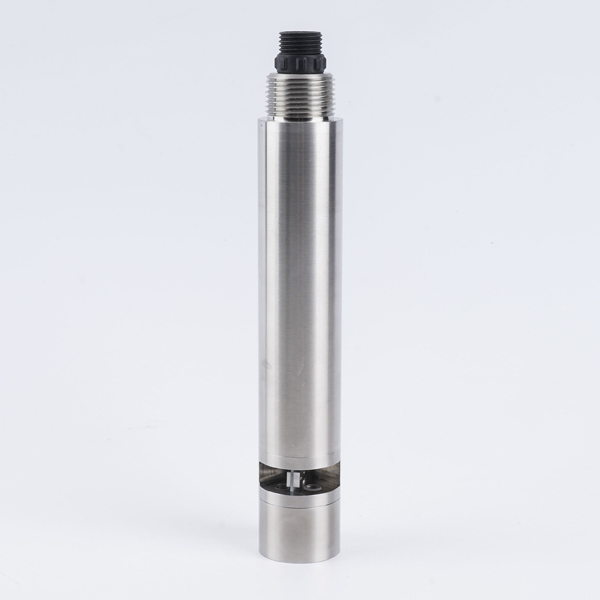
COD, or chemical oxygen demand, gives a treatment operator an aggregate measure rather than identifying every compound in wastewater. Results are normally expressed as mg O2/L. That is an oxygen-equivalent demand, not the dissolved oxygen currently present in the sample. A higher COD can indicate a larger chemical oxygen demand per unit volume under the chosen method, but it does not identify a particular contaminant or its toxicity.
COD is useful when the operational question concerns an incoming load, a change across a treatment stage or an unusual organic-rich stream. It is not a complete statement of water quality. Metals, nutrients, pathogens, salinity and specific hazardous substances can matter independently. A low COD result alone does not establish drinking-water suitability, and a surface-water classification value should not be presented as a drinking-water criterion.
A chemical COD procedure measures response to an oxidizing treatment under specified conditions. For example, EPA Method 410.4 uses dichromate digestion followed by colorimetric determination. The method includes its own sample handling, interference and quality-control requirements. It is not an ultraviolet absorption measurement performed directly in the treatment tank.
An online COD sensor using UV absorption detects the optical response of constituents in its path and applies a calibration relationship. A second optical measurement can reduce certain particle-related effects, but it does not make every oxygen-demanding compound absorb UV in the same proportion. Reagent-free measurement describes the optical sensing operation; it does not mean that reference checks, cleaning or occasional laboratory analysis are unnecessary.
| Result | How it is obtained | Use with a stated limitation |
|---|---|---|
| Chemical-method COD | Defined oxidation and analytical procedure | Interpret with the method's sample, interference and quality-control conditions. |
| UV-derived COD estimate | Optical response mapped to COD-equivalent values | Use where the wastewater relationship has been checked for the intended decision. |
| BOD5 | Biological test over its defined five-day incubation | Addresses a different oxygen-demand measurement; not an instantaneous UV channel. |
| TOC | Carbon measurement by the selected analytical method | Reported as carbon, not an interchangeable COD value. |
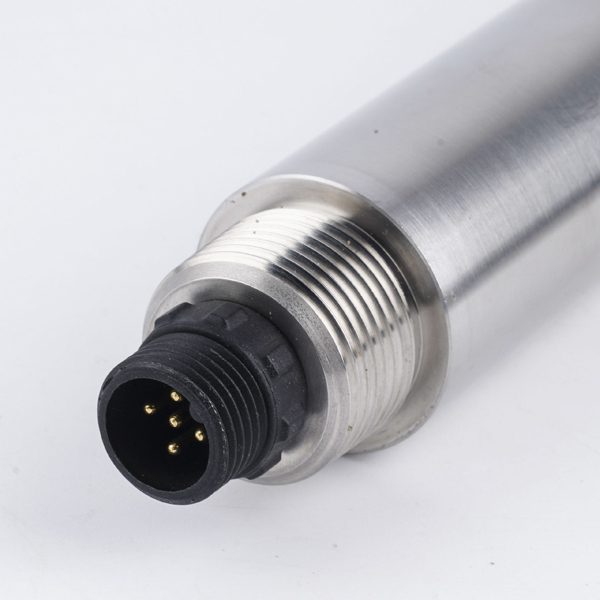
A concentration trend can improve while the total daily incoming demand rises. Calculate COD load using concentration and representative flow from matching periods. With concentration C in mg/L and daily flow Q in m3/day, load in kg/day is C x Q / 1000. Do not combine a spot concentration with an unrelated daily flow and describe it as a measured daily load.
In an illustrative calculation, 200 mg/L at 1000 m3/day gives 200 kg/day. A later condition of 150 mg/L at 1600 m3/day gives 240 kg/day. Concentration fell by 25%, yet calculated load rose by 20%. These are assumed conditions, not NiuBoL treatment results. They show why a dilution event and an actual reduction in oxygen-demanding input can lead to different operating decisions.
Likewise, a concentration difference between inlet and outlet is not automatically a synchronized removal result. Hydraulic residence time, recycling, storage and changing flow affect the comparison. Define the time and flow basis before evaluating a treatment stage. A sensor that records more frequently cannot by itself correct a mismatch between different parcels of water.
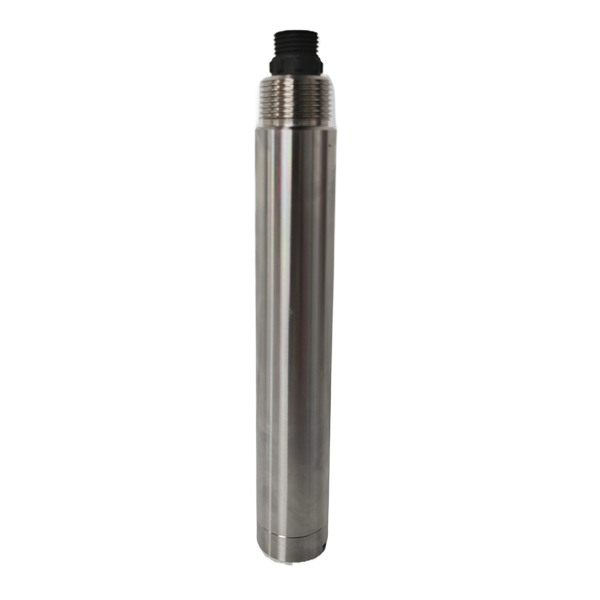
The following table applies to the NiuBoL NBL-WQ-COD base configuration. Other illustrated COD models have their own optical arrangements, ranges and outputs; do not transfer their specifications to this model. For an inquiry, identify the exact model as well as the expected matrix, not only the words online COD sensor.
| Parameter | NBL-WQ-COD base configuration | Engineering consequence |
|---|---|---|
| Principle | Dual-wavelength ultraviolet absorption | COD-equivalent optical result requires a suitable wastewater relationship. |
| Paired ranges | 0-200 mg/L KHP equivalent with 0-100 NTU; or 0-500 mg/L KHP equivalent with 0-200 NTU | Select COD and turbidity spans together; do not mix another model's range pair. |
| Resolution and accuracy | COD resolution 0.1 mg/L; COD +/-5%, with percentage basis to be agreed; turbidity +/-5% FS, resolution 0.1 NTU | Optical calibration performance is not a universal wastewater prediction error. |
| Supply and consumption | 12-24 V DC; 0.3 W at 12 V | Size the delivered system including acquisition and any separate equipment. |
| Output | RS485 / Modbus RTU | Do not assume an optional 4-20 mA channel from a different COD variant. |
| Operating conditions | 0-45 degrees C; pressure below 0.1 MPa | Check the liquid and mounting conditions independently of IP protection. |
| Construction | 316L stainless steel housing; IP68 probe; immersion installation; standard 5 m cable | Specify cable-jacket compatibility and protect electrical terminations separately. |
| Calibration | Two-point calibration | Reference adjustment and site-matrix validation answer different questions. |
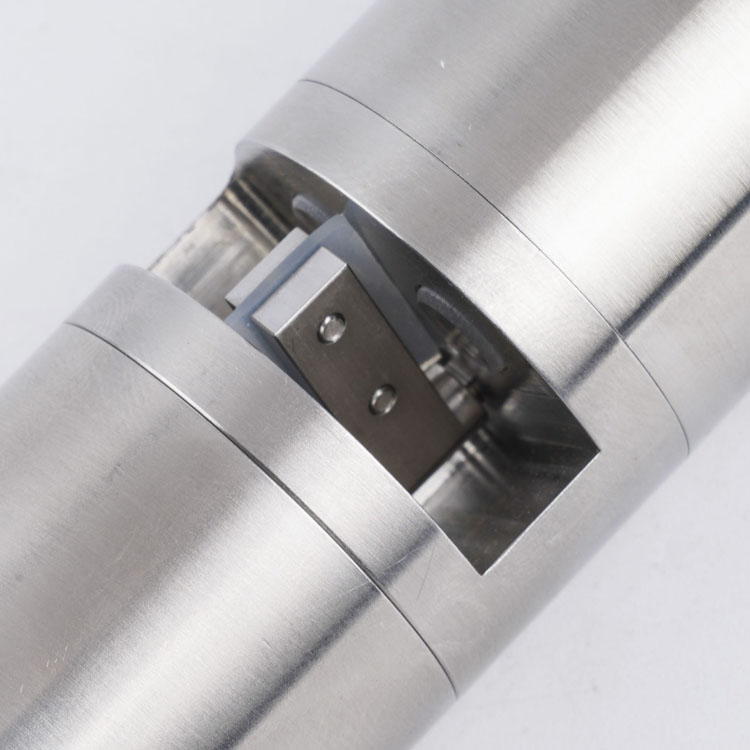
For online COD monitoring, collect paired sensor observations and representative samples from the same location and time. Cover ordinary operation and the changes that would trigger an alarm or investigation. Record whether the reference sample is filtered or unfiltered and how it is handled. Removing particles before a laboratory test while leaving them in the sensor's optical path changes the comparison.
Inspect prediction error in the operating regions, not only an overall correlation coefficient. A relationship fitted across a wide range can still be poor near a low outlet threshold. Repeated measurements from one stable batch provide less information about matrix changes than samples taken across relevant plant states. Set the usable range and acceptance criterion before treating a fitted curve as operational evidence.
A KHP reference solution can check an instrument's response to a defined reference chemistry. It does not reproduce every wastewater mixture. If a new stream introduces constituents with different UV absorption or chemical oxygen demand, revisit the relationship. Do not keep changing the slope to force unrelated samples onto one line without investigating the sample and optical conditions.
BOD provides information about biological oxygen demand under a defined method, whereas COD includes substances oxidized by its chemical test. Their relationship is not a fixed conversion ratio for all wastewater. A UV- or fluorescence-derived BOD estimate, including a separately selected online instrument, does not undertake the BOD5 incubation procedure.
The separate BOD instrument pictured below therefore belongs to a different measurement discussion. It may contribute a validated process trend, but its value should not replace a chemical COD result merely because both are expressed in oxygen-demand units. Establish the relevant reference test and the purpose of each tag before comparing biological treatability or treatment performance.
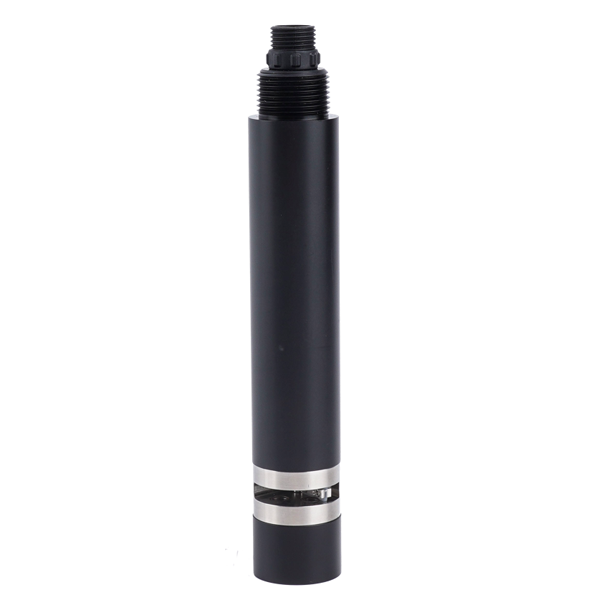
Municipal inlet trending: a repeated domestic wastewater matrix can make optical trends useful for identifying changes. Check suspended material, bubbles and incoming-stream variability, and combine with flow if load is the question. Do not automatically connect the raw value to unrestricted aeration or chemical dosing.
Mixed industrial wastewater: changing color, solvents, salts or reducing constituents can alter the relationship between UV response and chemical COD. A generic 0-500 mg/L range is not proof of suitability for a high-strength stream. Evaluate real samples before selecting direct immersion, a conditioned sample system or a different analytical method.
Treated effluent and reuse: low-range performance and matrix-specific error can matter more than a large upper span. If the required decision is close to the method's useful detection region, evaluate the complete uncertainty and sample handling. COD alone does not establish pathogen control, membrane-fouling potential or suitability for a particular reuse duty.
When a COD-equivalent trend changes unexpectedly, inspect the window, cleaning mechanism, bubbles, optical obstruction and turbidity conditions. Compensation reduces some interference; it does not eliminate every effect. Review the temperature and pressure at the sensor rather than assuming an IP68 probe tolerates any process connection. A sample loop can also introduce delay, settling or loss of volatile constituents.
Then verify the digital path. Match device identity, register representation, scale, units and acquisition time through the PLC, RTU or data logger to SCADA. Missing communications must not become a zero-COD result. Keep cleaning and calibration periods visible so an artificial event is not interpreted as an improved outlet or a new pollution incident.
For a NiuBoL selection review, provide expected COD and turbidity ranges, representative paired samples, reference method, temperature, pressure and the action that follows a result. State the required output and existing acquisition interface. An application trial based on those conditions is more informative than selecting a probe solely for reagent-free operation.
No. Chemical COD is defined by the oxidation method and can include demand from certain reducing inorganic constituents. UV-based estimates have an additional dependence on optical absorption. Neither result identifies every organic compound individually.
No. COD alone does not establish microbiological, toxicological or other required water-quality conditions. Do not use a surface-water COD classification as a substitute for the complete criteria of the intended water use.
Not automatically. Confirm the required method and acceptance arrangement for the project. Validate the optical relationship for the intended operational use, and retain the specified reference analysis wherever it remains required.
The mixture may contain oxygen-demanding constituents with a different UV response, or sampling and instrument conditions may have changed. Check paired samples, reference-method quality control, optical cleanliness and turbidity before adjusting the sensor.
No. Load also depends on flow. Use matching-period concentration and flow data, and identify how representative the samples are. A diluted but larger flow can carry more daily oxygen demand than a smaller, more concentrated stream.
No. The base configuration listed here is 0.3 W at 12 V and requires pressure below 0.1 MPa. Model-specific output, cleaning-load and environmental specifications must remain attached to the delivered instrument.
Use paired measurements across relevant wastewater states, define an error criterion and document conditions that invalidate the relationship. Include cleaning access, sampling delay and the receiving-system test. A short demonstration on a reference solution does not establish whole-plant suitability.
COD as a pollution indicator is useful when its analytical meaning, sample and flow basis are clear. A NiuBoL online UV sensor can supply frequent COD-equivalent observations for a validated application, while chemical and biological methods retain their separate roles. Select the measurement approach from the decision and the wastewater, rather than assuming one COD number describes every pollution risk.
 NBL-WQ-CL Water Quality Sensor Online Residual Chlorine Sensor.pdf
NBL-WQ-DO Online Fluorescence Dissolved Oxygen Sensor.pdf
NBL-WQ-NHN Ammonia Nitrogen Water Quality Sensor.pdf
NBL-WQ-COD Online Water Quality COD Sensor.pdf
NBL-WQ-PH Online pH Water Quality Sensor.pdf
NBL-WQ-EC water quality conductivity sensor.pdf
Prev:Water Turbidity Detection Methods: Optical Design and Sensor Selection
Next:Swimming Pool Circulation Monitoring: Filtration, Dosing and Sensor Readings
Related recommendations
Sensors & Weather Stations Catalog
Agriculture Sensors and Weather Stations Catalog-NiuBoL.pdf
Weather Stations Catalog-NiuBoL.pdf
Agriculture Sensors Catalog-NiuBoL.pdf
Water Quality Sensor Catalog-NiuBoL.pdf
Related products
 Combined air temperature and relative humidity sensor
 TDR Soil Moisture & Temperature Sensor for irrigation| RS485 |4-20mA| NBL-S-THR
 Soil pH sensor RS485 soil Testing instrument soil ph meter for agriculture |NBL-S-PH
 Wind Speed sensor Output Modbus/RS485/Analog/0-5V/4-20mA
 Tipping bucket rain gauge for weather monitoring auto rainfall sensor RS485/Outdoor/stainless steel
 Pyranometer Solar Radiation Sensor 4-20mA/RS485

Screenshot, WhatsApp to identify the QR code
WhatsApp number:+8615367865107
(Click on WhatsApp to copy and add friends)

