





— Blogs —
—Products—
 Consumer hotline +8618073152920
 WhatsApp:+8615367865107
Address:Room 102, District D, Houhu Industrial Park, Yuelu District, Changsha City, Hunan Province, China
Product knowledge
Time:2026-05-31 11:41:48 Popularity:370
Quick Answer: Swimming pool circulation monitoring should relate each reading to filtration, chemical addition and the water returning to the pool. Chlorine-related measurement, pH and temperature can support operation, but a working controller does not replace independent tests or demonstrate that every part of the pool is adequately treated. Select the measured chlorine species and range before designing automatic dosing.
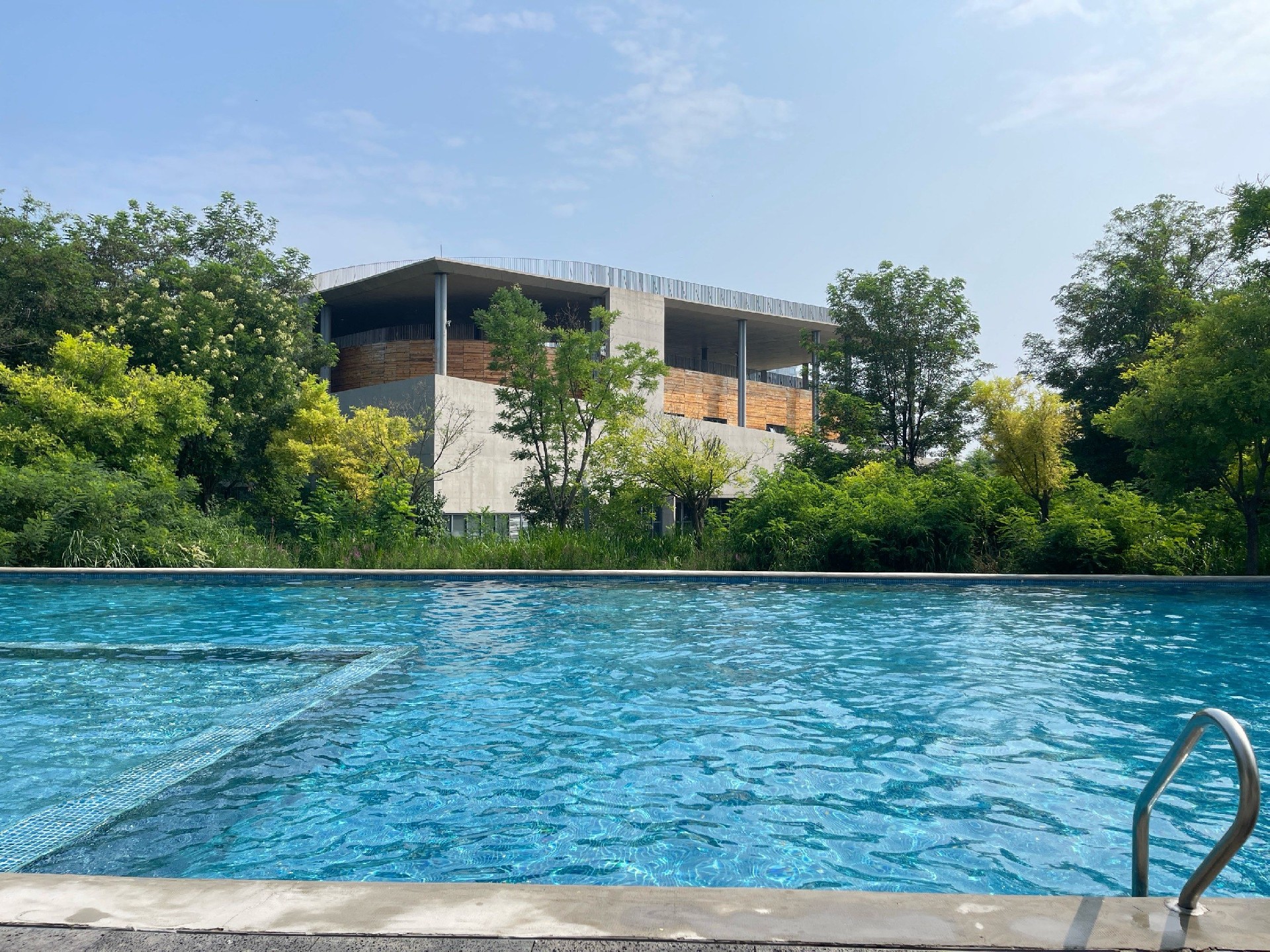
Mark the pool outlets, balance tank where used, circulation pump, filter, heating and chemical-addition points, return branches and sample takeoff. Record the actual order of equipment. Different plant arrangements need different interpretation; a diagram of one treatment process is not a universal pool specification.
A sample before chemical addition answers a different question from one taken after mixing. A measuring cell fed from an unrepresentative branch can give a stable value while another part of the circuit changes. Identify which pool or circulation loop the sample describes, particularly where one plant serves several basins.
| Task | Useful observation | Limit of that observation |
|---|---|---|
| Filtration | Turbidity trend, filter operating condition and appropriate pressure information | A single turbidity result does not define a universal backwash command or identify a microorganism. |
| Disinfectant control | A defined disinfectant residual, pH and appropriate independent tests | HClO, free chlorine, total chlorine and chlorine dioxide are not interchangeable quantities. |
| Water balance | pH with the additional chemistry needed for the selected assessment | pH alone cannot provide alkalinity, calcium hardness or a complete saturation-index calculation. |
| Water replacement | Measured makeup volume and the facility's water-quality test plan | A turbidity or pH channel does not directly measure urea. |
Specify the disinfectant and treatment arrangement through the facility's application review and authorization process. Chlorine dioxide is a different chemical from free chlorine and needs an appropriate measurement method. The monitoring equipment must measure the required quantity, not merely carry a residual-chlorine label.
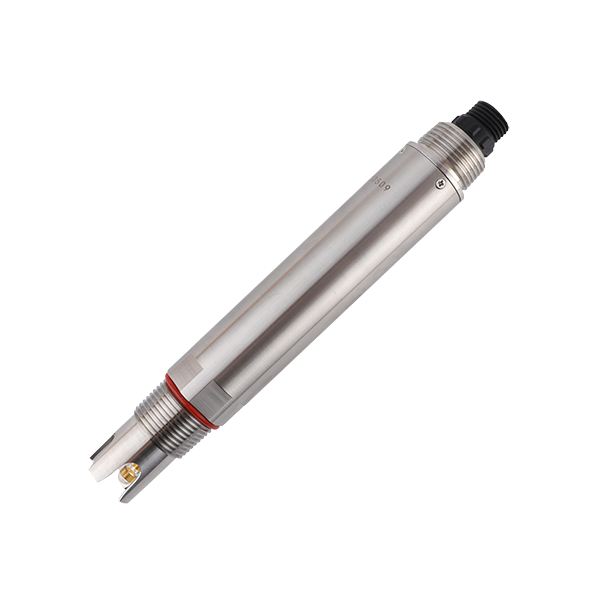
The stainless-steel CL-4 assembly above and the basic NBL-WQ-CL below are different configurations. Both are specified for HClO. That does not establish an interchangeable total-free-chlorine result in every pool chemistry, including pools using stabilizer. Review the actual disinfectant, stabilizer and reference method with the proposed measurement.
| Item | Basic NBL-WQ-CL | CL-4A / CL-4S |
|---|---|---|
| Range / resolution | 0-2.000 mg/L HClO; 0.001 mg/L | 0-2.000 or 0-20.00 mg/L HClO; 0.001 or 0.01 mg/L |
| Accuracy | +/-5% or +/-0.05 mg/L; temperature +/-0.5 degrees C | +/-5% of reading; temperature +/-0.3 degrees C |
| Operating temperature / pressure | 5-50 degrees C; below 0.1 MPa | 5-50 degrees C; at or below 0.2 MPa |
| pH conditions / compensation | pH 4-9; Pt1000 temperature compensation | pH 4-9; Pt1000 temperature compensation |
| Sample arrangement | Matching flow cell; 30-60 L/h | Matching flow cell; confirm its required flow |
| Output / supply | RS485 Modbus RTU; 12-24 V DC +/-10% | RS485 Modbus RTU; optional 4-20 mA; 12-24 V DC |
| Materials / protection | POM and PTFE; IP68 | 4A: POM/ABS; 4S: POM/316L; IP68 |
Confirm the complete operating range, including conditions during authorized treatment and maintenance. A 0-2 mg/L HClO span must not be selected as though it were a universal pool free-chlorine range. Resolution is also not accuracy; establish the applicable accuracy interpretation and reference comparison at the actual decision level.
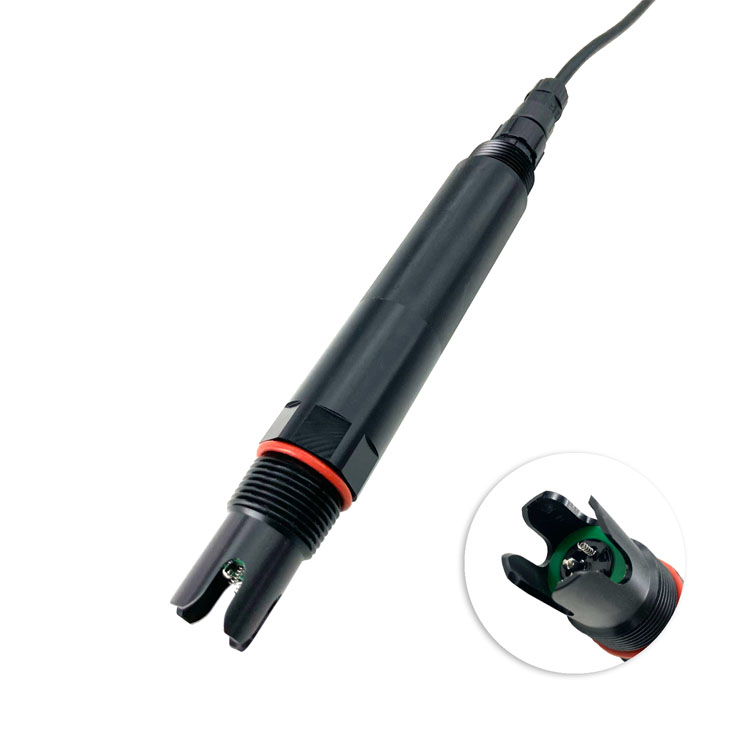
pH affects chlorine chemistry, but automatic temperature compensation in a chlorine probe does not supply pH correction. A separate pH observation can support a defined interpretation; it does not automatically turn an HClO probe into a qualified free-chlorine analyzer.
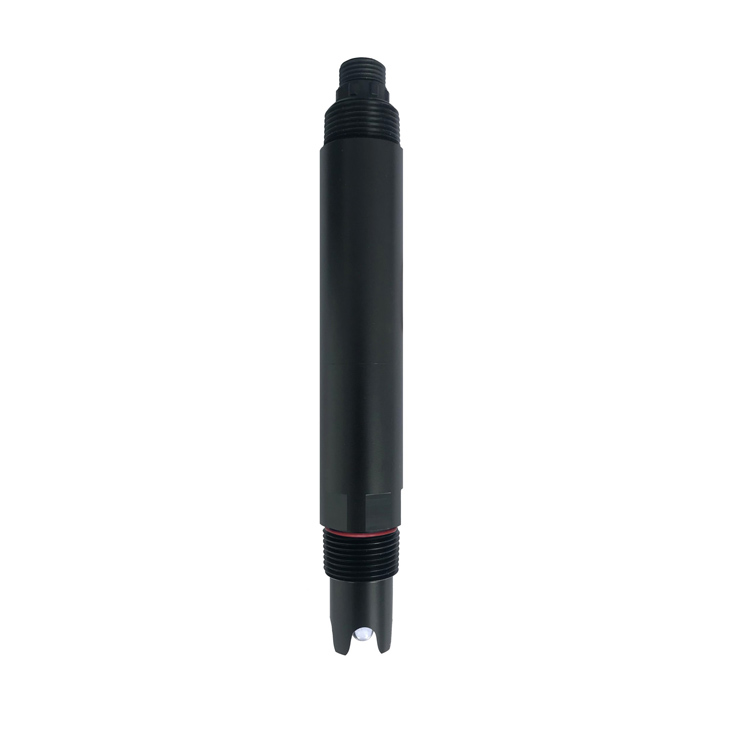
The PH-4 probe below uses Pt1000 compensation and has a 0-50 degrees C operating range at or below 0.2 MPa. The basic NBL-WQ-PH uses NTC compensation and a 0-65 degrees C range below 0.2 MPa. Both provide RS485 Modbus RTU, but their configurations must remain identifiable in the station.
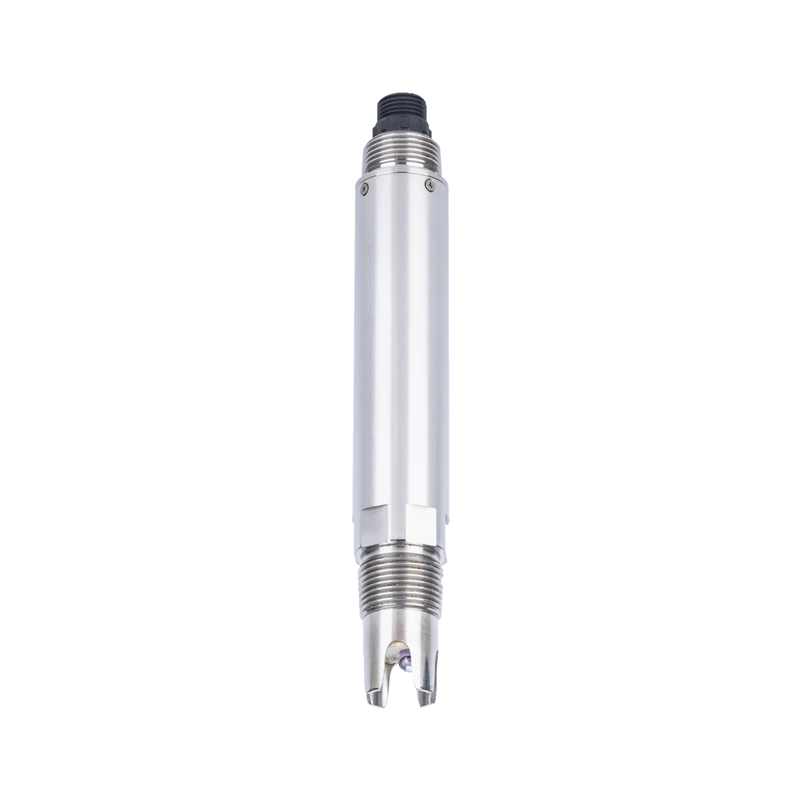
If a reading changes when a pump changes speed or a valve moves, check the sample flow, pressure and arrival time before changing calibration. If circulation stops, the cell can retain old water while communication continues. Show sample-invalid and stale-data states separately from a genuine low residual.
During filter backwashing or service isolation, the sample route may no longer describe normal return water. Establish the associated controller behavior in the plant design, including chemical-feed interlocks and authorized return to operation. A remote connection must not be the only means of maintaining the required local control behavior.
A rise in turbidity deserves interpretation against filtration, flow and particles; it should not automatically command more disinfectant. For a separate retrofit or panel-acceptance task, use the pool monitoring retrofit guide rather than assuming that replacement probes validate the complete plant.
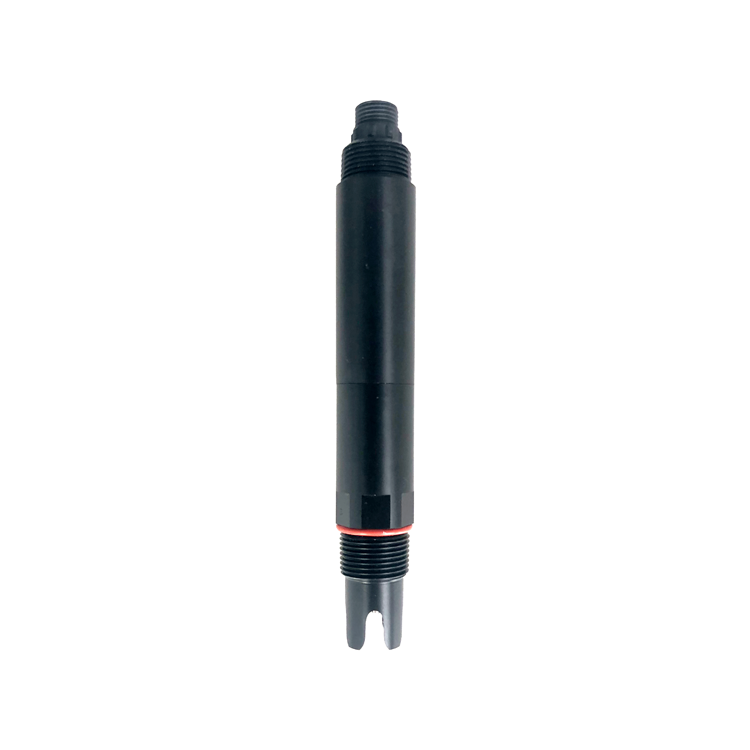
A compatible PLC or logger can acquire sensor values over RS485 Modbus RTU. Keep chlorine concentration, pH, temperature and ORP in separate tags with their own units and status. ORP is an electrode potential, not a direct chlorine concentration or an independent guarantee of disinfection.
Forward current, identified readings to a monitoring platform through a suitable gateway. A cloud dashboard does not correct a stopped sample or provide an analytical approval. Retain the test and maintenance records required for the actual facility alongside the online trend.
No. Appearance and odor cannot establish the required disinfectant concentration or microbiological condition. Use the facility's appropriate tests and operating procedures; do not calibrate the online system from sensory observations.
No. The online system needs comparison checks, while other required parameters have their own test methods. The pool parameter and independent-test guide separates those duties.
Do not assign that duty from its product name. Its specification is for HClO. A chlorine-dioxide process requires a measurement appropriate to that disinfectant and the required reporting method.
No. First check species, stabilizer conditions, sampling, timing, flow, pH and reference procedure. Adjusting slope before resolving these differences can conceal a reporting or sampling problem.
Provide the treatment diagram, disinfectant and stabilizer use, required reporting range, sample conditions, independent test method, controller inputs and chemical-feed arrangement. NiuBoL can assess measurement hardware against those conditions without treating one sensor as a complete pool-treatment system.
Swimming pool circulation monitoring works when readings remain connected to the treatment route and operating state. Specify the chlorine quantity and range, interpret pH separately, and distinguish valid measurements from stopped samples. Keep independent testing and plant operating requirements alongside the digital system rather than replacing them with universal setpoints or sensory checks.
 NBL-WQ-CL Water Quality Sensor Online Residual Chlorine Sensor.pdf
NBL-WQ-CL-4A Industrial-grade Online Residual Chlorine Sensor.pdf
NBL-WQ-CL-4S Series Online Water quality Residual Chlorine Sensor.pdf
Prev:COD as a Pollution Indicator and Online Sensor Application
Next:Oilfield Wastewater pH Sensor Selection: Glass and Antimony Limits
Related recommendations
Sensors & Weather Stations Catalog
Agriculture Sensors and Weather Stations Catalog-NiuBoL.pdf
Weather Stations Catalog-NiuBoL.pdf
Agriculture Sensors Catalog-NiuBoL.pdf
Water Quality Sensor Catalog-NiuBoL.pdf
Related products
 Combined air temperature and relative humidity sensor
 TDR Soil Moisture & Temperature Sensor for irrigation| RS485 |4-20mA| NBL-S-THR
 Soil pH sensor RS485 soil Testing instrument soil ph meter for agriculture |NBL-S-PH
 Wind Speed sensor Output Modbus/RS485/Analog/0-5V/4-20mA
 Tipping bucket rain gauge for weather monitoring auto rainfall sensor RS485/Outdoor/stainless steel
 Pyranometer Solar Radiation Sensor 4-20mA/RS485

Screenshot, WhatsApp to identify the QR code
WhatsApp number:+8615367865107
(Click on WhatsApp to copy and add friends)

