





— Blogs —
—Products—
 Consumer hotline +8618073152920
 WhatsApp:+8615367865107
Address:Room 102, District D, Houhu Industrial Park, Yuelu District, Changsha City, Hunan Province, China
Product knowledge
Time:2026-05-31 11:45:17 Popularity:435
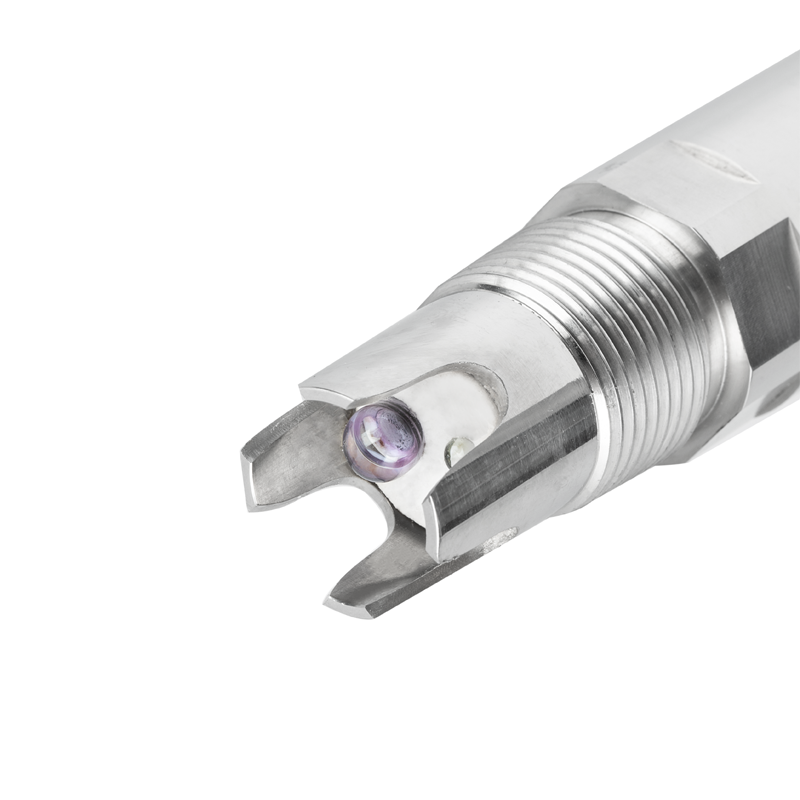
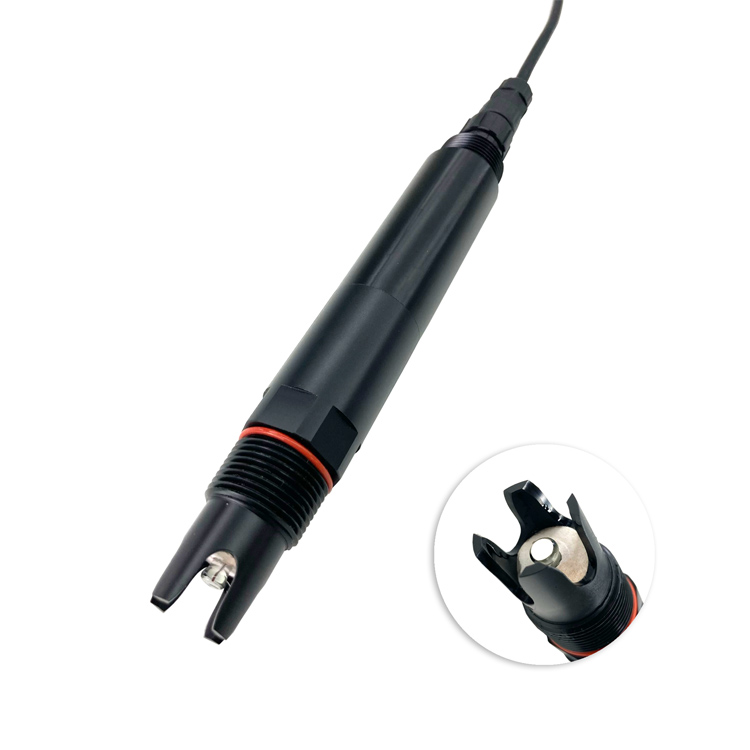
Quick Answer: Oilfield wastewater pH sensor selection should start with water chemistry, deposits, temperature, pressure and a representative measuring point. Antimony is an application-specific alternative, not a universal improvement over glass. The NiuBoL NBL-WQ-PH and PH-4 configurations illustrated here use glass electrodes; their mechanical housings do not make them antimony sensors.
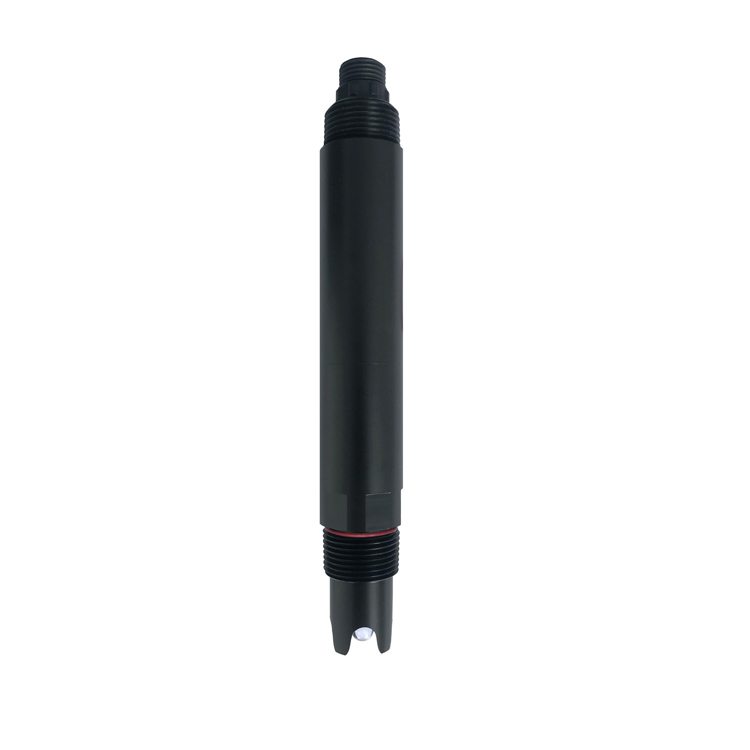
Produced water, well-washing water and flowback are not one uniform sample. Oil content, suspended solids, dissolved salts, treatment chemicals and operating conditions can change between streams or over time. Describe the water at the proposed measuring point rather than selecting from the label "oilfield wastewater."
An oily coating can obstruct contact with the sensing surface or reference junction. Deposits can slow a response, while a damaged electrode, unsuitable materials or a changed sample path create different problems. Record the failure pattern and compare it with the water condition before concluding that the glass principle itself is unsuitable.
| Question | Glass electrode assessment | Antimony electrode assessment |
|---|---|---|
| Measuring response | Uses pH-sensitive glass with a suitable reference system. | Uses a metal/oxide electrochemical response; review redox sensitivity. |
| Mechanical damage | Protect the glass against impact while preserving water renewal. | A metal sensing element changes the mechanical risk, not all chemical limitations. |
| Fouling | Evaluate coating, junction design and permitted cleaning. | Evaluate surface condition and the model-specific service procedure. |
| Application approval | Check chemistry and the complete operating envelope. | Require a defined model, operating envelope and comparison in the actual water. |
Antimony response can be affected by oxidizing or reducing species, dissolved oxygen, temperature and certain metals. Its calibration and useful pH interval are model-dependent. Those limitations prevent a blanket recommendation for sulfide-bearing, oily or alkaline wastewater. Do not infer suitability from the absence of a fragile glass bulb.
A persistent oil film also needs a practical inspection and cleaning plan. Changing sensing material does not establish that the film, reference-junction contamination or sample representativeness has been resolved. Compare candidate assemblies under the conditions that caused the existing failure.
| Parameter | Basic NBL-WQ-PH | PH-4A / PH-4S |
|---|---|---|
| Principle / measuring range | Glass electrode; 0-14 pH | Glass electrode; 0-14 pH |
| Resolution / accuracy | 0.01 pH; +/-0.1 pH; temperature +/-0.3 degrees C | 0.01 pH; +/-0.1 pH; temperature +/-0.3 degrees C |
| Operating temperature / pressure | 0-65 degrees C; below 0.2 MPa | 0-50 degrees C; at or below 0.2 MPa |
| Temperature compensation | NTC | Pt1000 |
| Housing | POM | 4A: POM/ABS; 4S: POM/316L |
| Supply / power | 12-24 V DC; 0.2 W at 12 V | 12-24 V DC; 0.2 W at 12 V |
| Output | RS485 Modbus RTU | RS485 Modbus RTU; optional 4-20 mA |
| Installation / cable / protection | Immersion, 3/4 NPT; standard 5 m cable; IP68 | Immersion, 3/4 NPT; standard 5 m cable; IP68 |
The basic NBL-WQ-PH and PH-4 configurations need separate chemical and mechanical assessments. Neither a stainless-steel body nor a 0-14 pH range qualifies the assembly for every produced-water stream, strong oxidant, solvent or cleaning chemical. Include the cable jacket, seals and fittings in that review.
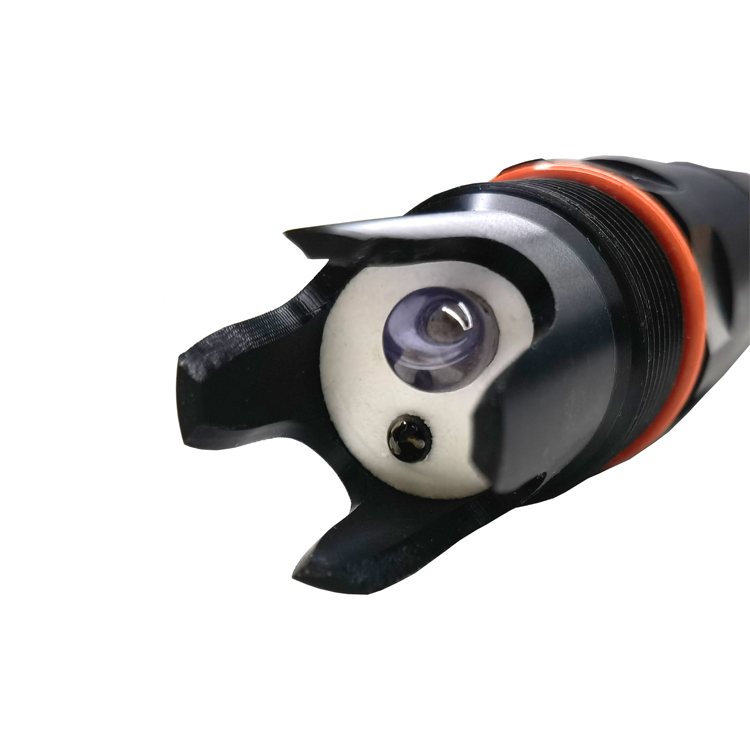
A hot or pressurized oilfield stream can exceed a probe's envelope. A properly designed sampling arrangement may provide conditions suitable for measurement, but it changes the measurement location and can change the sample. Pressure reduction, gas release, cooling and phase separation can affect the resulting water condition.
Define whether the required result is the pH in the original process or in the conditioned aqueous sample. Do not present a cooled sample as an unchanged in-process result merely because temperature compensation is enabled. Use qualified sampling and operating procedures for the site's pressure and chemical hazards.
Where oil removal or settling occurs before the measuring point, identify that boundary on the process drawing. The observation can be useful for the treated water without describing the untreated stream. For broader exposure limits, see the difficult-media pH review.
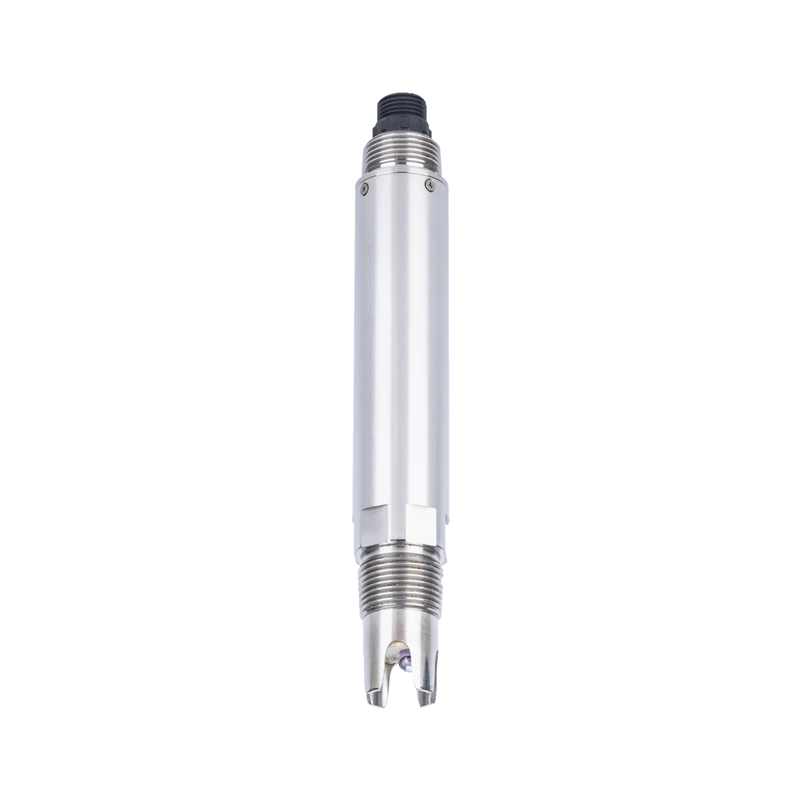
If coating is the problem, track response and comparison results before fouling, during service and after permitted cleaning. If mechanical damage is the problem, inspect support and guard geometry rather than judging only by electrode lifespan. For varying salinity or treatment chemistry, include the expected variation in the trial.
Compare representative observations with an appropriate reference, recording temperature and sample handling. A buffer check establishes an aspect of electrode performance; it does not prove that an oil-coated probe measures the process correctly. Do not adjust calibration to conceal a difference caused by sample conditioning.
For RS485 Modbus RTU integration, compare a direct probe read with the PLC or logger before investigating electrode chemistry. Keep the pH channel separate from ORP and temperature. A communications or scaling problem requires a data-path correction, not a different sensing material.
No. Review the exact model's chemistry, temperature and response limitations, then compare it in representative water. A metal sensing element does not establish a better analytical result in every stream.
No. Basic NBL-WQ-PH and PH-4 are glass-electrode configurations. Identify sensing material from the exact model specification, not from a stainless-steel housing.
No. Compensation does not protect the housing, seals, reference system or cable from excessive exposure. Basic PH and PH-4 have different operating limits and must be assessed separately.
No. Use a cleaning procedure compatible with the exact sensing assembly and contamination. An unapproved solvent or abrasive can damage components or change response. Establish the permitted method before scheduling automatic cleaning.
Provide the process stage, oil and solids condition, salt and chemical composition, normal and upset temperature and pressure, required pH tolerance, current failure pattern, sampling arrangement and interface. NiuBoL can assess the glass-probe configurations against that information without assuming universal produced-water suitability.
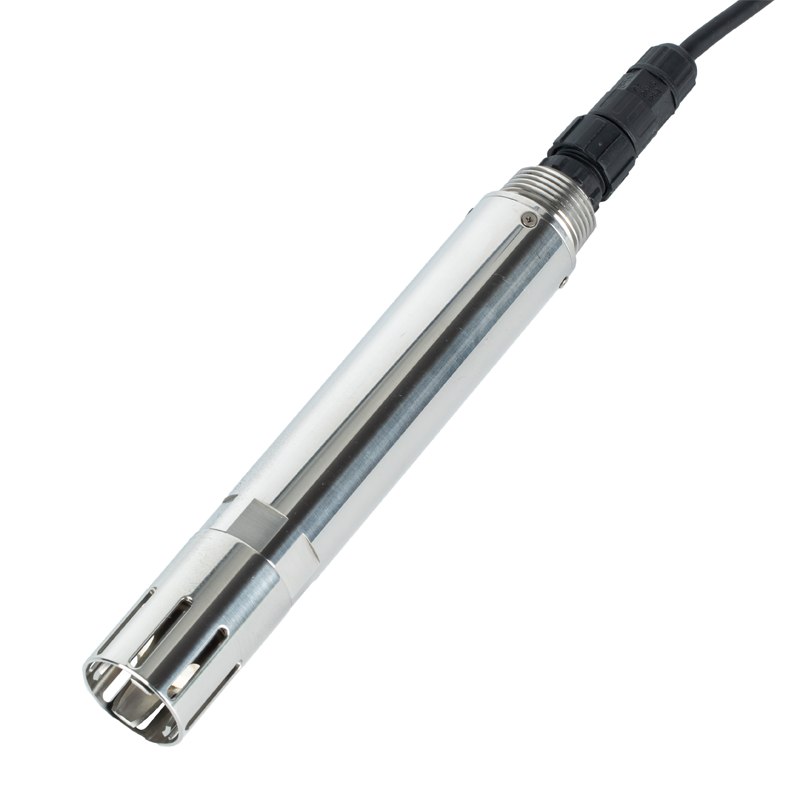
Oilfield wastewater pH sensor selection should address the actual failure mechanism and measurement boundary. Compare glass and alternative sensing assemblies against chemistry, exposure and a practical field test. Protect representative sampling and service access, and do not let a broad claim about electrode material replace model-specific evaluation.
 NBL-WQ-PH Online Water Quality pH Sensor.pdf
Prev:Swimming Pool Circulation Monitoring: Filtration, Dosing and Sensor Readings
Next:Paired Chlorine and pH Monitoring: Specify Two Measurement Channels
Related recommendations
Sensors & Weather Stations Catalog
Agriculture Sensors and Weather Stations Catalog-NiuBoL.pdf
Weather Stations Catalog-NiuBoL.pdf
Agriculture Sensors Catalog-NiuBoL.pdf
Water Quality Sensor Catalog-NiuBoL.pdf
Related products
 Combined air temperature and relative humidity sensor
 TDR Soil Moisture & Temperature Sensor for irrigation| RS485 |4-20mA| NBL-S-THR
 Soil pH sensor RS485 soil Testing instrument soil ph meter for agriculture |NBL-S-PH
 Wind Speed sensor Output Modbus/RS485/Analog/0-5V/4-20mA
 Tipping bucket rain gauge for weather monitoring auto rainfall sensor RS485/Outdoor/stainless steel
 Pyranometer Solar Radiation Sensor 4-20mA/RS485

Screenshot, WhatsApp to identify the QR code
WhatsApp number:+8615367865107
(Click on WhatsApp to copy and add friends)

