





— Blogs —
—Products—
 Consumer hotline +8618073152920
 WhatsApp:+8615367865107
Address:Room 102, District D, Houhu Industrial Park, Yuelu District, Changsha City, Hunan Province, China
Product knowledge
Time:2026-05-31 11:48:43 Popularity:410
Quick Answer: Paired chlorine and pH monitoring requires two defined measurement channels, not an assumption that one chlorine probe measures both parameters. The basic NiuBoL NBL-WQ-CL measures HClO with temperature compensation; pH requires a separate suitable sensor. Keep their sample conditions, calibration procedures and data tags distinct before using the pair for treatment control.
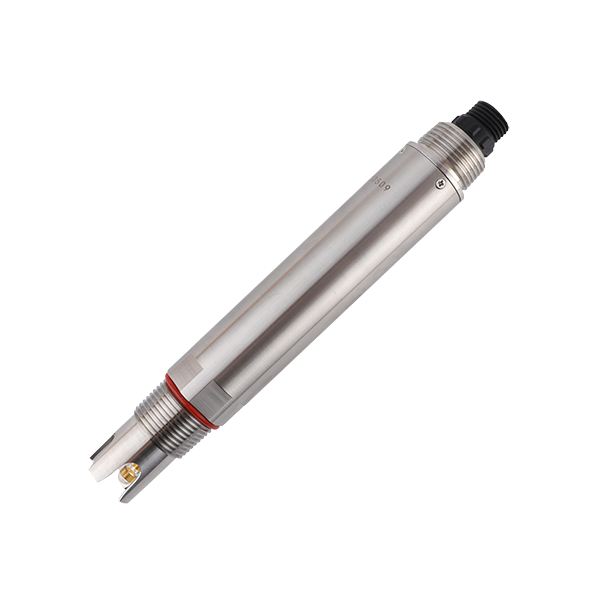
A panel can display chlorine, pH and temperature without those functions belonging to a single probe. Identify each sensing assembly and which channel supplies each value. This matters when replacing a probe, comparing quotations or deciding what remains valid while another channel is being serviced.
The CL-4 sensor illustrated above is a chlorine configuration. A Pt1000 temperature element in a chlorine probe is not a pH electrode. Similarly, adding a pH value to a dashboard does not demonstrate that the chlorine result has been corrected for pH or converted to the reporting quantity required by the project.
HClO, free chlorine, total chlorine and chlorine dioxide are different quantities. Basic NBL-WQ-CL is specified for 0-2.000 mg/L HClO. CL-4 variants have their own range options and output specifications; their higher range must not be assigned to basic CL.
Before comparing the online channel with a colorimetric test, identify what each reports. A pH observation can help explain chlorine distribution, but a generic correction factor does not establish an interchangeable free-chlorine result. Use the HClO and free-chlorine comparison guide to resolve that distinction before changing calibration.
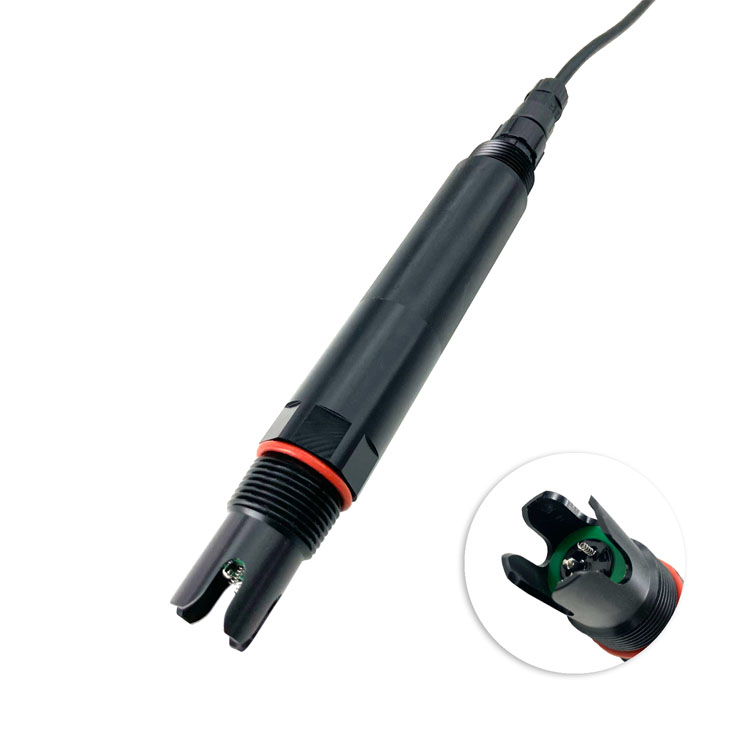
| Item | Basic NBL-WQ-CL | Basic NBL-WQ-PH |
|---|---|---|
| Measured quantity / range | HClO; 0-2.000 mg/L | pH; 0-14 |
| Resolution | 0.001 mg/L | 0.01 pH |
| Accuracy | +/-5% or +/-0.05 mg/L; temperature +/-0.5 degrees C | +/-0.1 pH; temperature +/-0.3 degrees C |
| Temperature compensation | Pt1000 | NTC |
| Operating envelope | 5-50 degrees C; pressure below 0.1 MPa; pH 4-9 | 0-65 degrees C; pressure below 0.2 MPa |
| Sample / mounting | Matching flow cell; 30-60 L/h | Immersion, 3/4 NPT; representative contact with the water |
| Output / supply | RS485 Modbus RTU; 12-24 V DC +/-10% | RS485 Modbus RTU; 12-24 V DC |
| Consumption / materials | 0.2 W at 12 V; POM and PTFE | 0.2 W at 12 V; POM |
| Protection / cable | IP68; standard 5 m cable | IP68; standard 5 m cable |
Use the rating of the complete installation, including cell, seals, fittings and cable jacket. The higher pressure limit of a separate pH probe does not increase the permissible pressure of the chlorine cell. For a common sample arrangement, establish conditions acceptable to every component.
A chlorine value and pH value taken at different process points may not describe the same water. Chemical injection, mixing and sample-line delay can separate them even when the screen timestamps are identical. Identify the sample route for each channel and retain measurement time as well as upload time.
For a drinking-water point, define whether both channels describe the tank outlet or a distribution sample. For pool control, include the disinfectant and stabilizer conditions and keep independent testing in the operating plan. For cooling-water monitoring, check the actual biocide, deposits and chemical exposure rather than assuming every oxidant can be measured as HClO.
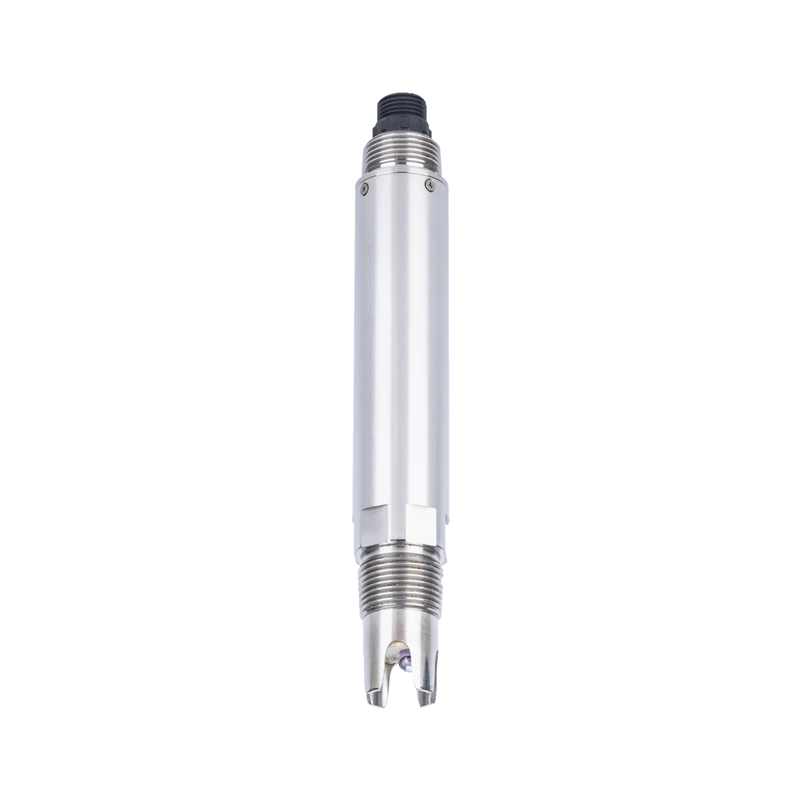
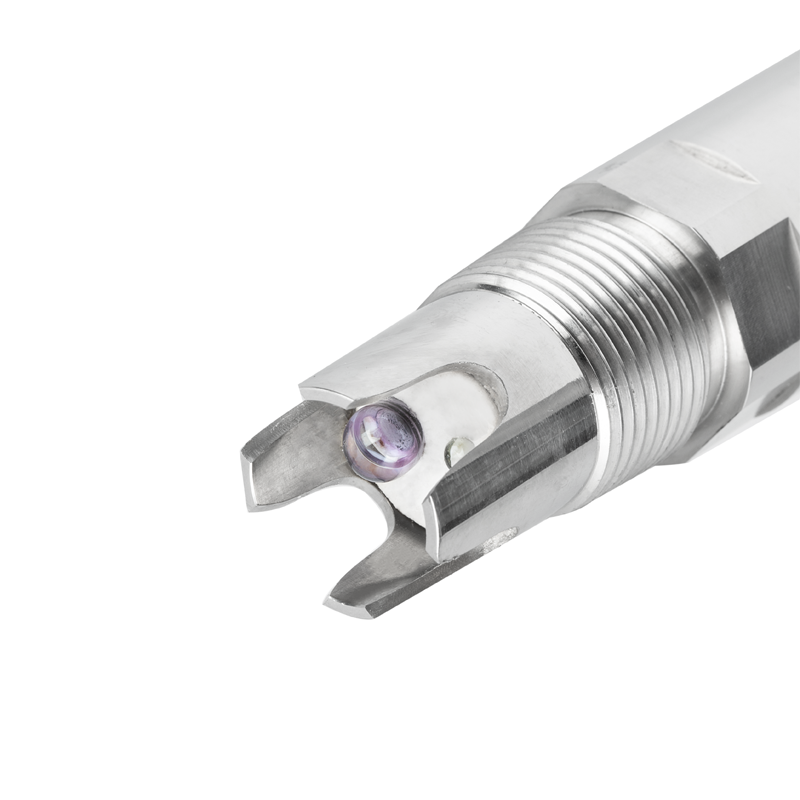
The PH-4 stainless-steel pH probe shown above is a separate version with Pt1000 compensation. It does not change the basic PH specification in the table. Specify the full pH model alongside the chlorine model so a replacement order preserves the intended pair.
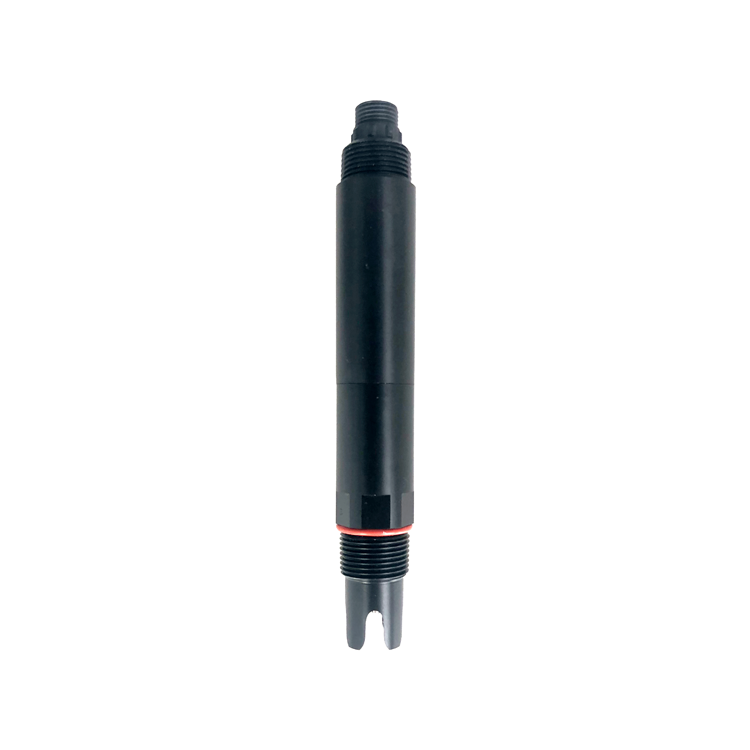
For basic CL, a new electrode or one returned after long storage requires 24 hours of activation in tap water. Zero calibration uses chlorine-free water; slope calibration uses an appropriate 1-2 mg/L HClO reference whose concentration has been established by a suitable method. Sample flow, pH and reference basis should be checked before an adjustment.
A pH channel instead uses appropriate pH buffers and temperature-dependent buffer values. Do not apply the chlorine activation or reference procedure to a pH electrode simply because both instruments are on the same panel. The basic CL maintenance guide covers the chlorine-specific service task.
Verify the two channels independently before evaluating their combined interpretation. If a result changes after one sensor is replaced, first check the replacement model, configuration, sample contact and reference result. Do not adjust the other channel merely to restore an old apparent relationship.
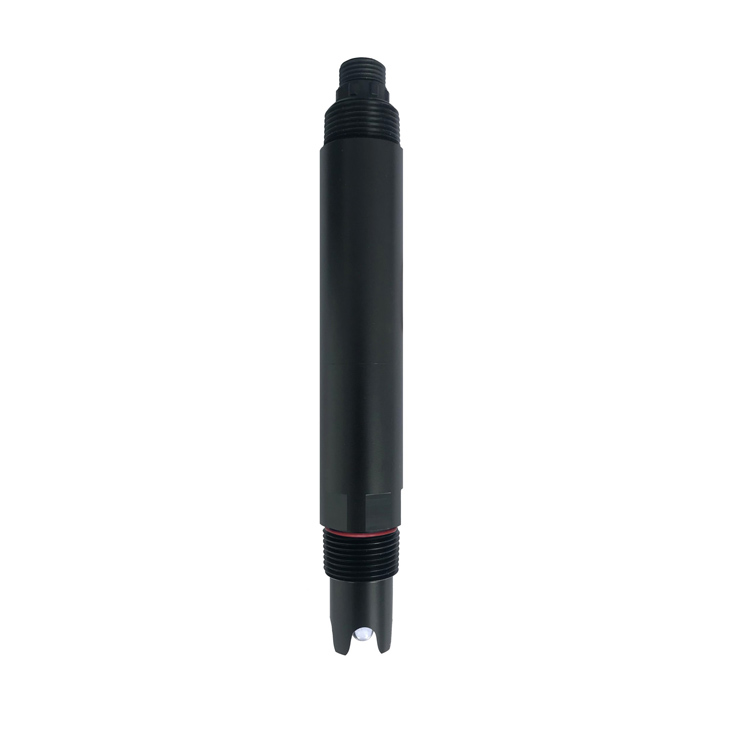
Give each RS485 Modbus RTU device a suitable address and decode its own register definitions. Preserve chlorine concentration, pH and temperature as separate quantities, including their validity and acquisition status. The common protocol does not imply a common register map or identical numerical format.
If the pH channel is unavailable, a calculation that depends on pH must not silently use an unidentified old value. If the sample flow stops, communication alone cannot prove that either channel represents current process water. Define the authorized control response for these states in the project logic and test it before automatic use.
No. The basic chlorine probe is specified for HClO and includes temperature compensation. A separate pH sensing channel is needed where the system requires pH.
No. Basic CL has a 0-2.000 mg/L HClO specification. Check CL-4 range and output options as separate configurations, with their own pressure and mounting conditions.
Not by assumption. Chlorine and pH need different defined reference conditions. An appropriate pH buffer is not a chlorine reference, and an HClO solution does not establish a known pH calibration point.
No. Establish the sensor's measured species and any validated calculation, required inputs and reference method. Two available numbers do not by themselves qualify a free-chlorine result.
Provide the disinfectant, required reporting quantity and tolerance, expected pH and temperature, sampling diagram, pressure and flow, receiving interface and service access. NiuBoL can review the two sensing assemblies and the acquisition arrangement as identifiable components.
Paired chlorine and pH monitoring is useful when each channel is valid on its own and both describe the intended water condition. Separate the models, references and data tags, then define how the controller uses the pair. This avoids treating temperature compensation or a shared display as an extra analytical capability.
 NBL-WQ-CL Water Quality Sensor Online Residual Chlorine Sensor.pdf
NBL-WQ-CL-4A Industrial-grade Online Residual Chlorine Sensor.pdf
NBL-WQ-CL-4S Series Online Water quality Residual Chlorine Sensor.pdf
NBL-WQ-PH Online Water Quality pH Sensor.pdf
Prev:Oilfield Wastewater pH Sensor Selection: Glass and Antimony Limits
Next:Conductivity Sensor Calibration After Cleaning: Zero, Slope and Reinstallation
Related recommendations
Sensors & Weather Stations Catalog
Agriculture Sensors and Weather Stations Catalog-NiuBoL.pdf
Weather Stations Catalog-NiuBoL.pdf
Agriculture Sensors Catalog-NiuBoL.pdf
Water Quality Sensor Catalog-NiuBoL.pdf
Related products
 Combined air temperature and relative humidity sensor
 TDR Soil Moisture & Temperature Sensor for irrigation| RS485 |4-20mA| NBL-S-THR
 Soil pH sensor RS485 soil Testing instrument soil ph meter for agriculture |NBL-S-PH
 Wind Speed sensor Output Modbus/RS485/Analog/0-5V/4-20mA
 Tipping bucket rain gauge for weather monitoring auto rainfall sensor RS485/Outdoor/stainless steel
 Pyranometer Solar Radiation Sensor 4-20mA/RS485

Screenshot, WhatsApp to identify the QR code
WhatsApp number:+8615367865107
(Click on WhatsApp to copy and add friends)

