





— Blogs —
—Products—
 Consumer hotline +8618073152920
WhatsApp:+8615367865107
Address:Room 102, District D, Houhu Industrial Park, Yuelu District, Changsha City, Hunan Province, China
Product knowledge
Time:2026-08-29 09:08:00 Popularity:268
An indoor outdoor temperature and humidity monitor can show a lower outdoor RH while the incoming air still carries more moisture than expected. Relative humidity depends on temperature as well as water vapor. Before using the comparison to ventilate a greenhouse, store or process area, preserve both temperature/RH pairs and define the moisture and thermal decision the controller must make.
RH describes the air's proximity to saturation at its current temperature. Comparing percentages measured at different temperatures is not a direct comparison of water-vapor content. The National Weather Service explanation of dew point and humidity illustrates why the lower percentage can be misleading.
For moisture-related ventilation decisions, the control designer may use dew point, vapor pressure or humidity ratio as appropriate to the application. Keep the calculation method, required pressure inputs and valid range explicit. Do not treat a calculated dew point as a separately measured channel unless the instrument actually provides that measurement.
Moisture suitability is only one condition. Incoming air temperature, condensation risk, rain, wind, contamination and the equipment's operating limits can also prevent ventilation. A temperature/RH comparison is not a complete building or greenhouse control specification.
| Observed comparison | What it does not establish | What to evaluate |
|---|---|---|
| Outdoor RH is lower | Outdoor air necessarily removes indoor moisture | Both temperatures and an appropriate moisture quantity |
| Outdoor temperature is lower | Ventilation is safe for the crop or stored material | Thermal limits and the expected operating effect |
| Two current values appear on screen | The observations were obtained at the same time | Acquisition times and stale-data handling |
| Two sensors agree side by side | Both installed locations are representative | Indoor zoning and outdoor exposure after mounting |
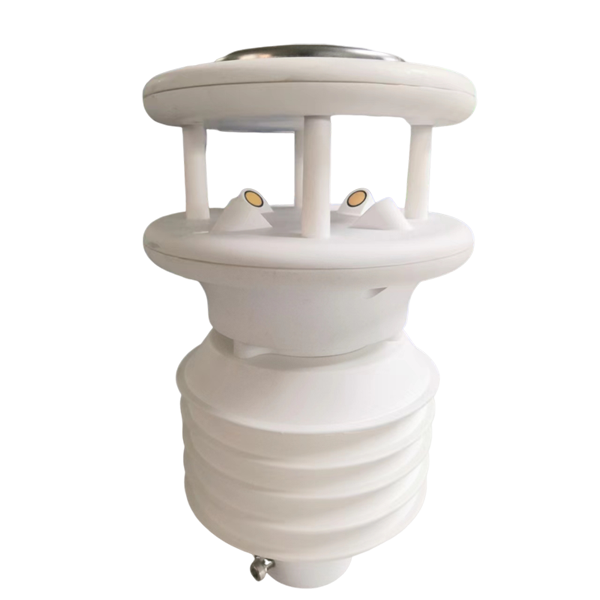
The NiuBoL NBL-W-81GUWS above combines outdoor temperature and RH with wind, pressure, particulate and noise channels. Its additional parameters may suit an environmental station, but they do not make it a necessary purchase for a simple indoor point.
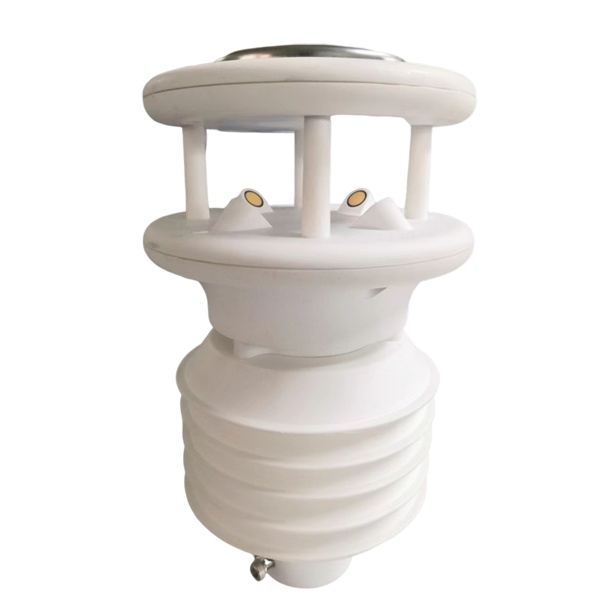
The ten-parameter head below is another configuration, not an indoor receiver included with the first product. A two-location system needs two appropriate sensing positions and a receiving arrangement that maintains their identities. Confirm the actual instruments, controller inputs and included accessories in the quotation.
| NBL-W-81GUWS item | Specification | Meaning for comparison |
|---|---|---|
| Air temperature | -40 to +80 C; +/-0.5 C; 0.1 C resolution | Temperature error affects the interpretation of RH and derived moisture quantities |
| Relative humidity | 0-100% RH; +/-5% RH; 0.1% RH resolution | A small display difference is not necessarily a resolved environmental difference |
| Power | DC 9-24 V; approximately 1 W average with particulate sensor | Outdoor-head load only, excluding logger and communications |
| Output | RS485 Modbus RTU; 9600 bps | Read the ordered register map and maintain temperature/RH pairing |
| Operating environment | -40 to +80 C; 0-95% RH; IP65 | Measurement range does not establish unrestricted condensation exposure |
| Installation lead | Confirm cable length, jacket and joint protection for the order | Do not apply a different head's standard cable specification |
Consider two RH channels each specified at +/-5% RH under the relevant conditions. Their errors could differ by as much as 10 percentage points in a worst-case comparison. An indicated difference of five percentage points does not establish its sign from those limits alone. This arithmetic is an illustrative bound, not a measured field error or statistical confidence interval.
At different temperatures, even a well-resolved RH difference still does not directly answer the moisture-removal question. Derived values require the temperature uncertainty and calculation method to be considered too. Do not build a narrow switching threshold from display resolution alone.
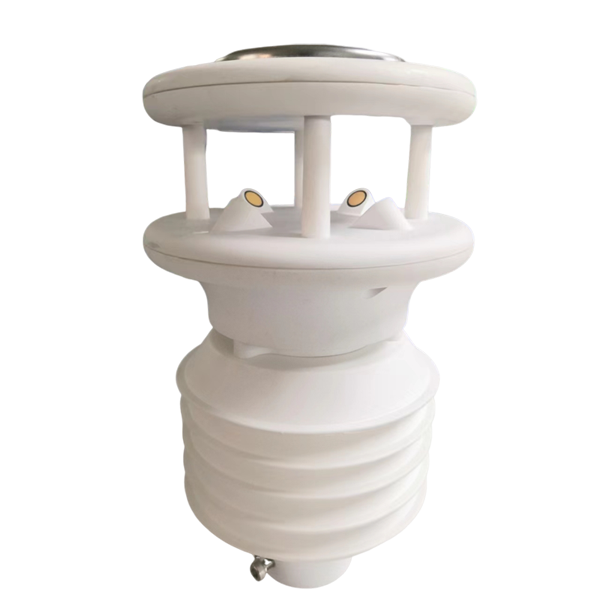
A configurable all-in-one head, shown below, must be assessed using its own selected configuration. Do not copy the eight-parameter model's power consumption or channel map into a different station.
Place the indoor point in the air zone the decision concerns, away from a heater, door jet or supply-air outlet unless that local condition is deliberately being monitored. Place the outdoor point where it represents incoming ambient air without wall heating, exhaust recirculation or inappropriate shelter.
Before permanent mounting, compare the channels under a suitable common exposure to investigate relative disagreement. Then document their installed locations. Agreement before installation cannot correct the heat plume or wet surface introduced by a poor final position.
At the PLC, RTU or data logger, store indoor temperature/RH and outdoor temperature/RH with their acquisition times and validity. Reject stale combinations. After a link outage, a new indoor value paired with an old outdoor value must not be presented as a current differential.
Review a controlled ventilation event under the site's authorized operating procedure. Record the paired conditions before, during and after the event alongside fan or vent status. Check whether the two sensors' response and update behavior are suitable for the intended decision interval. Do not force their readings to match after opening a vent; they may still represent different air volumes.
If outdoor wind is part of the opening permission, the NBL-W-SS below supplies a separate wind-speed measurement. Its IP65 rating and output version apply to that anemometer, not to the indoor RH instrument. Wind alone does not establish that ventilation will reduce moisture.

Not on that comparison alone. Evaluate the complete temperature/RH pairs, the chosen moisture quantity and the site's thermal and operating constraints.
No. It may be calculated at the host. Identify where the calculation occurs, which inputs it uses and how unavailable inputs affect the result.
If each channel has a +/-5% RH accuracy limit under the applicable conditions, the worst-case difference error can reach 10 percentage points. Resolution of 0.1% RH does not remove that limitation.
Only after its complete installation duty and environmental suitability are reviewed. Extra wind or rainfall channels may be unnecessary; request a suitable indoor sensing arrangement rather than assuming two identical outdoor heads are required.
Expose the missing or stale observation and apply the project's defined fallback. Do not calculate a current indoor/outdoor difference from an old value without identifying it.
Provide the monitored zones, ventilation purpose, normal and extreme conditions, required decision interval, cable routes and receiving controller. Include any derived moisture calculation and separate wind or rain permissions.
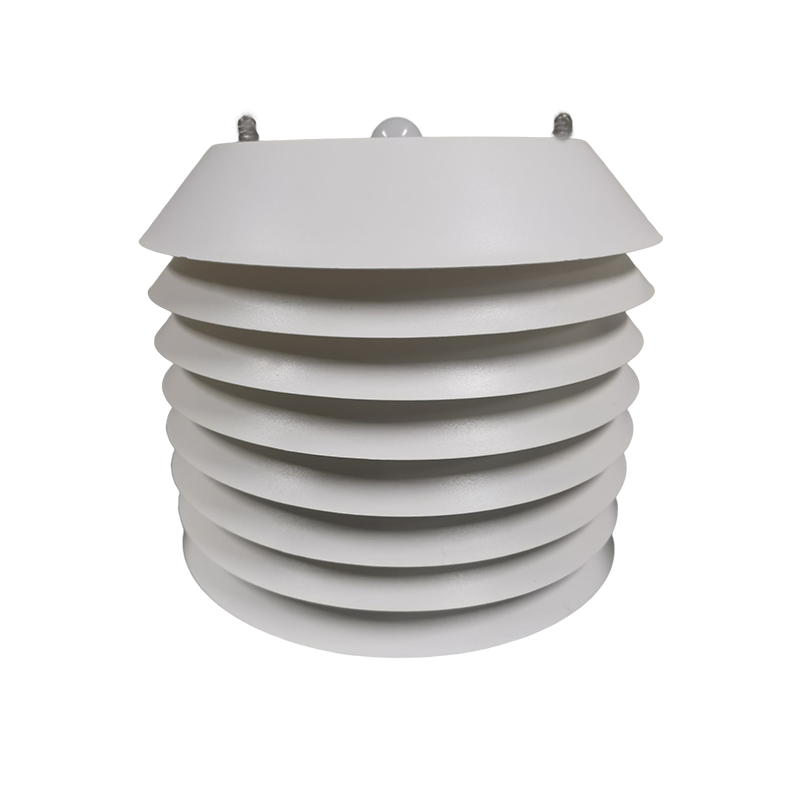
The NBL-W-THPLC below combines temperature, RH, pressure, illuminance and CO2. If this parameter set is relevant, confirm the ordered protocol, mounting and protection requirements. Its CO2 channel is not a substitute for a required safety gas-detection system.
An indoor outdoor temperature and humidity monitor supports ventilation decisions only when the two locations, times and measurement limits are understood. Compare the moisture quantity needed by the application rather than RH percentages alone. NiuBoL can review the sensing and acquisition arrangement against the actual indoor zone, outdoor exposure and controller requirements.
Prev:Agricultural Sensors for Greenhouse Substrates: Verify the Fit
Next:Instrument Used to Measure Turbidity of Water: Verification
Related recommendations
Sensors & Weather Stations Catalog
 Agriculture Sensors and Weather Stations Catalog-NiuBoL.pdf
Weather Stations Catalog-NiuBoL.pdf
Agriculture Sensors Catalog-NiuBoL.pdf
Water Quality Sensor Catalog-NiuBoL.pdf
Related products
 Combined air temperature and relative humidity sensor
 TDR Soil Moisture & Temperature Sensor for irrigation| RS485 |4-20mA| NBL-S-THR
 Soil pH sensor RS485 soil Testing instrument soil ph meter for agriculture |NBL-S-PH Wind Speed sensor Output Modbus/RS485/Analog/0-5V/4-20mA
 0.2mm Tipping Bucket Rain Gauge for Weather & Hydrology | NiuBoL
 Pyranometer Solar Radiation Sensor 4-20mA/RS485


Screenshot, WhatsApp to identify the QR code
WhatsApp number:+8615367865107
(Click on WhatsApp to copy and add friends)

