







A frozen cup anemometer can under-read or stop, but a flat wind-speed trace is not proof of icing. Genuine calm, a seized bearing, a power problem and a logger repeating its last value can produce similar records. Diagnose the measurement chain as well as the weather, and keep a quality flag separate from the reported speed.
First ask whether the value is fresh
Check timestamps and successful communications at the sensor, logger and platform. A communications failure must not become a valid zero-wind observation. Compare the raw signal with the displayed value and check whether the receiver holds the last value after an unsuccessful read.
If fresh measurements continue, inspect the rotor when conditions allow safe access. Ice can alter cup shape before stopping rotation. A stopped rotor can report zero even while wind continues; a constant nonzero value may instead be held in the data path. Do not climb an icy mast or approach moving equipment to settle the diagnosis.
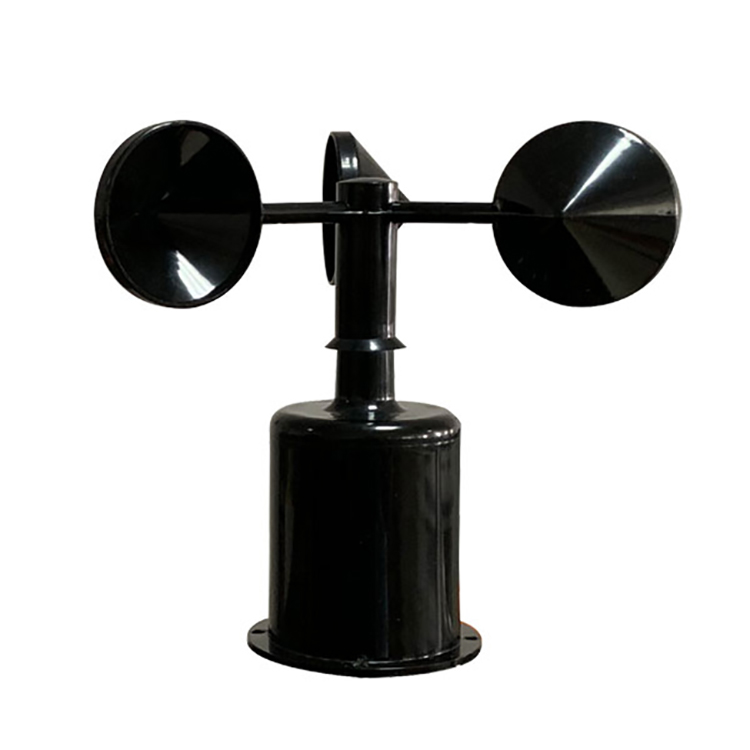
Three-cup wind-speed sensor; rotor condition and data freshness need separate checks.
The linked NiuBoL product is a cup-anemometer configuration. Its communication interface does not demonstrate that it detects ice. An RS485 connection is not evidence of an icing-status register. Store operator or logger-generated quality flags separately unless a documented instrument diagnostic is actually available.
Weather evidence narrows the investigation, not the verdict
Freezing fog and freezing rain can deposit ice on a wind sensor. Temperature and humidity help identify suspect periods, but there is no defensible universal rule restricting icing to −5 to 0°C, humidity above 80% and wind below 5 m/s. Conditions outside that combination are not automatically safe.
The sensor's own low speed is also circular evidence: if ice makes it under-read, that value cannot independently prove the ambient wind was low. A nearby reference instrument, camera, observed freezing precipitation or maintenance inspection is stronger evidence. A reference must have comparable exposure and an independently assessed measurement state.
Keep speed and direction flags distinct. A fixed vane direction may be steady wind rather than a frozen vane, while simultaneous flat channels can reflect a common power or communications problem. Use combined evidence instead of forcing every flat trace into an icing category.
Heating changes the checks, not the need for them
Gill's guidance on wind measurement in icing conditions explains that ice can stop a cup rotor or obstruct an ultrasonic acoustic path. Removing moving parts does not make a wind head ice-proof. Heating coverage and power demand differ between instruments.
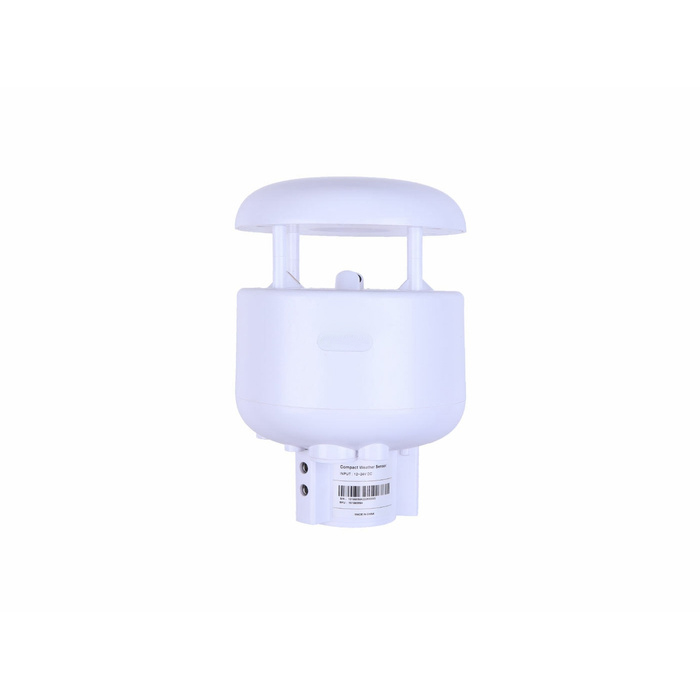
Ultrasonic wind head; its appearance does not establish an anti-icing capability.
For a heated installation, examine specified heater status, supply voltage and current under load. Current draw alone does not prove every critical surface is clear. Absent heater current may be normal when the controller is not requesting heat. Compare observed behavior with that instrument's control logic.
Vaisala's WA15 documentation distinguishes heated-shaft protection against bearing freezing from broader sensor performance. Do not transfer another manufacturer's heater design, rating or cold-weather claim to a NiuBoL model. Assess heater demand against winter power availability, not just the sensor electronics' consumption.
Count received data and usable data separately
Consider a hypothetical 30-day record of hourly values. All 720 scheduled hours contain a received value, but review withholds 96 hours because their validity has not been established. Assume the other 624 hours pass the stated checks.
| Measure | Calculation | Result |
|---|---|---|
| Expected hourly records | 30 × 24 | 720 |
| Received records | Assumed complete logger export | 720 |
| Retained valid records | 720 − 96 | 624 |
| Data receipt completeness | 720 / 720 × 100 | 100% |
| Valid-data availability | 624 / 720 × 100 | 86.7% |
The denominator remains the full scheduled period. Do not remove suspect hours, icing downtime or missing hours from it to make availability look higher. The 96 hours here are an assumed review outcome, not the automatic output of a weather-threshold test. If investigation restores some of them, update their classification and retain the audit trail.
Report the numerator's acceptance criteria with the percentage. A received-but-stale value is not useful merely because a database row exists. For irregular samples or partial-hour faults, use a documented duration-based metric rather than mixing sample counts with elapsed hours.
Preserve the evidence for later review
Keep raw readings, timestamps, communication results, quality flags and the reason for each change. Do not silently substitute the last good speed for suspect values. A filled value remains an estimate, not an observation, and its use depends on the downstream analysis.
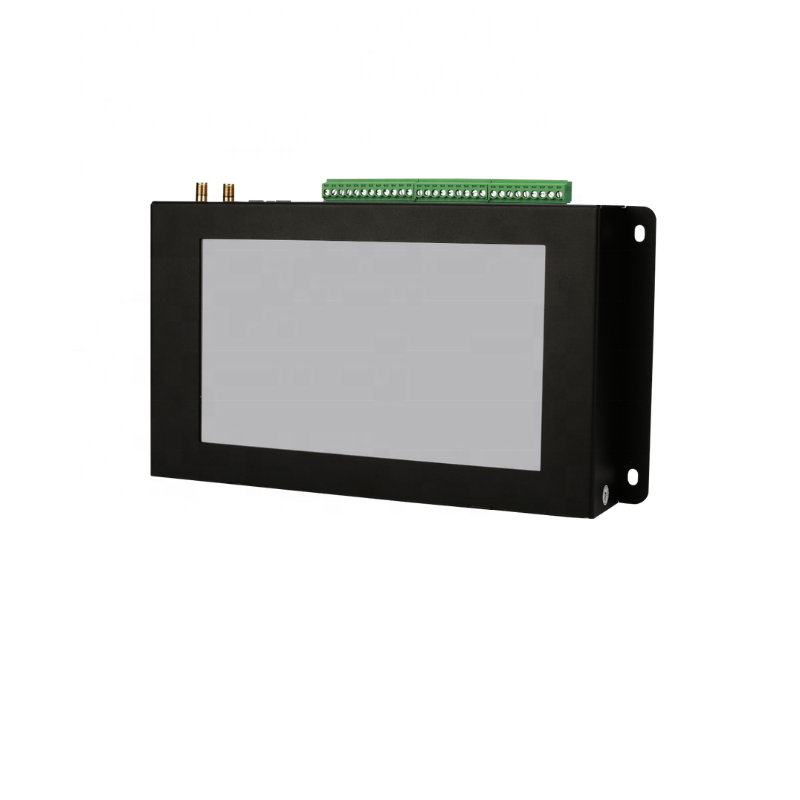
Weather-station data logger for collecting measurements; quality rules belong to the configured data workflow.
Keep unavailable and suspect periods visible in reports. When calculating a wind statistic from accepted observations, state the coverage and exclusion policy. Discarding winter events without reporting them can bias the apparent wind climate. A review flag should prompt investigation, not an unrecorded deletion.
FAQ
Q1. Does zero wind during freezing fog mean the cups are frozen?
It is plausible, but not established. Check fresh communication, independent wind evidence and rotor condition. Calm air and mechanical or electrical faults remain alternatives.
Q2. Can humidity alone validate an icing flag?
No. It is supporting weather information, not a direct observation of ice on the instrument. Use a site-specific review procedure and document confirming evidence.
Q3. Can a heated sensor's reading be accepted automatically?
No. Power, heater coverage, control state and the measurement path can still fail. Keep diagnostic and data-quality checks in service.
Close the event, not just the gap
A useful winter record distinguishes genuine calm, confirmed instrument problems and unresolved observations. Its availability calculation retains the whole scheduled period, and its archive preserves the evidence behind each decision.
For a cold-weather monitoring enquiry, provide:
- Expected freezing precipitation, temperature range and mast exposure.
- Existing sensor model, output, logger behavior on failed reads and suspect time series.
- Available winter power, access restrictions and required data coverage.
Contact NiuBoL to discuss wind-monitoring equipment and the information needed to assess a cold-site configuration.









