





— Blogs —
—Products—
 Consumer hotline +8618073152920
WhatsApp:+8615367865107
Address:Room 102, District D, Houhu Industrial Park, Yuelu District, Changsha City, Hunan Province, China
Product knowledge
Time:2026-11-27 12:00:00 Popularity:14
An ion selective sensor does not report one ion in isolation. It reports the primary ion plus every interfering ion the membrane can answer to, each weighted by a selectivity coefficient. When an interferent, converted to an equivalent primary-ion activity, is large enough to explain the shift, check interference before you change the concentration assumption.
For a primary ion i and an interfering ion j, the Nicolsky-Eisenman equation writes the electrode response as an equivalent primary activity: a_eq = a_i + k_ij·(a_j)^(z_i/z_j). The membrane does not know which ion supplied the potential; it answers to the sum. The number displayed as concentration is derived from a_eq, not from a_i alone.
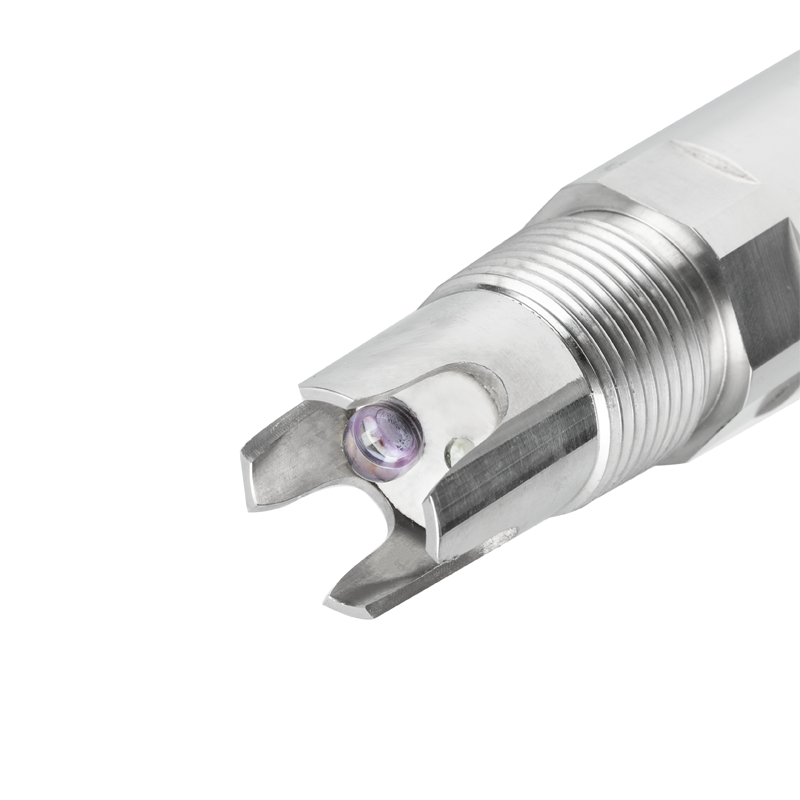
Figure 1. NBL-WQ-PH-4 Online pH Sensor Glass Electrode Method RS-485 Modbus-RTU for Industrial IoT Water….
That distinction is the whole error mechanism. A reading is a statement about the total charge-generating population at the membrane surface. It becomes a statement about ammonium only after you show that the added terms are small. If one added term is comparable to a_i, the instrument is measuring a mixture, however precise the electronics appear to be.
The selectivity coefficient k_ij is the weighting factor. A value of 1 means the membrane responds to the interferent as strongly as to the primary ion; values well below 1 mean it rejects the interferent. Coefficients quoted in literature are typical engineering reference values tied to a specific membrane and matrix. Confirm the figure against the current datasheet or nameplate before it enters any calculation.
Table 1 fixes a_NH4 at 1.0 × 10⁻³ mol/L and a_K at 2.0 × 10⁻³ mol/L, then varies k. Every entry is an assumed site value or a typical engineering reference value used to show sensitivity; none is a product rating.
Illustrative calculation based on assumed site values, not a measured field record.
Ammonium and potassium are both monovalent, so z_i/z_j equals 1 and the potassium term is simply k_ij × a_K. The bias is linear in potassium activity: double the potassium and the added activity doubles. That linearity is exactly what makes a modest coefficient dangerous, because a slowly rising interferent can quietly scale the error without changing the slope of the calibration.
The practical consequence is that interference scales with the interferent, not with the primary ion. A site where potassium is stable may show a constant offset that calibration absorbs; a site where potassium varies with source water or dosing will show a wandering ammonium trend that no amount of recalibration removes.
Change the interferent's charge and the exponent changes with it. For a divalent ion such as calcium, z_i/z_j is 0.5, so the added term becomes k_ij times the square root of a_Ca. The coefficient must then carry compensating units, so a value measured for potassium cannot be carried over to calcium by inspection.
Read the valence from the species actually present in the sample, not from the name on the reagent bottle. The coefficient is valid only for the stated primary/interferent pair under the stated membrane and ionic conditions; re-derive it whenever either ion changes.
This worked example uses the Nicolsky-Eisenman form with monovalent ions. Inputs are assumed, not recorded: a_NH4 = 1.0 × 10⁻³ mol/L, a_K = 2.0 × 10⁻³ mol/L, and k_NH4,K = 0.12. The coefficient is a typical engineering reference value and must be confirmed against the current datasheet before use.
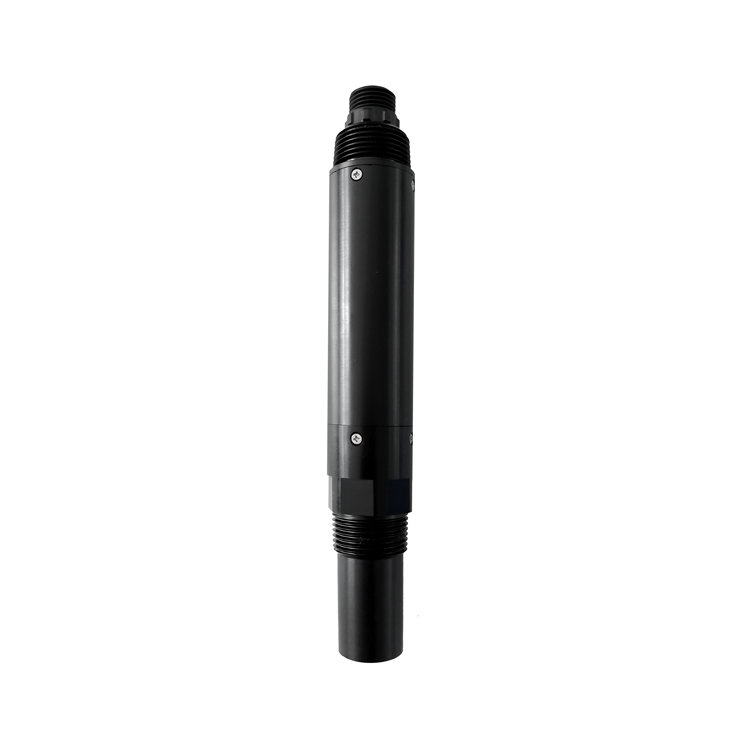
Figure 2. Water Conductivity EC Sensor RS485 Modbus IP68 — NBL-WQ-EC.
Formula: a_eq = a_NH4 + k_NH4,K·a_K^(z_i/z_j) = 1.0 × 10⁻³ + 0.12 × 2.0 × 10⁻³ = 1.24 × 10⁻³ mol/L. Result: relative deviation = (1.24 − 1.00)/1.00 = 24%. At 25 °C, a monovalent Nernst slope of 59.16 mV per decade gives a potential error of 59.16 × log10(1.24) = 5.5 mV.
Now double the interferent. With a_K = 4.0 × 10⁻³ mol/L, a_eq = 1.0 × 10⁻³ + 0.12 × 4.0 × 10⁻³ = 1.48 × 10⁻³ mol/L, a deviation of 48% and a potential error of about 10.1 mV. The deviation doubles because the exponent is 1; for a divalent interferent it would not.
Illustrative calculation based on assumed site values, not a measured field record. Verify k and the operating range on the current datasheet.
Two boundaries apply to the result. First, a_eq is an activity, not a concentration; converting it requires a stable activity coefficient, which is what the conditioning step provides. Second, the linear form holds only while the membrane stays inside its Nernstian response region and the matrix matches the one used to obtain k.
An ionic strength adjuster is dosed in excess so that the sample's activity coefficient is dominated by a fixed background electrolyte. With that coefficient stable, activity becomes proportional to concentration and the calibration translates into mg/L. Some adjusters also complex interfering ions, which changes the effective coefficient; document the adjuster used whenever you quote k.
Standards and samples must receive the same dose in the same ratio. If the sample's own ionic strength is far above the adjusted background, the assumption of a constant coefficient weakens and the equivalent-activity calculation drifts from the displayed value. Extremely saline or concentrated samples therefore need a matrix-matched check rather than a single blanket correction.
Reference stability matters just as much. A common probe design uses a three-electrode system — counter, reference and working electrode — in one integrated body. Any drift in the reference potential appears directly as an apparent concentration change. Check the junction, refill solution and reference potential before attributing a slow shift to ammonium.
Temperature enters twice. The Nernst slope for a monovalent ion is 59.16 mV per decade at 25 °C and varies roughly 0.2 mV per decade per °C; the selectivity coefficient is also temperature dependent. Log temperature alongside the ion reading, and confirm the compensation range on the current datasheet.
Where several samples are run together, an eight-channel design with simultaneous start and single-channel start modes can reduce variation introduced between channels. Choose simultaneous start for matched timing; use single-channel start when samples need different conditioning times. Eliminating inter-channel variation removes one more source of apparent interference.
The model fails when its assumptions fail. Outside the Nernstian region — because of membrane aging, fouling, or concentrations beyond the working range — the slope is no longer 59.16 mV per decade and the arithmetic above no longer describes the electrode. A coefficient measured in one matrix may not transfer to another.
It also fails when the reference is unstable, when the adjuster is not in excess, when the interferent is not the one listed in the coefficient table, or when the response has not reached equilibrium. If the equivalent contribution approaches the primary activity, the device is reporting a mixture, not ammonium. Treat that reading as screening data only.
Do not use the calculation to rescue a suspect measurement. It explains an error budget; it cannot restore selectivity that the membrane does not have. When the residual deviation remains unexplained after the interferents are accounted for, the correct action is an independent measurement, not a smaller assumed coefficient.
Send the sample to a laboratory when the calculated deviation exceeds your acceptance threshold, when the matrix is unknown, when a reading will be used for regulatory reporting, or when two methods disagree. For metal ions, inductively coupled plasma atomic emission spectroscopy is a common reference method: matrix interference is small, the linear range is wide, and sensitivity is high.
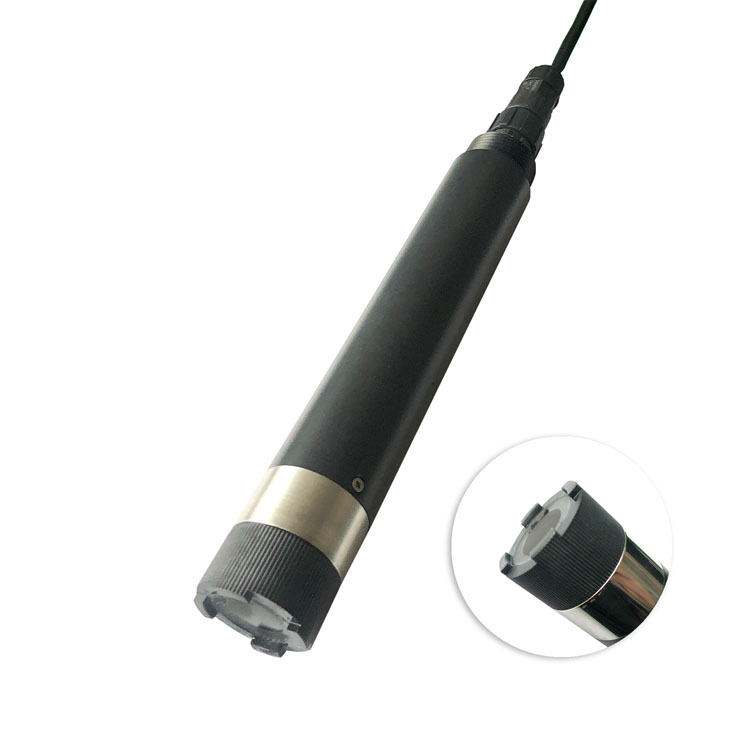
Figure 3. NBL-WQ-DO Online Fluorescence Dissolved Oxygen Sensor.
That method can identify and quantify several metals in one run, which is useful when more than one interferent is suspected. Its drawback is cost, so it fits confirmation rather than routine monitoring. Heavy metals are conventionally taken as elements with density at or above 4.5 g/cm3; lead is one of thirteen hazards identified by the World Health Organization as relevant to children's health, and it is absorbed almost completely and excreted slowly.
Keep the field reading as a trend signal and the laboratory result as the decision value. Record both, with the coefficient, adjuster, temperature and datasheet revision used, so the deviation can be reconstructed later.
Q1. Does a changing ion selective sensor reading always mean the ammonium concentration changed?
No. The membrane answers to equivalent activity, a_NH4 + k·a_K for monovalent ions. With k = 0.12 and a_K = 2.0 × 10⁻³ mol/L, potassium adds 24% to the apparent value while ammonium stays fixed. Check the interferent first.
Q2. What does the selectivity coefficient actually mean?
It weights the interferent relative to the primary ion. A value of 1 means equal response; 0.12 means the interferent contributes 12% per unit activity. It is a typical engineering reference value tied to a specific membrane and matrix; confirm it against the current datasheet.
Q3. Why does potassium matter more than a divalent ion here?
Ammonium and potassium are both monovalent, so the exponent z_i/z_j is 1 and the term is linear in a_K. For a divalent ion the exponent is 0.5 and the term involves a square root, so the error scales differently and the coefficient cannot be reused.
Q4. What does an ionic strength adjuster change?
It fixes the activity coefficient by adding a large, constant background electrolyte, so activity tracks concentration and the calibration reads in concentration units. Some adjusters also complex interferents, which changes the effective k. Always quote the adjuster together with the coefficient.
Q5. How much can a 2 °C temperature change matter?
For a monovalent ion the slope changes by roughly 0.2 mV per decade per °C, and k is temperature dependent too. In the worked example a 5.5 mV error corresponds to a 24% deviation, so uncompensated temperature drift can look like a real concentration change.
Q6. When should I stop adjusting the calculation and use a lab method?
When the equivalent contribution approaches the primary activity, the matrix is unknown, the reading supports regulatory reporting, or two methods disagree. ICP-AES offers small matrix interference, a wide linear range and simultaneous multi-element results, at higher cost, for confirmation.
An ion selective sensor reports equivalent activity, not a single ion. For ammonium with potassium at equal charge, a 0.12 coefficient turns a_K = 2.0 × 10⁻³ mol/L into a 24% apparent deviation; doubling potassium doubles it to 48%. The arithmetic is reproducible by hand, but only inside the Nernstian range and only with a stable reference and fixed ionic strength.
Check interference before you change the concentration
An ion selective sensor reports equivalent activity, so a change in reading is not automatically a change in the target ion. With ammonium at 1.0e-3 mol/L, potassium at 2.0e-3 mol/L and a selectivity coefficient of 0.12, the equivalent activity rises to 1.24e-3 mol/L, a 24% deviation and about 5.5 mV at 25 °C. Log interfering ions and ionic strength with every result, and confirm any decision-critical value by laboratory analysis.
Checking ion interference in an electrode reading? Share the target and interfering ion activities through our contact page, and we will help you work the equivalent activity.
Prev:Greenhouse Humidity Sensor: Stuck at 100% RH
Next:no more
Related recommendations
Sensors & Weather Stations Catalog
 Agriculture Sensors and Weather Stations Catalog-NiuBoL.pdf
Weather Stations Catalog-NiuBoL.pdf
Agriculture Sensors Catalog-NiuBoL.pdf
Water Quality Sensor Catalog-NiuBoL.pdf
Related products
 Combined air temperature and relative humidity sensor
 TDR Soil Moisture & Temperature Sensor for irrigation| RS485 |4-20mA| NBL-S-THR
 Soil pH sensor RS485 soil Testing instrument soil ph meter for agriculture |NBL-S-PH
 Wind Speed sensor Output Modbus/RS485/Analog/0-5V/4-20mA
 0.2mm Tipping Bucket Rain Gauge for Weather & Hydrology | NiuBoL
 Pyranometer Solar Radiation Sensor 4-20mA/RS485


Screenshot, WhatsApp to identify the QR code
WhatsApp number:+8615367865107
(Click on WhatsApp to copy and add friends)

