







A light intensity sensor reporting lux cannot establish crop photon exposure from different LED fixtures using one universal conversion factor. The relationship depends on the full spectrum reaching the measurement plane, not just the fixture's red-to-blue ratio. For a grow-light purchase, specify PPFD in μmol/m²/s, the wavelength band and the comparison conditions before comparing ranges or prices.
Why a red-to-blue ratio is not a conversion factor
Lux weights incident light according to human visual sensitivity. PPFD counts photons within a defined photosynthetic waveband, conventionally 400–700 nm. Green, blue and deep-red photons contribute differently to lux, so changing the spectrum can change the ratio between lux and PPFD. Apogee's conversion tables give different factors for different source types rather than one universal factor.
A red-to-blue ratio omits green, other wavelengths and the exact red and blue bands. Two spectra with the same ratio can therefore have different lux-to-PPFD relationships. “Red-rich” alone does not prove a particular conversion or a fixed percentage advantage in photon exposure.
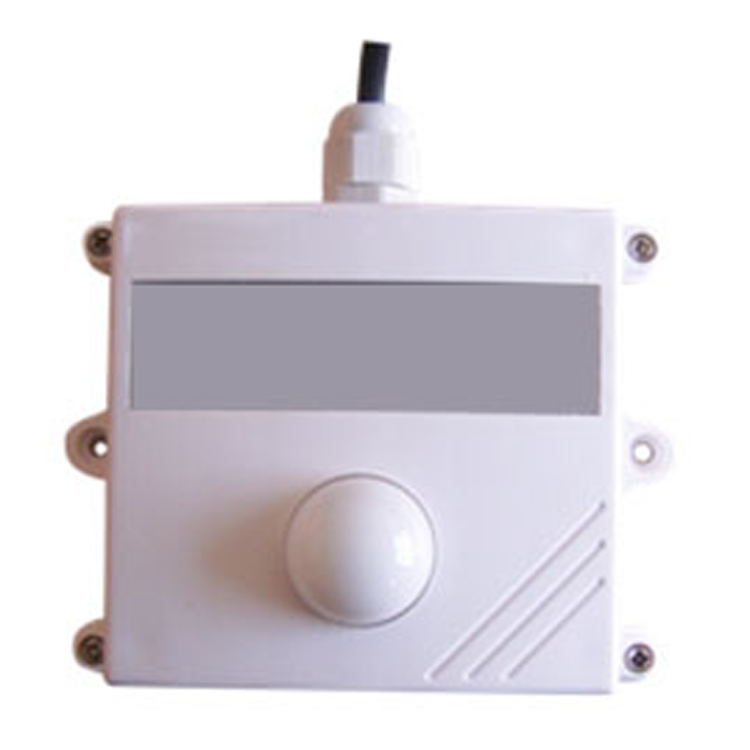
Lux sensor for illuminance, not PPFD.
The NBL-W-LUX illuminance sensor measures lux. It can support daylight or brightness monitoring, but it is not a PPFD instrument. Its current product page lists a 0–80% RH operating range, so persistent condensation or higher greenhouse humidity also needs attention when selecting a configuration.
Put comparable quantities in the quotation
Ask each supplier to return the following information against the same application:
| Purchase requirement | Evidence to request | Why it changes the comparison |
|---|---|---|
| Measured quantity and unit | Lux, PPFD or radiant power, with the output register/scaling | A label such as “light intensity” is not enough |
| Wavelength band | Spectral-response curve and calibration basis | Conventional PPFD and far-red-inclusive measurements are not the same quantity |
| Actual LED source | Fixture spectrum at the intended channel mix and dimming settings | A daylight calibration or broad lamp category may not describe narrow-band LEDs |
| Measurement plane | Height, orientation and grid positions | Different geometry can overwhelm small sensor differences |
| Performance under that source | Relevant calibration/reference comparison and uncertainty | Resolution alone does not establish accuracy |
| Environmental suitability | Temperature, humidity and condensation limitations | A suitable optical response does not ensure suitable exposure |
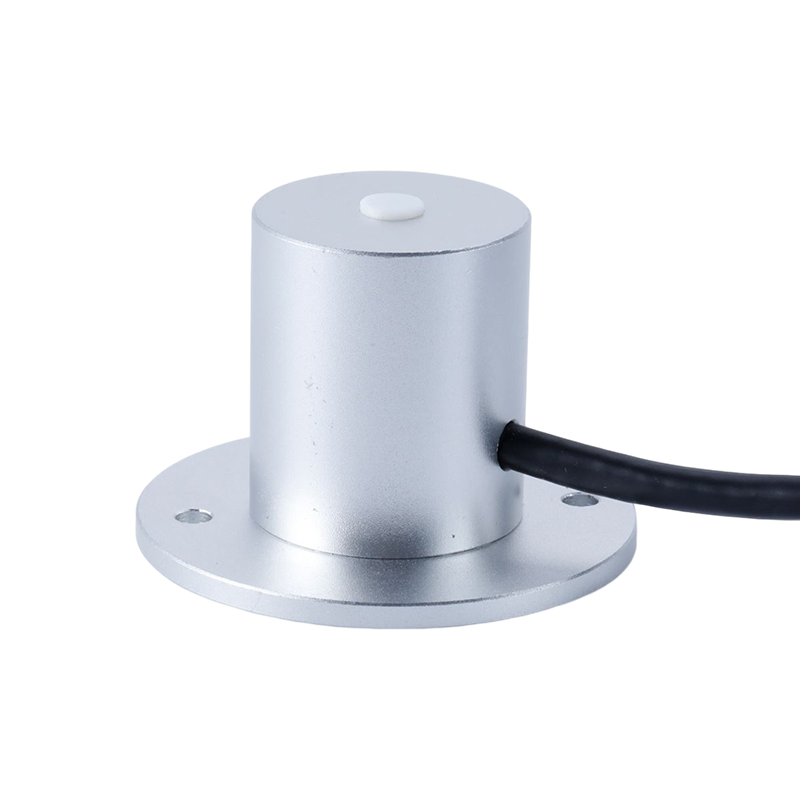
NBL-W-PARS sensor; output quantity needs configuration-specific documentation.
The NBL-W-PARS product page identifies a 400–700 nm response, but its published table combines a W/m² measuring range with photon-flux sensitivity units. Those are different quantities. For a PPFD procurement, obtain a configuration-specific photon-output specification and calibration record before accepting it for DLI control. This article does not assign a PPFD range, accuracy or LED spectral-error rating to that product.
Test the proposed conversion under your actual LEDs
If a system must retain a lux channel, establish any conversion as a local measurement relationship:
- Use a suitable calibrated quantum reference and the candidate lux sensor on the same measurement plane. Sample the same positions sequentially under stable lighting, or swap adjacent positions to check spatial gradients.
- Record both instruments' readings, fixture settings, height, orientation and temperature. Allow the lights and instruments to stabilize.
- Repeat across the channel mixes and dimming states actually used. Dimming does not necessarily change spectral distribution, but independently controlled channels or some driver strategies can; test rather than assume.
- Calculate PPFD/lux for each state and examine the spread against the project's allowed uncertainty. Do not treat a noisy near-dark ratio as a useful calibration point.
- Check the relationship again after a material change to fixtures, optics or operating recipe. Retain the paired measurements, not just a single fitted factor.
A changing lux/PPFD ratio is evidence to investigate. It does not by itself distinguish a spectral change from sensor drift, spectral mismatch, shadowing or a position difference.
Keep irradiance and weather-station light channels separate
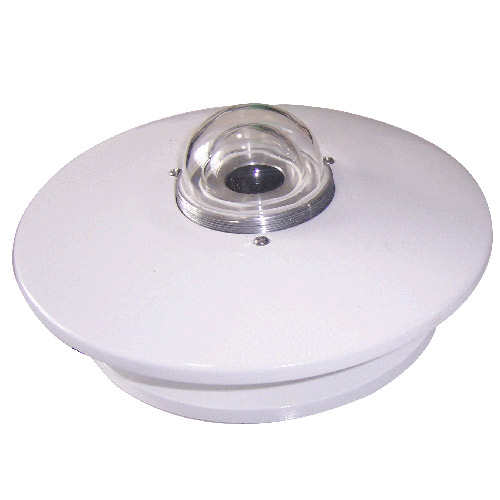
Solar radiation sensor for irradiance in W/m², not direct PPFD.
The solar radiation sensor is for solar irradiance in W/m², not a direct count of photosynthetic photons. A broadband energy measurement cannot be converted to PPFD for arbitrary LEDs without spectral information.
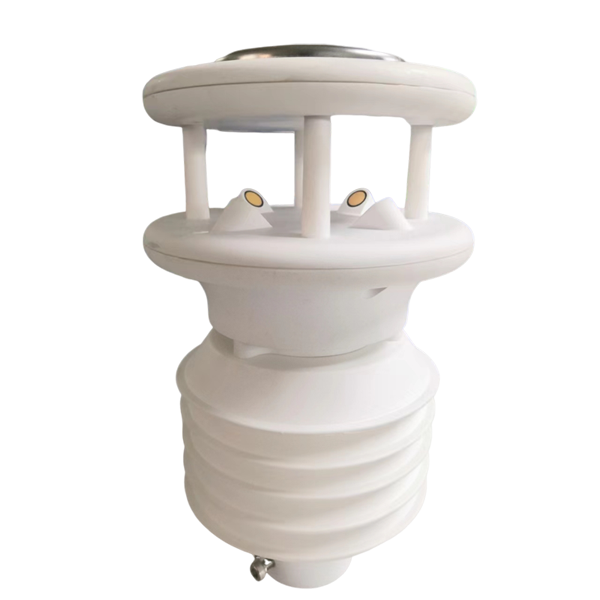
Weather sensor with a selectable irradiance or illuminance channel.
The NBL-W-71GUWS weather sensor offers solar radiation or illuminance as alternative seventh parameters. Neither choice makes it a dedicated PPFD channel. Keep an outdoor weather measurement separate from the crop-plane LED measurement rather than comparing the two as equivalent light meters.
Calculate DLI from measured photon flux, not brightness
For constant PPFD, DLI = PPFD × illuminated hours × 3600 / 1,000,000. With an assumed, independently measured PPFD of 300 μmol/m²/s maintained for 14 hours, the daily total is 15.12 mol/m²/day. The assumed values illustrate the unit conversion; they are not a crop recommendation or a NiuBoL test result.
For changing daylight, dimming or mixed illumination, integrate the time series: DLI = Σ(PPFDmean,i × Δti) / 1,000,000, with each interval duration in seconds. Use interval-mean photon flux or a sampling scheme adequate to capture changes. Apogee's DLI guidance explains why light accumulated over the day differs from an instantaneous reading.
Do not silently fill a logging gap with zero or a last-held value. Flag incomplete days and report the integration coverage. A correct DLI calculation cannot repair an unverified lux-to-PPFD conversion.
FAQ
Q1. Can a published white-LED conversion cover every fixture?
No. It may be useful as an estimate for a defined spectrum, but it is not an acceptance basis for all white, red/blue or multi-channel LEDs. Use the actual spectral distribution or a paired quantum-reference test.
Q2. Does measuring a wider band always give a higher PPFD?
Not as a general cross-instrument claim. Extending an otherwise identical photon integral adds any photons present in the extra band, but different sensors also have different responses and calibrations. State the band and compare like quantities.
Q3. Must every sensor be recalibrated annually?
There is no universal interval for all instruments and exposures. Follow the instrument's calibration guidance and establish checks from required uncertainty, observed drift and maintenance history.
Buy the measurement, then validate the conversion
The purchase decision is not simply lux versus a product labeled PAR. It is whether the supplied configuration produces a documented photon measurement under the intended LEDs. A full-spectrum or paired-reference comparison supplies that evidence; a red-to-blue ratio and a generic factor do not.
For a grow-light inquiry, provide:
- Fixture model, spectrum or spectral power distribution, and channel/dimming recipes.
- Crop-plane height and measurement grid, expected PPFD and photoperiod.
- Required wavelength band, accuracy target and reference instrument.
- Greenhouse humidity/condensation exposure, output interface and DLI logging requirements.
Contact NiuBoL with this specification to discuss the appropriate measurement type and the configuration documents needed before purchase.









