







A free chlorine sensor supplies a concentration reading, not proof of disinfection. CT assessment must pair the correct disinfectant residual with an effective hydraulic contact time for the treatment segment, then apply the relevant organism-, temperature- and pH-dependent requirements. A larger CT number alone does not establish safe water or treatment compliance.
The focus here is the CT record and its clock. For low-range instrument performance and sampling-panel selection, use the separate residual chlorine sensor selection guide.
Define the treatment segment before starting the clock
Identify where the disinfectant is applied, where the residual is sampled and which water actually passes between those points. The theoretical detention time, volume divided by flow, assumes a hydraulic behavior that a real basin may not achieve. Short-circuiting, water-level changes and bypasses can reduce useful contact time.
T10 is the contact-time measure for which 90% of the water has at least that detention time. It is not the average residence time or a guarantee about every water parcel. Establish it through an appropriate tracer study or an accepted hydraulic assessment; a baffling factor used to estimate T10 must be justified for the actual installation and flow conditions.
The EPA disinfection profiling and benchmarking manual sets out the distinction between theoretical detention and effective contact time, and the need to identify disinfection segments. Its method must be applied within the relevant jurisdiction's requirements, not treated as a universal operating permit.
A hydraulic example, without an invented pass threshold
Assume a segment contains 120 m³ of water and carries 6 m³/min. For arithmetic only, assume a baffling factor of 0.50. This example factor is not a recommendation for an untested tank. Also assume a validated free-chlorine residual of 0.50 mg/L as Cl₂ at the segment's designated residual point.
| Quantity | Hypothetical calculation | Result |
|---|---|---|
| Theoretical detention time | 120 m³ / 6 m³/min | 20 min |
| Effective time estimate | 20 min × 0.50 | 10 min |
| Calculated free-chlorine CT | 0.50 mg/L × 10 min | 5.0 mg·min/L |
Using 20 minutes directly would produce 10 mg·min/L, twice the example's effective-time result. Neither number is declared a pass: the applicable required CT has not been supplied. The operator needs the approved disinfectant-specific assessment, target organism and inactivation requirement, water temperature, pH and operating conditions before assessing performance.
Use an actual measured residual appropriate to the calculation method, not the applied dose or an assumed initial concentration. Chlorine demand and decay mean dose and residual are not interchangeable. An approved endpoint-residual method can account conservatively for decay within its assumptions; arbitrary concentration-times-duration multiplication cannot.
Free and total chlorine belong to different calculations
For ordinary chlorinated water, free chlorine includes HOCl and OCl⁻; total chlorine includes free and combined chlorine. If paired, suitable methods report total chlorine at 2.0 mg/L and free chlorine at 0.2 mg/L on the same Cl₂-equivalent basis, the combined fraction is 1.8 mg/L by difference. That difference also inherits measurement uncertainty.
At the example's assumed 10-minute effective time, the free-chlorine CT is 0.2 × 10 = 2.0 mg·min/L. Substituting total chlorine would give a numerical product of 20 mg·min/L, but it would not be a valid free-chlorine CT. Do not multiply combined chlorine by an arbitrary factor and add it as free-chlorine-equivalent credit.
Chloramines can be evaluated using appropriate chloramine-specific CT methods. CT does not cease to apply simply because the disinfectant is not free chlorine. Health Canada's discussion of virus inactivation distinguishes disinfectant-specific performance and the much larger exposures chloramines may require. Results cannot be transferred between disinfectants or organisms using one universal coefficient.
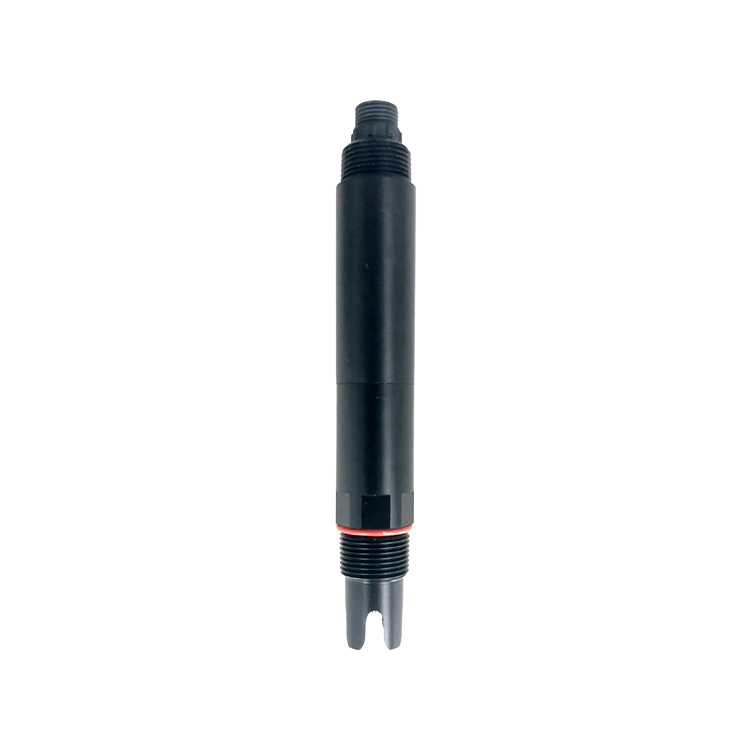
NBL-WQ-CL chlorine probe; its documented target is HOCl, not automatically total free chlorine.
The current NBL-WQ-CL product page identifies hypochlorous acid as the measured parameter. Do not label its HOCl output as free chlorine in mg/L as Cl₂ without a documented measurement/reporting basis and validation for the water conditions. The word “residual” in a product name does not resolve that distinction.
Sample-line delay is a measurement delay
A side-stream analyzer receives a sample later than the instant it left the process. For an assumed 2 L sample-line volume and 0.50 L/min flow, nominal transport delay is 2 / 0.50 = 4 minutes, before analyzer response is considered. Track actual flow and examine the sample path; stagnant pockets and poor turnover can make the delay worse.
Do not add those four minutes to the treatment basin's T10. The main treated flow does not travel through the analyzer tubing. In the example, the effective process time stays 10 minutes, not 14. A downstream main-flow pipe can contribute contact time only when it belongs to the accepted process segment and its hydraulics are properly assessed; it is not the same as a sample tube.
Chlorine may also decay in the sample line. Compare a prompt reference measurement taken at the process sampling point with the analyzer result, accounting for timing, and investigate tubing condition and sample turnover. Do not invent a constant decay correction. Retain process-sample time, analyzer time, sample flow, response behavior and the method used to align the records.
Keep supporting measurements in their proper role
pH changes the HOCl/OCl⁻ balance and affects free-chlorine disinfection assessment. Temperature affects the applicable CT requirements as well as measurement behavior. Log these with the residual and flow information. Automatic temperature compensation in a sensor does not establish the required CT or correct every pH-dependent response.
Turbidity is relevant to treatment-condition review, but it neither measures chlorine concentration nor establishes hydraulic time. The NBL-WQ-TS turbidity sensor is a separate measurement channel.
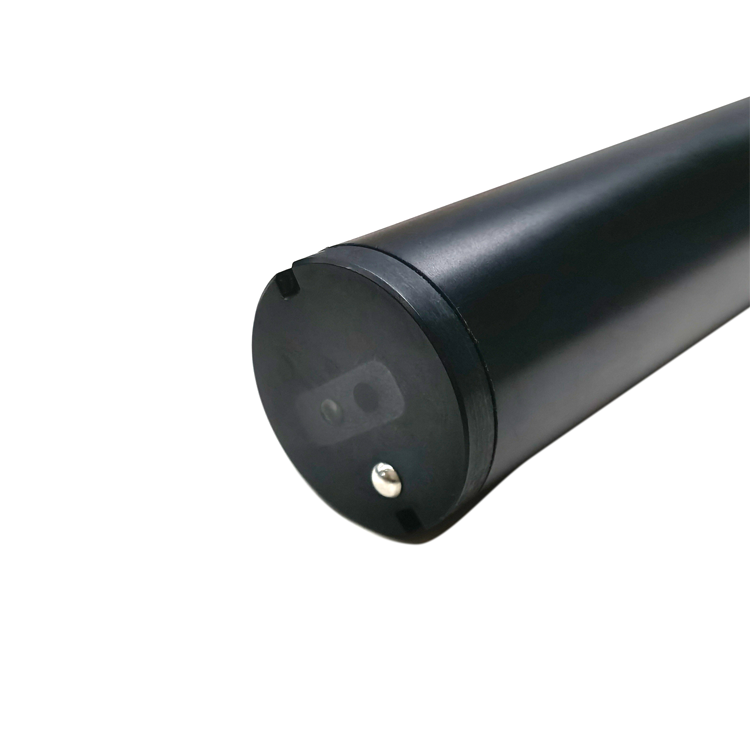
Turbidity probe optical face; turbidity does not supply a chlorine CT value.
Conductivity can support a properly designed, permitted hydraulic tracer study when the method suits the system. An ordinary operating EC value is not a contact-time measurement. The NBL-WQ-EC is a conductivity instrument, not a chlorine analyzer.
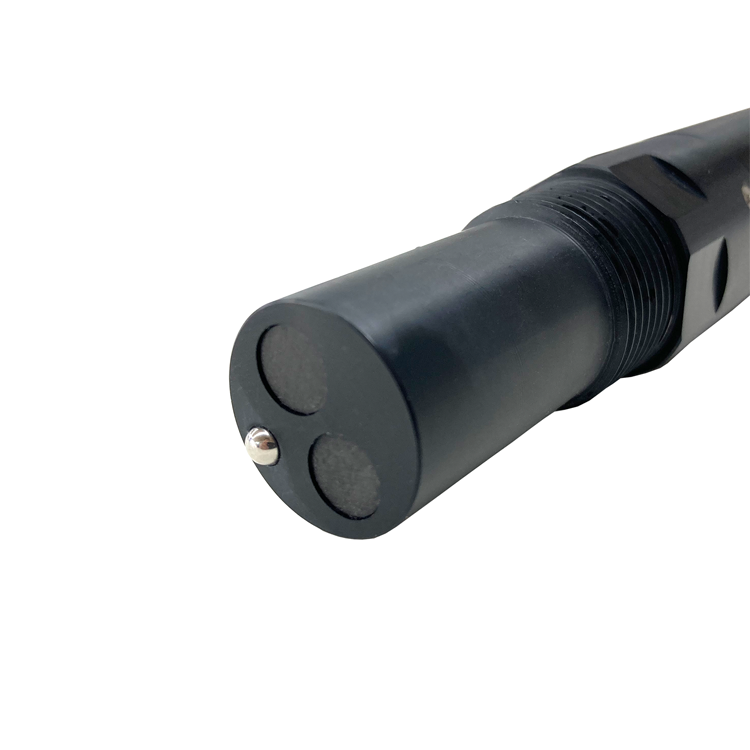
Conductivity probe sensing end; a tracer study requires a defined procedure and time-series analysis.
An ORP signal is likewise not a substitute for the specified chlorine residual. ORP is an electrode potential influenced by water chemistry; there is no universal conversion from millivolts to chlorine mg/L. YSI's chlorine-disinfection instrumentation discussion distinguishes these measurement roles.
FAQ
Q1. Does holding 0.5 mg/L for a nominal half hour prove disinfection?
No. Establish what disinfectant was measured, its reporting basis and the effective hydraulic time, then apply the appropriate performance requirements. A clock setting is not a hydraulic study.
Q2. Can total chlorine be used in a free-chlorine CT table?
No. Use the residual and method appropriate to the actual disinfectant. Chloramine processes need their own applicable assessment rather than a free-chlorine conversion factor.
Q3. Should analyzer delay be ignored?
No. Account for it in measurement timestamps and investigate residual loss in the sample path. Do not claim it as additional treatment contact time.
Make the CT record reproducible
A defensible record links the residual's chemical and reporting basis, its sampling point and time, the effective hydraulic time and the applicable assessment conditions. It does not replace missing hydraulic evidence with a larger nominal residence time, or missing free chlorine with total chlorine.
For a monitoring enquiry, provide:
- Disinfectant type, required residual/reporting basis and designated sampling point.
- Effective-time study or accepted hydraulic assessment, operating flows and water levels.
- pH/temperature range, sample-line volume and flow, and reference-check records.
Contact NiuBoL to discuss measurement equipment and integration details. The responsible water-treatment professional must establish treatment requirements and assess disinfection performance.









