





— Blogs —
—Products—
 Consumer hotline +8618073152920
 WhatsApp:+8615367865107
Address:Room 102, District D, Houhu Industrial Park, Yuelu District, Changsha City, Hunan Province, China
Product knowledge
Time:2026-07-22 12:11:41 Popularity:244
An online water analyzer and a multiparameter probe are not the same purchase. Analyzer cabinets can include sample handling and more complex measurement modules, while probes are compact sensors installed directly in water or a flow cell.
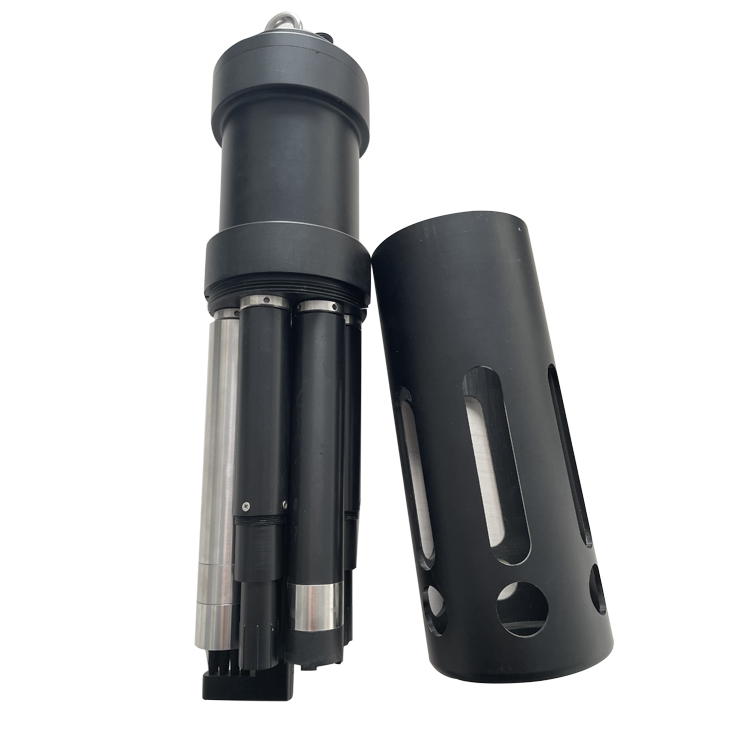
The right choice depends on parameter type, maintenance staff, site space, budget, data objective and whether the project needs a cabinet-level analyzer or a field probe network.
This article helps project teams decide between an analyzer cabinet, a field probe package and a mixed architecture before they request a quotation.
Start by defining the decision made from the measurement. A treatment plant may need process control, an aquaculture farm may need early warning, and an environmental station may need continuous records. These objectives require different accessories and acceptance checks.
A useful purchase document avoids vague phrases. It states the water type, measuring point, expected range, output interface, power condition, installation method and maintenance responsibility.
| Project question | Why it matters |
|---|---|
| What water is measured? | Clean water, seawater, wastewater and aquaculture water have different range and fouling needs. |
| Who uses the data? | Operators, regulators, farm managers and engineers need different alarm and record formats. |
| Where is it installed? | Pipe, tank, pond, river, buoy and cabinet installations change mounting accessories. |
| How is data collected? | PLC, RTU, gateway, display and cloud platform require different output planning. |
This online water analyzer solution is suitable when the project needs online records, stable field installation and integration with a control or data acquisition system. It is not the right choice when the buyer only needs a one-time laboratory result or where no maintenance access can be provided.
For remote or unattended projects, the quotation should include cleaning, calibration and spare part planning. For staffed process sites, simpler mounting may be acceptable if operators can inspect the sensor regularly.

| Technical item | Verified value or project note |
|---|---|
| Dissolved oxygen | 0 to 20 mg/L, +/-2%, 0.01 mg/L |
| pH | 0 to 14 pH, +/-0.1 pH, 0.01 pH |
| Turbidity | 0 to 100 NTU or 0 to 1000 NTU by configuration |
| Conductivity and salinity | 0 to 5000 uS/cm, 0 to 200 mS/cm, 0 to 70 PSU options |
| ORP | -1500 mV to +1500 mV, +/-6 mV |
| COD option | 0 to 200 or 0 to 500 mg/L equivalent KHP |
| Output | RS485 Modbus RTU for online integration |
| Project value | Fewer cables, fewer openings and optional self-cleaning for stations and buoys |
Range and accuracy must be read together. A larger range does not automatically make a better instrument. The useful range is the one that covers real process variation while preserving enough resolution for the normal operating band.
RS485 Modbus RTU output is valuable for multi-point stations because it reduces wiring and provides digital values to PLC, RTU or IoT gateways. For older control cabinets, analog conversion or controller output may still be required.
Field environment challenge: Water quality changes with feeding, aeration, algae and water exchange.
System integration plan: Combine online sensors with gateway alarms and scheduled calibration.
User value: Gives farm managers earlier warning and reduces manual test gaps.
Field environment challenge: Influent and effluent conditions can change quickly and foul probes.
System integration plan: Install sensors at representative process points and integrate values into PLC or SCADA.

User value: Supports process adjustment, trend review and discharge risk control.
Field environment challenge: Remote rivers and reservoirs face power, fouling and communication limits.
System integration plan: Use RS485 sensors with RTU or solar station and a realistic cleaning interval.
User value: Creates continuous records for environmental assessment.
Field environment challenge: Repeat orders need consistent wiring, documents and packaging.
System integration plan: Standardize model, cable, output and spare parts across batches.
User value: Improves installation repeatability and after-sales response.
Price is shaped by the sensor configuration, cable length, controller or gateway, mounting accessories, calibration supplies, documents and delivery quantity. A complete quote should separate these items so the buyer can compare equivalent scopes.
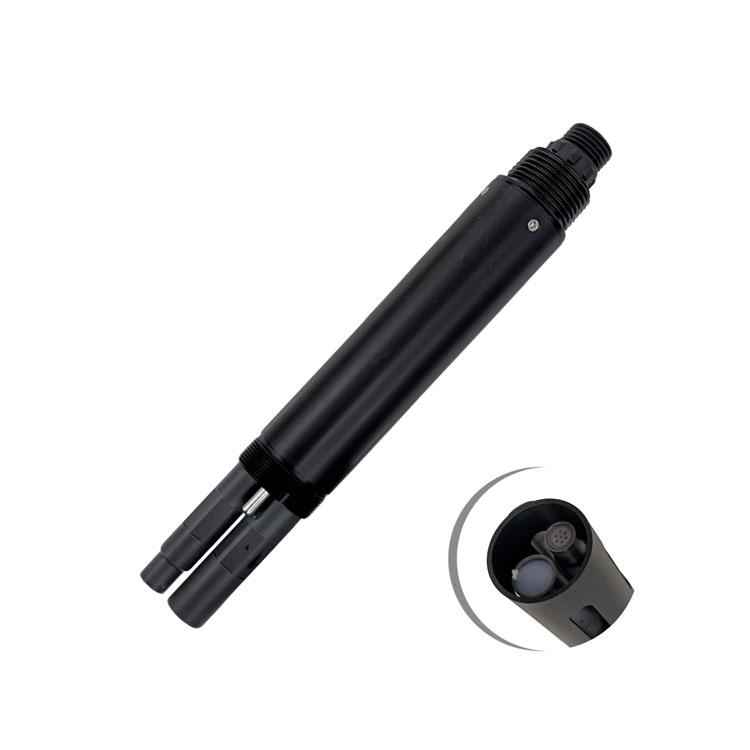
The lowest unit price is not always the lowest project cost. Commissioning delays, missing communication documents, wrong range or poor mounting can cost more than the initial saving.
| Selection factor | Recommended action |
|---|---|
| Range | Base it on historical water data or expected process extremes. |
| Output | Confirm RS485 register map, analog requirement or gateway protocol. |
| Installation | Check flow, depth, bubbles, fouling and maintenance access. |
| Calibration | Define standard, interval and responsible team before acceptance. |
| Documents | Request manual, wiring, Modbus map and packing list with model number. |
| Check | Engineering note |
|---|---|
| 1 | A multiparameter probe simplifies installation, but the project still needs separate calibration records for each parameter. |
| 2 | Use RS485 addressing and cable planning carefully when several probes share one bus at a station, buoy or cabinet. |
| 3 | For self-cleaning versions, include wiper inspection and replacement in the maintenance plan instead of assuming the station is maintenance-free. |
| 4 | Check which parameters are essential for the objective and which are optional; too many parameters can increase cost without improving decisions. |
| RFQ field | Why it changes selection or quote |
|---|---|
| Water type and range | Determines sensor model and whether the quoted range is useful. |
| Point quantity | Affects bus address planning, cable, controller and spare ratio. |
| Output interface | PLC, gateway, recorder or display requirements change configuration. |
| Installation drawing | Mounting hardware cannot be selected accurately without site structure. |
| Maintenance scope | Cleaning tools, calibration liquid and spare parts affect yearly cost. |
For serious procurement, ask the supplier to mark what is included and what is excluded. This avoids disputes about controllers, gateways, calibration supplies, mounting parts and freight packaging after the purchase order is issued.
A good engineering specification also states the acceptance method. Without a defined comparison sample, calibration standard and communication test, the buyer may receive hardware that is technically correct but difficult to approve on site.
Analyzer cabinets are useful when the measurement requires sample conditioning, reagent handling, larger instruments or a protected indoor-style environment. Multiparameter probes are useful when the site needs compact immersion, fewer cables and fast deployment at rivers, ponds, buoys or tanks.
The wrong choice usually comes from copying another project. A plant with technicians and sample lines may handle an analyzer cabinet well. A remote station with solar power and limited maintenance may be better served by a digital probe package.
| Decision factor | Analyzer cabinet | Multiparameter probe |
|---|---|---|
| Installation space | Needs cabinet and sample path | Compact immersion or flow cell |
| Maintenance | May need reagent or sample-line work | Needs probe cleaning and calibration |
| Parameter flexibility | Can support complex analysis | Good for field parameters in one body |
| Remote deployment | More demanding | Often easier for stations and buoys |
If the buyer is unsure which system form is right, the RFQ should describe the water, parameters, site space, power, communication, maintenance staff and reporting purpose. NiuBoL can then recommend whether separate sensors, a multiparameter probe or a more complete analyzer-style system is more practical.
The maintenance team should be consulted before purchase. A sophisticated analyzer may fail as a project choice if no one can handle sample lines, reagents or cabinet maintenance. A field probe may also fail if no one can clean and calibrate it. The right answer depends on local capability.
For public tenders, avoid naming only the instrument form. State the measurement objective, parameter list, range, installation environment and output requirement. This allows suppliers to offer a defensible system rather than forcing every offer into the same unsuitable shape.
For a remote river or reservoir, the simpler field probe often wins because power, maintenance and cabinet protection are limited. For a plant laboratory building or controlled sampling room, an analyzer cabinet may be easier to service and protect.
The buyer should also define whether downtime of one parameter can stop the whole station. If independent replacement is important, separate sensors may be preferred. If compact deployment is more important, a multiparameter probe may be the better system choice.
Choose an analyzer cabinet when the method, sample handling or site practice requires a protected instrument environment. Choose a multiparameter probe when the project needs compact installation, fewer cables, direct immersion and lower station complexity. Many projects use both: cabinet analyzers for selected compliance-related parameters and digital probes for field conditions.
The wrong choice usually appears after handover. A cabinet without maintenance staff becomes a burden. A probe installed where a sample line would have been cleaner becomes a fouling problem. The decision should be made from maintenance ability, not only measurement names.
| If this is true | Start with this option |
|---|---|
| Remote site with solar power | Multiparameter probe or separate low-power digital sensors. |
| Plant has sample room and trained staff | Analyzer cabinet may be practical. |
| Several field parameters at one location | Multiparameter probe reduces cable and mounting work. |
| Parameter requires complex analysis | Analyzer system or dedicated analyzer should be evaluated. |
For an analyzer cabinet, acceptance should check sample flow, drainage, reagent or method condition, output scaling and maintenance access. For a multiparameter probe, acceptance should check immersion depth, cleaning access, Modbus data, each parameter calibration record and whether the mounting point represents the water body.
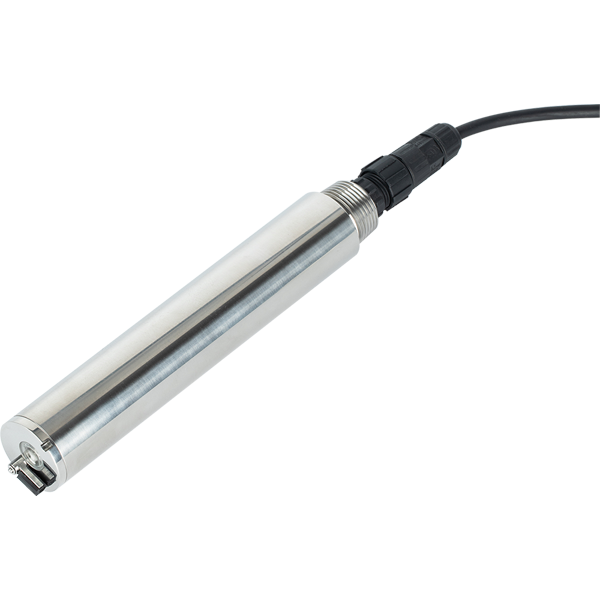
A: An analyzer usually works as a cabinet or instrument system with sample handling. A multiparameter probe is a compact sensor assembly installed in water or a flow cell.
A: Choose it when the method needs protected installation, sample conditioning, reagent handling or plant technicians can maintain the instrument regularly.
A: Choose it for rivers, ponds, buoys, tanks and remote stations where compact installation, low wiring burden and direct RS485 data are more important.
A: Yes. A plant may use analyzer systems for selected parameters and digital probes for pH, DO, EC, turbidity or field station data.
A: Neither is automatically lower. Analyzer cabinets may need sample-line or reagent work. Probes need cleaning and calibration. The better option matches local maintenance ability.
A: State parameters, measuring ranges, water type, site space, power, communication, maintenance staff, reporting purpose and whether sample lines are available.
A: It is wrong when the parameter requires a method that cannot be handled by direct immersion or when fouling and maintenance access make field readings unreliable.
Confirm the measurement purpose, installation environment, signal output, power supply, cable route, data platform, maintenance access, and acceptance record. These details help the project team avoid field changes after procurement.
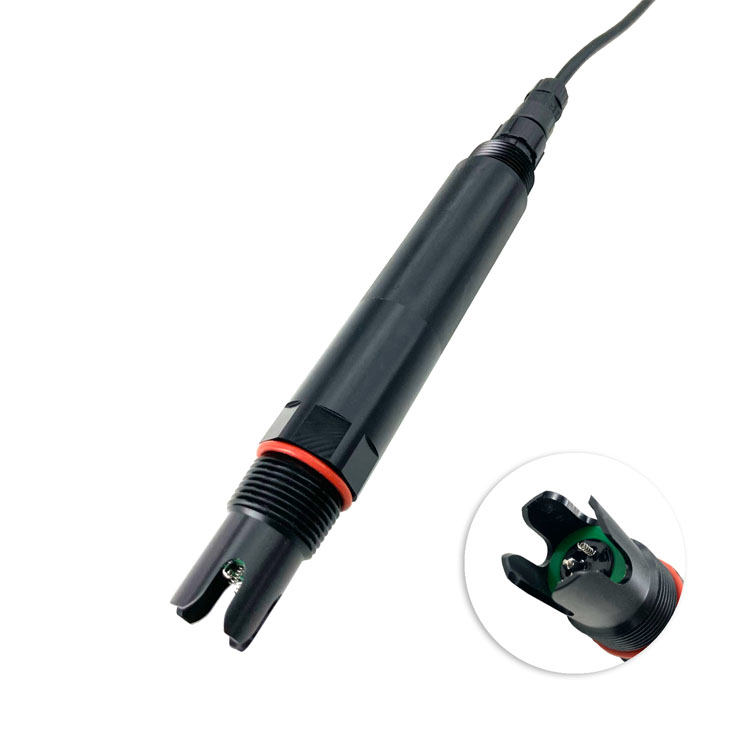
Online Water Analyzer vs Multiparameter Probe: Which System Should You Buy? should be approached as an engineering selection task. NiuBoL water quality sensors provide RS485 Modbus RTU integration, IP68 field construction and product options for pH, DO, EC/TDS, salinity, turbidity, TSS, COD, ammonia nitrogen and multiparameter stations. Buyers get better quotes when they define range, site, output, installation and maintenance scope before ordering.
Prev:Online Monitoring System for STP: Sensor List, Installation Points and Budget
Next:Multi Parameter Water Quality Meter vs Single-Parameter Sensors
Related recommendations
Sensors & Weather Stations Catalog
 Agriculture Sensors and Weather Stations Catalog-NiuBoL.pdf
Weather Stations Catalog-NiuBoL.pdf
Agriculture Sensors Catalog-NiuBoL.pdf
Water Quality Sensor Catalog-NiuBoL.pdf
Related products
 Combined air temperature and relative humidity sensor
 TDR Soil Moisture & Temperature Sensor for irrigation| RS485 |4-20mA| NBL-S-THR
 Soil pH sensor RS485 soil Testing instrument soil ph meter for agriculture |NBL-S-PH
 Wind Speed sensor Output Modbus/RS485/Analog/0-5V/4-20mA
 Tipping bucket rain gauge for weather monitoring auto rainfall sensor RS485/Outdoor/stainless steel
 Pyranometer Solar Radiation Sensor 4-20mA/RS485

Screenshot, WhatsApp to identify the QR code
WhatsApp number:+8615367865107
(Click on WhatsApp to copy and add friends)

