





— Blogs —
—Products—
 Consumer hotline +8618073152920
 WhatsApp:+8615367865107
Address:Room 102, District D, Houhu Industrial Park, Yuelu District, Changsha City, Hunan Province, China
Product knowledge
Time:2026-06-16 14:17:58 Popularity:238
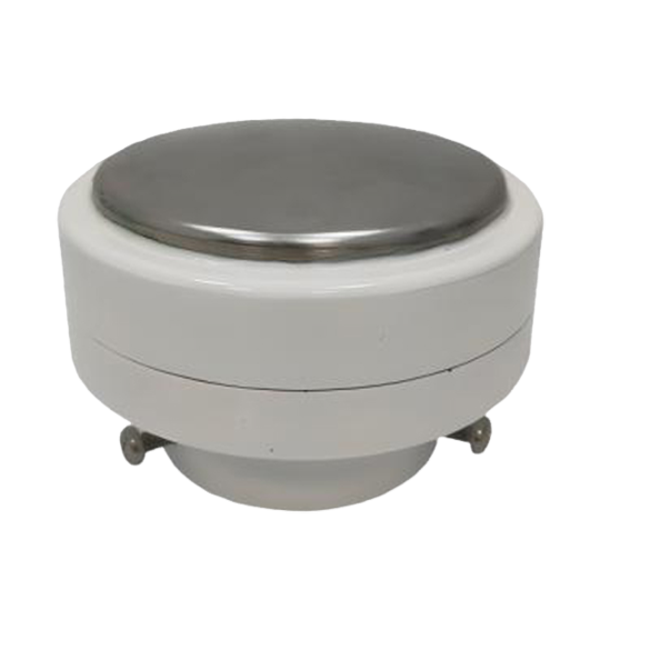
A piezoelectric rain gauge measures rainfall through the impact energy of raindrops rather than a tipping bucket mechanism. It is suitable for agricultural irrigation, meteorological stations, disaster warning and unattended rainfall monitoring projects.
Rainfall affects water level, irrigation demand, crop growth, flood risk and weather-service decisions. Timely rainfall data helps operators judge when to irrigate, when to alert and how rainfall changes across a site.
Traditional mechanical rain gauges can be affected by moving parts, blockage, leaves or freezing protection needs. A piezoelectric design has no mechanical moving parts and can detect rainfall start and end more quickly in many field applications.
The NBL-W-PRS reference sensor uses piezoelectric ceramic kinetic measurement. When raindrops hit the sensing surface, the impact is used to estimate drop weight and calculate rainfall amount.
The curved surface with anti-fouling coating supports self-cleaning. Because there are no exposed moving parts, the device is suitable for remote monitoring stations where frequent manual maintenance is difficult.
The sensor should be installed on the top of a pole rather than on a side arm that can vibrate. It should be above 500 mm from the ground, in an open area without obstruction, away from vibration sources and high-power electromagnetic interference.
Cable routing should be fixed and protected. Loose hanging cables can move in wind and create installation problems. The pole and bracket should avoid holes that form wind noise or vibration.
| Item | Engineering Reference |
|---|---|
| Model | NBL-W-PRS |
| Measurement principle | Piezoelectric ceramic kinetic rainfall measurement |
| Power supply | DC 12 to 24 V |
| Output | RS485 Modbus |
| Measurement range | 0 to 8 mm/min |
| Accuracy | +/-4% for daily accumulated rainfall |
| Resolution | 0.01 mm |
| Power consumption | Average current<5 mA at 12 V |
| Working environment | -40 to 80 degC, 0 to 100% RH |
| Protection rating | IP66 |
| Installation | Pole top fixing, integrated base box or concrete foundation |
| Maintenance feature | No mechanical moving parts, self-cleaning curved surface |
Site environment challenge: Irrigation scheduling needs real rainfall data rather than regional estimates.
System integration scheme: Install RS485 piezoelectric rain gauges in representative fields.
User value delivered: Growers adjust irrigation and reduce unnecessary watering.
Site environment challenge: Rainfall must be measured continuously with low maintenance.
System integration scheme: Integrate the rain gauge with weather station data logger through RS485.
User value delivered: Operators get rainfall records with lower mechanical maintenance.
Site environment challenge: Rainfall intensity can change quickly in mountain or watershed areas.
System integration scheme: Use low-power rainfall sensors with remote platform upload.
User value delivered: Managers receive earlier rainfall trend information.
Site environment challenge: Drainage systems need rainfall intensity data for response.
System integration scheme: Deploy sensors at drainage zones and connect to a platform.
User value delivered: Operators compare rainfall with water-level and drainage performance.
Choose piezoelectric rain gauge where low maintenance and no moving parts are important.
Confirm measurement range of 0 to 8 mm/min and 0.01 mm resolution for the project.
Use RS485 Modbus for weather station or RTU integration.
Check IP66 protection for outdoor deployment.
Plan installation away from vibration, obstruction and electromagnetic interference.
Confirm the required signal path before purchase: sensor or device output, data logger, RTU, 4G gateway, cloud platform and any local display should be defined as one chain.
For RS485 systems, document address, baud rate, register mapping, unit conversion and grounding method during commissioning so later maintenance does not depend on one installer.
For solar-powered field equipment, review local sunlight, battery capacity, working schedule, enclosure protection and service access. A device that works in a demo may fail if energy balance and cleaning access are ignored.
Install on pole top and keep the sensing surface level and open.
Test rainfall data upload and accumulation calculation before acceptance.
Acceptance should include power supply, RS485 communication, rainfall simulation or data observation, platform display and installation inspection. The installer should record pole height, surrounding obstruction and cable routing.
Although the sensor is designed for low maintenance, field teams should still inspect the surface, bracket and cable after storms. Low maintenance does not mean no inspection.
Select it when low maintenance, no moving parts and unattended rainfall monitoring are important for agriculture, weather stations or disaster warning.
It should be installed on a pole top in an open area, away from obstruction, vibration sources and high-power electromagnetic interference.
Side arms can create vibration, which may affect rainfall impact measurement and reduce data reliability.
Acceptance should check power, communication, platform display, rainfall accumulation, installation height, cable fixing and surrounding obstruction.
The NBL-W-PRS reference range is 0 to 8 mm/min with 0.01 mm resolution.
It estimates rainfall from raindrop impact energy detected by a piezoelectric ceramic element.
Although there are no moving parts, the surface, bracket, pole and cable should be inspected after storms or severe weather.
Yes. Field rainfall data helps irrigation managers avoid unnecessary watering and understand local rainfall differences.
Obstruction, vibration, loose cables, poor mounting, nearby splashing and unsuitable installation location can affect data quality.
Provide application type, installation environment, power supply, communication method, platform needs, rainfall intensity range and maintenance access.
For a B2B project, documentation is part of the product value. The buyer should keep the product model, installation point, wiring record, communication settings, calibration or inspection method, maintenance interval and acceptance screenshots in one project file.
This documentation helps distributors, system integrators and end users discuss the same technical facts when troubleshooting or expanding the system. It also makes later procurement easier because the original design assumptions are visible.
A quotation should be compared by application fit, not only unit price. Buyers should check whether the supplier has considered the site environment, power supply, communication method, platform requirements, maintenance path and expected service life.
When two proposals use similar product names, the better proposal is usually the one that explains installation, data use and acceptance more clearly. That is the difference between buying a device and buying a usable monitoring point.
Before the piezoelectric rain gauge function guide project is accepted, the commissioning team should test power supply, equipment start-up, communication, platform display, alarm response and data storage. If the system includes solar power, battery voltage and working schedule should be checked under real field conditions.
Acceptance should include photos of the installation point, screenshots of platform data, a simple fault simulation and confirmation that the end user knows how to clean, inspect or restart the equipment. These small steps reduce later disputes between supplier, contractor and owner.
Monitoring data should be reviewed on a schedule. Daily values help operators see abnormal events, weekly trends help managers evaluate field operation, and seasonal records help the buyer decide whether more monitoring points or control devices are required.
For IoT projects, the platform should not be treated as only a display screen. It should support historical query, data export, alarm review and equipment management so the buyer can convert field measurements into practical decisions.
Every outdoor monitoring or field-control device needs a named maintenance responsibility. The owner should define who checks cables, who cleans the collection or sensing area, who reviews alarm messages and who contacts the supplier when communication fails.
For distributors and project contractors, providing a maintenance schedule improves customer trust because it shows that the system is designed for long-term operation rather than a one-time installation.
A scalable design is especially useful for agricultural parks, construction groups, scenic areas and municipal platforms because they often start with one pilot area and later copy the configuration to other sites. Clear wiring, naming and data rules make this expansion easier.
Outdoor devices are affected by rain, dust, insects, vibration, sunlight, corrosion, human interference and unstable power. The supplier should explain how the selected equipment handles these conditions, and the buyer should check whether the installation method matches the actual site.
If the monitoring point is remote, the project should also define how faults are reported and how quickly maintenance can arrive. A technically suitable product still needs an operating plan that fits the service distance.
Procurement teams often receive several quotations with similar model names but different project assumptions. A useful technical article helps them ask better questions: what is measured, where it is installed, how data is transmitted, who maintains it and what action follows an alarm.
When those questions are answered before purchase, the project is easier to approve internally and easier to implement on site. This is the practical value of writing the specification around engineering use rather than around product labels alone.
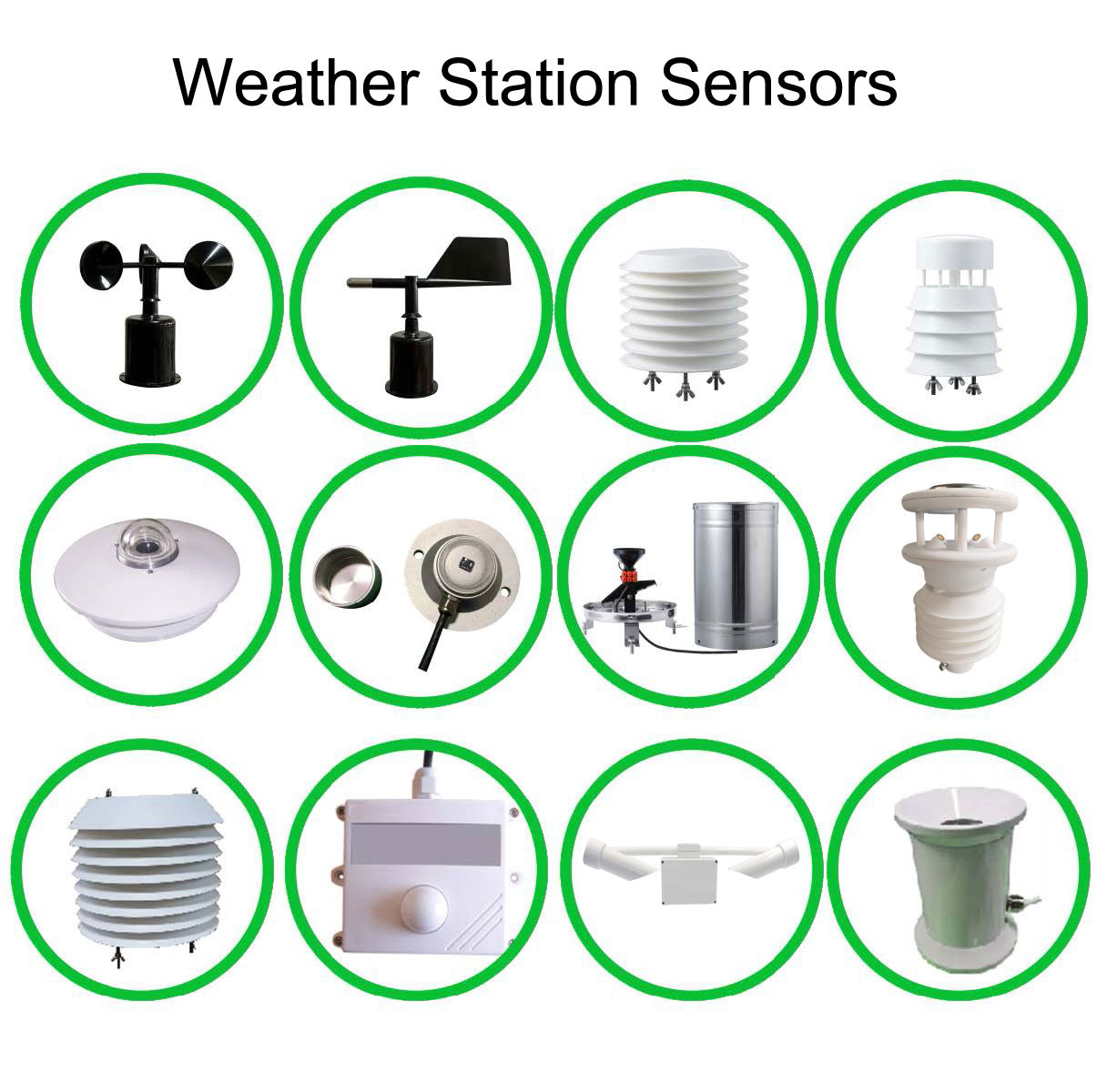
Rainfall data should be compared with nearby weather information during the first operating period. This helps the buyer confirm that installation vibration, obstruction or cable movement is not affecting the accumulated rainfall record.
A piezoelectric rain gauge is a practical choice for low-maintenance rainfall monitoring. NiuBoL NBL-W-PRS supports RS485 Modbus integration for agriculture, weather stations, hydrology and disaster warning projects.
Related recommendations
Sensors & Weather Stations Catalog
 Agriculture Sensors and Weather Stations Catalog-NiuBoL.pdf
Weather Stations Catalog-NiuBoL.pdf
Agriculture Sensors Catalog-NiuBoL.pdf
Water Quality Sensor Catalog-NiuBoL.pdf
Related products
 Combined air temperature and relative humidity sensor
 Soil Moisture Temperature sensor for irrigation|NBL-S-THR
 Soil pH sensor RS485 soil Testing instrument soil ph meter for agriculture |NBL-S-PH
 Wind Speed sensor Output Modbus/RS485/Analog/0-5V/4-20mA
 Tipping bucket rain gauge for weather monitoring auto rainfall sensor RS485/Outdoor/stainless steel
 Pyranometer Solar Radiation Sensor 4-20mA/RS485

Screenshot, WhatsApp to identify the QR code
WhatsApp number:+8615367865107
(Click on WhatsApp to copy and add friends)

