





— Blogs —
—Products—
 Consumer hotline +8618073152920
 WhatsApp:+8615367865107
Address:Room 102, District D, Houhu Industrial Park, Yuelu District, Changsha City, Hunan Province, China
Product knowledge
Time:2026-06-17 09:36:34 Popularity:248
Oil contamination in water is not only an environmental issue; it is also a project risk for wastewater discharge, petrochemical drainage, port operation, cooling water return, and surface water protection. For system integrators, the difficulty is that oil pollution often appears as a thin film, intermittent leakage, or a sudden concentration spike rather than a stable laboratory sample. An online oil-in-water sensor must therefore provide continuous measurement, fast response, reliable signal transmission, and a maintenance model that can be accepted by operators on site.
NiuBoL oil-in-water monitoring is designed for industrial procurement projects where the sensor becomes part of a wider data chain. The purchasing decision usually involves the EPC contractor, automation engineer, environmental compliance team, and instrument distributor. The key requirement is not a single reading on a display, but a repeatable measurement node that can be connected to PLC, RTU, data logger, SCADA, or an IoT platform through RS485 / Modbus RTU.
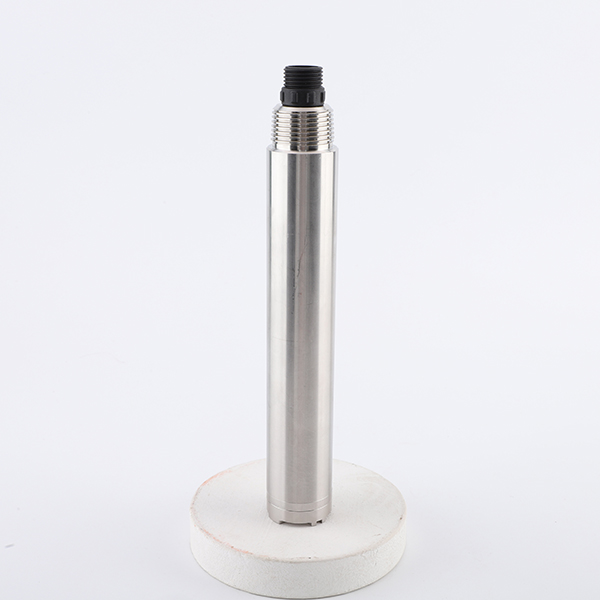
In petrochemical storage areas, machinery workshops, oilfield produced water, shipyards, municipal drainage networks, and industrial parks, oil can enter water through equipment aging, pipe leakage, cleaning water, accidental spills, or mixed runoff. A manual sampling plan may find a problem after discharge has already occurred. Online oil-in-water monitoring gives the project team an earlier signal: a trend change, an alarm threshold, or a comparison between upstream and downstream locations.
Oil film affects oxygen exchange, aquatic organisms, fish eggs, larvae, vegetation, skin contact safety, and equipment corrosion. In an engineering project, these effects translate into measurable risks: discharge non-compliance, delayed emergency response, higher treatment cost, and insufficient evidence for root-cause analysis.
The online oil-in-water sensor is installed at the sampling point or in an immersion location where representative water flow can be maintained. It sends oil concentration data to an acquisition unit by RS485 / Modbus RTU. The acquisition unit then handles local display, alarm output, historical storage, wireless transmission, or integration with an existing control system. In a complete station, oil-in-water data can be combined with pH, COD, turbidity, conductivity, water level, and flow data to judge whether a pollution event is isolated or linked to a wider process change.
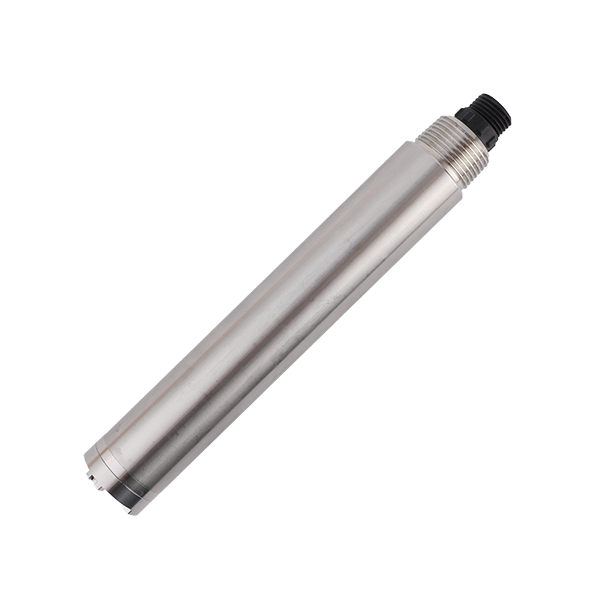
For industrial buyers, RS485 / Modbus RTU remains valuable because it is predictable, widely supported, and easy to wire across distributed monitoring points. The oil-in-water sensor can be addressed as a field device on a Modbus network, allowing the integrator to read measured value, temperature compensation status, device address, and alarm-related registers depending on the project configuration. Optional 4-20 mA output can be used where the client requires analog input to a PLC or legacy controller.
Industrial compatibility should be evaluated together with cable shielding, waterproof connectors, grounding, surge protection, power supply quality, and installation distance. The wiring reference uses 12-24 V DC power, RS485 A/B communication, and optional current output wiring, which is suitable for most environmental monitoring cabinets and station controllers.
| Parameter | Engineering Reference | Integration Note |
|---|---|---|
| Measurement principle | Fluorescence method for oil substances in water | Suitable for continuous online monitoring of petroleum-related pollutants |
| Measurement range | 0 to 40.00 mg/L | Confirm dilution or model selection for high-concentration process wastewater |
| Resolution | 0.01 mg/L | Useful for trend monitoring and early warning thresholds |
| Accuracy | ±3% of reading; temperature accuracy ±0.3°C | Use project calibration records for acceptance |
| Minimum detection | 0.4 mg/L | Supports low-level oil pollution warning |
| Response time | T90 < 30 s | Suitable for sudden spill and discharge change detection |
| Temperature compensation | Pt1000 automatic compensation | Improves stability where water temperature changes |
| Output signal | RS485 Modbus RTU; optional 4-20 mA | Compatible with PLC, RTU, data logger and SCADA |
| Power supply | 12-24 V DC | Use regulated industrial power supply in field cabinets |
| Power consumption | 0.2 W at 12 V | Suitable for low-power remote stations |
| Protection rating | IP68 | Supports immersion installation |
| Working environment | 0 to 50°C, pressure <0.2 MPa | Check process pressure before installation |
| Housing material | 316L stainless steel | Appropriate for many industrial and wastewater sites |
| Cable and connector | Shielded five-core cable, M16-5 waterproof connector | Keep joints waterproof and strain relieved |
Site challenge: Oil concentration may rise quickly during equipment cleaning, tank drainage or accidental leakage.
System integration scheme: Install oil-in-water, pH, COD and conductivity sensors at the outlet; connect all field devices to an RTU through RS485 Modbus RTU.
User value: The operator receives continuous discharge evidence and can trigger bypass, retention or treatment adjustment before non-compliant water leaves the site.
Site challenge: Thin oil film may appear on the water surface and move with wind or tide, making manual sampling inconsistent.
System integration scheme: Deploy fluorescence oil monitoring with surface water level and weather data; use alarm thresholds for patrol dispatch.
User value: The project gains faster spill recognition and clearer event records for response coordination.
Site challenge: Multiple enterprises discharge into a shared drainage line, and responsibility analysis depends on time-correlated data.
System integration scheme: Set sensors at branch outlets and main collection channels, using Modbus addresses for each monitoring point.
User value: Trend comparison helps locate abnormal discharge sources and supports evidence-based management.
Site challenge: Oil droplets, suspended solids and salinity may change treatment performance over time.
System integration scheme: Combine oil-in-water measurement with turbidity, conductivity and pressure/flow monitoring.
User value: Operations teams can adjust separation and filtration processes with less delay.
Selecting an online oil-in-water sensor should start with the expected oil type, concentration range, installation form, fouling risk, and communication interface. Fluorescence measurement is well suited to petroleum oils containing aromatic or conjugated compounds. For sites involving vegetable oil, mixed organic oil, seawater, or heavy contamination, confirm the target pollutant and calibration method before procurement. If the project requires both local control and remote reporting, choose RS485 Modbus RTU as the primary interface and keep 4-20 mA as a PLC-friendly option.
For purchasing documents, specify measurement range, detection limit, response time, housing material, protection rating, cable length, connector type, Modbus register support, calibration method, spare cleaning materials, and acceptance procedure. This prevents a common procurement problem: a sensor is technically correct but cannot be installed or verified under the actual project conditions.
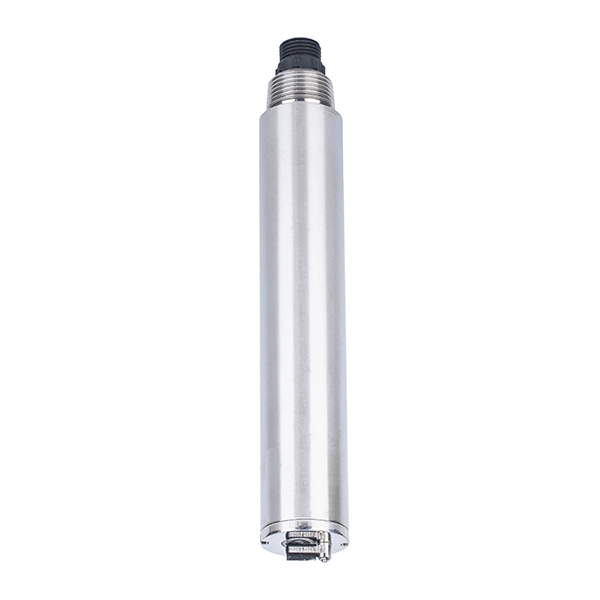
Keep the sensing window away from walls and sediment. A practical immersion layout keeps more than 2 cm clearance from the sidewall and more than 10 cm from the bottom. Avoid strong mechanical impact, cable tension, and direct contact with abrasive solids. During commissioning, use distilled water for zero calibration and a prepared standard solution for slope calibration, allowing the reading to stabilize for several minutes before saving parameters.
For Modbus wiring, use shielded cable, separate signal wiring from high-power cables, and define a unique slave address for each sensor. In outdoor stations, add lightning protection, waterproof junction boxes, and stable DC power. For long-term operation, inspect the optical window, cable seal, and connector condition as part of the maintenance schedule.
For project acceptance, the buyer should not rely only on a successful power-on test. A practical acceptance procedure includes zero calibration record, standard solution verification, Modbus communication test, alarm threshold test, platform data display, historical data export and image documentation of the installation point. If the sensor is used at a discharge outlet, the acceptance record should also identify whether the measured water is representative of normal operation or only a clean-water test.
Distributors can improve quotation quality by asking for oil type, expected concentration range, water temperature, installation depth, cable distance, controller type and whether the site requires analog output. These details help avoid underspecified orders and reduce field changes after delivery.
A: Use online sensing when the project needs continuous evidence, spill alarms, or trend records. Laboratory testing remains useful for verification, but it cannot replace real-time monitoring at discharge points.
A: It is especially suitable for petroleum-related oils with fluorescent compounds. For special oils, mixed wastewater or vegetable oil, the buyer should confirm calibration applicability with representative samples.
A: Yes. RS485 Modbus RTU is suitable for PLC, RTU and data logger integration. Optional 4-20 mA can be used where the controller only accepts analog input.
A: Choose a representative flow point, avoid stagnant corners, keep clearance from the tank wall and bottom, and prevent bubbles, sediment or wiping damage on the optical window.
A: Set thresholds according to discharge limits, background values and process risk. Many projects use warning and action levels rather than a single alarm point.
A: Regularly clean the optical window with clean water and a soft cloth, inspect cable strain and waterproof seals, and record calibration history for acceptance.
A: For direct immersion points it may not. For high solids, variable flow or difficult access locations, a sampling and flow-control arrangement can improve stability.
A: Include technical datasheet, Modbus register list, wiring diagram, calibration method, installation drawing, warranty terms and spare-part recommendations.
A: Yes. Oil-in-water can share a data acquisition unit with COD, pH, turbidity, conductivity and level sensors, provided address and power capacity are planned.
A: It links measurement principle, field installation, protocol compatibility and acceptance parameters, allowing engineers to compare the sensor against the actual discharge scenario.

An online oil-in-water sensor is a field measurement device for projects where oil pollution must be detected before it becomes a compliance or emergency response problem. For NiuBoL buyers and integrators, the practical value lies in fluorescence measurement, RS485 Modbus RTU compatibility, low-power operation, IP68 immersion protection, and clear calibration and installation procedures. When it is specified together with the correct site layout and data acquisition method, it becomes a reliable node in an industrial water quality monitoring system.
Related recommendations
Sensors & Weather Stations Catalog
 Agriculture Sensors and Weather Stations Catalog-NiuBoL.pdf
Weather Stations Catalog-NiuBoL.pdf
Agriculture Sensors Catalog-NiuBoL.pdf
Water Quality Sensor Catalog-NiuBoL.pdf
Related products
 Combined air temperature and relative humidity sensor
 Soil Moisture Temperature sensor for irrigation|NBL-S-THR
 Soil pH sensor RS485 soil Testing instrument soil ph meter for agriculture |NBL-S-PH
 Wind Speed sensor Output Modbus/RS485/Analog/0-5V/4-20mA
 Tipping bucket rain gauge for weather monitoring auto rainfall sensor RS485/Outdoor/stainless steel
 Pyranometer Solar Radiation Sensor 4-20mA/RS485

Screenshot, WhatsApp to identify the QR code
WhatsApp number:+8615367865107
(Click on WhatsApp to copy and add friends)

