





— Blogs —
—Products—
 Consumer hotline +8618073152920
 WhatsApp:+8615367865107
Address:Room 102, District D, Houhu Industrial Park, Yuelu District, Changsha City, Hunan Province, China
Product knowledge
Time:2026-06-17 09:36:34 Popularity:214
A water quality analyzer in an industrial project is not a laboratory accessory. It is a measurement layer that connects chemistry, automation, compliance reporting and maintenance planning. The buyer usually needs to answer several questions before issuing an inquiry: which parameters are mandatory, whether online measurement can replace manual inspection for routine control, how the instrument communicates with the existing platform, and how operators will maintain electrodes, reagents or optical windows after installation.
Residual chlorine measurement by electrode method and NiuBoL online water quality monitoring systems are both relevant to analyzer selection. A complete project may include a monitoring center, transmission unit, micro station and sensors. The following guide focuses on selecting a water quality analyzer package for drinking water, industrial water treatment, surface water stations and distributed water networks.
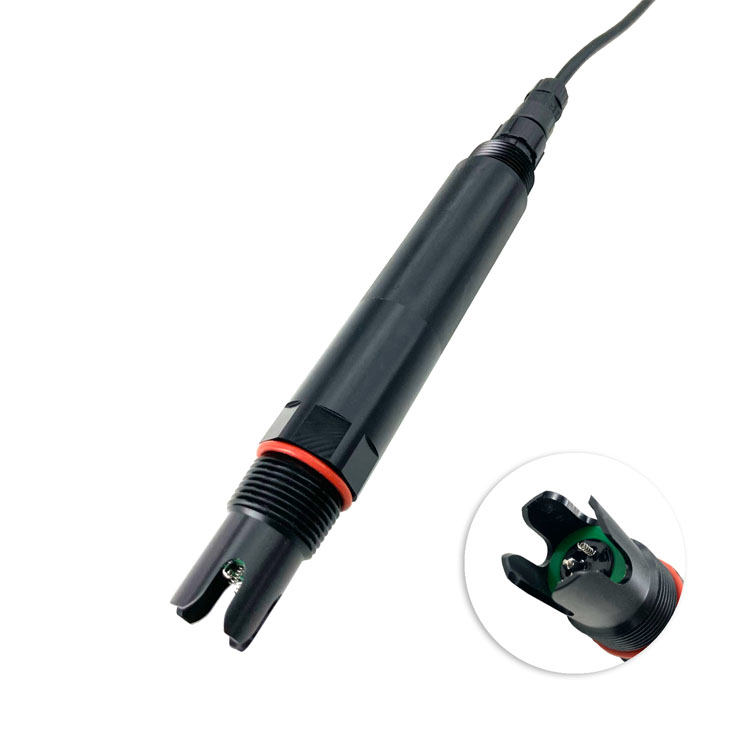
The first decision is whether the project is controlling a process, verifying discharge, protecting a water source or building a long-term environmental database. Residual chlorine is selected for disinfection control and drinking water safety. pH is selected where neutralization, corrosion risk or biological treatment stability matters. COD is selected where organic pollution and wastewater treatment load must be tracked. Conductivity is selected for salinity, dissolved ion change, leakage detection and process water classification. A multi-parameter analyzer is selected when operators need several indicators in one station rather than isolated readings.
For system integrators, a practical analyzer package should support stable signal output, clear maintenance intervals, suitable installation hardware, and data compatibility with the customer platform. A single portable reading may be useful during service visits, but online projects require repeatable measurement and remote data availability.
A typical online analyzer architecture includes field sensors, a controller or transmitter, a power supply, a sample flow path or immersion bracket, data acquisition equipment and a remote platform. The water quality analyzer does not work alone; it becomes the front-end measurement unit of the station. It may be installed at an inlet, outlet, storage tank, pipeline bypass, river section, reservoir point or aquaculture pond, depending on the monitoring purpose.
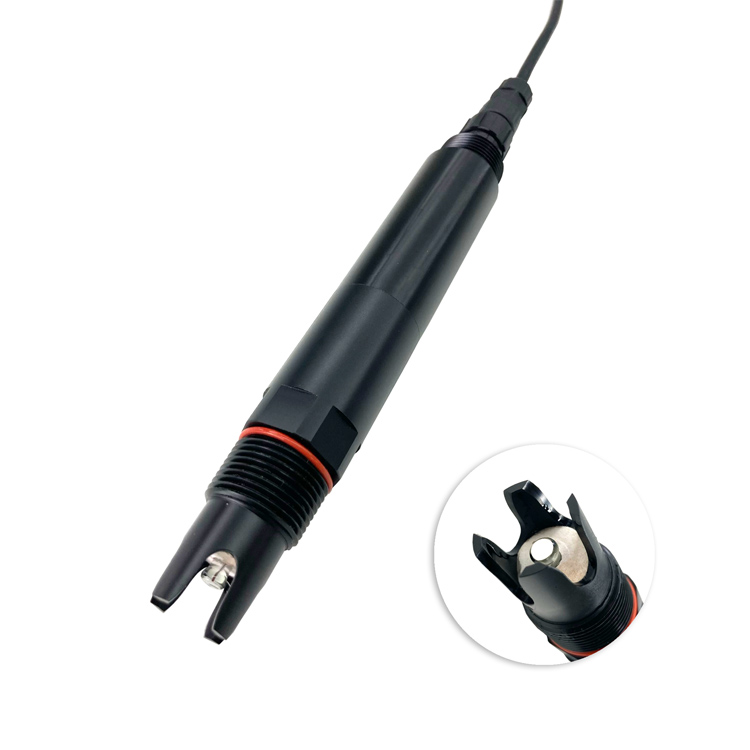
RS485 / Modbus RTU is widely used because it allows several sensors to share a bus, supports long-distance industrial wiring, and can be read by PLC, RTU, industrial computer and IoT gateways. For a water quality analyzer package, the integrator should confirm slave address setting, baud rate, parity, register map, value scaling, alarm registers and whether the controller can poll multiple parameters without data conflict. Where existing equipment uses analog inputs, 4-20 mA output can be kept as a secondary path.
| Parameter | Engineering Reference | Integration Note |
|---|---|---|
| Residual chlorine | Free or total chlorine measurement by electrode method; project range commonly selected according to disinfection process | Check pH 4-9 applicability and possible chlorine dioxide interference |
| pH | 0-14 pH measuring range; online electrode configuration | Use temperature compensation and scheduled calibration |
| COD | UV or optical online COD sensor depending on model and application | Confirm water matrix, turbidity influence and cleaning requirement |
| Conductivity | Online EC monitoring for ion concentration and salinity trend | Select range according to source water, industrial water or wastewater |
| Power supply | Common industrial DC 12-24 V or station controller supply | Use stable power and surge protection |
| Output signal | RS485 Modbus RTU; optional analog output on selected devices | Confirm register map before PLC programming |
| Protection rating | Sensor probes commonly IP68 for immersion; controller cabinet depends on design | Match enclosure to outdoor or indoor installation |
| Working temperature | Usually 0-50°C for water quality probes, subject to model datasheet | Avoid freezing, high-temperature process water and pressure beyond rating |
| Cable material | Shielded signal cable with waterproof connector for outdoor use | Separate signal cable from power cable |
| Data functions | Real-time value, historical storage, alarm and remote platform upload through station controller | Define reporting interval and retention policy in the project document |
For chlorine monitoring, specify whether free chlorine or total chlorine is required. The electrode method described in the material uses electrochemical reaction current under a fixed voltage; the current is proportional to chlorine concentration. It is suitable for online trend control where reagent-free or low-maintenance operation is preferred. For drinking water and disinfection projects, verify pH range, temperature compensation, calibration method and interference handling.
For pH and conductivity, focus on electrode durability, installation depth, flow condition and cleaning access. For COD, confirm whether the wastewater contains suspended solids, color, oil or chemicals that may affect optical readings. For multi-parameter stations, select a controller that can collect pH, turbidity, temperature, conductivity, water level, ammonia nitrogen, COD, dissolved oxygen, flow velocity, flow rate and oil-in-water data according to the project scope.

Site challenge: The operator must confirm residual disinfectant while avoiding delayed manual records.
System integration scheme: Use residual chlorine, pH and temperature monitoring connected to a local controller and remote platform.
User value: The plant gains continuous evidence of disinfection performance and faster response to abnormal dosing.
Site challenge: Water chemistry affects corrosion, scaling, product quality and equipment lifetime.
System integration scheme: Install pH, conductivity and temperature sensors at key process points with RS485 communication.
User value: Maintenance teams can identify drift and process upset before equipment damage occurs.
Site challenge: COD, pH and conductivity can change with production schedule and treatment load.
System integration scheme: Combine online COD, pH and conductivity sensors with data storage and alarm thresholds.
User value: The client receives a traceable discharge record for operation and compliance review.
Site challenge: Several parameters must be monitored over months, often in outdoor cabinets or floating platforms.
System integration scheme: Use a multi-parameter package with water quality probes, data acquisition, solar power if required and remote upload.
User value: Environmental managers can compare trends across locations without continuous manual visits.
Before installation, confirm water flow, sample representativeness, pressure, temperature, suspended solids, fouling risk and service access. For electrode-based analyzers, calibration and cleaning must be part of the maintenance plan. For optical analyzers, avoid bubbles and heavy surface contamination. For Modbus networks, assign addresses in the commissioning sheet and record baud rate, register map and engineering unit conversion.
For procurement, request a datasheet, user manual, wiring diagram, Modbus protocol document, calibration solution recommendation, spare electrode or membrane information, and installation accessories. This makes the quotation comparable across suppliers and reduces integration changes after delivery.
A useful purchase request should separate mandatory parameters from optional parameters. Mandatory parameters are linked to compliance, control logic or contractual acceptance. Optional parameters are used for diagnostics or future expansion. This distinction prevents overbuilding the first phase while still leaving space for additional probes later.
The second checklist item is channel capacity. If a station will start with pH, residual chlorine and conductivity but may later add COD or turbidity, the controller should have enough communication capacity, power reserve and physical installation space. The buyer should also ask whether additional Modbus addresses can be added without replacing the host controller.
The third item is maintenance ownership. Some projects are operated by the end user; others are maintained by the system integrator or a local service partner. Electrode cleaning, calibration solution storage, membrane replacement, reagent handling and data validation should be assigned clearly in the contract. A technically correct analyzer may still fail as a project if nobody owns routine maintenance.
The fourth item is data acceptance. Define whether acceptance is based on stable online readings, comparison with laboratory sampling, alarm response, platform display, historical export or all of these. When this is written before delivery, the supplier, integrator and buyer can evaluate the system with the same criteria.
For international procurement, it is also useful to separate product supply from project engineering scope. Product supply covers sensors, controller, cable, accessories and manuals. Engineering scope may include cabinet assembly, sampling pipeline, platform configuration, on-site commissioning and operator training. Clear separation helps both sides quote accurately and avoids disputes about work that was never included in the equipment price.
A: An online analyzer is designed for continuous measurement, remote data acquisition and system alarms. A handheld tester is mainly for inspection or calibration checks.
A: Most industrial projects start with pH, conductivity, temperature and the main pollution indicator such as COD, residual chlorine, ammonia nitrogen or turbidity.
A: Yes. RS485 Modbus RTU is commonly used at field level. Cloud or platform access is usually handled by the controller, RTU or IoT gateway.
A: Free chlorine is used for active disinfection control, while total chlorine is required when combined chlorine and overall chlorine residual must be evaluated.
A: Yes. Many electrode methods specify an applicable pH range. The buyer should confirm pH conditions and temperature compensation during selection.
A: Yes, if the probes support compatible RS485 Modbus settings and the controller has enough channels, power capacity and polling logic.
A: Check expected COD range, suspended solids, color, oil content, cleaning requirement and whether the application is process control or discharge monitoring.
A: Parameter list, measuring ranges, installation drawings, communication requirement, power supply, cable length, accessories and certification requirements.
A: Value comes from trend comparison, alarms, historical export and correlation between parameters, not only from the current reading.
A: Clear wiring, standard Modbus protocol, stable power design, documented calibration and compatible mounting hardware reduce commissioning risk.
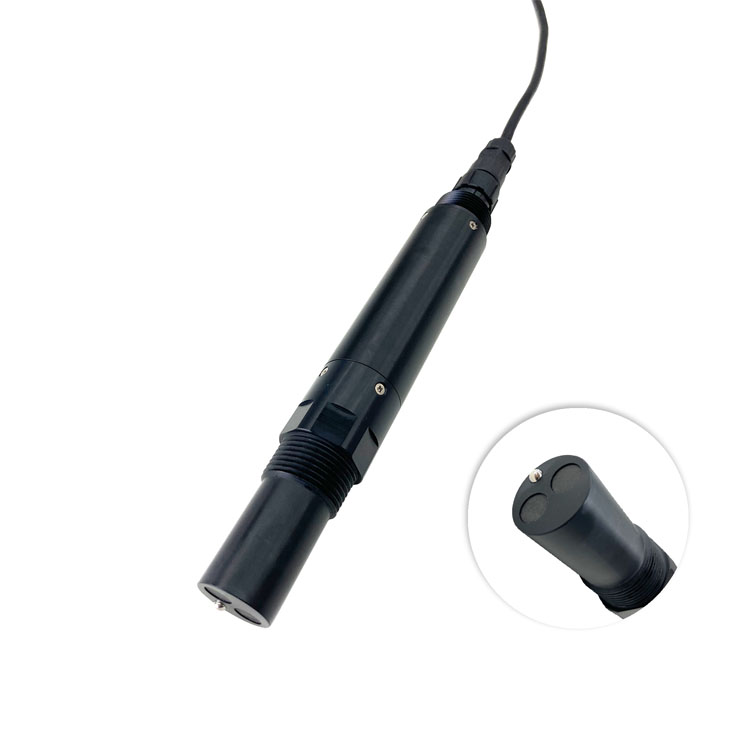
A water quality analyzer should be selected as an integrated measurement package rather than a single instrument name. For NiuBoL projects, the practical selection logic is to define the monitoring objective, choose the required sensors, confirm RS485 / Modbus RTU compatibility, plan maintenance, and request complete engineering documents. This approach helps distributors and system integrators deliver analyzers that can be installed, commissioned and maintained in real projects.
Prev:Online Oil-in-Water Sensor for Spill Detection and Industrial Discharge Monitoring
Next:Why Water Quality Monitoring Matters in Pollution Control and Industrial Water Projects
Related recommendations
Sensors & Weather Stations Catalog
 Agriculture Sensors and Weather Stations Catalog-NiuBoL.pdf
Weather Stations Catalog-NiuBoL.pdf
Agriculture Sensors Catalog-NiuBoL.pdf
Water Quality Sensor Catalog-NiuBoL.pdf
Related products
 Combined air temperature and relative humidity sensor
 Soil Moisture Temperature sensor for irrigation|NBL-S-THR
 Soil pH sensor RS485 soil Testing instrument soil ph meter for agriculture |NBL-S-PH
 Wind Speed sensor Output Modbus/RS485/Analog/0-5V/4-20mA
 Tipping bucket rain gauge for weather monitoring auto rainfall sensor RS485/Outdoor/stainless steel
 Pyranometer Solar Radiation Sensor 4-20mA/RS485

Screenshot, WhatsApp to identify the QR code
WhatsApp number:+8615367865107
(Click on WhatsApp to copy and add friends)

