





— Blogs —
—Products—
 Consumer hotline +8618073152920
 WhatsApp:+8615367865107
Address:Room 102, District D, Houhu Industrial Park, Yuelu District, Changsha City, Hunan Province, China
Product knowledge
Time:2026-06-17 09:36:35 Popularity:197
Water quality monitoring matters because it converts an uncertain water condition into data that can be managed. For engineering buyers, the issue is not whether water looks clean; it is whether water chemistry, suspended matter, organic load, dissolved oxygen, nutrients and toxic indicators are changing in a way that affects production, ecology, discharge compliance or public safety. Continuous online monitoring gives managers earlier evidence and allows system integrators to build a repeatable decision chain.
Water quality monitoring is a necessary way to accurately, timely and comprehensively reflect water status and development trends. In project terms, that means a monitoring system should support pollution source control, environmental planning, process optimization, emergency response and long-term comparison among different locations.
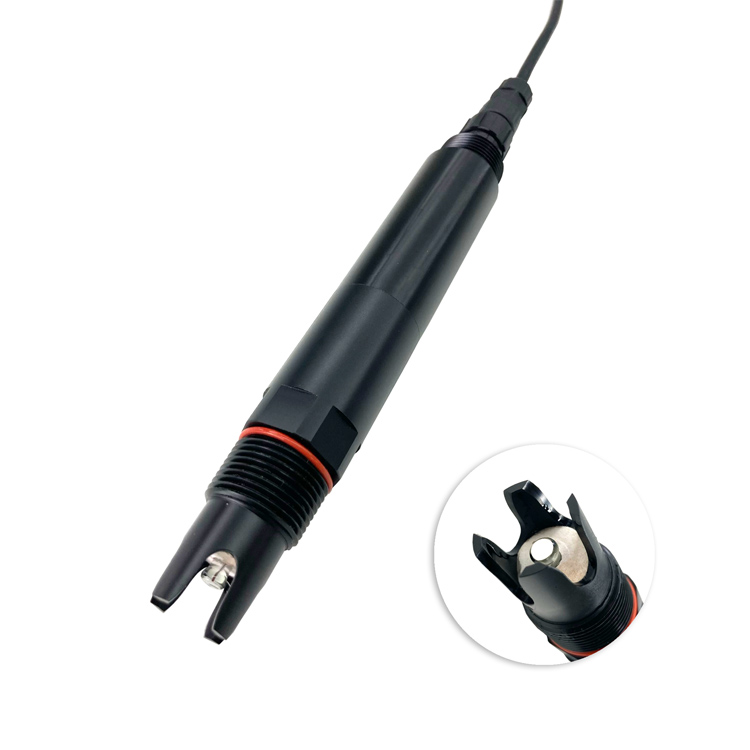
Traditional periodic sampling is still important, but it cannot show what happens between sampling times. A pollution event may last for twenty minutes; a dissolved oxygen drop in aquaculture may occur before sunrise; a wastewater discharge change may happen after production shift. Online water quality sensors close this time gap. They provide trend lines, alarms and event evidence that can be connected to a control room, database or management platform.
For a system integrator, the monitoring value is created through architecture: field sensors measure, the acquisition unit validates and stores, the communication network transmits, and the platform displays trends, alarms and reports. The same sensor reading becomes much more useful when it is timestamped, stored and compared with historical and upstream/downstream data.
| Parameter | Engineering Reference | Integration Note |
|---|---|---|
| pH | Acidity and alkalinity of water, commonly measured across 0-14 pH | Important for corrosion, neutralization, aquaculture and treatment control |
| Temperature | Water temperature for compensation and process interpretation | Affects dissolved oxygen, reaction rate and biological activity |
| Turbidity | Suspended particles and optical clarity | Useful for source water, sediment events and filtration performance |
| Conductivity | Dissolved ion concentration trend | Helps identify salinity change, leakage or process water variation |
| Dissolved oxygen | Oxygen available in water, commonly monitored in mg/L | Critical for aquaculture, river ecology and biological treatment |
| COD and BOD | Organic pollution indicators | Used for wastewater load and treatment efficiency evaluation |
| Ammonia nitrogen | Nitrogen pollution and toxicity indicator | Important for aquaculture, sewage and surface water management |
| Toxic substances | Examples include phenols, cyanide, arsenic, lead, chromium, cadmium, mercury and pesticides | Usually requires project-specific monitoring method and acceptance plan |
| Output signal | RS485 Modbus RTU for online probes and station controllers | Supports integration with PLC, RTU and IoT gateway |
| Protection requirement | IP68 probes or protected station enclosures according to installation | Match protection level to immersion, outdoor and maintenance conditions |
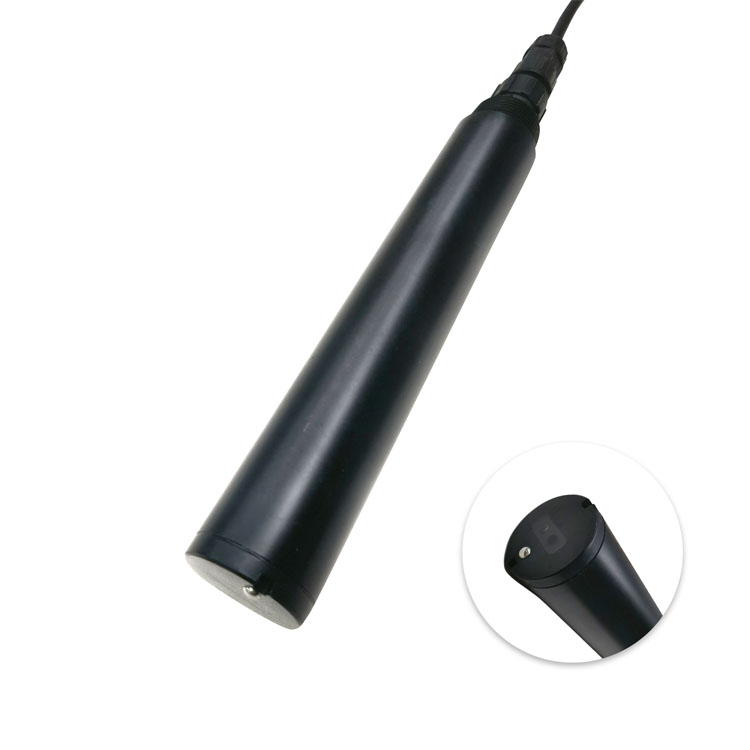
In modern water quality projects, the sensor layer should be compatible with industrial data acquisition. RS485 / Modbus RTU allows field instruments to be connected to a controller over stable wiring. The controller can then upload data through Ethernet, cellular, LoRa or other project-specific communication methods. This separation is important: the probe should focus on accurate measurement, while the station controller manages data, alarms and remote access.
Industrial compatibility also includes power supply, cable protection, grounding, lightning protection, enclosure rating, data interval, clock synchronization and maintenance access. A monitoring project that ignores these practical details may produce unstable data even when the sensor itself is technically correct.
Site challenge: Water conditions change with rainfall, runoff, upstream discharge and seasonal temperature.
System integration scheme: Deploy pH, dissolved oxygen, turbidity, conductivity and ammonia nitrogen sensors at representative sections.
User value: Managers receive trend evidence for pollution source investigation and ecological protection.
Site challenge: Fish and shrimp health can be affected by low dissolved oxygen, ammonia nitrogen and pH fluctuation.
System integration scheme: Use DO, pH, temperature, ammonia nitrogen and turbidity monitoring with alarm output.
User value: Operators can adjust aeration, water exchange or feeding strategy before losses occur.
Site challenge: Production wastewater changes by process, shift and raw material batch.
System integration scheme: Connect COD, pH, conductivity and oil-in-water sensors to a remote monitoring platform.
User value: The plant gains operational visibility and more defensible discharge records.
Site challenge: Source water safety requires early detection of turbidity, residual pollutants and abnormal chemistry.
System integration scheme: Use distributed online stations with historical storage and alarm rules.
User value: The utility can respond faster to abnormal source water conditions.
Do not begin selection with the number of sensors. Begin with the decision that the data must support. If the decision is aeration control, dissolved oxygen and temperature are essential. If the decision is discharge compliance, COD, pH, ammonia nitrogen, conductivity, turbidity and flow may be needed. If the decision is source water trend analysis, pH, turbidity, conductivity, dissolved oxygen, temperature and selected nutrients may be sufficient for the first stage.
After defining parameters, select measurement range, accuracy, installation method, communication interface, cleaning method and maintenance interval. For procurement documents, include the site environment, sample condition, expected cable distance, power availability, platform requirement and whether the supplier should provide Modbus protocol and installation accessories.
Data quality depends on sensor choice and site design. Avoid installing probes in dead water, near sediment buildup, directly against walls, or in places where bubbles and debris constantly contact the sensing surface. In outdoor stations, plan enclosure ventilation, solar power margin, battery capacity, waterproof cable entry and lightning protection. In multi-point monitoring networks, keep parameter names, units and alarm thresholds consistent across all stations.
Water quality monitoring data becomes valuable when it supports a specific action. In pollution control, the action may be source tracing, discharge suspension or treatment adjustment. In aquaculture, the action may be aeration, water exchange or feeding change. In industrial water treatment, the action may be chemical dosing, bypass control, filter backwash or maintenance scheduling. A monitoring system should therefore be designed with action rules, not only with parameter names.
For buyers, this means each sensor should be justified by a decision. Dissolved oxygen is selected because operators need to protect biological activity. Turbidity is selected because suspended solids affect filtration and source water quality. Conductivity is selected because ion changes can reveal intrusion, leakage or process variation. COD and ammonia nitrogen are selected because they show organic and nutrient pollution pressure. When the decision is clear, the monitoring system becomes easier to approve and easier to defend during budget review.
For system integrators, the most useful deliverable is not only the cabinet or the probe. It is the complete data workflow: measurement, validation, communication, alarm, storage, report and service plan. If the platform can show trend curves, compare locations and export records, the client can use the data in management meetings, inspection reports and treatment optimization work.
Procurement documents should define the monitoring point, installation depth, water flow condition, target parameters, measuring ranges, output protocol, data interval, alarm thresholds, cabinet rating, power source and expected maintenance cycle. Acceptance should include live data display, platform login, historical query, alarm test, image or site record if required, and comparison with a reference method where applicable.
When several stations are deployed, ask for a station naming rule and parameter naming rule before configuration. This small step improves later data analysis. If one site labels dissolved oxygen as DO and another labels it as oxygen concentration, platform export becomes harder to use. Consistent metadata is part of a professional monitoring project.
For long-term operation, the buyer should also define who checks abnormal data. A sensor alarm may indicate true pollution, but it may also indicate fouling, cable damage, power interruption or calibration drift. A useful monitoring project includes a response workflow: verify device status, compare neighboring parameters, inspect the site if needed, and then decide whether process or environmental action is required.
This workflow also makes the article more useful for buyers because it answers practical project questions directly: what to monitor, where to install, how to integrate, how to maintain and how to use the data after deployment.
For NiuBoL distributors, this also gives a clear inquiry path. Instead of asking only for a sensor price, the buyer can provide water body type, target parameter list, installation method, platform requirement and expected maintenance cycle. The supplier can then recommend a practical configuration instead of guessing from a broad application name.
A: The main purpose is to provide reliable data for process control, pollution prevention, compliance evidence and early warning.
A: pH, temperature, turbidity, conductivity, dissolved oxygen, COD, ammonia nitrogen and residual chlorine are commonly selected depending on the project.
A: Online monitoring provides continuous trend and alarm data, while laboratory testing provides detailed verification at selected times.
A: Yes. Sensors usually communicate by RS485 Modbus RTU to a controller, and the controller uploads data to the platform.
A: Choose representative points based on flow direction, pollution source, mixing condition, access, safety and maintenance requirements.
A: No. Parameters should match the management decision. Adding unnecessary sensors increases cost and maintenance without improving decisions.
A: Common causes include poor installation position, fouling, bubbles, incorrect calibration, unstable power, poor grounding and wrong Modbus settings.
A: Datasheet, measuring range, accuracy, wiring diagram, Modbus protocol, installation accessories, calibration method and maintenance guidance.
A: Time-stamped data from different locations helps compare upstream and downstream changes and identify abnormal discharge patterns.
A: A network creates historical evidence for trend analysis, investment planning, treatment optimization and emergency response.
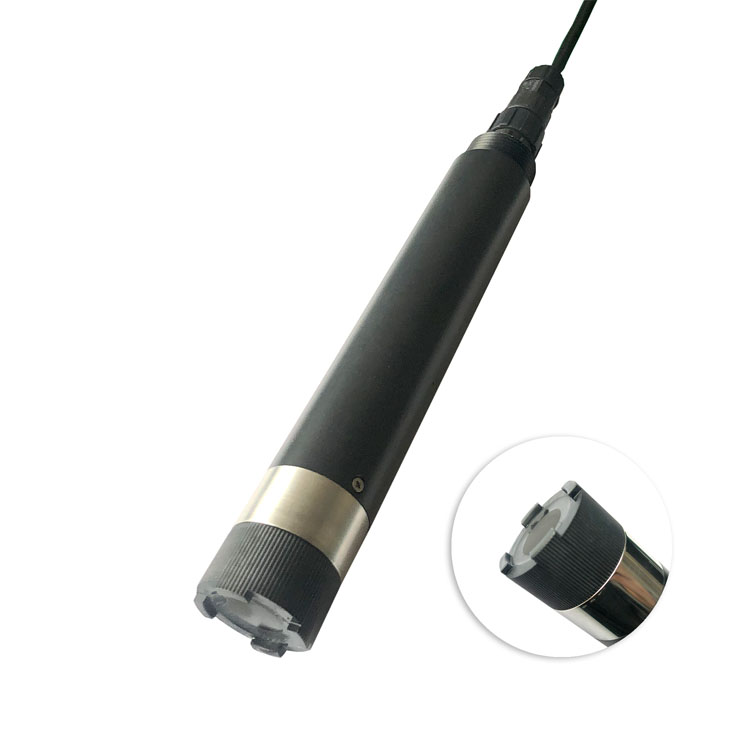
Water quality monitoring is valuable when it is treated as an engineering data system, not as a collection of disconnected instruments. NiuBoL sensors and monitoring solutions support continuous measurement, RS485 Modbus RTU integration, remote data acquisition and scalable deployment across surface water, aquaculture and wastewater projects. The result is clearer evidence, faster response and better project decisions.
Prev:Water Quality Analyzer Selection for Chlorine, pH, COD and Multi-Parameter Monitoring
Next:Online Wastewater Quality Monitoring System for Farms, Industrial Parks and Treatment Outlets
Related recommendations
Sensors & Weather Stations Catalog
 Agriculture Sensors and Weather Stations Catalog-NiuBoL.pdf
Weather Stations Catalog-NiuBoL.pdf
Agriculture Sensors Catalog-NiuBoL.pdf
Water Quality Sensor Catalog-NiuBoL.pdf
Related products
 Combined air temperature and relative humidity sensor
 Soil Moisture Temperature sensor for irrigation|NBL-S-THR
 Soil pH sensor RS485 soil Testing instrument soil ph meter for agriculture |NBL-S-PH
 Wind Speed sensor Output Modbus/RS485/Analog/0-5V/4-20mA
 Tipping bucket rain gauge for weather monitoring auto rainfall sensor RS485/Outdoor/stainless steel
 Pyranometer Solar Radiation Sensor 4-20mA/RS485

Screenshot, WhatsApp to identify the QR code
WhatsApp number:+8615367865107
(Click on WhatsApp to copy and add friends)

