





— Blogs —
—Products—
 Consumer hotline +8618073152920
 WhatsApp:+8615367865107
Address:Room 102, District D, Houhu Industrial Park, Yuelu District, Changsha City, Hunan Province, China
Product knowledge
Time:2026-06-17 09:36:36 Popularity:185
Wastewater quality monitoring has become a practical requirement for large aquaculture bases, family farms, planting bases, industrial parks and treatment outlets. As production scale increases, wastewater volume increases with it. The water may contain organic load, nutrients, residual chemicals, pathogens, heavy metals or high-conductivity discharge. If it is released or reused without monitoring, the downstream environmental and agricultural risks become difficult to control.
An online wastewater quality monitoring system gives the buyer a way to monitor pH, COD, total phosphorus, total nitrogen, ammonia nitrogen, conductivity and other selected indicators in real time. For an EPC contractor or system integrator, the goal is to build a stable station that collects representative samples, protects instruments, stores data, uploads records and triggers alarms before discharge decisions are made.

A complete wastewater monitoring system normally includes a water intake or sampling unit, sample pretreatment unit, sensor or analyzer module, data acquisition unit, auxiliary cabinet, power system, communication module and remote data management center. In smaller projects, sensors may be installed directly in a channel or tank. In higher-risk discharge projects, sampling, filtering, flow control and instrument protection are added to improve measurement stability.
The data chain should allow operators to view real-time values on a computer or mobile terminal, query historical data, export reports and review alarms. Some projects also add camera capture for discharge condition verification. Real-time monitoring, remote viewing, photo upload, data query and storage are all useful functions in wastewater governance projects.
At field level, RS485 / Modbus RTU is suitable for distributed wastewater sensors because the protocol is supported by many PLCs, RTUs and IoT gateways. The integrator should define device address, baud rate, register table, unit conversion and polling interval. For station-level communication, the RTU can upload data to a platform through cellular or Ethernet depending on site infrastructure.
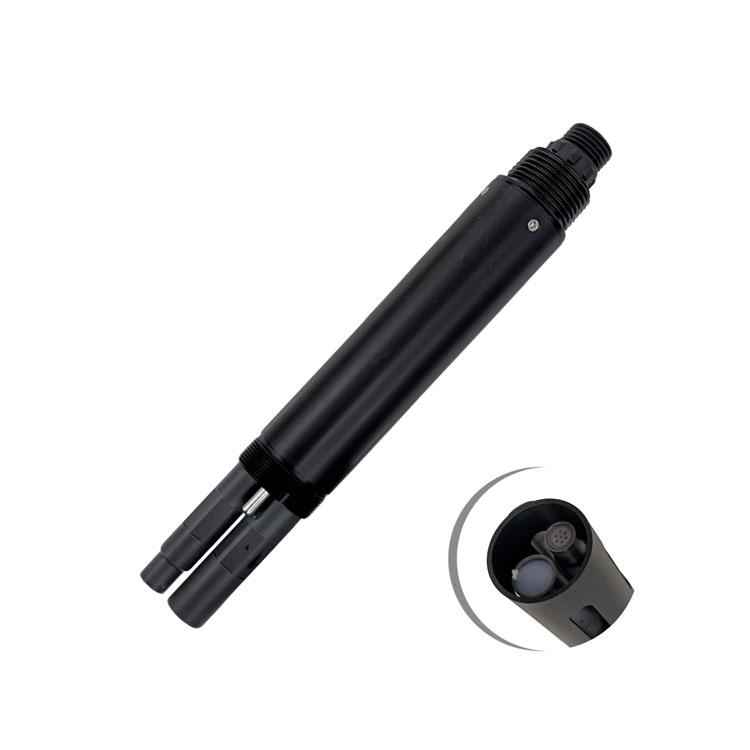
| Parameter | Engineering Reference | Integration Note |
|---|---|---|
| pH monitoring | 0-14 pH online measurement | Used for neutralization, biological treatment and discharge control |
| COD monitoring | Online optical or analyzer-based COD monitoring according to wastewater matrix | Used to track organic pollution and treatment load |
| Ammonia nitrogen | Online NHN measurement by selected sensor method | Important for farming wastewater, sewage and nutrient pollution |
| Conductivity | Online EC measurement for dissolved ion trend | Helps detect abnormal discharge or high salinity water |
| Total phosphorus / total nitrogen | Analyzer configuration selected when regulatory or project scope requires it | Usually requires more complete sampling and reagent management |
| Power supply | Station power supply with DC output for sensors | Solar or mains power selected by site condition |
| Output signal | RS485 Modbus RTU from sensors or analyzer controller | Compatible with RTU, PLC and data acquisition units |
| Protection design | IP68 probes; outdoor cabinet with suitable weatherproof rating | Match enclosure, cable gland and grounding to outdoor wastewater sites |
| Data functions | Real-time display, historical storage, alarm, remote query and report export | Define data interval and retention in project acceptance |
| Maintenance items | Calibration, cleaning, reagent replacement where applicable, pump and tubing inspection | Include service schedule in the purchase contract |
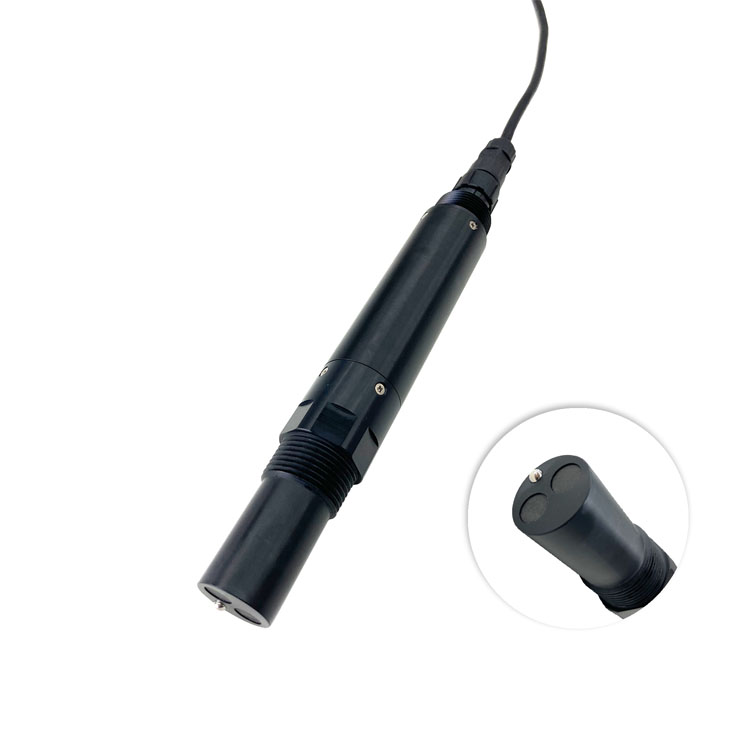
For aquaculture and livestock wastewater, ammonia nitrogen, dissolved oxygen, pH, temperature and conductivity are often important. For planting base runoff, turbidity, conductivity, pH and nutrient indicators may be selected. For industrial parks, COD, pH, conductivity, turbidity, oil-in-water and selected toxic indicators may be required depending on the tenant profile. For municipal or sewage treatment outlets, COD, ammonia nitrogen, total phosphorus, total nitrogen and flow data are often combined to support operational and reporting decisions.
Site challenge: Water quality can change with feeding, stocking density, medication and seasonal temperature.
System integration scheme: Install pH, ammonia nitrogen, dissolved oxygen, turbidity and conductivity monitoring with alarm thresholds.
User value: Operators receive earlier warning before water reuse or discharge affects pond health or nearby farmland.
Site challenge: Different plants may discharge at different times, making abnormal events hard to trace.
System integration scheme: Deploy COD, pH, conductivity and optional oil-in-water monitoring at branch and main outlets.
User value: Data comparison helps locate abnormal discharge sources and supports management decisions.
Site challenge: Untreated wastewater may contain nutrients, chemical residues and pathogens.
System integration scheme: Use online monitoring before irrigation reuse, with historical data stored on the platform.
User value: The user can decide whether water is suitable for reuse or should enter treatment first.
Site challenge: Operators need continuous evidence that effluent remains within controlled conditions.
System integration scheme: Integrate COD, ammonia nitrogen, pH, conductivity and flow data into a station cabinet.
User value: The plant improves operational visibility and creates structured records for review.
A wastewater monitoring purchase should define the water source, expected pollution indicators, measuring range, sampling method, cabinet requirement, communication interface, power supply, maintenance responsibility and platform requirement. If total phosphorus or total nitrogen analyzers are included, reagent management, waste liquid handling and calibration schedule must be planned. If only probe-type sensors are selected, the buyer should still plan cleaning, calibration and periodic verification.
For integrators, the safest quotation is not the shortest equipment list. It is a complete system bill covering sensors, controller, cabinet, power, communication, mounting hardware, cable, calibration accessories, software access and after-sales documents.
Wastewater monitoring is often connected to operational responsibility, so data management must be planned before installation. The system should record measured value, unit, time, station name, alarm status and device status. If the project includes photo capture, image time should match the sensor data time. If the platform exports reports, the file format and time range should be useful for the customer's internal review process.
Acceptance should not depend on one momentary reading. A better approach is to test continuous operation across a defined period, check communication stability, compare selected values with sampling results, verify alarm actions and confirm historical query. This gives the owner confidence that the system can operate after the contractor leaves the site.
For projects with several wastewater sources, use consistent station naming and parameter units. A practical example is to define names such as Farm Outlet 1, Treatment Inlet, Treatment Outlet and River Downstream. This makes trend comparison easier and helps managers understand whether a change comes from production, treatment performance or receiving water condition.
A farm wastewater monitoring point may use pH, conductivity, ammonia nitrogen, temperature and optional turbidity. The purpose is to judge whether wastewater can enter treatment, storage or controlled reuse. An industrial park outlet may use COD, pH, conductivity, turbidity and oil-in-water because the water matrix is more complex and may change by tenant. A municipal treatment outlet may require COD, ammonia nitrogen, total phosphorus, total nitrogen and flow information because the management focus is continuous effluent quality and load calculation.
These examples show why a fixed package is not always enough. Buyers should avoid asking only for a wastewater monitoring system price without describing the wastewater source. The same cabinet may look similar, but sensors, sampling design, maintenance cost and acceptance method can be different. A clear source description helps NiuBoL or a distributor recommend a configuration that matches the real site instead of a generic list.
For export or distributor projects, the inquiry should also mention whether the customer needs only sensors, a complete cabinet, a floating station, or a monitoring platform. These scopes are very different. A clear scope allows the supplier to prepare the correct packing list, wiring drawing and commissioning guide instead of sending a quotation that later needs several revisions.
If the project is tender-based, include acceptance language in the technical document. For example, state that the system must display real-time data, save historical records, support alarm thresholds, provide communication protocol documentation and pass image or site verification where camera capture is required. This makes evaluation clearer for both the purchaser and the integrator.
Wastewater sites often have bubbles, sediment, grease, variable flow and harsh odor conditions. Install sensors where water is mixed but not turbulent enough to damage probes. Keep sampling pipes short where possible and avoid dead zones. Provide a safe service position for cleaning and calibration. Use shielded communication cable, waterproof joints, surge protection and documented Modbus settings. During acceptance, compare online readings with verified sampling results under stable conditions.
A: It usually includes sampling or immersion installation, sensors or analyzers, data acquisition, power, communication, cabinet and remote platform functions.
A: Common parameters include pH, COD, ammonia nitrogen, conductivity, turbidity, total phosphorus, total nitrogen and flow, depending on the project.
A: Yes. Field sensors use RS485 Modbus RTU to the station controller, and the controller handles remote upload through the selected network.
A: Direct installation is simpler, but a sampling system is better where flow, solids, grease or maintenance access require controlled conditions.
A: It provides real-time values, alarms and historical records so operators can delay discharge, adjust treatment or investigate abnormal sources.
A: Water matrix, suspended solids, color, bubbles, fouling and calibration condition all affect COD monitoring performance.
A: Parameter list, measuring ranges, communication protocol, power, enclosure, installation method, platform functions, maintenance items and acceptance method.
A: The architecture can be similar, but parameters and maintenance design should match the wastewater type and site operation.
A: Maintenance depends on water quality and sensor type. Wastewater sites usually require scheduled cleaning, calibration and visual inspection.
A: Historical data allows trend analysis, event review, discharge evidence and comparison before and after treatment adjustments.
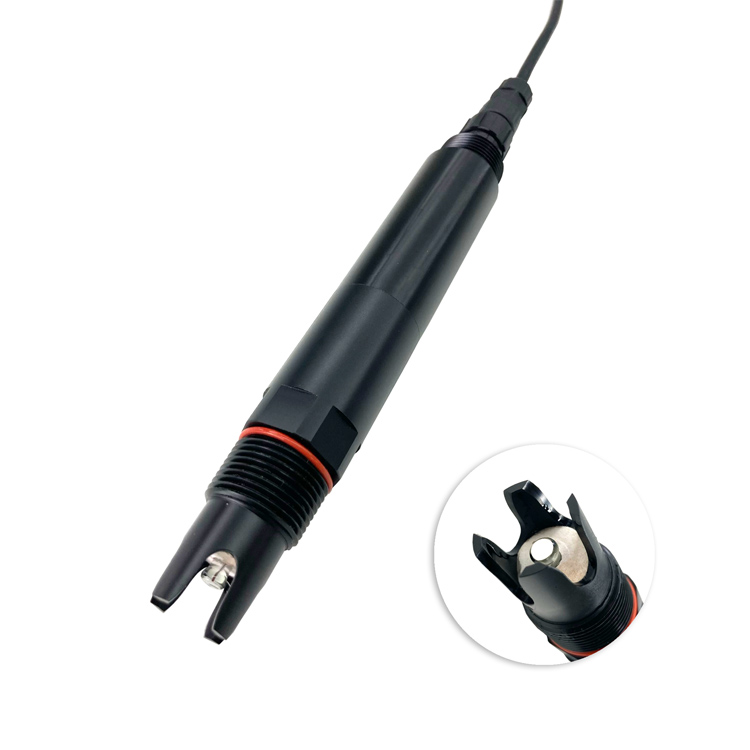
An online wastewater quality monitoring system helps farms, industrial parks and treatment outlets move from occasional inspection to continuous control. For NiuBoL projects, the useful configuration combines suitable sensors, RS485 Modbus RTU field communication, reliable station hardware, remote data management and a maintenance plan that matches wastewater conditions.
Prev:Why Water Quality Monitoring Matters in Pollution Control and Industrial Water Projects
Next:Floating Water Quality Monitoring Station Advantages for Rivers, Lakes and Aquaculture
Related recommendations
Sensors & Weather Stations Catalog
 Agriculture Sensors and Weather Stations Catalog-NiuBoL.pdf
Weather Stations Catalog-NiuBoL.pdf
Agriculture Sensors Catalog-NiuBoL.pdf
Water Quality Sensor Catalog-NiuBoL.pdf
Related products
 Combined air temperature and relative humidity sensor
 Soil Moisture Temperature sensor for irrigation|NBL-S-THR
 Soil pH sensor RS485 soil Testing instrument soil ph meter for agriculture |NBL-S-PH
 Wind Speed sensor Output Modbus/RS485/Analog/0-5V/4-20mA
 Tipping bucket rain gauge for weather monitoring auto rainfall sensor RS485/Outdoor/stainless steel
 Pyranometer Solar Radiation Sensor 4-20mA/RS485

Screenshot, WhatsApp to identify the QR code
WhatsApp number:+8615367865107
(Click on WhatsApp to copy and add friends)

