





— Blogs —
—Products—
 Consumer hotline +8618073152920
 WhatsApp:+8615367865107
Address:Room 102, District D, Houhu Industrial Park, Yuelu District, Changsha City, Hunan Province, China
Product knowledge
Time:2026-06-17 09:36:36 Popularity:202
A floating water quality monitoring station is selected when the monitoring object is a large or open water body and fixed bank installation cannot represent the actual water condition. Rivers, reservoirs, lakes and aquaculture ponds often require long-term, multi-point and in-situ monitoring. A floating station places sensors directly on the water surface platform, sends data to shore or cloud systems, and can be moved when the monitoring point changes.
The material describes several advantages: IoT remote management, dual solar panel power supply, compatibility with different water quality probes, environmental adaptability and convenient movement. For buyers, these are not slogans. They are engineering factors that determine whether the station can remain online, produce useful data and be maintained without excessive site visits.
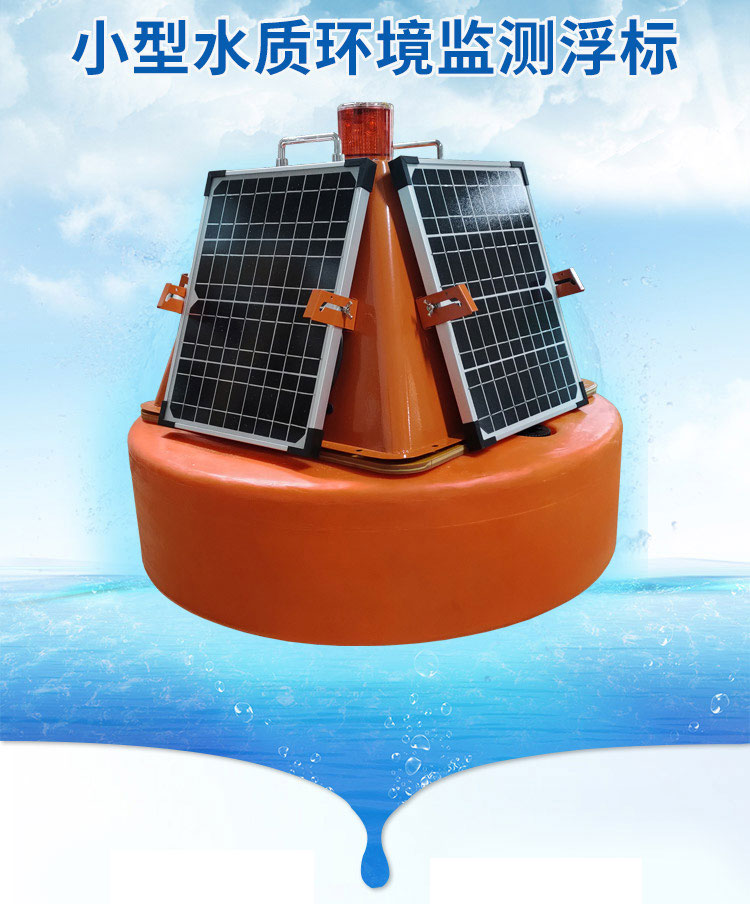
Surface water monitoring projects often involve scattered points, limited power supply, changing water level and difficult cable routing. A floating station reduces civil work because the platform carries sensors, controller, battery, solar panels and communication equipment. It can support dissolved oxygen, pH, temperature, conductivity, turbidity, ammonia nitrogen, transparency and other probes according to the project plan.
For aquaculture operators, a floating station provides 24-hour water temperature, pH and dissolved oxygen monitoring, with historical storage and alarm support. For environmental agencies, it helps observe water quality trends and pollution events in rivers and reservoirs. For integrators, it creates a repeatable station package that can be deployed across multiple water bodies.
The floating station is the field node. Sensors measure in situ water quality; the controller collects probe signals through RS485 / Modbus RTU or controller-compatible inputs; the communication module sends data to a remote platform; solar panels and battery storage supply power; the buoy or floating platform protects instruments and maintains position by anchoring or mooring. The shore-side system receives data, displays trends, stores history and sends alarm notifications.
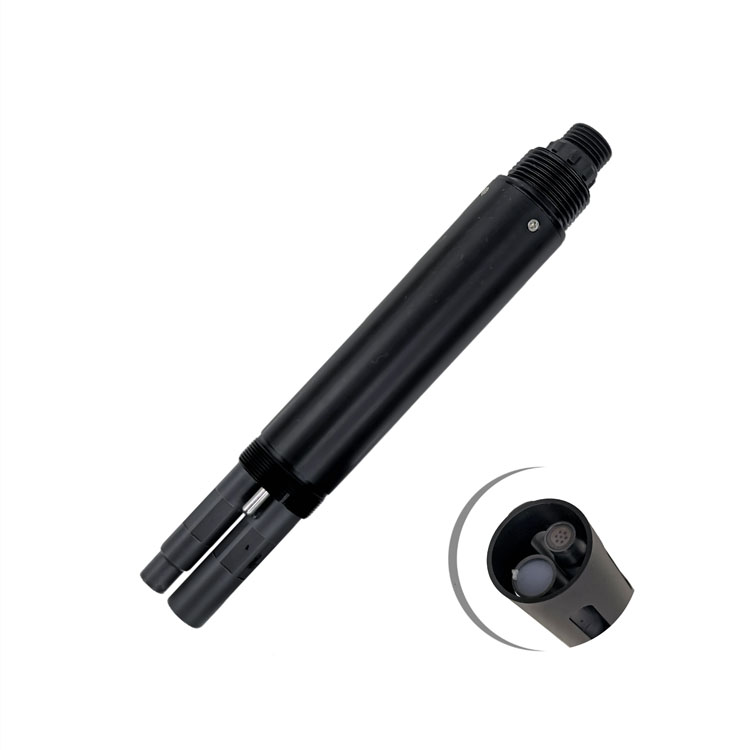
Most water quality probes used in floating stations can be integrated through RS485 / Modbus RTU. This allows the controller to read several parameters from different probes and transmit them as a unified data package. Where the project uses wireless upload, the station controller handles cellular, LoRa or other communication methods. The buyer should check whether the controller supports the number of probes, power budget, data interval and alarm logic required by the project.
| Parameter | Engineering Reference | Integration Note |
|---|---|---|
| Station type | Floating or buoy-mounted water quality monitoring station | Suitable for rivers, lakes, reservoirs and aquaculture ponds |
| Measured parameters | pH, temperature, dissolved oxygen, conductivity, turbidity, ammonia nitrogen, transparency and other selectable probes | Select according to project purpose rather than maximum quantity |
| Sensor communication | RS485 Modbus RTU for many digital probes | Record address and register map for each probe |
| Power supply | Solar panel plus battery storage; dual solar panel design can extend effective charging time | Calculate power margin for cloudy days and transmission interval |
| Data upload | Station controller to remote platform by configured communication module | Confirm network coverage before deployment |
| Protection design | Waterproof and dustproof station structure with protected electrical compartment | Match cable glands and connectors to outdoor floating use |
| Working environment | Open water outdoor environment; exact temperature and wind/wave rating confirmed by project model | Check local weather, ice, flood and navigation risk |
| Installation | Anchoring, mooring or fixed-point floating deployment | Design anchor line according to water depth and flow |
| Maintenance | Sensor cleaning, battery check, solar panel cleaning and mooring inspection | Include boat access and safety procedure |
| Data functions | Real-time display, historical query, alarm and report export | Useful for long-term monitoring and event review |
Site challenge: Dissolved oxygen and pH may change quickly at night or during high-density farming.
System integration scheme: Deploy a floating station with DO, pH, temperature and ammonia nitrogen probes.
User value: Operators receive early warning for aeration and water exchange decisions.
Site challenge: Bank-side readings may not represent open water conditions.
System integration scheme: Place floating stations at intake area, inflow area and risk points with remote upload.
User value: Managers gain spatial comparison and earlier abnormal trend detection.
Site challenge: Rainfall and upstream discharge can create short-term water quality changes.
System integration scheme: Use movable floating stations to monitor pH, turbidity, conductivity and ammonia nitrogen.
User value: The project team can relocate monitoring points based on investigation needs.
Site challenge: Long-term dissolved oxygen, turbidity and nutrient trends are needed to evaluate restoration effect.
System integration scheme: Deploy multi-parameter floating monitoring with scheduled data upload.
User value: Stakeholders receive comparable data before and after restoration measures.
Choose a floating station by water body size, target parameters, deployment duration, power condition, communication coverage, maintenance access and anchoring environment. A station with many probes is not always the right answer. For aquaculture, DO, pH, temperature and ammonia nitrogen may be the priority. For source water, turbidity, conductivity, pH, dissolved oxygen and selected nutrients may be more useful. For river patrol projects, mobility and quick deployment may be more important than a large sensor package.
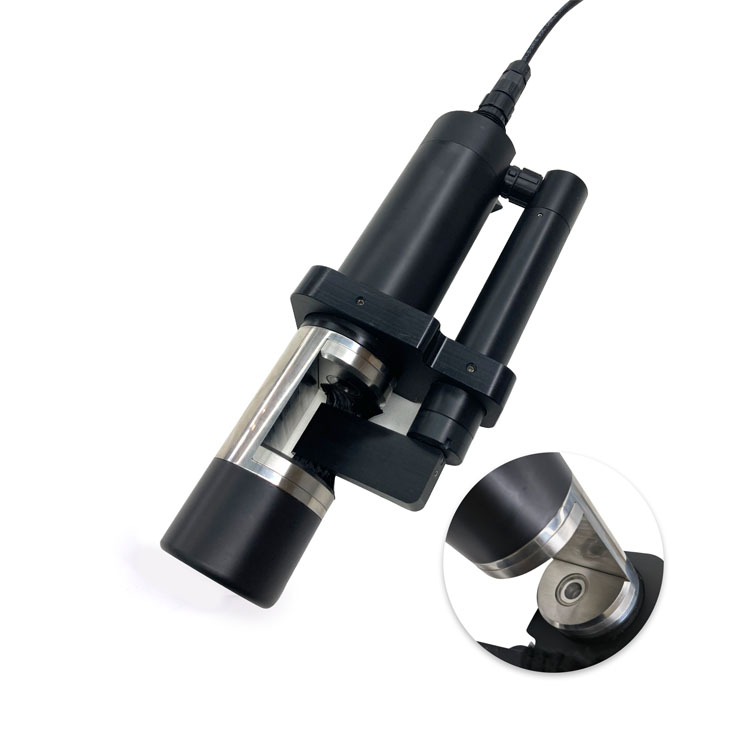
Before deployment, survey water depth, flow velocity, wind exposure, debris, navigation, theft risk and communication signal. Design the anchor or mooring system so the station stays in the intended monitoring area but can move safely with water level changes. Keep sensor probes submerged at the correct depth and protected from direct collision. Plan maintenance routes, spare probes, battery replacement and cleaning tools.
For data integration, use stable sensor addresses, consistent units and a fixed reporting interval. Configure alarm thresholds according to the water body and project purpose. Do not copy aquaculture alarm values directly into river projects without review.
Before asking for a quotation, buyers should prepare several site details. What is the water depth during dry season and wet season? Is the station close enough for mobile network coverage? Can service personnel reach the platform safely? Are there floating plants, sediment, fishing activities or boats near the monitoring point? Will the station stay in one location or move between water bodies?
These questions affect platform size, anchoring design, sensor protection, battery capacity and maintenance cost. A small floating station may be suitable for a calm aquaculture pond, while a reservoir or river project may need stronger mooring, larger power margin and more robust cable protection. The more clearly these details are stated, the more accurate the supplier's proposal becomes.
For long-term projects, ask how the station handles abnormal conditions. Examples include low battery voltage, sensor communication loss, platform offline status and data exceeding alarm thresholds. Device-status data is useful because it helps distinguish real water quality events from equipment maintenance issues.
Acceptance should cover both measurement and station operation. Check that each sensor displays the correct unit, each Modbus address is unique, the platform receives data at the expected interval, alarm thresholds trigger correctly and historical records can be exported. On the mechanical side, inspect the buoyancy, cable routing, solar panel angle, battery compartment, waterproof seals and mooring connection. A station that passes only a data test but has weak anchoring is not ready for field use.
Floating station projects sometimes become expensive because too many parameters are added before the monitoring objective is clear. A better method is to define a core package and an expansion package. The core package covers the parameters that drive daily decisions. The expansion package covers parameters that may be added after the first season of operation. This keeps the first project easier to install and gives the buyer real data before expanding.
For example, an aquaculture buyer may start with dissolved oxygen, pH, temperature and ammonia nitrogen. A reservoir buyer may start with pH, turbidity, conductivity, dissolved oxygen and temperature. If later analysis shows nutrient pollution or transparency is a management issue, additional probes can be added through the station controller if capacity was planned in advance.
This staged approach also helps distributors. They can offer a standard core station for quick project response, then prepare optional modules for customers who need more parameters, longer autonomy or a different data platform. The result is a proposal that is easier to understand and easier to approve.
A: It measures water quality in situ at open-water points where bank-side installation may not represent actual conditions.
A: Common parameters include temperature, pH, dissolved oxygen, conductivity, turbidity, ammonia nitrogen and transparency, with other probes selected by project need.
A: Solar power is suitable when panel size, battery capacity, transmission interval and local weather are calculated correctly.
A: Yes. Sensors connect to the station controller, and the controller uploads data through the configured communication module.
A: Digital probes send values to the controller over RS485 Modbus RTU, allowing multiple parameters to be collected in one station.
A: Water depth, flow, wind, waves, debris, anchoring, maintenance access, network signal and safety risks should be checked.
A: It can be moved between sites, but long-term trend comparison is better when each key water body has a fixed station.
A: Clean probes and solar panels, inspect battery status, check cable seals and verify anchoring or mooring condition.
A: Compare sensor list, power design, communication method, platform functions, material, anchoring accessories and maintenance documents.
A: It provides continuous DO, pH and temperature trends, helping operators react before water stress affects stock health.
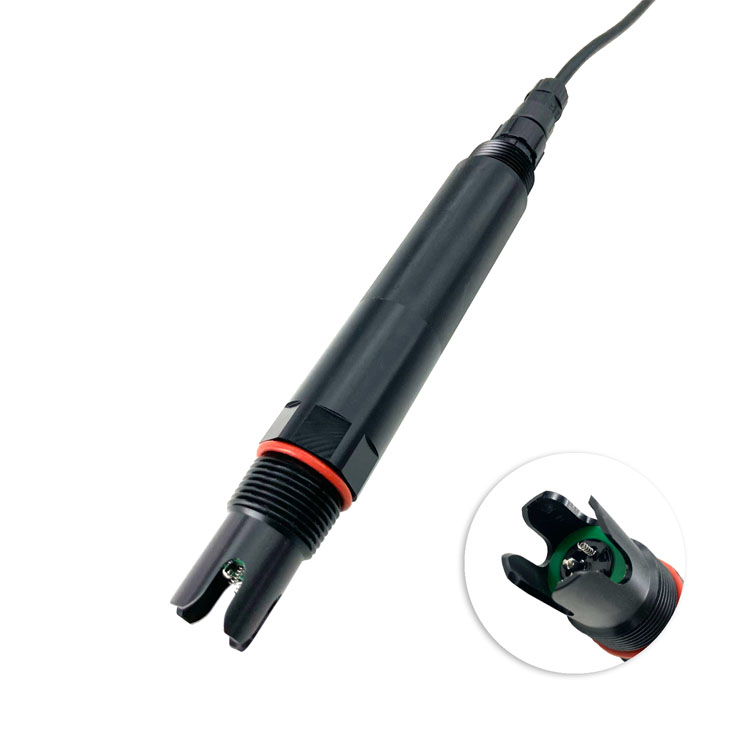
A floating water quality monitoring station is valuable where open-water data, remote access and flexible deployment are required. NiuBoL floating station projects can integrate multiple water quality probes, solar power, station controllers and remote platforms, helping buyers build scalable monitoring for rivers, lakes, reservoirs and aquaculture operations.
Prev:Online Wastewater Quality Monitoring System for Farms, Industrial Parks and Treatment Outlets
Next:Buoy Water Quality Monitoring Station Deployment Guide for Surface Water Projects
Related recommendations
Sensors & Weather Stations Catalog
 Agriculture Sensors and Weather Stations Catalog-NiuBoL.pdf
Weather Stations Catalog-NiuBoL.pdf
Agriculture Sensors Catalog-NiuBoL.pdf
Water Quality Sensor Catalog-NiuBoL.pdf
Related products
 Combined air temperature and relative humidity sensor
 Soil Moisture Temperature sensor for irrigation|NBL-S-THR
 Soil pH sensor RS485 soil Testing instrument soil ph meter for agriculture |NBL-S-PH
 Wind Speed sensor Output Modbus/RS485/Analog/0-5V/4-20mA
 Tipping bucket rain gauge for weather monitoring auto rainfall sensor RS485/Outdoor/stainless steel
 Pyranometer Solar Radiation Sensor 4-20mA/RS485

Screenshot, WhatsApp to identify the QR code
WhatsApp number:+8615367865107
(Click on WhatsApp to copy and add friends)

