







A soil temperature sensor helps explain why a soil moisture reading falls during freezing, but it does not turn that reading into total water content. Dielectric moisture probes respond much more strongly to liquid water than to ice. A winter drop can therefore reflect a change of phase rather than drying. Check temperature at the same depth, soil conditions and probe contact before using the moisture trace in a water balance.
What changes when soil water freezes?
Both FDR and TDR moisture sensors infer water content from the soil's dielectric response. Their ordinary soil-moisture calibrations are not a direct measurement of water mass, nor do they separately measure liquid water and ice. Campbell Scientific's frozen-soil FAQ explains how the lower dielectric response after freezing can appear as a rapid moisture decline; its device-specific specifications must not be transferred to a NiuBoL probe.
Research by Zhou and colleagues in Water Resources Research describes the large dielectric contrast between liquid water and ice, residual unfrozen water below zero, and water redistribution during freezing. Their experiments used additional measurements and a mixing model to distinguish total water from its liquid and ice fractions. An ordinary moisture output alone cannot make that separation.

Figure 1. NBL-S-THR soil moisture and temperature probe; TDR measurement also depends on dielectric response.
A low apparent volumetric water content in frozen soil is consequently not an irrigation command. It may be consistent with freezing, an air gap around the electrodes, a real change in water distribution, or several effects together. Temperature provides essential context, not a unique diagnosis.
Keep the terms separate:
- Apparent volumetric water content is the sensor's calibrated moisture output under the prevailing conditions.
- Unfrozen water content is the liquid fraction remaining in soil that may also contain ice.
- Total water content includes both phases, expressed on a clearly defined basis.
Do not label the first quantity as either of the other two without a validated method.
A temperature profile locates an isotherm, not necessarily the freezing front
Interpolating between two depths can estimate where the temperature is 0 °C. It cannot establish that all soil above that depth is frozen or all pore water below it is liquid. Salts lower the freezing temperature; pore size and water binding also affect when water freezes. Ice and liquid can coexist through a transition zone.
Consider only two hypothetical readings: −0.2 °C at 25 cm and +0.8 °C at 30 cm. Assuming a linear temperature gradient between them:
Depth at 0 °C = 25 + [0 − (−0.2)] / [0.8 − (−0.2)] × (30 − 25) = 26 cm.
The arithmetic gives a nominal 0 °C isotherm at 26 cm, not a measured ice boundary. It also assumes correctly surveyed depths, comparable measurement times and a sufficiently linear profile.
Measurement uncertainty matters here. The NBL-S-TM documentation specifies temperature accuracy of ±0.5 °C. An indicated −0.2 °C is too close to zero to establish a subzero temperature from that specification alone. Reporting the calculated depth to the nearest centimetre does not establish centimetre-scale frost-depth accuracy. With sparse sensors, a near-zero plateau or several crossings, report the observations and their limitations rather than a single definitive front depth.
Pair the right channels at each depth
The NBL-S-TM product page identifies an FDR sensor measuring soil temperature and volumetric moisture with RS485 Modbus RTU output. It is a single-location probe: monitoring several depths requires several probes or a suitable multi-depth instrument. Its published temperature range extends below freezing, but that is not evidence of a validated total-water or ice-content calibration.
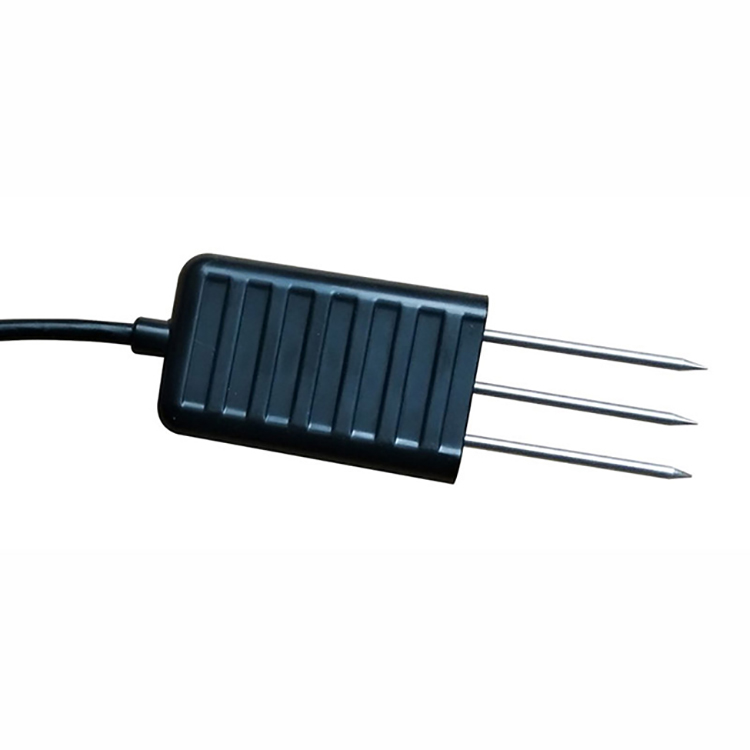
Figure 2. NBL-S-TM soil temperature and moisture probe; one probe measures around one installation point.
For each channel, retain the model, serial number, installation depth, timestamp, units and quality status. Measure temperature at the moisture sensing depth; do not substitute air temperature. An above-ground temperature record can differ substantially from conditions below snow or insulating surface cover.
Before interpreting a winter change, compare the same location over time. A nearby plot with different soil, drainage or cover is not a calibration reference. Water can move during freezing, so unchanged total water mass must not be assumed for an open field layer.
Installation checks before and after winter
Good contact remains necessary even with a sealed probe. The NBL-S-TM manual describes insertion into representative soil without rocking the probe and horizontal installation into a soil wall for buried measurement. Neither arrangement makes the instrument immune to frost movement.
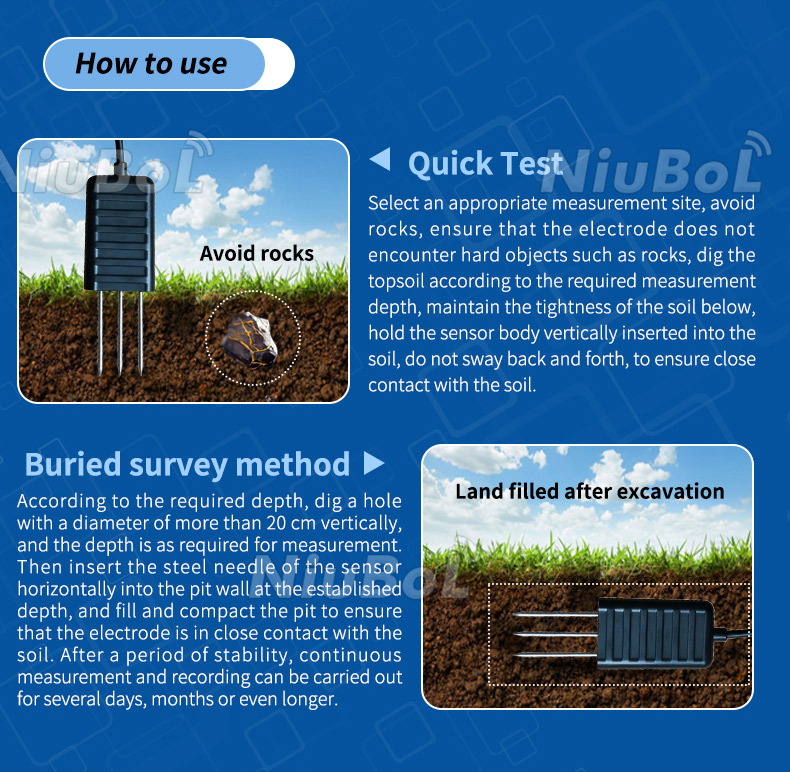
Figure 3. NiuBoL's soil-probe installation illustration, not a photograph of a winter monitoring project.
Install before the ground hardens and document the sensing depth. Do not hammer a probe into frozen soil. After thawing, inspect accessible connections and look for movement, disturbed ground or evidence of lost contact. If the moisture baseline changes, investigate installation and actual soil-water changes before editing calibration coefficients.
A useful winter record includes paired temperature and moisture traces through cooling and thawing, rainfall or irrigation notes, and observations of snow or surface cover. Preserve raw readings and flag questionable intervals. Do not add a fixed number of moisture percentage points to every frozen reading or delete the intervals from a seasonal record.
Winter measurement questions
Q1. Can temperature alone tell me how much ice is present?
No. Temperature helps assess freezing conditions, but estimating ice content requires additional information and a validated soil-specific method. A low moisture reading is not a direct ice-content measurement.
Q2. Should the reading return to its pre-freeze value after thawing?
Not necessarily. Water may have drained or moved, and frost movement may have changed probe contact. Compare the thawed soil under documented conditions rather than requiring an exact return to an old value.
Q3. Can I use the sensor's subzero operating range as proof of winter moisture accuracy?
No. A temperature or environmental operating range and a validated moisture calibration are different specifications. For a winter water-balance study, define which water fraction must be measured and how it will be independently checked.
What a winter monitoring system can establish
Paired temperature and dielectric moisture data can identify intervals needing a different interpretation. They cannot, by themselves, prove total water loss, quantify ice or locate the true freezing front from a 0 °C crossing. For routine monitoring, retain and flag the winter data; for quantitative frozen-soil studies, specify the reference measurements before selecting equipment.
For a configuration review, prepare:
- Soil texture and salinity information, with the salinity test method;
- Required depths and expected soil temperatures;
- Whether the objective is temperature, unfrozen water, total water or frost depth;
- Existing logger/interface details and the intended reference method.
Contact NiuBoL with those details to discuss appropriate temperature and moisture monitoring equipment.








