





— Blogs —
—Products—
 Consumer hotline +8618073152920
 WhatsApp:+8615367865107
Address:Room 102, District D, Houhu Industrial Park, Yuelu District, Changsha City, Hunan Province, China
Product knowledge
Time:2026-06-18 09:13:50 Popularity:260
Volatile organic compounds are common pollutants in industrial production, vehicle exhaust, cooking emissions and storage areas. They are important precursors of fine particulate matter and ozone, and some VOCs are toxic, irritating, flammable or explosive under certain conditions. For industrial parks and municipal environmental projects, VOC monitoring is not only an air quality topic; it is also a data requirement for risk warning, source tracing and daily supervision.
A VOCs online monitoring system is valuable when the owner needs continuous data from a fixed source, factory boundary, traffic corridor, residential edge, park or mobile monitoring point. The system should collect gas concentration, process the data, store historical records and support alarm analysis. NiuBoL VOC sensing equipment can be integrated into distributed ambient air monitoring terminals where RS485 / Modbus communication and low-maintenance field operation are required.
VOCs are difficult to manage with occasional manual inspection because concentration can change with production schedule, wind direction, temperature, solvent use, exhaust treatment operation and traffic flow. A continuous monitoring point helps the project team see whether an abnormal odor complaint is isolated, whether a treatment unit is working, and whether boundary concentration is changing before and after process adjustment.
For system integrators, the practical requirement is to turn a gas sensor into a stable monitoring node. That means open-air installation, reliable power, RS485 communication, platform upload, alarm configuration and a maintenance plan. The project owner needs data that can be reviewed later, not only a reading observed at the moment of inspection.
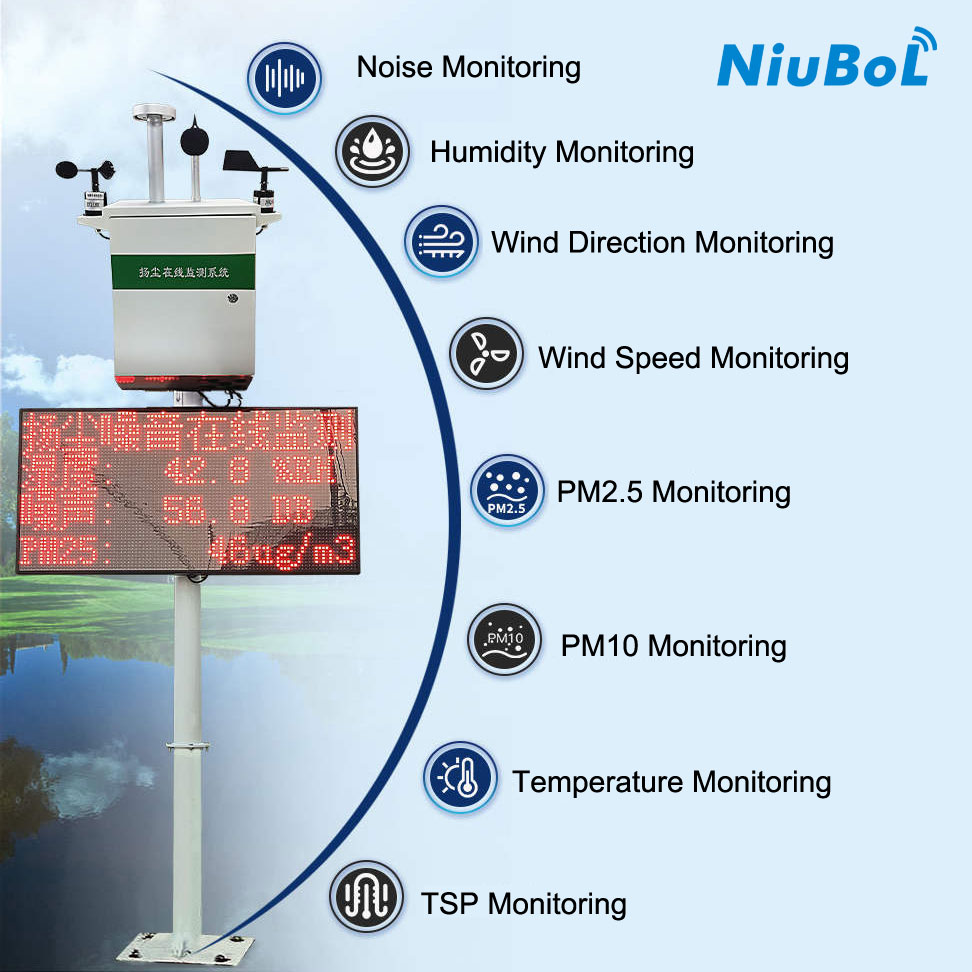
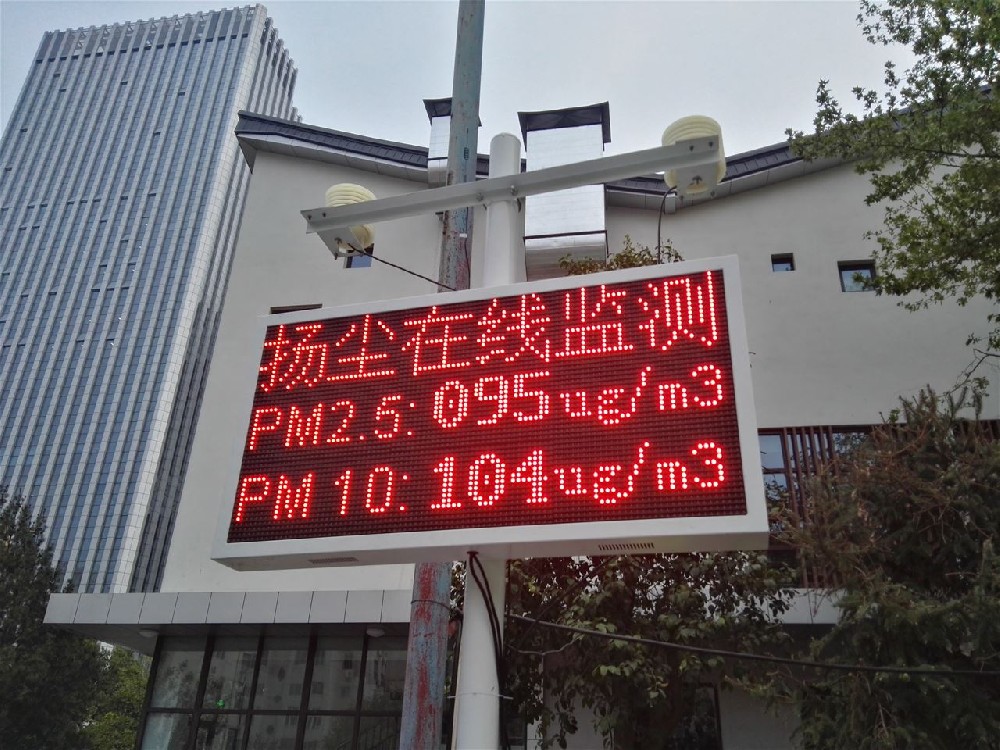
The VOC sensor is the field detection element. It is usually connected to an environmental monitoring host, data logger, RTU or air monitoring station. The host collects VOC concentration through RS485 / Modbus, adds time and station information, and sends data to a local display or cloud platform. In larger projects, VOC data can be combined with temperature, humidity, wind speed, wind direction, PM2.5, PM10 and noise to support source analysis.
RS485 / Modbus is suitable for industrial environmental monitoring because it is widely supported by data acquisition equipment and can operate in distributed station wiring. During integration, the project team should confirm device address, baud rate, register map, unit conversion and alarm thresholds. For outdoor points, shielded cable, grounding, surge protection and waterproof connectors are important for stable data.
| Item | Technical Reference | Project Note |
|---|---|---|
| Measured gas | VOC gas; selected NiuBoL configuration may also support TVOC / H2S page applications | Confirm gas target before quotation |
| Measurement principle | PID principle for VOC sensing; diffusion sampling | Suitable for ambient and boundary monitoring |
| Measurement range | VOC 0-40 ppm | Use application concentration to confirm model range |
| Resolution | 0.001 ppm | Useful for trend and early warning analysis |
| Accuracy | ±5% FS | Use calibration and site comparison for acceptance |
| Power supply | DC 12 V | Use stable industrial power supply |
| Output | RS485, Modbus protocol | Compatible with RTU, data logger and platform gateway |
| Protection rating | IP65 | Suitable for pole-mounted outdoor monitoring with proper installation |
| Working environment | -30 to 50°C, 15-90% RH | Avoid condensation and direct water ingress |
| Installation | Pole-mounted in open and ventilated location | Avoid blocked airflow and strong interference sources |
Site challenge: Different enterprises may release VOCs at different times, and odor complaints may not match inspection schedules.
System integration scheme: Install VOC sensors at boundary and sensitive downwind points; combine wind direction and PM data.
User value: Managers obtain time-stamped concentration trends for complaint response and source tracing.
Site challenge: Treatment performance may change with production load or equipment maintenance.
System integration scheme: Monitor VOC trends before and after treatment or near discharge-related points.
User value: Operators can see whether treatment adjustment changes concentration trends.
Site challenge: Vehicle emissions, temperature and wind conditions change VOC concentration over time.
System integration scheme: Deploy VOC monitoring with meteorological and particulate sensors in a grid.
User value: City managers gain distributed evidence for air quality analysis.
Site challenge: Sensitive public areas need stable data and understandable alarms.
System integration scheme: Use low-power VOC monitoring with remote platform display and threshold rules.
User value: The owner can communicate environmental changes with clearer evidence.
Before procurement, define whether the project needs VOC, TVOC, specific gas, fixed-source monitoring, boundary monitoring or mobile inspection. Then confirm measuring range, resolution, accuracy, output signal, protection rating, installation height, power availability and platform connection. If the site has high humidity or possible condensation, the sampling path and enclosure design should be reviewed carefully.
For buyer usefulness, the project document should answer direct questions: what VOCs monitoring is for, which parameters matter, where to install, how to integrate and what documents buyers should request. This makes the page more useful than a short product description because it supports specification writing and supplier comparison.

A VOCs online monitoring system should be specified as a field measurement system rather than a single display device. A useful procurement document defines the monitoring target, installation environment, measured parameters, power supply, communication method, data platform, alarm logic, maintenance access and acceptance procedure. This gives distributors, integrators and project owners a common technical baseline before quotation.
Acceptance should include sensor communication, stable platform display, alarm test, historical export, station naming and a site photo. The buyer should also request a datasheet, wiring diagram, Modbus register document, installation guide and calibration or maintenance recommendation.
A clear VOC monitoring inquiry should describe the monitoring purpose, target gas, expected concentration range, installation environment, mounting height, power supply, platform requirement and whether the point is fixed-source, boundary or ambient monitoring. If the project involves odor complaints, the document should also include nearby sensitive areas, prevailing wind direction and whether meteorological data is required.
For integrators, it is useful to separate sensor supply, station assembly, platform configuration and on-site commissioning. These items have different costs and responsibilities. When the quotation clearly lists each part, the buyer can compare proposals more fairly and avoid later disputes about installation or software scope.
VOC data should be reviewed as a trend rather than as isolated numbers. A sudden increase may indicate process change, treatment failure, solvent storage leakage or external source influence. When VOC readings are compared with wind direction, temperature and production schedule, the owner can judge whether the abnormal event is local, regional or process-related.
Long-term records also help verify whether a control measure is effective. If boundary VOC levels fall after equipment maintenance or exhaust treatment adjustment, the data becomes useful evidence for management review and future investment decisions.
The first mistake is selecting only a gas sensor without planning the station host, power, communication and platform. The second mistake is installing the sensor where airflow is blocked, which makes the reading less representative. The third mistake is ignoring meteorological data. For VOC source analysis, wind direction and wind speed often explain why one boundary point reads higher than another.
A stronger configuration includes the VOC sensor, environmental station host, weather parameters, communication module, platform access and a written maintenance schedule. If the project will be expanded later, reserve communication capacity and platform fields for additional gas or particulate sensors.
To prepare an accurate proposal, the supplier needs the monitoring site type, target VOC concentration range, number of points, installation height, power condition, network condition and whether local display is required. If the project involves several factories or boundary directions, include a simple layout drawing. This helps the technical team recommend point quantity and sensor configuration instead of quoting a single device without context.
A: Use online VOC monitoring when concentration may change with production schedule, wind direction, solvent use, exhaust treatment performance or traffic flow. Manual inspection can confirm selected moments, but it cannot show short-term peaks, night changes or recurring boundary trends. For industrial parks and factory boundary projects, continuous data is more useful for alarms, source tracing and management review.
A: A useful inquiry should include target gas or VOC category, expected concentration range, number of monitoring points, installation environment, power availability, communication method, platform requirement and whether meteorological data is needed. If the project is for boundary monitoring, a simple layout with source areas and sensitive receptors helps the supplier recommend point locations.
A: PID is widely used for many VOC monitoring applications, especially ambient and boundary trend monitoring. However, response differs by compound and application matrix. Buyers should confirm the target pollutant, expected concentration range, humidity condition and whether the project needs total VOC trend data or compound-specific analysis before final model selection.
A: VOC concentration alone shows that an abnormal value occurred, but wind data helps explain where it may have come from. When a concentration increase is compared with wind direction, factory layout and production schedule, the owner can judge whether the event is likely from a local source, a neighboring facility or a regional background condition.
A: Monitoring points should be placed where emissions can be represented and airflow is open. Typical locations include downwind boundary areas, sensitive residential edges, storage or treatment-related directions and points mentioned in the project risk assessment. Avoid corners, walls or structures that block airflow, because they may cause readings that do not represent actual boundary conditions.
A: Acceptance should include power stability, RS485 Modbus communication, live concentration display, alarm threshold test, platform upload, historical data export, station name, installation photo and wiring record. If the project includes weather data, wind speed and direction should be verified together with VOC readings so later source analysis has usable context.
A: Yes, if the platform or gateway supports the sensor output and data format. RS485 Modbus is commonly used for field acquisition, while the station host or gateway uploads data to software. The integrator should confirm Modbus registers, units, data interval, address setting and platform field names before installation.
A: Fixed-source monitoring focuses on process or exhaust-related points and may require sampling or pretreatment design. Ambient boundary monitoring focuses on open-air concentration trends around the site. The sensor selection, installation position, maintenance access and acceptance method can be different, so the project type should be defined before quotation.
A: Outdoor VOC monitoring requires regular inspection of the sensor inlet, enclosure, cable joints, power supply, communication status and calibration condition. Maintenance frequency depends on dust, humidity, contamination and operating environment. A project should define who performs inspection, how abnormal readings are verified and how service records are stored.
A: The data helps identify abnormal periods, compare boundary points, evaluate treatment changes and provide evidence for complaint response. When combined with weather and production records, VOC monitoring moves from simple display to practical decision support for industrial air quality management.
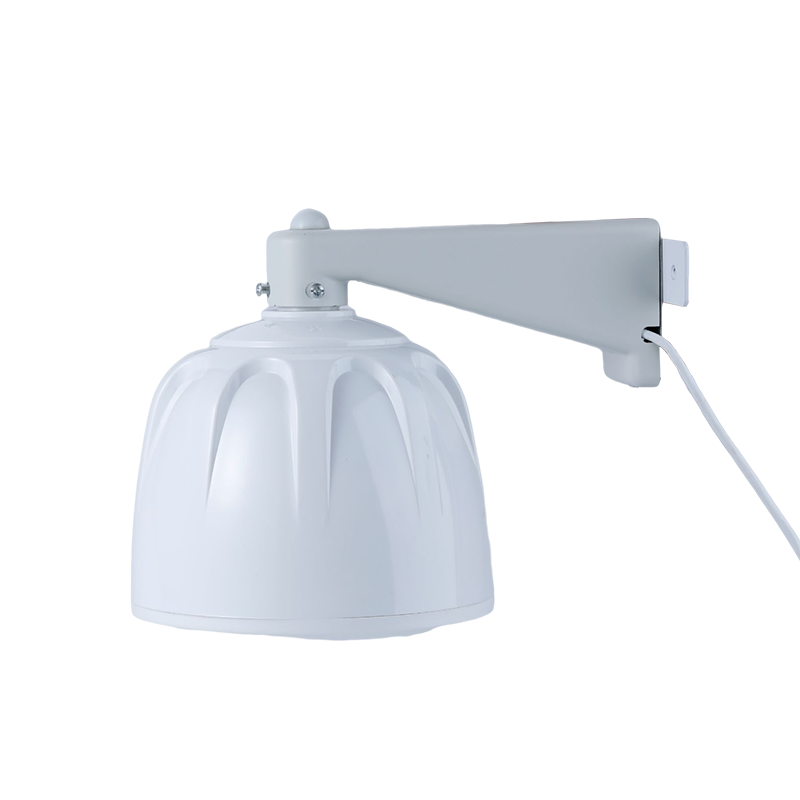
VOCs online monitoring provides continuous field data for industrial air quality management. With PID sensing, RS485 Modbus output, outdoor installation planning and remote data storage, NiuBoL VOC monitoring can support factory boundary supervision, industrial park governance and distributed air quality projects.
Prev:Buoy Water Quality Monitoring Station Deployment Guide for Surface Water Projects
Next:Construction Site Dust Monitoring Point Selection for PM2.5, PM10, TSP and Noise Systems
Related recommendations
Sensors & Weather Stations Catalog
 Agriculture Sensors and Weather Stations Catalog-NiuBoL.pdf
Weather Stations Catalog-NiuBoL.pdf
Agriculture Sensors Catalog-NiuBoL.pdf
Water Quality Sensor Catalog-NiuBoL.pdf
Related products
 Combined air temperature and relative humidity sensor
 Soil Moisture Temperature sensor for irrigation|NBL-S-THR
 Soil pH sensor RS485 soil Testing instrument soil ph meter for agriculture |NBL-S-PH
 Wind Speed sensor Output Modbus/RS485/Analog/0-5V/4-20mA
 Tipping bucket rain gauge for weather monitoring auto rainfall sensor RS485/Outdoor/stainless steel
 Pyranometer Solar Radiation Sensor 4-20mA/RS485

Screenshot, WhatsApp to identify the QR code
WhatsApp number:+8615367865107
(Click on WhatsApp to copy and add friends)

