





— Blogs —
—Products—
 Consumer hotline +8618073152920
 WhatsApp:+8615367865107
Address:Room 102, District D, Houhu Industrial Park, Yuelu District, Changsha City, Hunan Province, China
Product knowledge
Time:2025-12-19 14:49:59 Popularity:785
In complex natural ecosystems, plant leaves are the frontline for water and energy exchange with the atmosphere. Leaf wetness is not only a key physical quantity affecting plant transpiration but also a core environmental condition for fungal and bacterial infections in crops. For a long time, agricultural producers have relied on experience to judge whether plants are “too wet,” but tiny dew, ice crystals, or mist are difficult to quantify with the naked eye.
With the advent of the smart agriculture era, the NBL-W-LM leaf wetness sensor developed by NiuBoL has emerged. It acts like a 24-hour “plant health doctor,” transforming invisible leaf microenvironments into quantifiable data through high-precision sensing technology, providing scientific basis for crop growth research, pest and disease early warning, and refined fertilizer and water management.
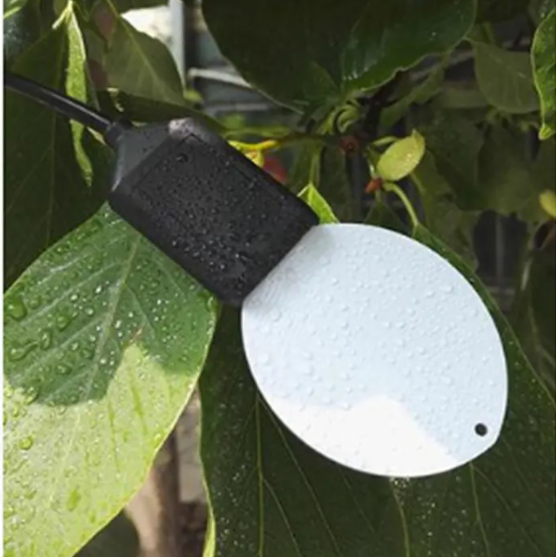
A leaf wetness sensor is a precision electronic instrument specifically designed to simulate and measure the moisture residue on plant leaf surfaces. Unlike traditional atmospheric humidity sensors, it focuses on the duration of liquid or solid water (ice) on solid surfaces (leaves).
The NiuBoL NBL-W-LM sensor adopts a bionic design, with its shape simulating the physical characteristics of real leaves. This design is not merely aesthetic but ensures that the rate of capturing dew, rain, and mist under natural conditions is highly consistent with real plants. It not only measures the degree of “wetness” but also senses ambient temperature, accurately distinguishing whether the moisture on the leaf is liquid water or condensed ice crystals, providing critical data for frost warnings in cold regions.
The technical core of the NiuBoL sensor lies in dynamic monitoring of “surface dielectric constant.”
Dielectric Constant Measurement Method
Precision sensing electrodes are distributed on the sensor surface. The dielectric constant of water (about 80) is much greater than that of air and the sensor substrate material. When dew, rain, or ice crystals appear on the leaf surface, the composite dielectric constant around the electrodes changes significantly. The internal circuit captures this tiny electrical change and converts it into a standard electrical signal.
Temperature and Humidity Dual-Dimension Fusion
The NBL-W-LM is not just a humidity switch. It has a built-in high-sensitivity temperature sensing unit. By simultaneously acquiring leaf surface temperature and humidity data, the system can calculate dew point temperature and determine the physical form of moisture in combination with real-time humidity. This multi-dimensional data fusion enables agricultural IoT systems to more intelligently assess the germination risk of pathogens.
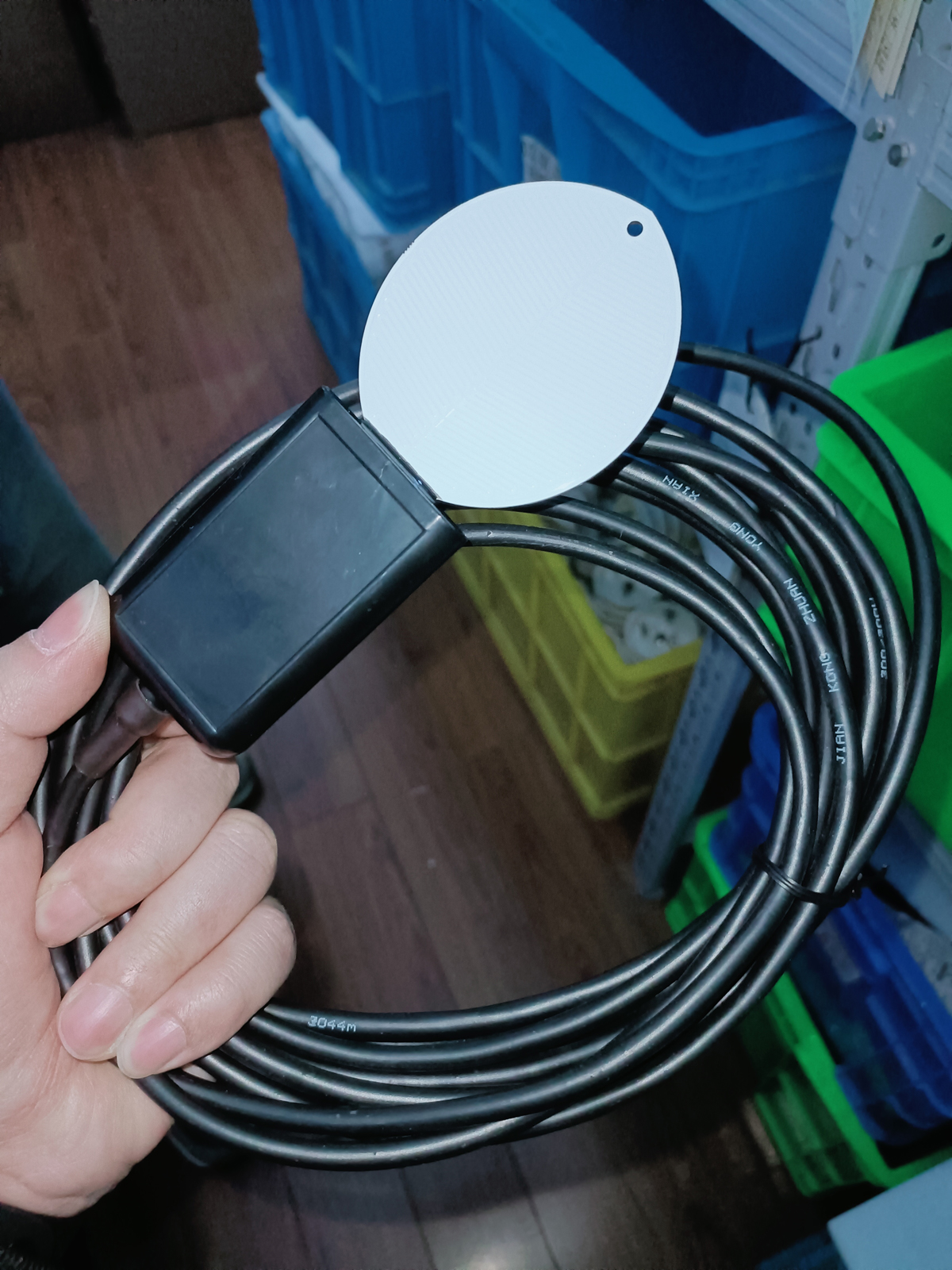
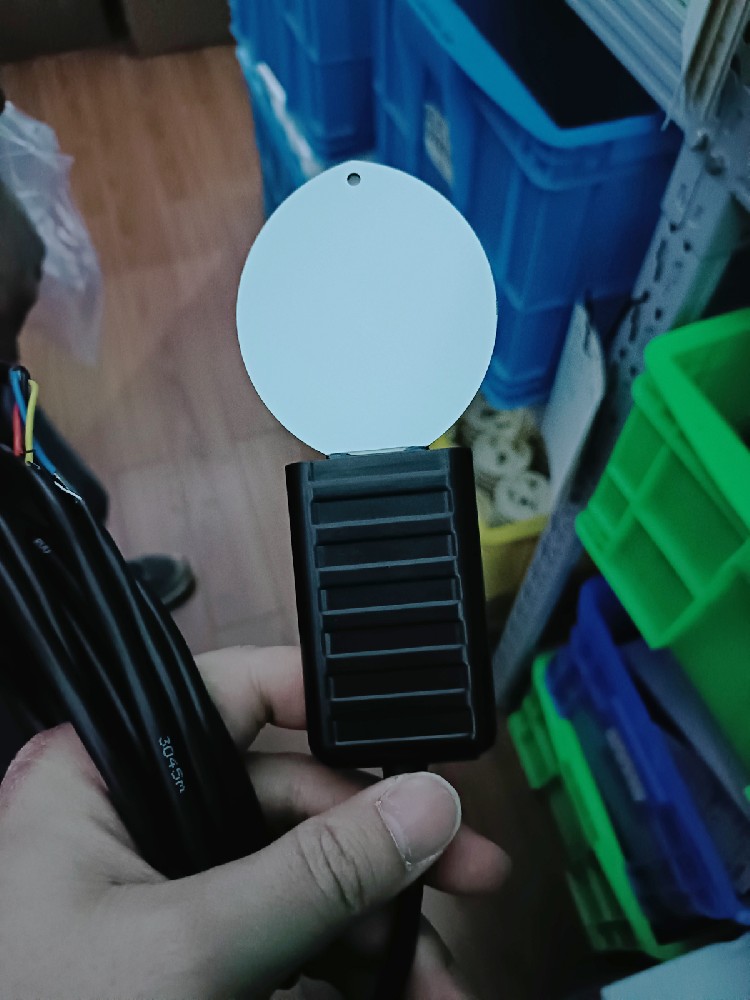
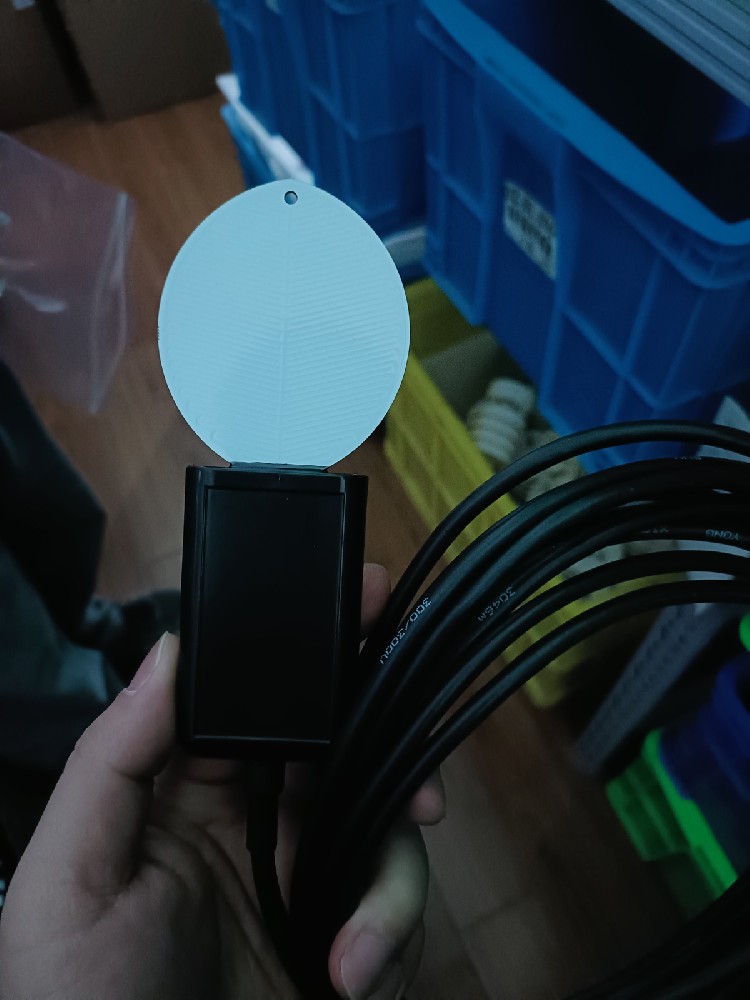
NiuBoL fully considered the harsh natural environments in agricultural fields when designing the NBL-W-LM. Its structural advantages are reflected in the following aspects:
Bionic Leaf-Shaped Structure: The sensor panel adopts a streamlined design to ensure that the convergence and evaporation rates of water droplets are similar to real crop leaves, reducing measurement errors due to material differences.
High-Tech Coating Surface: The sensor surface undergoes special treatment for good chemical stability, resisting corrosion from fertilizer and pesticide spraying, and preventing dust accumulation from interfering with dielectric constant measurement.
Waterproof Sealing Treatment: Adopts military-grade encapsulation technology with extremely strong waterproof sealing performance; even in prolonged rainfall or high-humidity fog environments, internal core components remain dry and stable.
Standardized Interfaces and Mounting Holes: The sensor front end has pre-reserved precise mounting holes, allowing users to hang it in the canopy layer or fix it on stems using non-metallic wires for simple and quick installation.
High Precision and Fast Response: High sampling frequency captures instantaneous changes in dew formation; humidity accuracy ±5%RH, temperature accuracy ±0.5℃.
All-Weather Monitoring Capability: Accurately identifies sudden summer rainfall or trace winter morning frost.
Extremely Low Power Consumption Design: Peak power consumption only 120mW, standby as low as 72mW. Ideal for deployment in solar-powered field stations for long-term uninterrupted monitoring.
Multiple Signal Outputs: Default standard RS485 bus communication, Modbus protocol or custom private protocols available. For large-scale monitoring networks, easily integrates with LoRaWAN modules for kilometers-range wireless data transmission, meeting needs of large farms or orchards.
High Reliability: Stable operation in extreme environments from -40℃ to 85℃, with performance not significantly drifting over time.
Pest and Disease Prediction and Precise Control
Most fungi (e.g., grape downy mildew, potato late blight) require continuous liquid water films on leaves for spore germination. By monitoring leaf wetness duration with NiuBoL sensor, farm owners can issue warnings before outbreaks, reducing blind pesticide spraying and achieving precise control.
Precision Irrigation Control
By observing the rate of leaf water loss, crop transpiration intensity and water stress can be inferred. In greenhouses, sensor data links with automatic irrigation systems to maintain optimal moisture balance.
Leaf Fertilization Optimization
The effectiveness of foliar fertilization largely depends on the residence time of fertilizer solution on leaves. Using sensor monitoring, operations can be timed for maximum absorption, improving fertilizer efficiency.
Plant Physiology and Ecological Research
For research institutions, this sensor is an important data source for studying crop development cycles, photosynthesis efficiency, and climate change impacts on vegetation.
To facilitate technical personnel selection, here is an overview of the main parameters of NBL-W-LM:
| Power Supply Voltage | DC 12V-24V |
| Communication Interface | RS485 (Baud rate 9600bps) |
| Power Consumption | Standby 72mW / Peak 120mW |
| Measurement Range | Temperature -40—80℃ / Humidity 0—100%RH |
| Measurement Accuracy | Temperature ±0.5℃ / Humidity ±5%RH |
| Sealing Level | High-strength waterproof design |
| Extensibility | Supports additional expansion of atmospheric temperature/humidity, light intensity, etc. |
Q1: Does the sensor need to distinguish front and back during installation?
Yes, it is generally recommended to install the simulated leaf sensing surface upward or tilted to mimic the real light-receiving and rain-receiving sides of crops.
Q2: How to clean pesticide residues on the sensor surface?
Use a soft damp cloth to gently wipe the sensing surface. Do not scrape the coating with sharp objects to avoid affecting dielectric constant detection sensitivity.
Q3: Can this sensor connect to LoRaWAN system?
Absolutely. The NiuBoL NBL-W-LM outputs standard RS485 signals and can access LoRaWAN wireless networks through a simple protocol conversion gateway, achieving long-distance, low-power data transmission—very efficient for large-scale planting areas.
Q4: What is the difference between it and ordinary air humidity sensors?
Air humidity (Relative Humidity) measures water vapor content in the air, while leaf wetness measures the presence of “liquid water” on the leaf surface. Even if air humidity is below 100%, dew can form on leaves due to radiative cooling, making leaf wetness sensors irreplaceable in disease prevention.
The NiuBoL leaf wetness sensor is not just a measurement tool; it is a bridge connecting natural ecology with digital management. Through deep perception of the leaf microenvironment, agricultural producers can move away from the blindness of “relying on the weather” toward data-based precise management.
Whether in the battle to increase crop yields or in environmental protection by reducing pesticide pollution, the NBL-W-LM demonstrates enormous potential. With the further popularization of IoT technology, we have reason to believe that high-precision sensors represented by NiuBoL will become standard configuration for every fertile field in the future, contributing technological power to global food security and sustainable development.
Want to learn more about the NiuBoL sensor (NBL-W-LM) technical parameters, latest prices, or obtain customized agricultural IoT solutions? Welcome to contact us; our technical experts will provide you with one-on-one consulting services.
About NiuBoL: We focus on researching and developing cutting-edge agricultural sensors and meteorological monitoring equipment, committed to empowering the smart agriculture ecosystem with sensing technology.
 NBL-W-LM-Leaf-Temperature-and-Humidity-Sensor-Instruction-Manual.pdf
Prev:“Digital Sentinel” of Smart Agriculture: NiuBoL Soil Moisture Monitoring Station
Next:Air Monitoring in Digital Workshops: NiuBoL Industrial Sensors and Intelligent Control Technology
Related recommendations
Sensors & Weather Stations Catalog
Agriculture Sensors and Weather Stations Catalog-NiuBoL.pdf
Weather Stations Catalog-NiuBoL.pdf
Agriculture Sensors Catalog-NiuBoL.pdf
Water Quality Sensor Catalog-NiuBoL.pdf
Related products
 Combined air temperature and relative humidity sensor
 TDR Soil Moisture & Temperature Sensor for irrigation| RS485 |4-20mA| NBL-S-THR
 Soil pH sensor RS485 soil Testing instrument soil ph meter for agriculture |NBL-S-PH
 Wind Speed sensor Output Modbus/RS485/Analog/0-5V/4-20mA
 Tipping bucket rain gauge for weather monitoring auto rainfall sensor RS485/Outdoor/stainless steel
 Pyranometer Solar Radiation Sensor 4-20mA/RS485

Screenshot, WhatsApp to identify the QR code
WhatsApp number:+8615367865107
(Click on WhatsApp to copy and add friends)

