





— Blogs —
—Products—
 Consumer hotline +8618073152920
 WhatsApp:+8615367865107
Address:Room 102, District D, Houhu Industrial Park, Yuelu District, Changsha City, Hunan Province, China
Product knowledge
Time:2026-05-14 16:02:02 Popularity:322
In laboratory wastewater treatment projects, chemical coagulation, electrochemical, O3 oxidation and other processes are widely used to reduce COD. Since COD is highly correlated with BOD, real-time monitoring of biochemical oxygen demand changes has become the key to optimizing process parameters and ensuring effluent compliance. Strict environmental standards for phosphorus and organic matter discharge have prompted system integrators to need stable and easy-to-integrate online monitoring equipment.
The core challenges faced by system integrators during project implementation include: traditional laboratory analysis methods are lagging, unable to meet continuous process control requirements, poor compatibility of equipment with existing automation systems, and high long-term operation and maintenance costs. The NBL-WQ-BOD-4A online BOD sensor uses the dual-wavelength fluorescence method principle with direct submersible installation, and can simultaneously output BOD and turbidity data, providing real-time feedback for chemically enhanced biological phosphorus removal processes, helping engineering teams accurately adjust volatile organic acid dosing in the anaerobic section, control phosphorus-accumulating bacteria activity, and chemical phosphorus removal dosage.
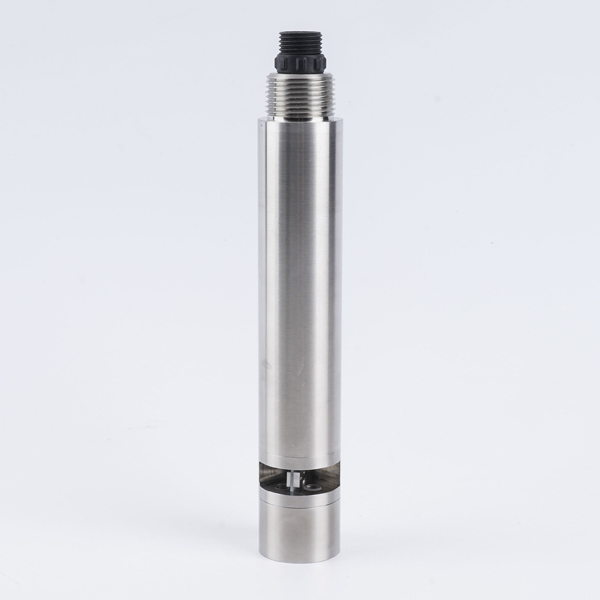
The NBL-WQ-BOD-4A online BOD sensor, as the core front-end sensing unit for wastewater treatment process monitoring, is typically deployed at anaerobic tank, aerobic tank effluent or total effluent monitoring points. Combined with PLC, RTU or edge gateways, it forms a closed-loop control system. The real-time BOD data output by the sensor can directly participate in PID regulation, alarm linkage or data upload to cloud platforms, supporting remote monitoring and process optimization.
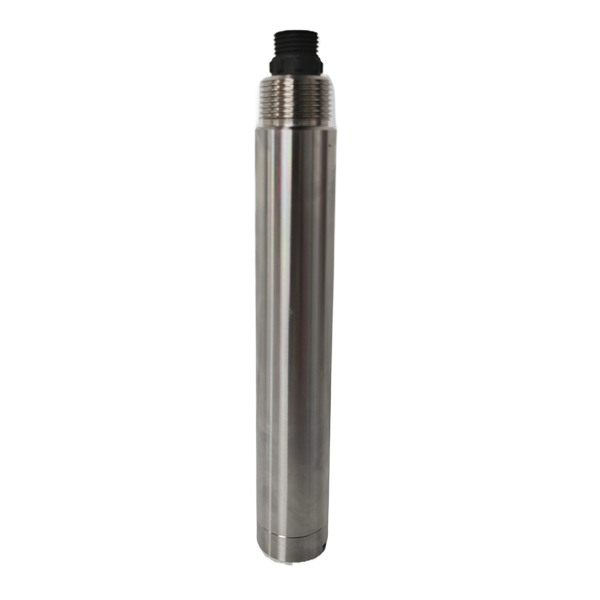
Its IP68 protection rating and 316L stainless steel + POM material ensure long-term stable operation in high-humidity and corrosive environments, making it particularly suitable for continuous online applications in laboratory and small-to-medium industrial wastewater treatment stations.
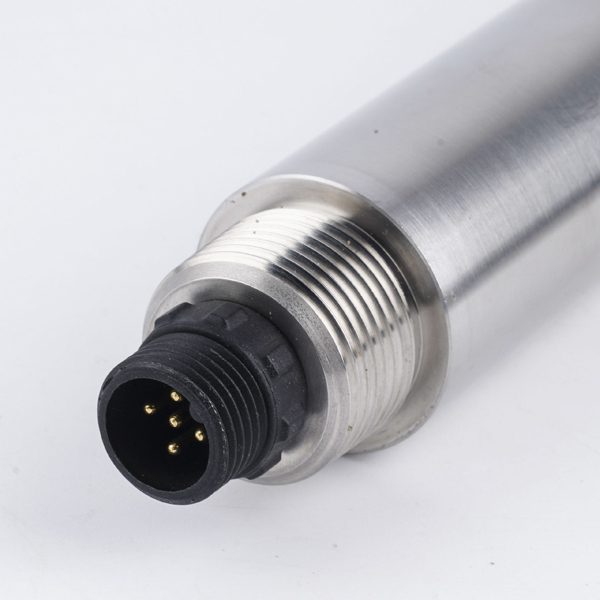
The sensor adopts an RS-485 interface and follows the Modbus RTU protocol, allowing direct connection with mainstream PLCs (such as Siemens, Schneider, Omron), DCS systems, and various IoT gateways without additional protocol conversion modules.
Baud rate supports standard industrial configurations and is compatible with most host computer software.
Strong multi-device networking capability; multiple sensors (BOD, COD, NH3-N, pH, etc.) can be connected on one bus, reducing wiring costs.
Stable signal output with strong anti-interference ability, meeting industrial site electromagnetic environment requirements.
This standardized communication design greatly shortens the system integration cycle and reduces engineering debugging difficulty.
| Parameter | Specification |
|---|---|
| Model | NBL-WQ-BOD-4A |
| Measurement Principle | Dual-wavelength fluorescence method |
| BOD Range | 0~150 mg/L |
| Turbidity Range | 0~100 NTU |
| BOD Accuracy | ±5% F.S. |
| BOD Resolution | 0.1 mg/L |
| Turbidity Accuracy | ±5% F.S. |
| Turbidity Resolution | 0.1 NTU |
| Calibration Method | Two-point calibration |
| Signal Output | RS-485 (Modbus/RTU) |
| Power Supply | 12~24VDC |
| Power Consumption | 0.2W@12V |
| Working Conditions | 0~45℃, <0.1MPa |
| Storage Temperature | -5~65℃ |
| Protection Rating | IP68 |
| Installation Method | Submersible installation |
| Cable Length | 5 meters (customizable) |
| Shell Material | POM + 316L stainless steel |
1. Laboratory Wastewater Treatment Station: In chemical coagulation + biological phosphorus removal combined processes, real-time monitoring of BOD changes in anaerobic and aerobic sections to guide volatile organic acid utilization and phosphorus-accumulating bacteria proliferation control, ensuring simultaneous compliance of phosphorus and organic matter.
2. Pharmaceutical/Chemical Wastewater Treatment Projects: For high organic load intermittent discharge wastewater, deploy sensors at regulating tank and biochemical tank outlets to achieve dynamic adjustment of process parameters and reduce chemical/electricity consumption waste in O3 oxidation or electrochemical methods.
3. Food Processing and Printing & Dyeing Wastewater Treatment: Combined with simultaneous turbidity measurement, evaluate the correlation between suspended solids and organic matter, provide decision basis for subsequent filtration or advanced oxidation units, and support multi-parameter linkage control systems.
Accuracy Selection: For projects with strict discharge standards (BOD<20mg/L), it is recommended to select this 0.1mg/L resolution model; conventional process monitoring can meet most engineering requirements.
Communication Selection: Prioritize RS-485 Modbus RTU, which is compatible with most existing automation systems. For wireless transmission, pair with LoRa or 4G/5G gateways.
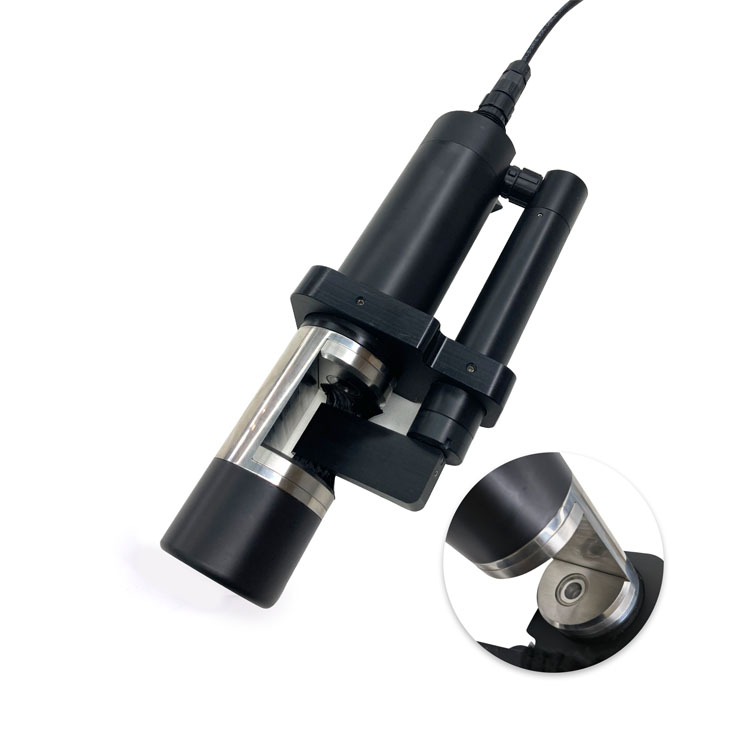
Installation Environment Selection: Submersible installation; avoid strong turbulence areas and areas with large amounts of floating oil when selecting points. It is recommended to pair with automatic cleaning devices to extend the maintenance cycle. Operating temperature 0-45℃ covers most laboratory and medium-temperature wastewater scenarios.
Power Supply Selection: 12-24VDC wide voltage input, adaptable to various on-site power conditions. Low power consumption design is suitable for solar + battery powered remote or mobile monitoring stations.
After installation, perform two-point calibration for the first use and verify every 1-3 months according to actual water quality.
RS-485 bus wiring is recommended to use shielded twisted pair cables with standardized grounding to avoid running parallel with strong power cables.
Avoid address conflicts in host computer settings and reserve expansion space to support future addition of other water quality sensors.
In long-term immersion environments, regularly check attachments on the probe surface and use manufacturer-recommended cleaning solution when necessary.
It is recommended to set the data collection cycle to 1-5 minutes to balance real-time performance and data volume control.
Q1: What is the correlation between the dual-wavelength fluorescence method and the traditional BOD5 method?
The dual-wavelength fluorescence method quickly and indirectly reflects biochemical oxygen demand through the fluorescence characteristics of organic matter and has good correlation with the standard BOD5 method. It is suitable for process control rather than strict metering occasions.
Q2: How does the sensor cope with high turbidity interference in water samples?
The product simultaneously measures turbidity and adopts a dual-wavelength design, which can effectively compensate for the impact of turbidity on fluorescence signals.
Q3: Does the Modbus RTU protocol support custom register addresses?
It supports standard Modbus RTU commands and can perform address mapping configuration according to project requirements.
Q4: Is the 150mg/L range sufficient for laboratory wastewater treatment?
The BOD of effluent from most laboratory and small-to-medium industrial wastewater treatment plants falls within this range. For special high-concentration occasions, dilution pretreatment or higher-range models can be used.
Q5: What is the maintenance cycle of IP68 protection rating in actual engineering?
In conventional wastewater environments, combined with regular cleaning, low-maintenance operation for 6-12 months can be achieved.
Q6: Does it support direct communication with PLCs of other brands?
As long as the master device supports Modbus RTU, it can be directly connected.
Q7: Does the sensor cable support on-site extension?
Custom cable length is supported. It is recommended to specify the actual installation depth when ordering.
Q8: Is there technical support and training service for bulk project procurement?
System integration guidance, on-site debugging support, and operation training can be provided to ensure the project is delivered on schedule.
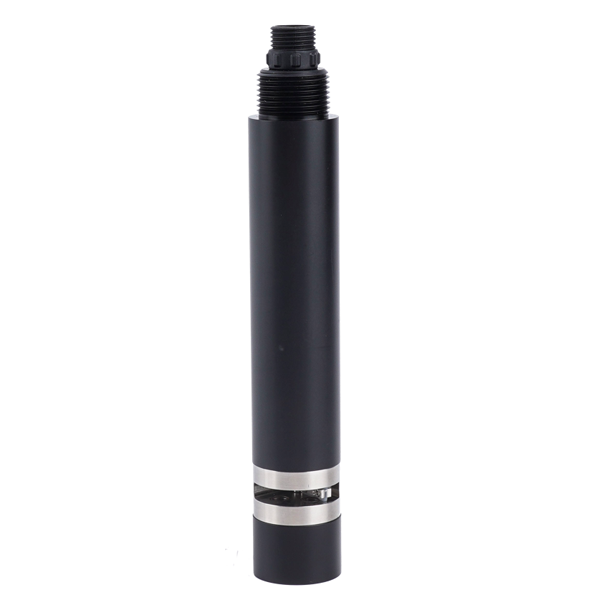
For system integrators and environmental protection engineering contractors, choosing a stable, open-protocol, and easy-to-maintain online BOD sensor is a key link to improving the intelligence level of laboratory wastewater treatment systems and reducing overall operation and maintenance costs. NiuBoL NBL-WQ-BOD-4A, with dual-wavelength fluorescence method combined with industrial-grade design, provides excellent Modbus RTU compatibility while meeting simultaneous BOD and turbidity monitoring, laying a solid foundation for building reliable IoT water quality monitoring and control systems.
In the project planning stage, it is recommended to conduct on-site surveys and selection verification in combination with specific process flows, discharge standards, and existing automation architecture to ensure the sensor maximizes its value throughout the entire system lifecycle.
 NBL-WQ-CL Water Quality Sensor Online Residual Chlorine Sensor.pdf
NBL-WQ-DO Online Fluorescence Dissolved Oxygen Sensor.pdf
NBL-WQ-NHN Ammonia Nitrogen Water Quality Sensor.pdf
NBL-WQ-COD Online Water Quality COD Sensor.pdf
NBL-WQ-PH Online pH Water Quality Sensor.pdf
NBL-WQ-EC water quality conductivity sensor.pdf
Prev:Analysis of COD Exceedance Causes in Urban Sewage Treatment Plants and Online COD Sensor Solutions
Related recommendations
Sensors & Weather Stations Catalog
Agriculture Sensors and Weather Stations Catalog-NiuBoL.pdf
Weather Stations Catalog-NiuBoL.pdf
Agriculture Sensors Catalog-NiuBoL.pdf
Water Quality Sensor Catalog-NiuBoL.pdf
Related products
 Combined air temperature and relative humidity sensor
 TDR Soil Moisture & Temperature Sensor for irrigation| RS485 |4-20mA| NBL-S-THR
 Soil pH sensor RS485 soil Testing instrument soil ph meter for agriculture |NBL-S-PH
 Wind Speed sensor Output Modbus/RS485/Analog/0-5V/4-20mA
 Tipping bucket rain gauge for weather monitoring auto rainfall sensor RS485/Outdoor/stainless steel
 Pyranometer Solar Radiation Sensor 4-20mA/RS485

Screenshot, WhatsApp to identify the QR code
WhatsApp number:+8615367865107
(Click on WhatsApp to copy and add friends)

