





— Blogs —
—Products—
 Consumer hotline +8618073152920
 WhatsApp:+8615367865107
Address:Room 102, District D, Houhu Industrial Park, Yuelu District, Changsha City, Hunan Province, China
Product knowledge
Time:2026-05-14 16:38:33 Popularity:349
In water environment monitoring and wastewater treatment automation systems, Biochemical Oxygen Demand (BOD) is a core indicator for assessing the degree of organic pollution in water bodies. For system integrators and engineering contractors, how to balance the real-time performance, accuracy, and operation & maintenance costs of monitoring is the key to equipment selection in the early stage of the project.
Traditional BOD determination mainly relies on the dilution and inoculation method (BOD5). Although this method has arbitration authority as the HJ505-2009 standard, its 5-day cultivation cycle makes it unable to meet the modern industry's demand for "real-time feedback control". In scenarios such as aeration control in wastewater treatment and early warning at river discharge outlets, delayed data means lagged decision-making.
Although the microbial sensor method (HJ/T86-2002) shortens the time, the lifespan of the bacterial membrane and environmental adaptability still limit its long-term application in harsh industrial sites. Therefore, BOD monitoring technology is evolving towards reagent-free, low-maintenance, and digital directions, aiming to achieve second-level perception of organic pollutants through online optical principles.
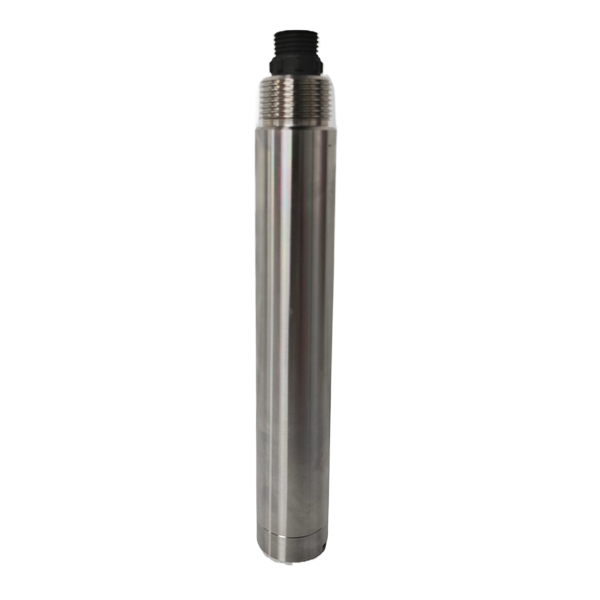
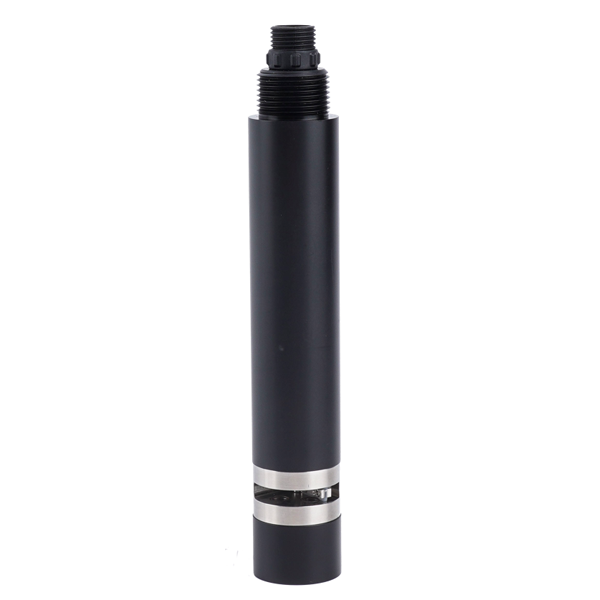
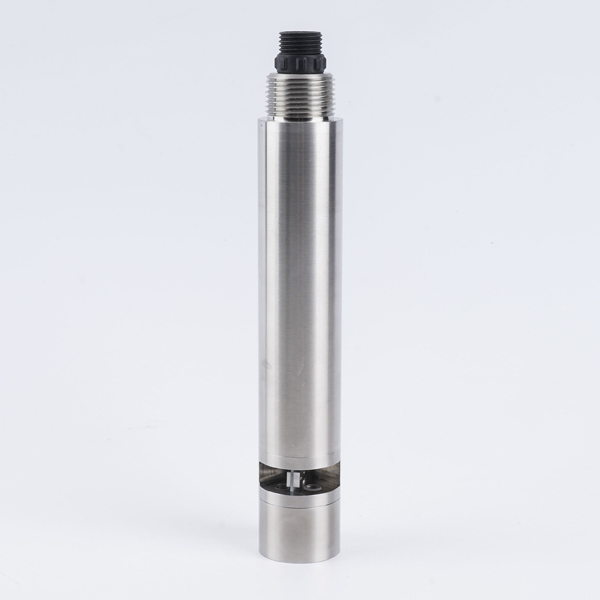
The NiuBoL NBL-WQ-BOD-4A online BOD sensor is positioned at the perception layer of the Industrial Internet of Things (IIoT).
In water quality monitoring stations or industrial control systems, this sensor is usually directly immersed in the water body or installed in a flow cell. It completes algorithm conversion of the collected optical signal internally and directly outputs standard BOD indicators through digital interfaces.
Uplink: Connected to PLC, data acquisition instrument or edge gateway.
Control Linkage: Cooperates with frequency converters to adjust blower aeration volume, or serves as a compliance early warning probe at wastewater discharge outlets.
To ensure stable operation in complex industrial environments (such as strong electrical interference and long-distance wiring), NiuBoL sensors adopt a mature digital communication architecture:
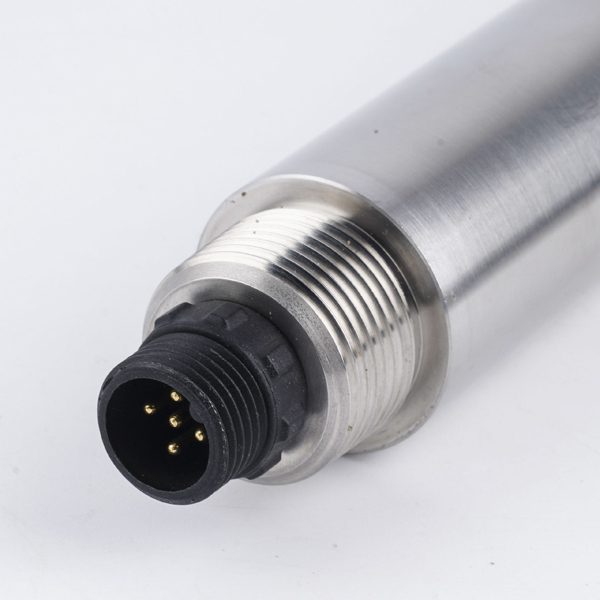
Physical Interface: Standard RS485 bus with extremely strong anti-electromagnetic interference capability.
Communication Protocol: Adopts standard Modbus RTU protocol. System integrators can read BOD concentration, turbidity and temperature data through function code 03 without complex driver development.
Engineering Convenience: Supports modification of device address. Multiple sensors (such as pH, COD, BOD, etc.) can be connected in parallel on a single bus, greatly simplifying the wiring cost of multi-parameter monitoring stations.
| Parameter Item | Technical Specification |
|---|---|
| Model | NBL-WQ-BOD-4A |
| Measurement Principle | Dual-wavelength fluorescence method |
| BOD Range | 0~150 mg/L |
| BOD Accuracy | ±5% F.S. |
| BOD Resolution | 0.1 mg/L |
| Turbidity Range / Accuracy | 0~100 NTU / ±5% F.S. |
| Automatic Cleaning | Built-in self-cleaning brush (to prevent biological fouling) |
| Output Interface | RS-485 (Modbus RTU) |
| Power Supply | 12~24V DC |
| Power Consumption | 0.2W @ 12V |
| Working Conditions | 0~45℃, Pressure < 0.1MPa |
| Protection Rating | IP68 |
| Shell Material | POM and 316L stainless steel |
In the biochemical treatment section, real-time BOD data is the core basis for optimizing aeration volume and reducing energy consumption. The continuous signal provided by NBL-WQ-BOD-4A can be connected to the SCADA system to achieve closed-loop control.
In surface water evaluation, this sensor uses dual-wavelength technology to automatically compensate for turbidity interference in water. It requires no chemical reagents and will not cause secondary pollution to the monitored water body, meeting green monitoring requirements.
For industries with large fluctuations in organic matter concentration such as pharmaceuticals and papermaking, the system can achieve immediate interception and alarm for illegal excessive discharge by utilizing its fast response time within 90 seconds.
When conducting project bidding or procurement selection, it is recommended to evaluate from the following dimensions:
Measurement Principle Selection: If the project emphasizes online continuous operation and low maintenance, prioritize optical fluorescence methods (such as this product) to avoid microbial membrane sensors with short maintenance cycles.
Installation Environment Matching: Confirm whether submersible installation conditions are available on site. This sensor uses POM and 316L materials, suitable for most neutral and weakly corrosive industrial wastewater.
Communication Method: Confirm the host computer interface. Digital RS485 output has become the mainstream choice for smart water affairs, avoiding accuracy degradation caused by analog signals.
Operation & Maintenance Assurance: It is necessary to confirm whether the equipment has automatic cleaning function, especially in high-nutrient water bodies, where biological fouling is the main cause of optical sensor drift.
7.1 Shading Installation: Although it has dual-wavelength compensation, for optimal accuracy, it is still recommended to install in areas without direct sunlight or in shaded sampling cells.
7.2 Turbidity Upper Limit: This sensor supports turbidity compensation up to 100 NTU. If the water turbidity exceeds this limit, it is recommended to add physical sedimentation or filtration systems at the front end.
7.3 Power Supply Stability: It is recommended to use an independent 24V DC industrial switching power supply on industrial sites, and perform proper shielding layer grounding to prevent frequency converter interference.
Technical Questions
Q1: How does the dual-wavelength fluorescence method achieve turbidity compensation?
The sensor uses a reference light source to detect the scattering intensity of suspended solids on the light path and automatically deducts this influence in BOD calculation through a specific algorithm.
Q2: Does the sensor require regular reagent replacement?
No. It is a pure physical optical measurement solution with zero reagent consumption during operation.
Q3: What is the maintenance frequency of the self-cleaning brush?
Depending on the degree of water contamination, the brush can usually operate stably for more than one year. Maintenance only requires checking whether foreign objects are entangled on the bristles.
Selection Questions
Q1: What to do if my BOD concentration exceeds 150mg/L?
This model has a range of 0-150mg/L and is suitable for surface water and most municipal wastewater. For high-concentration raw water, please consult the NiuBoL technical team for customized high-range versions.
Q2: Do installation brackets need to be purchased separately?
The sensor supports 3/4 NPT or specific submersible installation brackets, which can be selected according to site engineering drawings.
Q3: What is the role of POM material in the shell?
POM has excellent chemical resistance and mechanical strength. Combined with 316L stainless steel, it ensures long-term immersion without corrosion in various complex water qualities.
Q4: What is the product delivery cycle and after-sales service?
As a standard industrial product, stock is usually available. NiuBoL provides a complete communication register manual and remote integration guidance. One-year warranty.
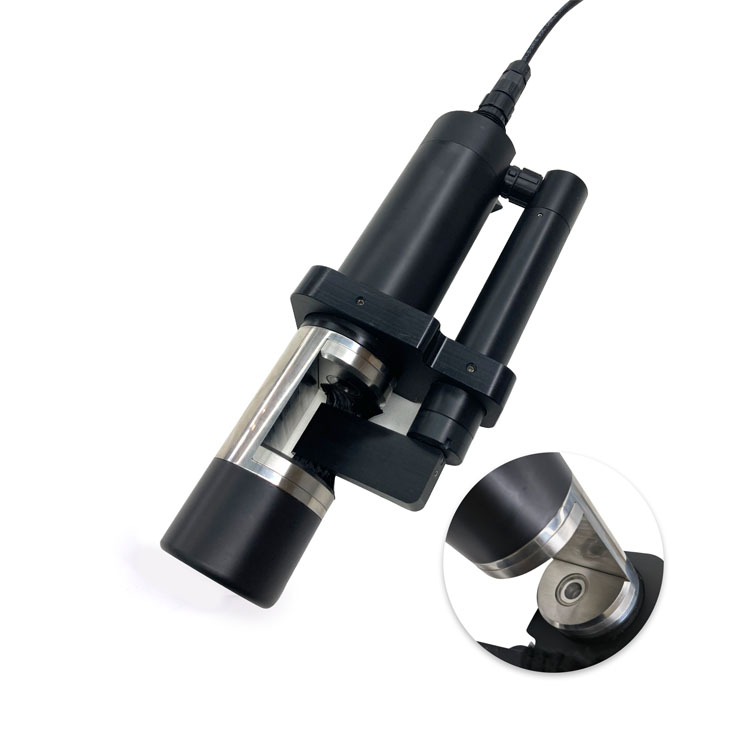
For system integrators, choosing NiuBoL NBL-WQ-BOD-4A is not just selecting a BOD measurement tool, but choosing a low-cost, high-reliability online monitoring solution. In the context of smart environmental protection projects that increasingly emphasize operating costs, its reagent-free, digital, and self-cleaning features can significantly reduce the long-term after-sales burden of the project and create continuous application value for end users.
 NBL-WQ-CL Water Quality Sensor Online Residual Chlorine Sensor.pdf
NBL-WQ-DO Online Fluorescence Dissolved Oxygen Sensor.pdf
NBL-WQ-NHN Ammonia Nitrogen Water Quality Sensor.pdf
NBL-WQ-COD Online Water Quality COD Sensor.pdf
NBL-WQ-PH Online pH Water Quality Sensor.pdf
NBL-WQ-EC water quality conductivity sensor.pdf
Related recommendations
Sensors & Weather Stations Catalog
Agriculture Sensors and Weather Stations Catalog-NiuBoL.pdf
Weather Stations Catalog-NiuBoL.pdf
Agriculture Sensors Catalog-NiuBoL.pdf
Water Quality Sensor Catalog-NiuBoL.pdf
Related products
 Combined air temperature and relative humidity sensor
 TDR Soil Moisture & Temperature Sensor for irrigation| RS485 |4-20mA| NBL-S-THR
 Soil pH sensor RS485 soil Testing instrument soil ph meter for agriculture |NBL-S-PH
 Wind Speed sensor Output Modbus/RS485/Analog/0-5V/4-20mA
 Tipping bucket rain gauge for weather monitoring auto rainfall sensor RS485/Outdoor/stainless steel
 Pyranometer Solar Radiation Sensor 4-20mA/RS485

Screenshot, WhatsApp to identify the QR code
WhatsApp number:+8615367865107
(Click on WhatsApp to copy and add friends)

