





— Blogs —
—Products—
 Consumer hotline +8618073152920
WhatsApp:+8615367865107
Address:Room 102, District D, Houhu Industrial Park, Yuelu District, Changsha City, Hunan Province, China
Product knowledge
Time:2026-02-27 21:06:51 Popularity:668
Solar insect killer lamp coverage is a layout question, not a fixed circle of crop protection. Crop canopy, terrain, competing lights and the activity of the target insect affect which insects reach a lamp. For an orchard or field project, use the stated reference area only as an initial planning input, then assess the actual blocks and confirm performance with local observations.
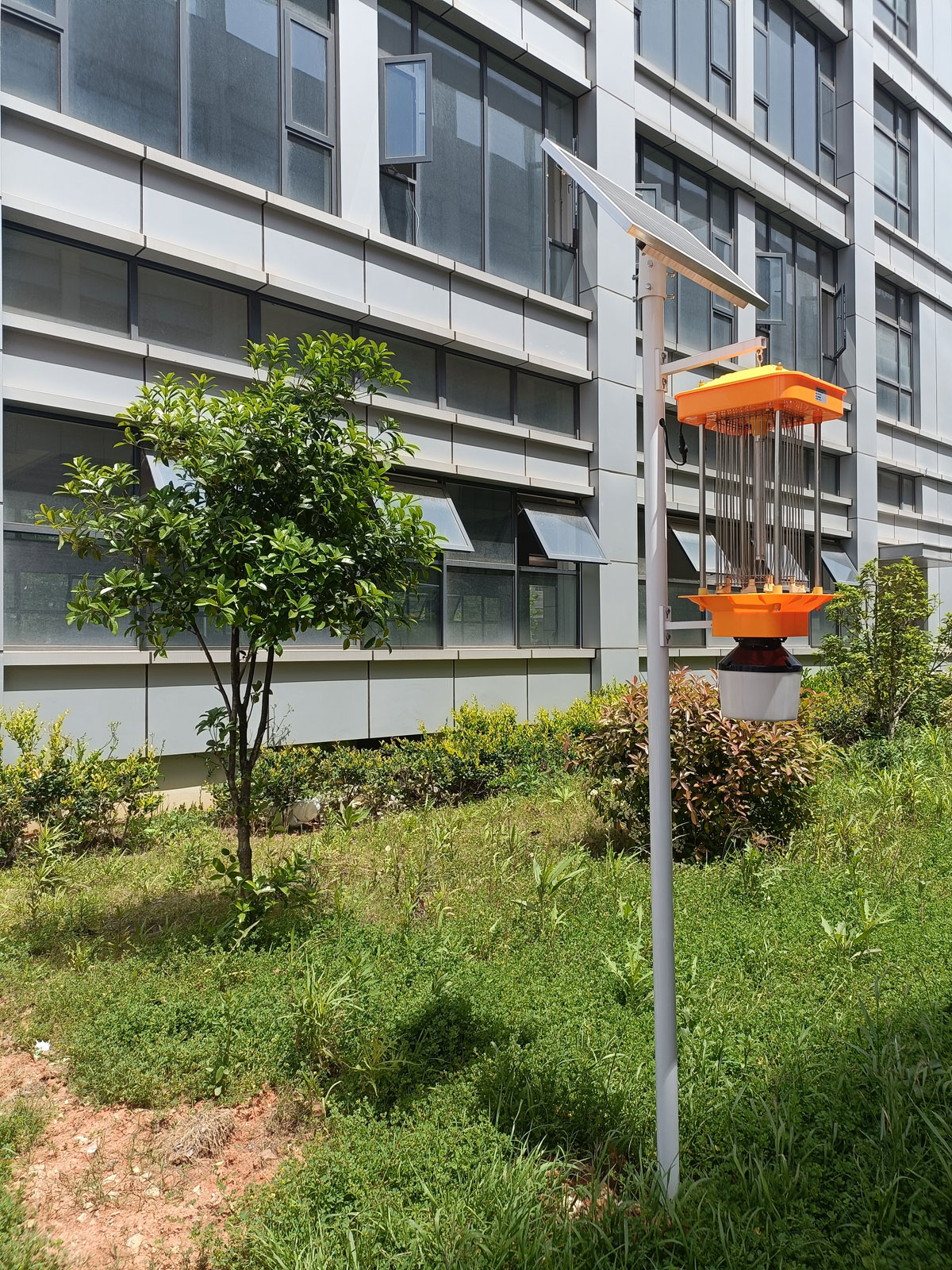
For the documented NiuBoL configuration, the reference area is 30-50 mu, approximately 2.0-3.3 ha, subject to terrain, crops and environmental conditions. This is not 30-50 imperial acres, and it is not a promise that every pest within that area will be controlled.
A mu is approximately 666.7 m2. Therefore 30 mu is about 20,000 m2 and 50 mu about 33,333 m2. Keep area units explicit in drawings and quotations. A translated area label can otherwise change the assumed equipment count by a large factor before the site has even been assessed.
For an illustrative 10 ha site, equivalent to 150 mu, dividing by the 30-50 mu reference gives an area-only allowance of three to five lamps. That calculation is not a final deployment recommendation. Separate crop blocks, screening and access can require a different arrangement, and an unsuitable target insect may make the proposed approach inappropriate regardless of lamp count.
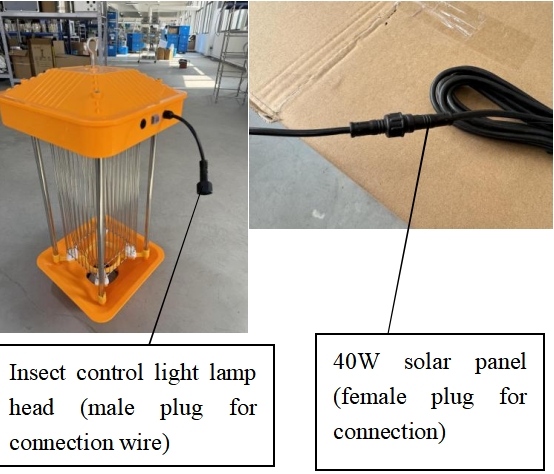
The NiuBoL frequency vibration solar insect lamp attracts responsive insects with light and uses a high-voltage grid. It is not a species-specific monitoring camera, a pesticide application system or a treatment for pests that are not exposed to the attraction mechanism.
Identify the damaging species, life stage and seasonal activity with the project's crop specialist. Adult insects captured at night are not the same measurement as larvae inside leaves or fruit. A large collection does not by itself show that crop damage fell, and an empty box does not prove the block is free of pests.
| Layout-related item | Configuration information | Design meaning |
|---|---|---|
| Reference area | 30-50 mu, approximately 2.0-3.3 ha | Conditional planning reference, not a guaranteed protection radius |
| Pole | 3 m overall height; 60 mm galvanized tube; 2.0 mm wall | Check actual lamp position against mature canopy and service access |
| Solar panel | Monocrystalline, at least 40 Wp | Needs an appropriate unshaded charging location |
| Battery | 12.8 V, 12 Ah LiFePO4 configuration | Not proof of a fixed number of cloudy operating days |
| Protection | IP65 | Outdoor protection does not establish flood, chemical or fire suitability |
Keep this grid-type lamp distinct from a wind-suction trap when evaluating light source, collection method and service needs. Select the actual configuration rather than using a photograph or a broad product-family name as the complete specification.
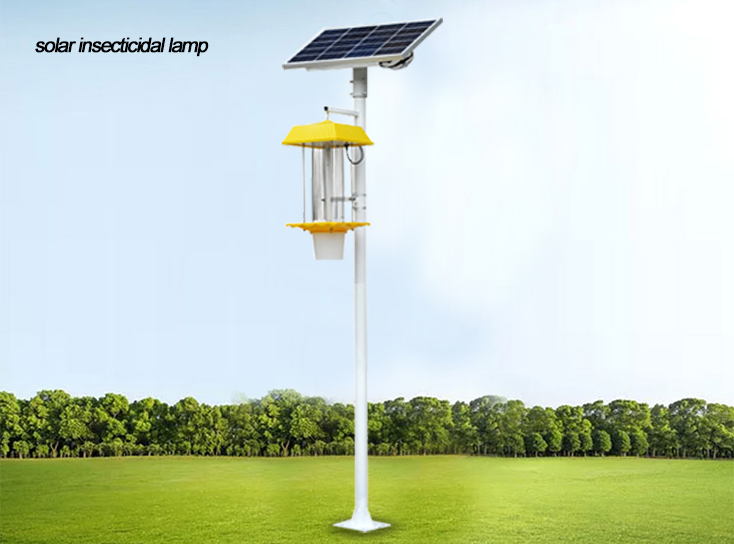
Draw the mature canopy, hedges, slopes, buildings and roads, not only the property boundary. Two adjoining blocks can be close in plan view yet separated by vegetation that screens the light. A central lamp may be visible from neither interior once the crop has grown.
In a young orchard, consider the future canopy rather than just the open conditions on installation day. A position that provides a visible light source and sunlight today may become shaded later. Check whether the lamp and panel can remain accessible without interfering with harvesting equipment or vehicle movement.
For open field crops, record crop height and seasonal operations. Avoid placing a pole where it creates an obstacle for spraying, cultivation or irrigation equipment. Increasing pole height without an engineered mounting review is not a universal way to overcome screening.
An area reference cannot be converted directly into a biological attraction radius. Such a conversion assumes an unobstructed circular footprint and uniform response, neither of which is established by the area number. Use the site layout and local observations instead of drawing identical overlapping circles and calling the whole area protected.
Record nearby yard lights, roads and other night lighting. Changes in background illumination can affect the local trapping environment. Compare similar operating conditions when evaluating alternative positions; moving a lamp and changing its schedule simultaneously makes the reason for a different catch harder to determine.
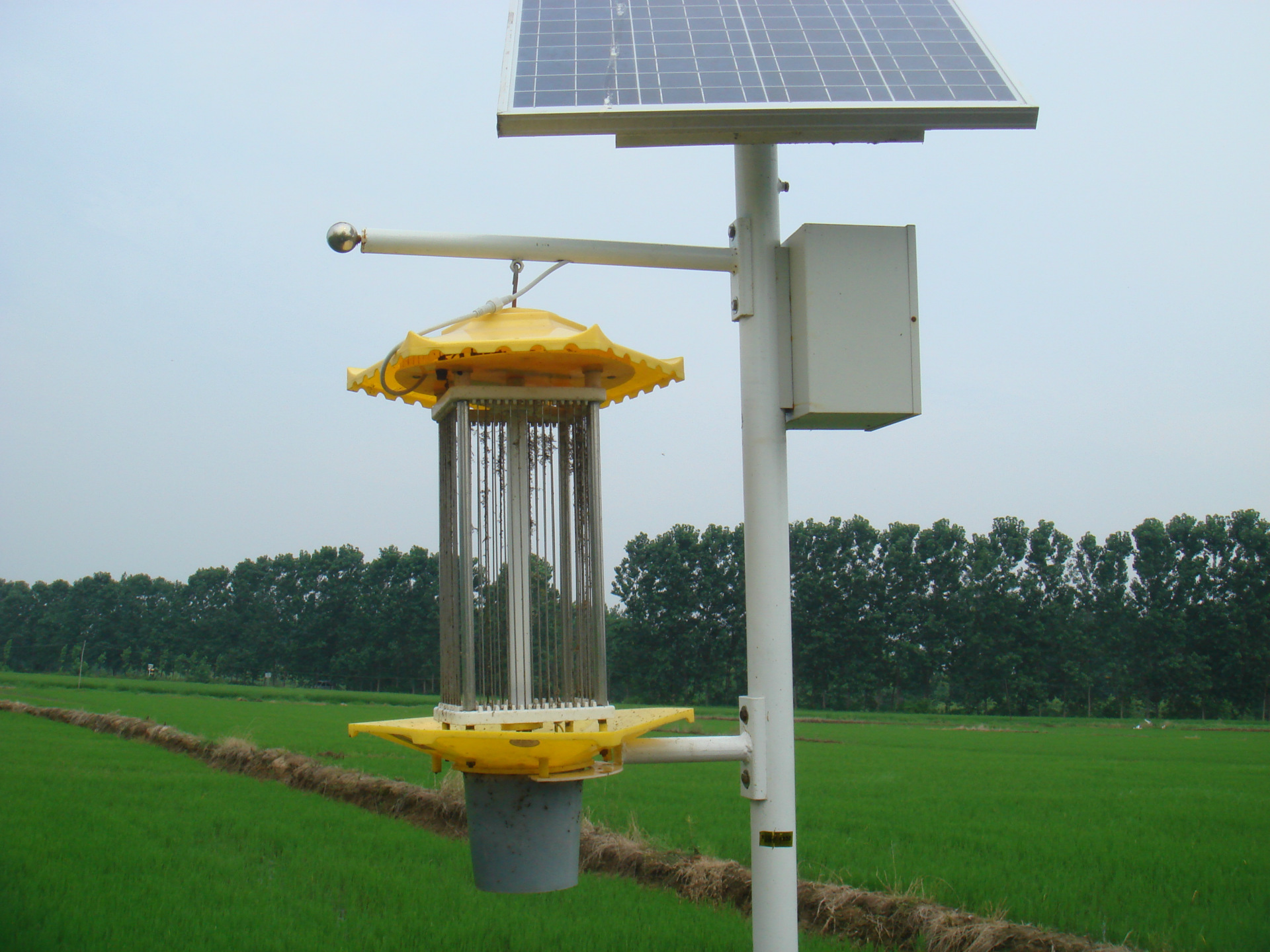
The panel needs solar exposure during the charging period; the light source needs a useful position during the target insect's active period. These requirements may not coincide. A shaded crop interior can be a poor charging location even if it appears convenient for pest interception.
Review panel exposure over the relevant season and note temporary shading from crops or trees. Use local solar conditions and the selected operating schedule for the power assessment. Do not use a fixed cloudy-day promise to justify a location whose charging conditions have not been checked.
On sloping land, inspect footing stability, runoff paths and service access. Avoid low points prone to inundation and places where a maintenance visit would require unsafe access. A nominal coverage area does not establish a suitable foundation or mounting position.
Light attraction is not automatically selective for damaging insects. Review non-target catches and nearby sensitive habitats with the project specialist. Night operation alone is not proof that beneficial insects are unaffected.
Use an operating window justified for the target activity and local crop programme. Do not assume that running longer always improves the outcome. If the intended task is to monitor a particular species, assess whether a species-targeted trap or dedicated identification equipment is needed instead.
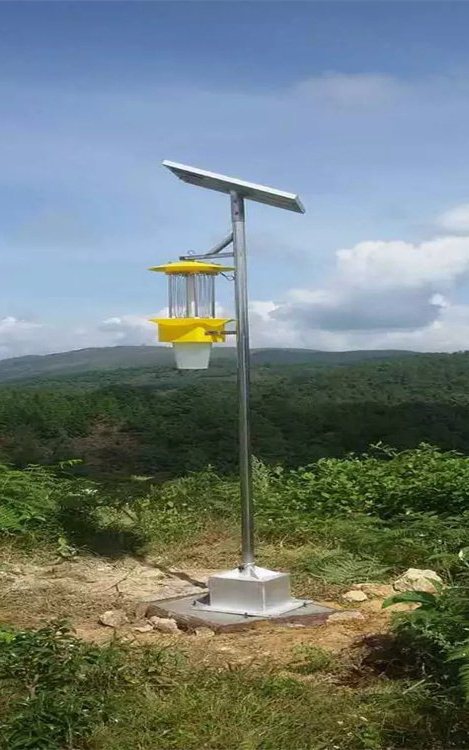
Before extending the layout across a large plantation, inspect representative positions under the intended canopy and operating conditions. Confirm actual operation, record target and non-target observations and compare crop scouting results. Use appropriate comparison areas or a trial design where the project needs to evaluate a control effect.
Keep changes traceable: position, mounting height, operating hours, maintenance and surrounding lighting. If a poorly performing block is screened from the lamp, assess that physical limitation before adding more operating hours or claiming a regional pest change.
Plan collection-box access and safe grid maintenance from the start. A position chosen solely to reduce lamp count may create a long service route or inaccessible equipment. Those costs belong in the deployment comparison alongside the purchase price.
Send NiuBoL a scaled block plan, total area with units, mature crop height, terrain photographs and nearby lighting. State the target species, intended operating season and whether the objective is trapping support or a monitored control trial. Include access and solar-exposure constraints.
Ask for equipment and mounting quantities tied to that layout rather than a guaranteed hectares-per-lamp statement. If remote status is required, specify it separately and confirm the offered controller and interface. A solar lamp's local automatic operation does not, by itself, supply a farm-network connection.
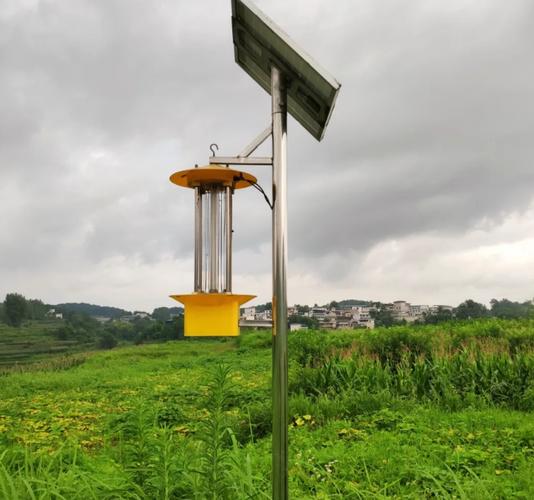
It is approximately 2.0-3.3 ha. It is a conditional reference for the configuration, not a guaranteed biological coverage area or an imperial-acre figure.
That provides only an initial area-based allowance. Mature canopy, separate blocks, terrain, target insect response and access must be assessed before finalizing positions or quantities.
No. Screening and crop structure differ. Evaluate visibility of the light source, future canopy and operating conditions rather than copying a universal distance between poles.
No. Identify the catch and compare relevant crop observations using an appropriate evaluation method. Trapped adults and crop damage are different outcomes.
Not indefinitely. The installation still needs sufficient charging energy over its operating period. Review panel exposure and loads; storage cannot replace a persistent energy shortfall.
No. Those outcomes depend on the crop-protection programme, field evidence and applicable certification requirements. The lamp is one physical trapping component, not proof of a specified reduction or certification.
Solar insect killer lamp coverage should be planned from correct area units and actual crop blocks. Account for canopy, target insect activity, non-target observations, charging and maintenance access before fixing quantities. A NiuBoL layout review is most useful when it starts with those site conditions rather than an assumed protection radius.
Prev:Multi-Parameter Water Quality Analyzer: Industrial-Grade Water Quality Monitoring Solution
Next:Solar Insect Killer Lamp Controls: Verify Local Operation Before IoT Connection
Related recommendations
Sensors & Weather Stations Catalog
 Agriculture Sensors and Weather Stations Catalog-NiuBoL.pdf
Weather Stations Catalog-NiuBoL.pdf
Agriculture Sensors Catalog-NiuBoL.pdf
Water Quality Sensor Catalog-NiuBoL.pdf
Related products
 Combined air temperature and relative humidity sensor
 TDR Soil Moisture & Temperature Sensor for irrigation| RS485 |4-20mA| NBL-S-THR
 Soil pH sensor RS485 soil Testing instrument soil ph meter for agriculture |NBL-S-PH
 Wind Speed sensor Output Modbus/RS485/Analog/0-5V/4-20mA
 Tipping bucket rain gauge for weather monitoring auto rainfall sensor RS485/Outdoor/stainless steel
 Pyranometer Solar Radiation Sensor 4-20mA/RS485


Screenshot, WhatsApp to identify the QR code
WhatsApp number:+8615367865107
(Click on WhatsApp to copy and add friends)

