





— Blogs —
—Products—
 Consumer hotline +8618073152920
 WhatsApp:+8615367865107
Address:Room 102, District D, Houhu Industrial Park, Yuelu District, Changsha City, Hunan Province, China
Product knowledge
Time:2026-02-22 10:41:44 Popularity:676
In the field of water conservancy engineering and flood control management, reservoir safety is always the core focus. In response to hidden dangers in reservoir dams, rapid water level rise during flood seasons, and the sudden nature of rainfall, management departments urgently need to deploy reliable automatic water and rainfall monitoring systems to achieve real-time collection and intelligent warning of key parameters such as rainfall, water level, and seepage, thereby significantly improving reservoir safety supervision levels.
As a professional manufacturer of water conservancy informatization equipment, NiuBoL provides a complete integrated solution based on high-frequency radar level gauges and telemetry terminals, specially designed for system integrators, IoT solution providers, project contractors, and engineering companies. It supports seamless access to existing water conservancy platforms, ensuring accurate data, stable transmission, and scalable systems.
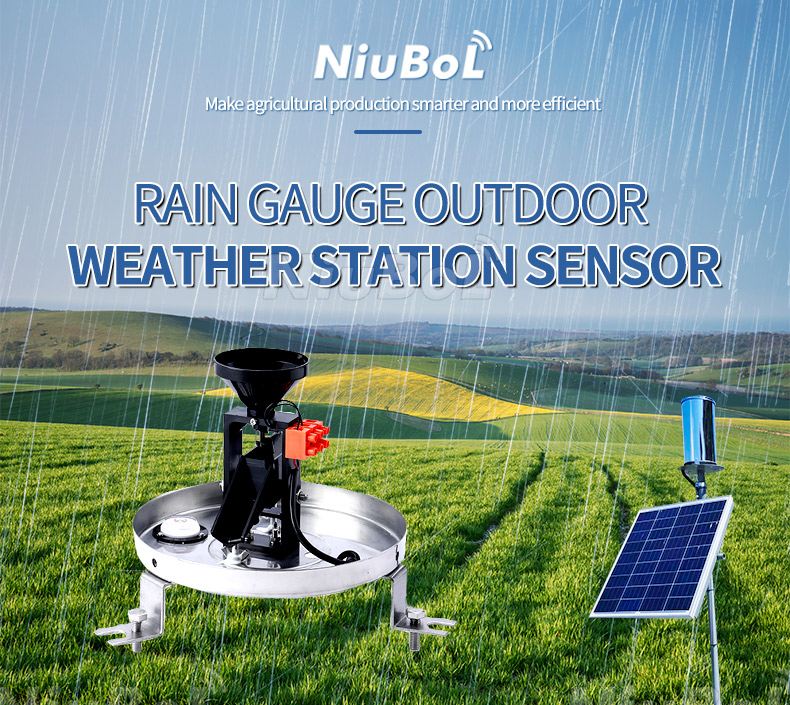
Reservoir safety issues directly relate to flood control and disaster mitigation, water supply assurance, and downstream livelihood. Traditional manual inspection methods have limitations such as poor timeliness, incomplete coverage, and high personnel risks in extreme weather. In recent years, the state has vigorously promoted "digital water conservancy" and small reservoir risk removal and reinforcement projects, placing higher requirements on automatic water and rainfall monitoring: it must achieve 24-hour uninterrupted monitoring, automatic alarms, and multi-level linkage response.
The NiuBoL water and rainfall automatic monitoring system addresses these pain points through non-contact high-precision sensors and industrial-grade telemetry terminals. The system can collect parameters such as water level, rainfall, flow, and water temperature in real time, and trigger audible and visual alarms, SMS notifications, and platform pop-ups when thresholds are exceeded, greatly shortening the response cycle from hazard detection to emergency disposal. The system complies with industry standards such as "Technical Conditions for Automatic Hydrological Reporting Systems" and is suitable for various scenarios including large and medium-sized reservoirs, mountain flood channels, and small dangerous reservoirs.
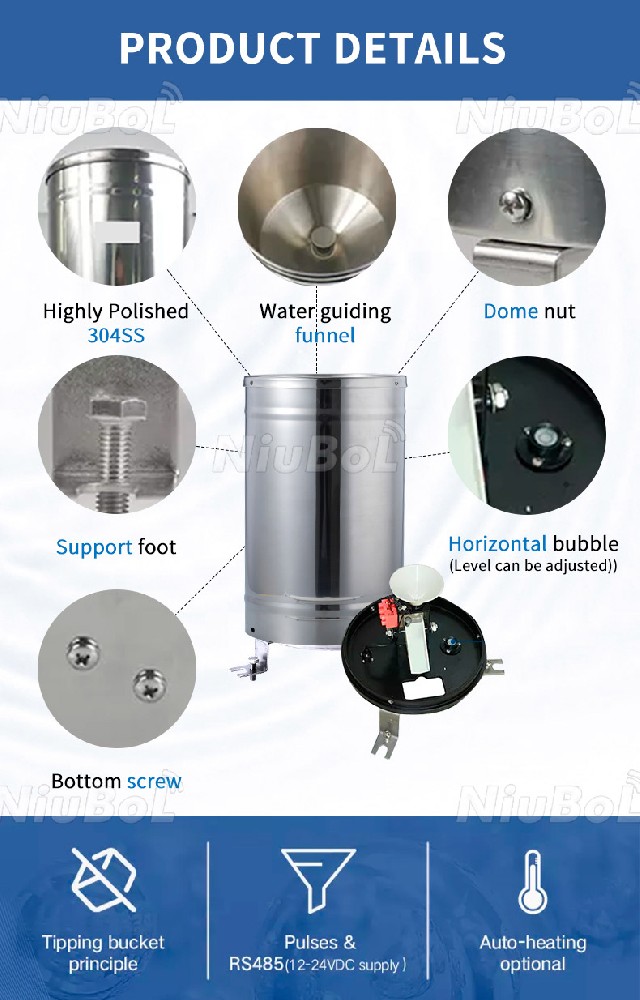
The NiuBoL water and rainfall automatic monitoring system adopts a layered distributed architecture, including the field acquisition layer, communication transmission layer, and central application layer.
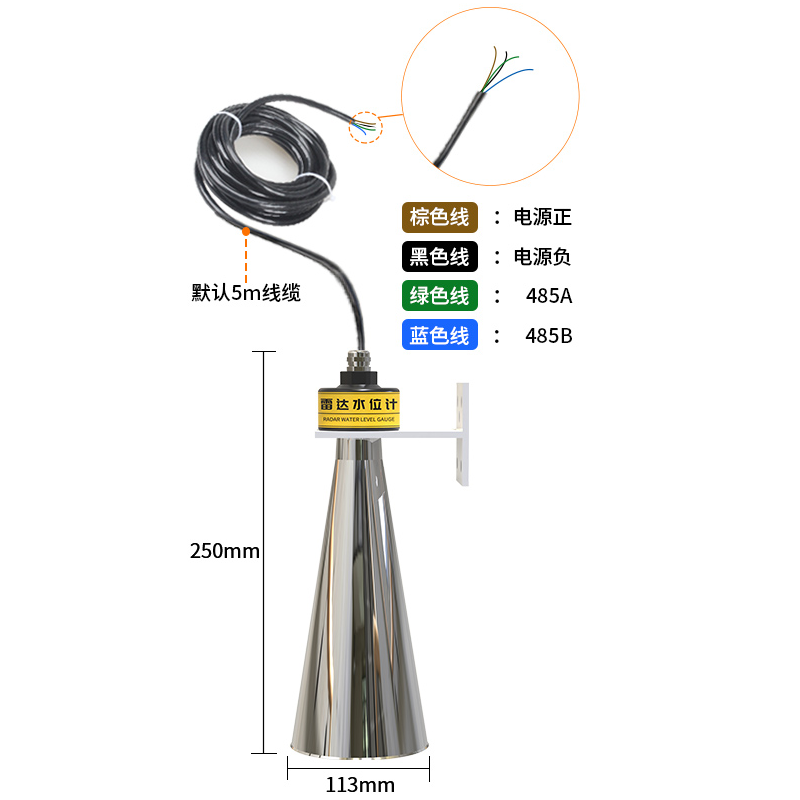
Field Acquisition Layer: Deploys radar level gauges, tipping bucket rain gauges, video cameras, and other sensors. The radar level gauge uses 77-79GHz FMCW frequency-modulated continuous wave technology for non-contact measurement, avoiding corrosion and siltation issues from underwater installation, particularly suitable for seasonal rivers, mountain flood channels, and corrosive water bodies.
Communication and Telemetry Layer: Centered on low-power industrial-grade telemetry terminals (RTU), supporting RS485 sensor access and 4G/5G wireless transmission (optional fiber optic/WiFi), with built-in large-capacity storage and watchdog mechanism to ensure local data caching during network disconnection and automatic retransmission upon recovery.
Central Platform Layer: B/S architecture-based monitoring center system supporting electronic map visualization, historical data query, trend analysis, and threshold alarm configuration. The platform reserves standard interfaces such as OPC UA and MQTT for easy docking with provincial water conservancy information platforms, dam safety monitoring systems, and smart water affairs platforms, achieving data sharing and multi-system integration.
Power supply uses solar + battery combination, equipped with charge controllers and lightning protection modules, with protection rating up to IP67, adapting to long-term unattended field environments.
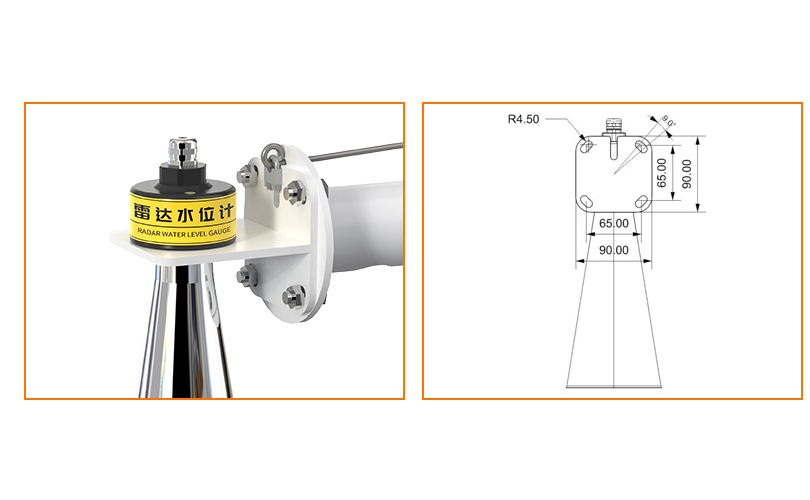
This parameter table demonstrates the product's engineering advantages in high precision, low power consumption, and anti-interference, facilitating selection and comparison by integrators.
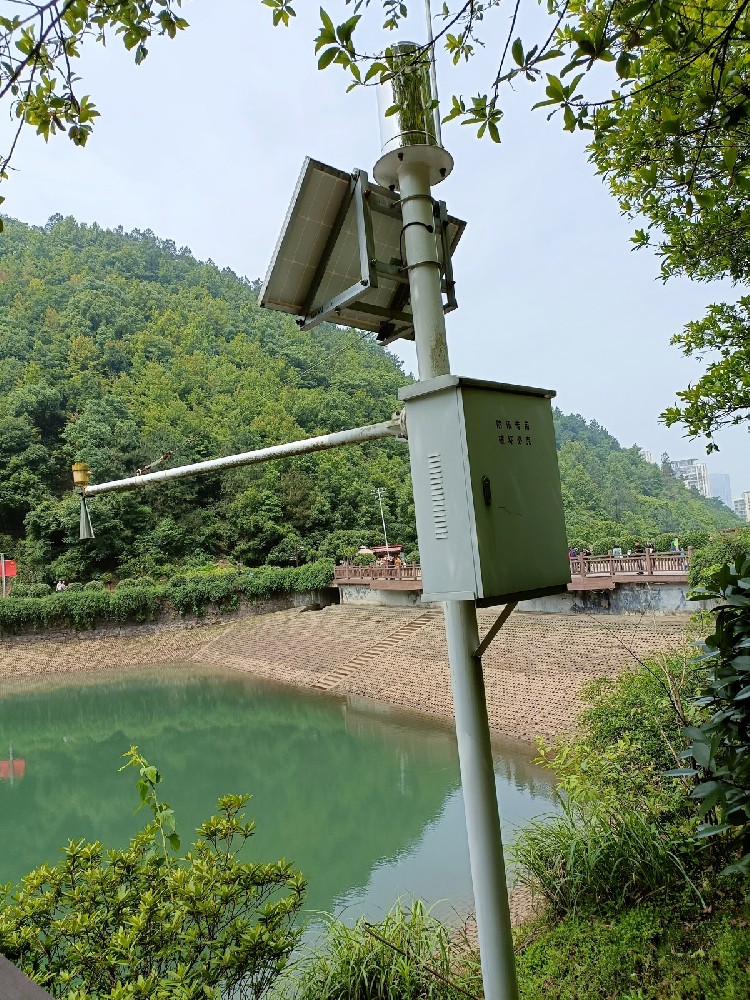
The NiuBoL system emphasizes openness and compatibility for rapid integration into projects of different scales by contractors:
Communication Protocol: Sensor layer unifies RS485 (Modbus RTU), baud rate 9600, 8N1; uplink supports MQTT, HTTP, TCP transparent transmission, and other protocols, adapting to mainstream IoT platforms.
Expansion Capability: RTU reserves multiple analog/digital inputs for subsequent access to seepage pressure gauges, seepage flow gauges, displacement gauges, etc., achieving integrated "water and rainfall + dam safety" monitoring.
Video Fusion: Supports IP camera access, enabling linkage between water level data and on-site video images for remote inspection and hazard verification.
Data Docking: Provides standardized API interfaces and data export functions (CSV, JSON) for easy connection with other platforms and systems.
Installation Notes for the Water and Rainfall Automatic Monitoring System:
The radar level gauge must be installed perpendicular to the water surface; tilting will cause echo signal attenuation.
Avoid fixed obstacles (such as bank revetments, trees) within the beam range to prevent false echoes.
When wiring RS485 bus, ensure A/B line sequence consistency and no address conflicts for multiple devices.

1. Fine Regulation of Flood Limit Water Level in Large Reservoirs
Track storage changes in real time with high-precision radar, combined with rainfall forecast data, to assist scheduling departments in precise discharge control and avoid exceeding flood limit warning lines.
2. Risk Removal and Reinforcement Projects for Small Dangerous Reservoirs
Deploy solar-powered systems in remote mountainous small reservoirs for unattended monitoring, with data directly transmitted to county/provincial platforms, meeting the Ministry of Water Resources requirements for small reservoir safety supervision.
3. Mountain Flood Disaster Warning
Radar level gauge + rain gauge combination responds quickly to short-duration heavy rainfall, automatically generating flood process lines and triggering graded warning SMS to township cadres and responsible persons.
4. Urban River Channel and Drainage Pipe Network Monitoring
Deploy at flood-prone points and pumping station forebays, linking video for dynamic urban flooding supervision and supporting automatic pump start/stop control.
In actual projects, similar systems have been implemented in multiple provincial small reservoir clusters, reducing hazard response time to minutes on average, significantly lowering patrol manpower costs, and reserving sufficient interfaces for later smart water conservancy platform construction.
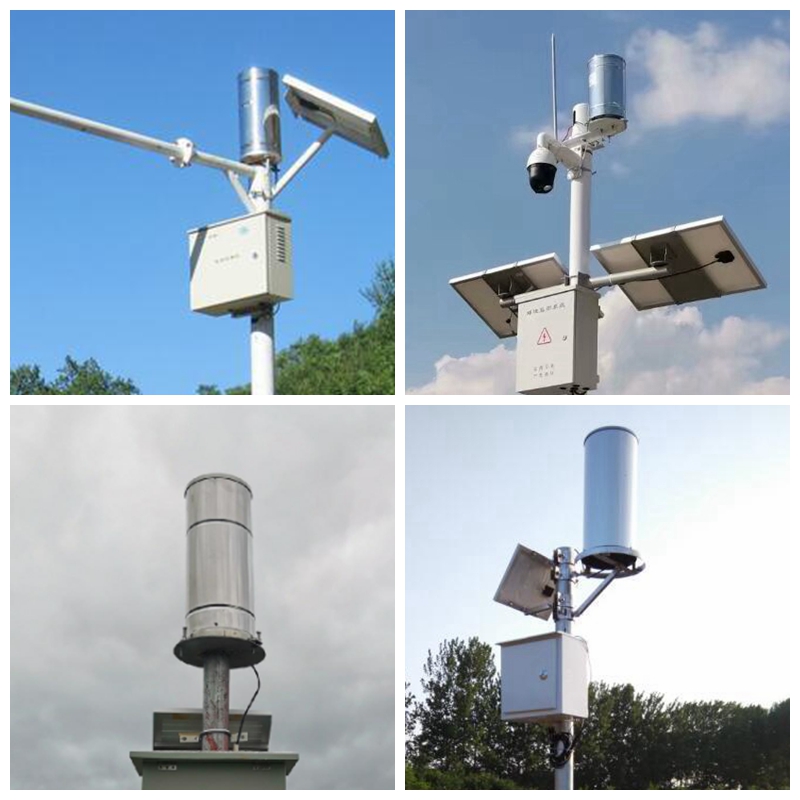
Range Selection: Water depth<20m selects 0~30m type; deep storage selects 0~65m type.
Communication Method: Remote areas without fiber optics prioritize 4G/5G; nearby or wired conditions select Ethernet.
Power Consumption and Supply: Full solar configuration recommends ≥60W PV panel + 100Ah colloidal battery to ensure ≥5 days autonomy during continuous rainy weather.
Environmental Adaptation: Strongly corrosive or high-sediment water bodies prioritize non-contact radar; 8° beam angle suitable for narrow channels.
Commissioning Key Points: On-site zero and full-scale calibration; test alarm linkage (SMS, audible/visual, platform push); verify disconnection retransmission function.
1. How does the system ensure data transmission reliability?
A: Supports local caching + breakpoint resume; data not lost during network anomalies; industrial-grade 4G/5G modules, external antennas can be added in weak signal areas.
2. Can the radar level gauge work normally on water surfaces with foam or floating debris?
A: Yes, non-contact microwave measurement is basically unaffected by foam, floating debris, or waves; algorithms optimized to suppress interference.
3. How many measurement points can the platform support concurrently?
A: Single platform supports thousands of points; distributed deployment and load balancing architecture allow horizontal scaling by project size.
4. Does it support integration with dam seepage and seepage pressure monitoring systems?
A: Yes, through RTU extended I/O or platform interfaces for multi-source data fusion.
5. How does solar power perform during continuous rainy weather?
A: Reasonable configuration maintains 5-7 days autonomy; system includes low-voltage protection and sleep mode.
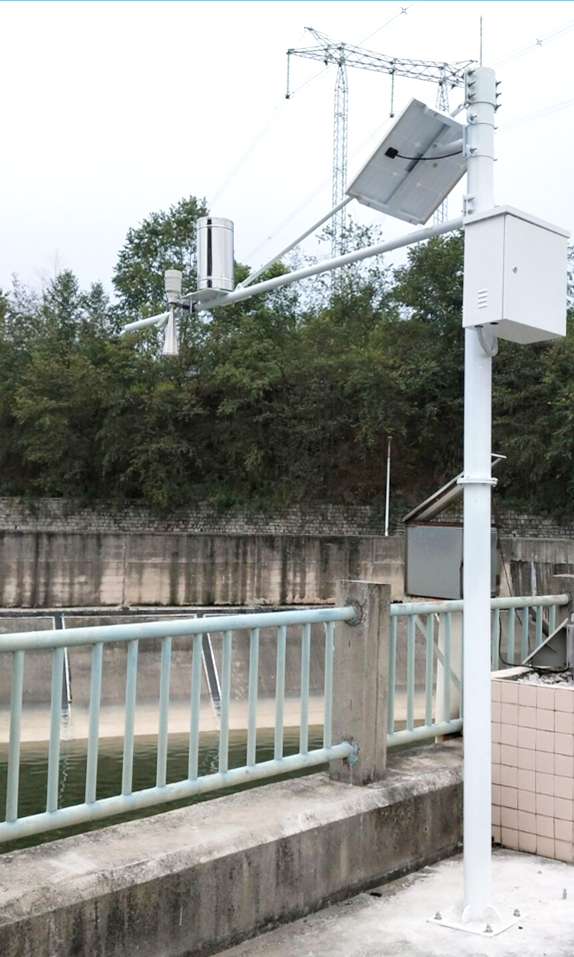
The NiuBoL water and rainfall automatic monitoring system, with high-precision radar sensing, stable telemetry transmission, and open platform architecture as its core, helps system integrators and engineering companies efficiently deliver safety supervision projects that meet modern water conservancy requirements. Through intelligent warnings driven by real-time data, the system not only improves the intrinsic safety level of reservoirs but also provides solid support for flood control decisions. If you need scheme design, equipment selection, or on-site survey for specific projects, welcome to contact the NiuBoL technical team; we will provide professional and reliable end-to-end solution support.
Related recommendations
Sensors & Weather Stations Catalog
 Agriculture Sensors and Weather Stations Catalog-NiuBoL.pdf
Weather Stations Catalog-NiuBoL.pdf
Agriculture Sensors Catalog-NiuBoL.pdf
Water Quality Sensor Catalog-NiuBoL.pdf
Related products
 Combined air temperature and relative humidity sensor
 TDR Soil Moisture & Temperature Sensor for irrigation| RS485 |4-20mA| NBL-S-THR
 Soil pH sensor RS485 soil Testing instrument soil ph meter for agriculture |NBL-S-PH
 Wind Speed sensor Output Modbus/RS485/Analog/0-5V/4-20mA
 Tipping bucket rain gauge for weather monitoring auto rainfall sensor RS485/Outdoor/stainless steel
 Pyranometer Solar Radiation Sensor 4-20mA/RS485

Screenshot, WhatsApp to identify the QR code
WhatsApp number:+8615367865107
(Click on WhatsApp to copy and add friends)

