





— Blogs —
—Products—
 Consumer hotline +8618073152920
 WhatsApp:+8615367865107
Address:Room 102, District D, Houhu Industrial Park, Yuelu District, Changsha City, Hunan Province, China
Product knowledge
Time:2025-11-16 17:03:11 Popularity:839
Precipitation observation plays a critical role in meteorology, hydrology, agriculture, and urban management. Accurate rainfall data is not only the foundation for scientific hydrological cycle analysis but also essential for flood prevention, urban drainage, agricultural irrigation, and water resource management. NiuBoL delivers complete solutions with high-precision precipitation instruments and automated rainfall monitoring systems for diverse applications.
Common Types of Precipitation Observation Instruments & Principles
Precipitation instruments are classified into four categories based on working principles and structure:
Tipping Bucket Rain Gauge | Optical Rain Gauge | Piezoelectric Rain Gauge | Radar Rain Gauge
Each has unique strengths and ideal use cases.
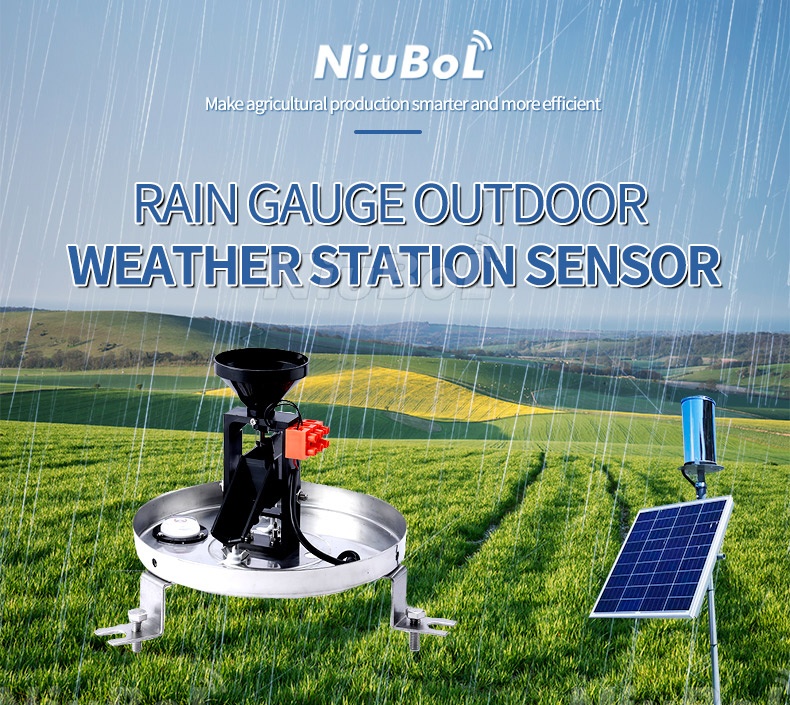
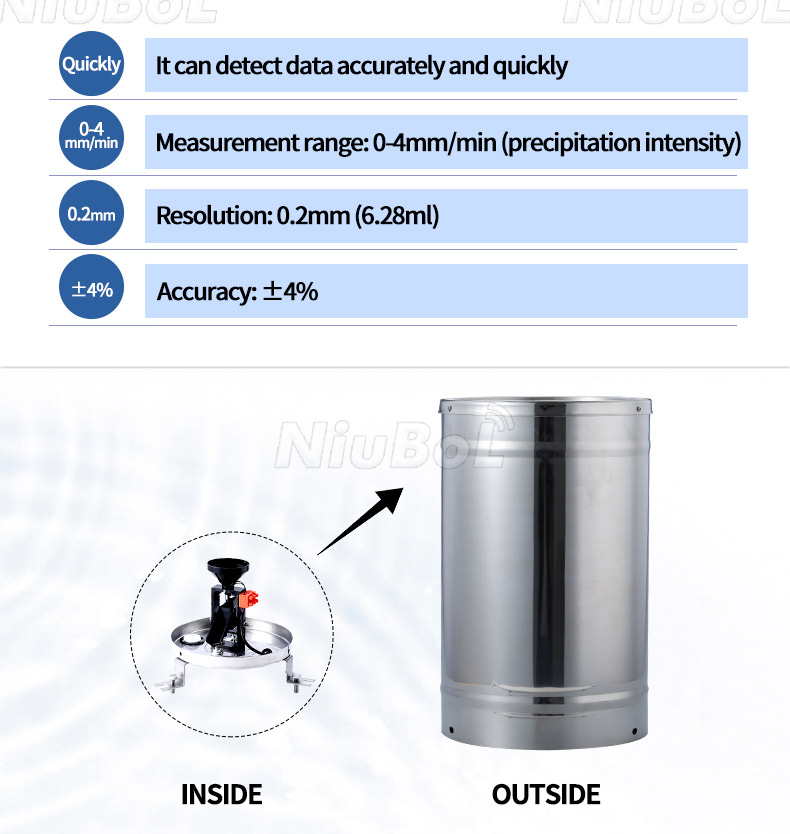
Collects rainwater via a funnel. When water reaches a set volume, the bucket tips, discharging water and recording the event via a sensor to calculate rainfall.
Principle: Gravity tipping + mechanical counting
- High accuracy & reliable data
- Sensitive to light rain
- Unaffected by dust, light, or debris
- Simple structure, easy maintenance & cleaning
- Long-term stable operation
- Relatively large volume
- Requires fixed installation

Uses optical sensors with a light source and receiver. Raindrops passing through the beam attenuate the signal; rainfall is calculated from the degree of attenuation.
- Compact & easy installation
- No water accumulation or clogging
- Fast digital output
- Light path susceptible to dust, leaves, or minor obstructions
- Accuracy heavily environment-dependent
- Less sensitive to drizzle
- High maintenance & regular calibration required
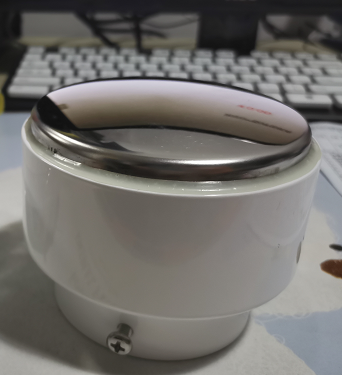
Detects pressure changes from raindrop impacts on piezoelectric material, converting them into electrical signals to compute rainfall.
- Compact & lightweight – portable
- Integrates easily into automated systems
- Electrical output for remote monitoring
- Insensitive to light rain
- Prone to false readings from wind, dust, or vibration
- Sandstorms may be misread as rain
> Why Piezoelectric Gauges Misread Sandstorms:
> The sensor detects impact pressure. Wind-blown sand particles generate similar signals to raindrops → false precipitation.

Uses microwave or radar signals for remote detection. Emitted signals reflect off raindrops; signal strength and return time determine rainfall volume and droplet size distribution.
- Non-contact, remote measurement
- Ideal for large-area monitoring
- Strong adaptability to harsh weather
- Provides rainfall intensity + droplet size data
- High cost
- Strict installation & calibration requirements
- Primarily for research, weather stations, or hydrological monitoring
| Type | Accuracy | Size | Environmental Adaptability | Maintenance Difficulty | Best Applications |
| Tipping Bucket | High | Large | Strong | Low | Agriculture, research, hydrology, disaster prevention |
| Optical | Medium | Small | Medium | High | Lab research, space-constrained sites |
| Piezoelectric | Medium-Low | Small | Medium-Low | Medium | Mobile observation, remote monitoring |
| Radar | High | Medium | Strong | High | Large-scale research, hydrological monitoring |
> Core Selection Principle: Accuracy is the top priority.
> For agriculture, hydrology, and disaster prevention, tipping bucket rain gauges remain the top choice. Optical and piezoelectric are ideal for portable or compact scenarios. Radar suits scientific or wide-area monitoring.
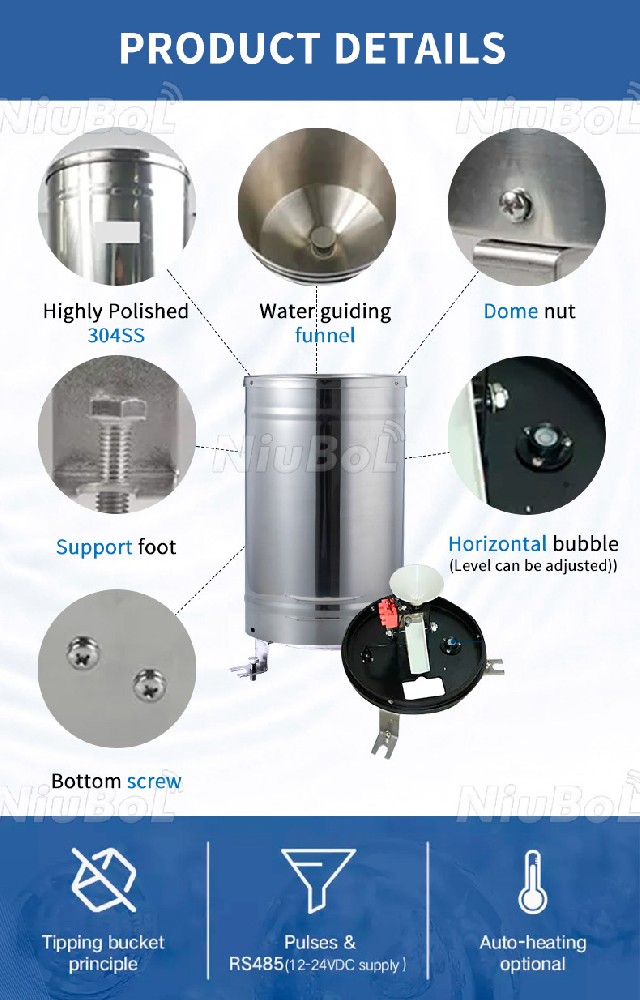
Modern systems have evolved from standalone instruments to integrated, intelligent platforms with automatic collection, real-time monitoring, data analysis, and alerting.
- Precision Agriculture: Accurate rainfall → optimized irrigation → 20%+ yield increase
- Urban Flood Prevention: Real-time data → scientific drainage scheduling
- Water Resource Management: Scientific basis for reservoir operations
- Environmental & Climate Research: Long-term data for climate modeling
- Disaster Mitigation: Early detection of flood/landslide risks
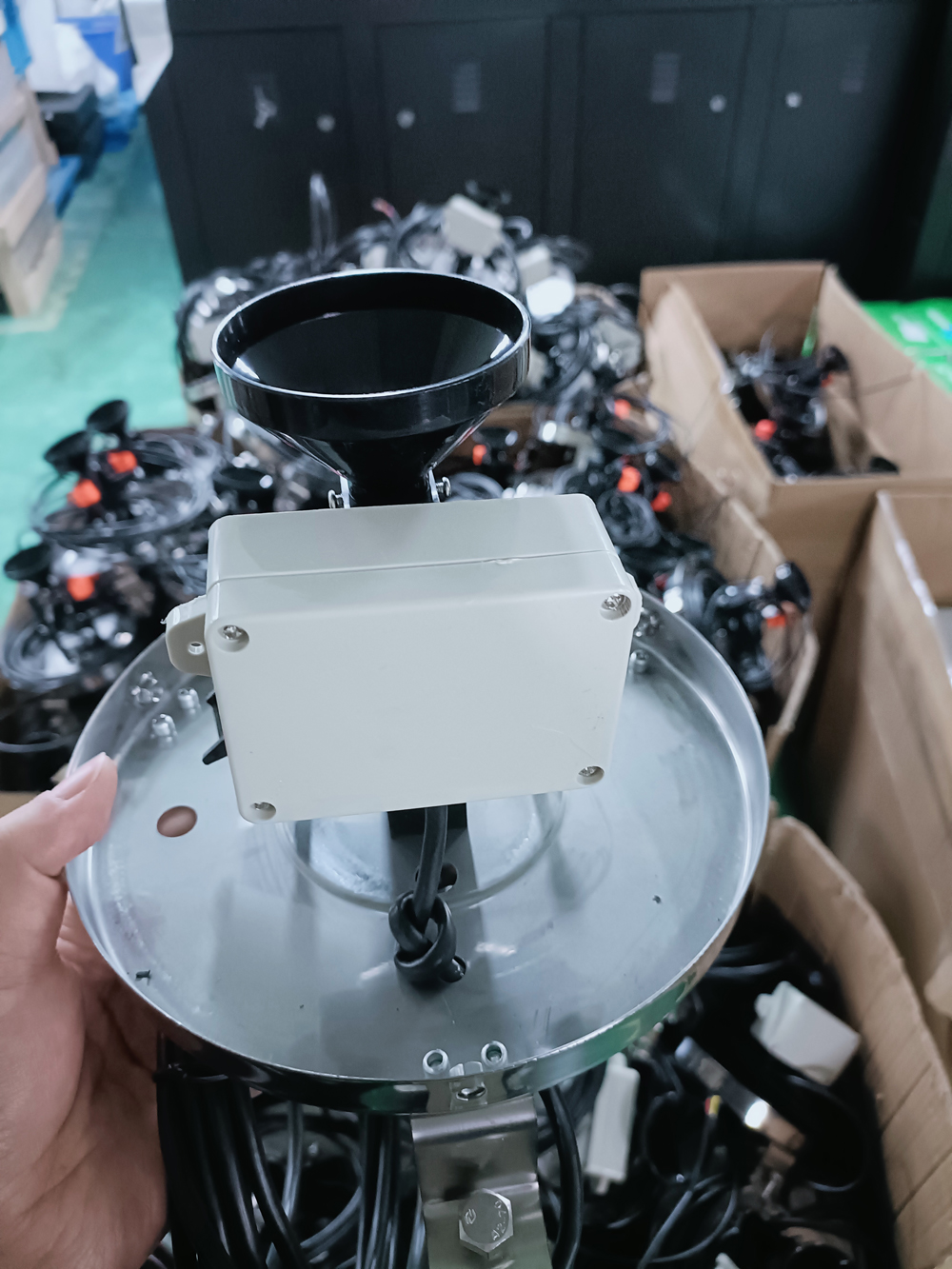
- 24/7 Automated Monitoring
- High Precision & Reliability via advanced sensors and algorithms
- Remote Monitoring & Analytics through cloud/internet
- Smart Alerts – threshold-triggered warnings
- Low Maintenance – modular tipping bucket design
- Precision Agriculture: Real-time field rainfall → automated irrigation → 20% yield boost
- Urban Drainage: Radar + monitoring system → optimized pipe network → reduced flooding
- Research & Hydrology: Multi-year data → supports climate models and flood forecasting
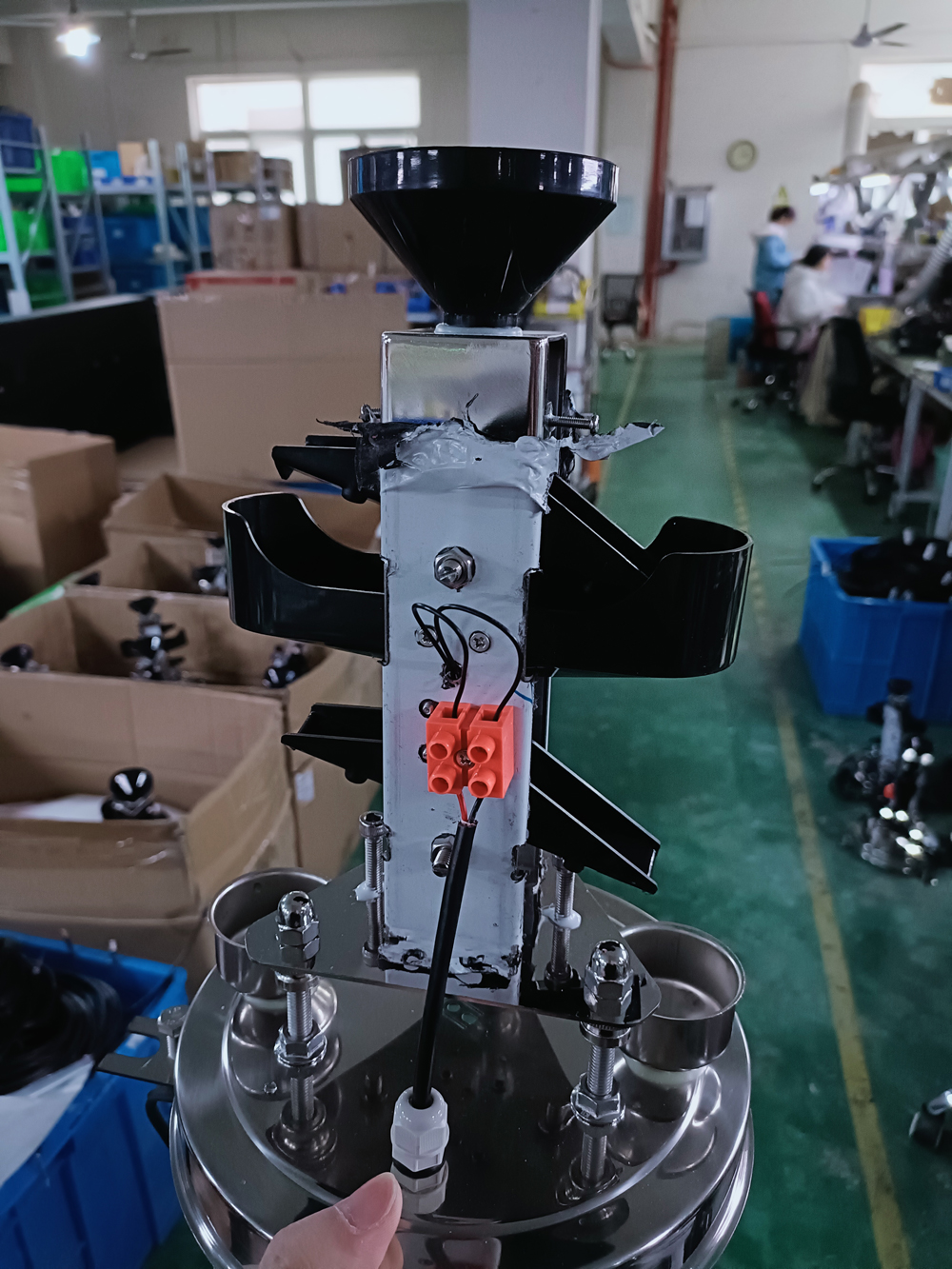
| Factor | Recommendation |
| Application | Research / large-area → Radar or Tipping Bucke Agriculture → Tipping Bucket or Optical Portable → Piezoelectric or Optical |
| Accuracy Needs | High → Tipping Bucket or Radar |
| Environment | Dusty/windy → Avoid Piezoelectric |
| Maintenance & Budget | Tipping Bucket: Simple, low-cost maintenanc Optical/Piezoelectric: Higher calibration costs |
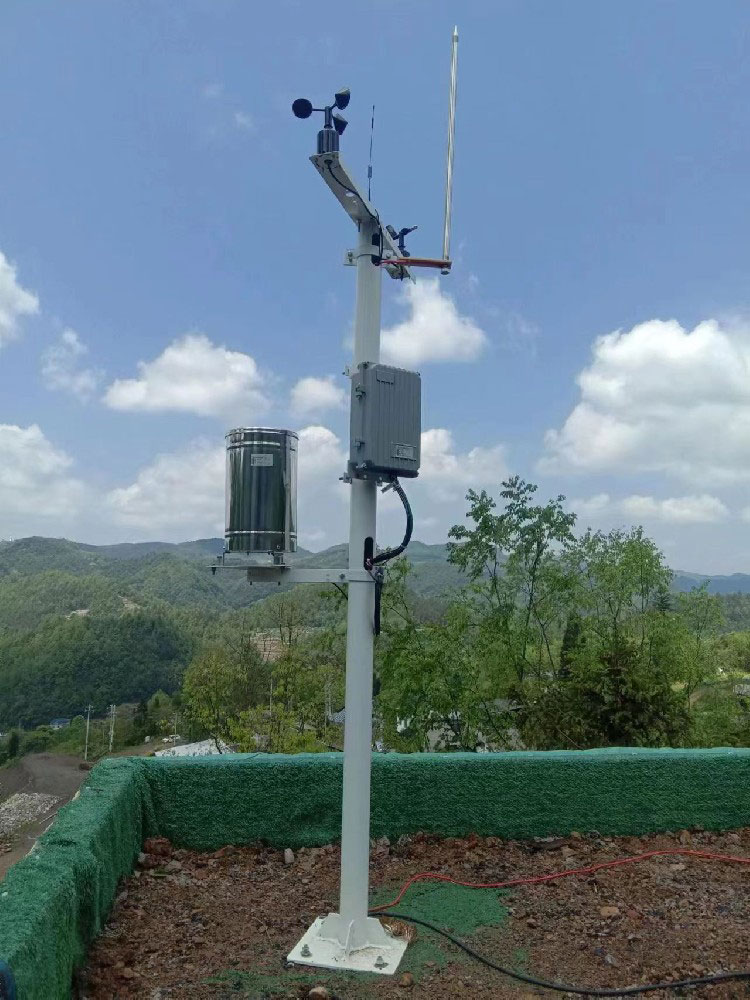
Over 10 years with regular funnel/bucket cleaning.
Yes, but regular cleaning of dust/leaves is required to maintain accuracy.
No – best for moderate to heavy rain.
Ideal for research, weather stations, large-scale hydrology – less common in small urban areas.
Yes — threshold-based automatic alarms.
Minimal with stable mounts and anti-wind design.
Optional — supports local storage or cloud connectivity.
Tipping bucket – superior accuracy, stability, and maintenance cost.
Yes — API or Modbus integration with agriculture, hydrology, or flood systems.
Minimal impact, but anti-freeze measures needed in cold climates.
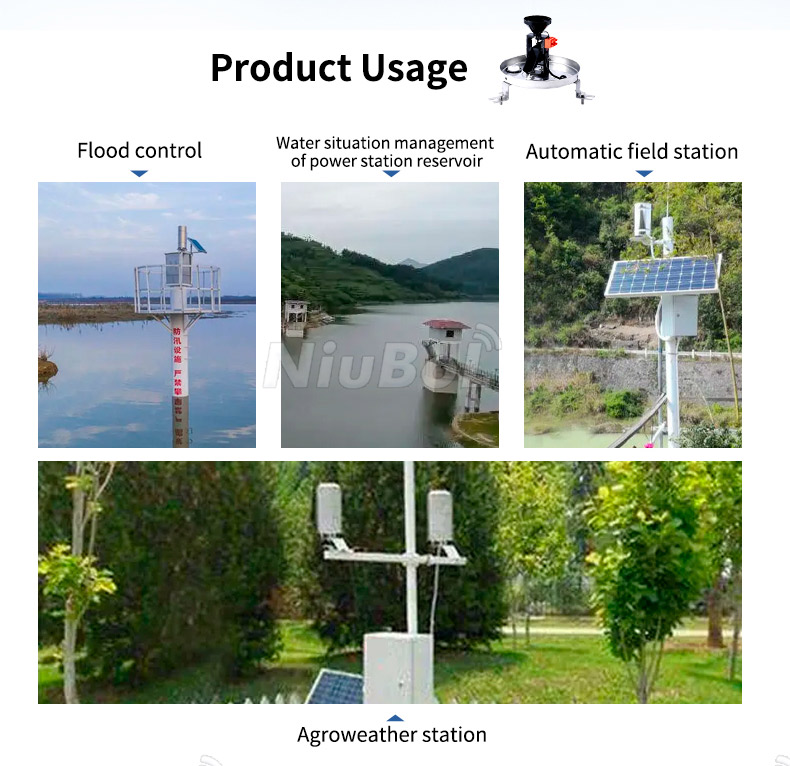
Precipitation observation is the cornerstone of agriculture, water conservancy, urban management, and scientific research. The four main rain gauge types have distinct strengths, but accuracy remains the decisive factor.
- NiuBoL Tipping Bucket Rain Gauges: Top choice for most scenarios due to high accuracy, reliability, and easy maintenance
- Optical & Piezoelectric: Ideal for compact or portable applications
- Radar: Best for scientific or wide-area monitoring
Paired with the NiuBoL Intelligent Rainfall Monitoring System, you get 24/7 precision, remote data, and actionable insights—empowering disaster prevention, precision agriculture, and climate research with robust, reliable data.
Ready for precision rainfall monitoring? Contact NiuBoL for your custom precipitation solution.
 NBL-W-ARS-Tipping-bucket-rain-gauge-instruction-manual.pdf
NBL-W-RS-Rain-sensors-instruction-manual-V4.0.pdf
NBL-W-DRS-Double-Tipping-Bucket-Rain-Sensor-Instruction-Manual.pdfPrev:How to Choose a Tipping Bucket Rain Gauge?
Next:NiuBoL Agricultural Weather Station — Comprehensive Smart Agriculture Solution
Related recommendations
Sensors & Weather Stations Catalog
Agriculture Sensors and Weather Stations Catalog-NiuBoL.pdf
Weather Stations Catalog-NiuBoL.pdf
Agriculture Sensors Catalog-NiuBoL.pdf
Water Quality Sensor Catalog-NiuBoL.pdf
Related products
 Combined air temperature and relative humidity sensor
 TDR Soil Moisture & Temperature Sensor for irrigation| RS485 |4-20mA| NBL-S-THR
 Soil pH sensor RS485 soil Testing instrument soil ph meter for agriculture |NBL-S-PH
 Wind Speed sensor Output Modbus/RS485/Analog/0-5V/4-20mA
 Tipping bucket rain gauge for weather monitoring auto rainfall sensor RS485/Outdoor/stainless steel
 Pyranometer Solar Radiation Sensor 4-20mA/RS485

Screenshot, WhatsApp to identify the QR code
WhatsApp number:+8615367865107
(Click on WhatsApp to copy and add friends)

